Table of Contents
The unrelenting summer sun beats down on festival stages from Bonnaroo to Barcelona, turning each performance into a battle against the elements. For touring guitarists, the enemy isn’t just the heat—it’s the invisible chemical warfare happening on their fretboard. Sweat, humidity, and atmospheric moisture conspire to oxidize unprotected strings, deadening tone mid-set and forcing costly emergency string changes in cramped backstage areas. By the third week of a summer tour, many players find themselves burning through traditional sets twice as fast, watching their per-diem disappear into the merch booth’s string stash.
This is where coated electric guitar strings transition from luxury to necessity. Modern polymer and nanotechnology treatments have evolved far beyond the brittle, tone-sucking coatings of the early 2000s. Today’s tour-grade strings offer a sophisticated balance: a molecular barrier that laughs at corrosive sweat while preserving the magnetic responsiveness and tactile feel that define your signature sound. Understanding what separates legitimate tour-ready strings from marketing hype could mean the difference between consistent, soaring leads and a mid-solo catastrophe when your high E snaps from fatigue at the worst possible moment.
Top 10 Coated Strings
Detailed Product Reviews
1. Ernie Ball Regular Slinky Coated Titanium Electric Guitar Strings, 10-46 Gauge (P03121)

Overview: Ernie Ball’s coated titanium strings represent the iconic brand’s answer to the coated string market, maintaining the familiar 10-46 Regular Slinky gauge while adding substantial durability enhancements. These strings target players seeking the classic Slinky feel and tone with significantly extended lifespan.
What Makes It Stand Out: The titanium reinforcement at the ball-end addresses a critical failure point, reducing breakage and slippage while improving tuning stability. Unlike competitors who only coat wound strings, Ernie Ball treats both wound and plain strings—wound strings receive a micro-thin enamel layer while plain strings feature rust-resistant plating plus patented titanium reinforcement winding. This comprehensive approach delivers up to five times more corrosion resistance than uncoated sets.
Value for Money: Positioned as a premium offering, these strings cost roughly double standard Slinkys but last 3-5 times longer under regular playing conditions. For gigging musicians or heavy players changing strings weekly, the annual cost actually decreases while providing consistent tone and reducing setup time.
Strengths and Weaknesses: Strengths include exceptional tuning stability, reduced breakage at the ball-end, authentic Slinky tone retention, and comprehensive corrosion protection. The titanium reinforcement genuinely prevents string slippage. Weaknesses include a slightly higher price point that may deter casual players, and some purists report the coating minimally affects high-frequency response compared to uncoated Slinkys.
Bottom Line: Ideal for regular performers and recording artists using Standard Slinkys who want extended life without sacrificing familiar playability. The titanium reinforcement is genuinely innovative, making these a smart investment for serious players tired of frequent string changes.
2. Elixir Strings, Acoustic Guitar Strings, Phosphor Bronze with NANOWEB Technology, Longest-Lasting Rich and Full Tone For Life with Comfortable Feel, 6 String Set, Light 12-53

Overview: Elixir revolutionized the string industry with their NANOWEB coating, and this phosphor bronze set represents their most popular acoustic offering. The light 12-53 gauge provides versatile playability while the coating promises extended tonal life, making them a favorite among professionals and hobbyists alike.
What Makes It Stand Out: The proprietary NANOWEB Technology creates an ultra-thin protective barrier that shields the entire string from corrosion-causing elements without sacrificing the natural feel phosphor bronze players expect. Unlike traditional coatings that flake or dampen tone, NANOWEB maintains the strings’ rich, full-bodied character for months rather than weeks, while delivering Elixir’s signature smooth, comfortable playing surface.
Value for Money: These strings command a 2-3x premium over uncoated phosphor bronze sets, but deliver 3-4x the playable lifespan. For acoustic players whose tone is paramount, the cost-per-day of optimal tone actually favors Elixir. They eliminate the tone degradation curve that forces premature changes on traditional strings.
Strengths and Weaknesses: Strengths include unparalleled tone longevity, consistent performance in humid conditions, reduced finger noise, and stable intonation throughout the string’s life. The smooth feel is gentler on fingertips. Weaknesses include a “coated” feel some players never adjust to, and the initial brightness can be slightly muted compared to fresh uncoated strings. The premium price stings for casual players.
Bottom Line: The definitive choice for serious acoustic players prioritizing tone consistency and longevity. If you value staying in tune and maintaining that “new string sound” for months, these justify every penny. Perfect for recording artists and gigging musicians.
3. D’Addario Acoustic Guitar Strings, XS Phosphor Bronze Coated, XSAPB1253, Light Gauge 12-53, 6-String Set, Pack of 1

Overview: D’Addario’s XS series represents their most advanced coated acoustic string, engineered to compete directly with industry leaders. The light 12-53 gauge combined with their ultra-thin XS coating aims to deliver extended life while preserving the warm, balanced tone phosphor bronze is known for.
What Makes It Stand Out: The XS film coating is remarkably thin yet completely envelopes the string, preventing corrosion without tonal dampening or physical fraying. The NY Steel core with Fusion Twist technology provides exceptional break strength and tuning stability—D’Addario claims 131% better tuning retention than standard strings. The coating’s durability means no peeling or flaking even after months of heavy play.
Value for Money: These match premium competitors’ pricing while offering D’Addario’s loyalty program through Players Circle points. The extended lifespan translates to fewer changes, saving time and money for regular players. They compete directly with Elixir NANOWEB at a similar price point while offering arguably better core technology.
Strengths and Weaknesses: Strengths include outstanding tuning stability, authentic phosphor bronze warmth, coating durability, and break resistance. The ultra-thin coating preserves natural string feel better than many competitors. Weaknesses include limited availability compared to more established brands, and some players report the coating wears slightly faster than NANOWEB under extremely aggressive playing. The tone is slightly less bright than fresh uncoated strings.
Bottom Line: An excellent premium option for D’Addario loyalists seeking coated benefits without abandoning the brand’s signature tone. The tuning stability alone makes them worth considering for recording and live use. A worthy competitor to more established coated strings.
4. Elixir Strings, Acoustic Guitar Strings, 80/20 Bronze with NANOWEB Technology, Longest-Lasting Bright and Focused Tone For Life with Comfortable Feel, 6 String Set, Light 12-53

Overview: Elixir’s 80/20 bronze NANOWEB strings deliver the classic bright, jangly acoustic tone with modern coating technology. The light 12-53 gauge offers familiar playability while the NANOWEB coating preserves that coveted “new string sparkle” far longer than traditional 80/20 sets, which are notorious for rapid tone loss.
What Makes It Stand Out: 80/20 bronze naturally produces a brighter, more focused tone than phosphor bronze, but typically fades within days. NANOWEB Technology locks in that initial brilliance for months, protecting against oxidation and corrosion. The coating’s smooth feel reduces finger squeak while maintaining the crisp articulation 80/20 players demand, creating a unique combination of vintage tone and modern longevity.
Value for Money: While priced similarly to Elixir’s phosphor bronze line, these offer specific value for players chasing bright tone that lasts. Traditional 80/20 strings require changing every 1-2 weeks to maintain their character; these extend that to months, making them exponentially more economical for tone-conscious players.
Strengths and Weaknesses: Strengths include exceptional brightness retention, smooth playing feel, humidity resistance, and consistent intonation. The focused tone cuts through mixes beautifully. Weaknesses include 80/20’s inherently shorter uncoated lifespan (making coating essential), a feel that some players find too slick, and brightness that can become harsh on certain guitars. The coating may slightly soften the initial attack.
Bottom Line: Perfect for players who love that classic 80/20 chime but hate the rapid tone decay. These are ideal for recording sessions where consistent brightness is crucial. If your guitar needs taming, these might be too bright; but for warm guitars, they’re transformative.
5. D’Addario Electric Guitar Strings, XS Nickel Coated, XSE1046, Regular Light Gauge 10-46, 6-String Set, Pack of 1

Overview: D’Addario brings their premium XS coating technology to electric guitar strings with this 10-46 regular light set. Designed for players seeking extended life without sacrificing the bright, articulate tone nickel-plated steel is known for, these strings target the same market as Elixir’s electric offerings.
What Makes It Stand Out: The ultra-thin XS film coating provides unprecedented corrosion resistance for electric strings without dampening high-frequency response. Combined with the NY Steel core and Fusion Twist technology, these deliver 131% better tuning stability than standard electric strings. The reformulated nickel-plated steel wrap wire enhances output and sustain while the coating prevents the grime buildup that typically kills string tone.
Value for Money: These command a premium over standard XL Nickel strings but last 3-4 times longer while maintaining consistent tone. For players who change strings frequently due to corrosion or tone loss, the cost-per-use is significantly lower. They compete directly with premium coated electrics at a comparable price.
Strengths and Weaknesses: Strengths include remarkable tuning stability, bright tone retention, smooth feel for fast playing, and break resistance. The coating prevents that “dead” feeling after weeks of play. Weaknesses include a slightly different feel that takes adjustment, and the coating can show wear under extremely aggressive bending. Some players prefer the raw feel of uncoated electrics for better grip.
Bottom Line: Excellent for gigging guitarists and recording artists who need reliable, consistent tone night after night. The tuning stability is genuinely impressive. If you’re already a D’Addario XL user, these are a natural upgrade that extends change intervals dramatically while preserving the tone you love.
6. DR Strings Electric Guitar Strings | DRAGON SKIN+ Coated Quantum Nickel | DEQ-9/46 | Superior Sound with Comfortable Feel & Long Life | Light to Medium 9-46 (DEQ-9/46)

Overview:
DR Strings’ DEQ-9/46 DRAGON SKIN+ series targets serious electric guitarists seeking premium performance. These light-to-medium gauge strings (9-46) employ Quantum Nickel wrap wire and proprietary Accurate Core Technology, promising enhanced tonal dynamics, durability, and comfortable playability. The micro-thin K3 coating undergoes application before winding—a distinctive manufacturing approach that sets these apart in the competitive coated string market.
What Makes It Stand Out:
The pre-winding coating process ensures comprehensive protection across all six strings, including the typically vulnerable plain steel strings—a rarity among competitors. The Quantum Nickel formulation claims hotter output with complex harmonic overtones, effectively “hot-rodding” your amplified sound. Accurate Core Technology strengthens the string architecture, reducing breakage and improving tuning stability during aggressive bending and heavy playing sessions that working musicians demand.
Value for Money:
Positioned in the premium tier, these strings command higher prices than conventional sets but compete directly with Elixir and D’Addario’s coated offerings. The extended lifespan—often 3-4 times longer than uncoated strings—justifies the investment for gigging musicians and daily players. Reduced restringing time and consistent performance translate to tangible savings and creative reliability.
Strengths and Weaknesses:
Strengths include exceptional longevity, natural uncoated feel, enhanced magnetic output, complete string set protection, and reliable tuning stability under duress. Weaknesses involve the premium price point, potential tonal compromise for purists preferring traditional pure nickel, and the light-top/heavy-bottom gauge may not suit balanced-tension enthusiasts.
Bottom Line:
Ideal for working musicians and tone-conscious players prioritizing durability without sacrificing tactile response. The DRAGON SKIN+ series delivers innovative engineering that justifies its cost through extended life and consistent, hot-rodded tone.
7. D’Addario Acoustic Guitar Strings, XT Phosphor Bronze Coated, XTAPB1253, Light Gauge 12-53, 6-String Set, Pack of 1

Overview:
D’Addario’s XTAPB1253 represents the brand’s advanced coated acoustic string line. These light gauge (12-53) phosphor bronze strings marry traditional warmth with modern durability through proprietary XT coating technology. Manufactured in New York to exacting specifications, they target acoustic players seeking extended life without sacrificing the classic D’Addario tone that has defined studio and stage standards for decades.
What Makes It Stand Out:
The XT coating provides advanced corrosion resistance while maintaining an uncoated string feel that purists appreciate. The NY Steel core with Fusion Twist technology delivers 131% better tuning stability—a quantifiable engineering claim backed by extensive testing. The Players Circle rewards program adds tangible value, letting users accumulate points toward free gear. Unlike some competitors, the coating preserves natural phosphor bronze warmth rather than masking it.
Value for Money:
Priced above standard D’Addario sets but below premium Elixir options, these hit a compelling sweet spot. The extended lifespan reduces replacement frequency, and the reward program effectively provides a small rebate on future purchases. For regular players, the tuning stability prevents costly mid-session retuning and maintains recording consistency that saves studio time.
Strengths and Weaknesses:
Strengths include warm balanced tone, exceptional tuning stability, American manufacturing quality, effective corrosion resistance, and the unique rewards program. Weaknesses are the moderate price increase over uncoated strings, potential coating texture preference issues for traditionalists, and light gauge may lack projection for aggressive strummers preferring heavier gauges.
Bottom Line:
Excellent choice for acoustic guitarists seeking reliable, great-sounding strings with enhanced durability. The XT series bridges affordability and performance, making them a smart upgrade from standard phosphor bronze sets for hobbyists and performing musicians alike.
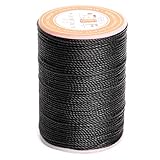
8. FANDOL Waxed Polyester Cord Wax-Coated Strings Waterproof Round Wax Coated Thread for Braided Bracelets DIY Accessories or Leather Sewing (Black)
Overview:
FANDOL’s waxed polyester cord serves the DIY crafting and repair market with a generous 55-meter roll of 0.8mm black thread. This wax-coated string offers waterproof durability for jewelry making, leather sewing, and general equipment repairs. The polyester construction ensures tensile strength while the wax coating provides stiffness and water resistance for versatile applications across multiple crafting disciplines.
What Makes It Stand Out:
The extensive 55-meter length provides exceptional value for crafters undertaking numerous projects without frequent reordering. Its waterproof nature distinguishes it from standard polyester threads, making it suitable for outdoor gear repairs and beach jewelry that must withstand moisture. The easy flame-sealing feature creates clean, permanent knots without fraying—a practical advantage for bracelet makers. The 0.8mm diameter hits a versatile middle ground accommodating both delicate beadwork and sturdy leather stitching.
Value for Money:
This product offers remarkable economy for the quantity provided. Competing waxed cords typically come in 10-25 meter spools at similar price points. For hobbyists and professionals alike, the generous supply reduces per-project cost significantly. The multi-application versatility eliminates need for separate thread types, saving both money and storage space while simplifying toolkits.
Strengths and Weaknesses:
Strengths include generous length, waterproof performance, easy heat-sealing, durability, and wide application range from jewelry to leather repair. Weaknesses involve limited color options (black only mentioned), potential wax residue transfer during handling, and 0.8mm may prove too thick for fine beadwork or too thin for heavy-duty leather applications like saddle repair.
Bottom Line:
An essential supply for DIY enthusiasts, crafters, and leatherworkers seeking reliable, economical cord. FANDOL delivers practical performance and quantity that justifies purchase for anyone regularly creating braided items or repairing textile goods.
9. Elixir Strings, Acoustic Guitar Strings, Phosphor Bronze with NANOWEB Technology, Longest-Lasting Rich and Full Tone For Life with Comfortable Feel, 6 String Set, Medium 13-56

Overview:
Elixir’s medium gauge (13-56) phosphor bronze acoustic strings with NANOWEB coating set the industry benchmark for longevity. These strings promise rich, full-bodied tone that maintains its character through months of regular playing. Trusted by professionals worldwide, they combine American manufacturing excellence with proprietary protective technology for serious acoustic players who demand reliability and consistent performance.
What Makes It Stand Out:
NANOWEB Technology creates the thinnest effective coating in the industry, preserving natural string feel while maximizing protection against corrosion, sweat, and humidity. The complete string coverage ensures consistent tone across all six strings, preventing the common problem of dead uncoated plain strings. Elixir’s reputation among touring professionals validates their longevity claims—many report 3-5x longer life compared to uncoated strings. The medium gauge provides excellent projection and fullness for most acoustic body styles.
Value for Money:
While priced at a premium, the cost-per-use ratio strongly favors Elixir for frequent players. A $15-20 set lasting four months versus $6 sets requiring monthly replacement yields significant annual savings. The reduced restringing time and consistent recording tone add intangible value. For hobbyists playing occasionally, the investment may be harder to justify economically, but performance benefits remain.
Strengths and Weaknesses:
Strengths include unparalleled longevity, stable tuning, rich phosphor bronze tone, comfortable smooth feel, and professional endorsement. Weaknesses are premium pricing, coating may slightly dampen high-frequency overtones for purists, and medium gauge can be challenging for beginners or fingerstyle players preferring lighter tension.
Bottom Line:
The definitive choice for performing musicians and serious players prioritizing tone consistency and minimal maintenance. Despite higher upfront cost, Elixir NANOWEB strings deliver unmatched longevity that justifies every penny for those playing regularly.
Why Rust Is Your Guitar’s Worst Enemy on the Road
Corrosion doesn’t just kill tone—it fundamentally alters string geometry and tension. When iron alloys oxidize, the rust creates microscopic pits in the winding, disrupting the uniform mass distribution that keeps your intonation stable. On a two-month summer tour, uncoated strings can lose up to 30% of their tensile strength, making them prone to false intonation and premature breakage. The real kicker? This degradation accelerates exponentially in the 85-95°F temperature range common at outdoor venues, where your body’s sweat production increases by 50% and the relative humidity on stage can spike to 70% or higher.
The financial calculus is brutal. A guitarist playing 90-minute sets six nights a week might restring every 3-4 shows with unprotected strings. At $6-8 per set plus $30-40 per change if you’re paying a tech, you’re looking at nearly $500 in string costs over a 30-date tour. Coated strings, while pricier upfront, can stretch that interval to 12-15 shows, fundamentally changing your tour budget and reducing stage anxiety.
Understanding Coated Guitar String Technology
Coated strings aren’t simply dipped in plastic. The manufacturing process involves vapor deposition or electrochemical bonding that creates a sub-micron layer—often thinner than a human red blood cell—over every millimeter of the string’s surface. This isn’t just the outer winding; premium treatments encapsulate the core wire and the spaces between windings where moisture loves to hide.
The Science Behind Corrosion Resistance
The most effective coatings operate on two principles: hydrophobicity and galvanic isolation. Hydrophobic polymer chains literally repel water molecules, causing sweat to bead and roll off instead of penetrating the windings. Galvanic isolation prevents the electrochemical reaction between dissimilar metals in your strings and bridge hardware. When you break a sweat on stage, your body becomes an electrolyte, creating a battery effect that accelerates metal decomposition. Quality coatings interrupt this circuit.
How Coatings Affect Tone and Feel
Early coated strings suffered from mass loading—the coating added enough weight to dampen high-frequency overtones, creating that characteristic “dead” sound. Modern formulations use density-matched polymers that maintain the string’s original mass profile. The result? Frequency response curves within 1-2dB of uncoated strings in blind tests. Feel-wise, the best coatings create a smooth, almost silk-like texture that reduces finger noise by up to 40%, a blessing for players who rely on subtle dynamics and clean signal paths.
Key Features to Look for in Tour-Ready Strings
When evaluating strings for summer touring, prioritize these non-negotiable characteristics: UV stability (coatings can degrade under stage lights), temperature operating range (should withstand 40°F to 120°F without cracking), and sweat-specific formulation (pH-neutral resistance to the salts and acids in perspiration). Also examine the coating’s abrasion resistance—how many slides and bends before it wears through at the frets?
Corrosion-Proof vs. Corrosion-Resistant: What’s the Difference?
“Corrosion-proof” is marketing hyperbole. No string is immortal. What you’re seeking is “highly corrosion-resistant” with a measurable lifespan. Look for strings tested to ASTM B117 standards (salt spray testing) with ratings of 72+ hours. This industry benchmark simulates months of exposure in just days. Strings surviving 100+ hours in salt fog chambers will easily handle a six-week summer festival circuit.
Coating Materials Explained
Not all protective layers are created equal. The material science directly impacts both longevity and sonic character.
Polymer-Based Coatings
Polytetrafluoroethylene (PTFE) derivatives remain the gold standard for flexibility and chemical resistance. These fluoropolymers maintain integrity from -100°F to 500°F, making them virtually immune to stage conditions. Newer formulations use perfluoroalkoxy (PFA) polymers that bond more tenaciously to metal substrates, reducing flaking at bend points. The thickness typically ranges from 0.5 to 3 micrometers—any thicker and you lose sustain; any thinner and protection fails.
Nanotechnology-Enhanced Barriers
2026’s breakthrough technology involves silicon dioxide (SiO2) nanoparticles suspended in polymer matrices. These create a harder, more abrasion-resistant surface while maintaining transparency to magnetic fields. The nanoparticles fill microscopic gaps in the metal surface, creating a smoother profile that reduces friction and improves tuning stability. Lab tests show these nano-enhanced coatings extending string life by 300-400% compared to uncoated equivalents.
Hybrid Coating Systems
The most advanced strings now use dual-layer systems: a base layer of corrosion-inhibiting conversion coating (like chromate or phosphate) chemically bonded to the metal, topped with a hydrophobic polymer shield. This redundancy means even if the outer layer wears through at fret contact points, the underlying metal remains protected. Think of it as a string wearing chainmail under a raincoat.
String Core and Windings: The Foundation of Durability
A coating can’t save a poorly constructed foundation. The core-to-wrap interface is where most string failures initiate.
Hex Core vs. Round Core for Durability
Hexagonal cores grip the winding wire more securely, preventing the “gap corrosion” that occurs when round cores allow microscopic movement. This mechanical lock reduces the entry points for moisture and maintains consistent tension as the string ages. However, hex cores feel stiffer. For tour durability, the slight tension increase is worth the trade-off—your hands adapt within days, but your strings survive weeks.
Nickel-Plated vs. Pure Nickel Windings
Nickel-plated steel windings offer brighter tone and stronger magnetic output but are more susceptible to galvanic corrosion where the plating is thin. Pure nickel windings are more chemically stable and develop a desirable patina rather than destructive rust. For summer tours, consider nickel-plated strings with heavier plating (3-5 microns vs. the standard 1-2 microns) or opt for pure nickel if your amp and pickups can handle the slightly warmer output.
Gauge Selection for Touring Musicians
Thicker isn’t always tougher. While heavier gauges offer more metal to corrode before failure, they also create higher tension that stresses the coating at bend points.
Balancing Playability and Longevity
A .009-.042 set might feel effortless for shredding but lacks mass and the coating is proportionally thinner on each strand. Conversely, .011-.049 sets provide robust tone and coating durability but can cause hand fatigue over long sets. The sweet spot for most players is .010-.046, offering enough metal thickness for coating adhesion while maintaining bendability. The .010 high E provides sufficient tensile strength to resist breakage even when the coating wears at the second fret from constant bending.
Drop Tunings and Extended Range Considerations
If you’re tuning down to C# or lower, increase your gauge to maintain tension and coating integrity. Floppy strings flex more at the bridge saddle, creating coating stress points. For 7 and 8-string guitars, the lowest strings benefit most from coating technology—these massive windings trap moisture like sponges. Consider coated options for strings below .056 to prevent the mud buildup that deadens your low-end punch.
Tone Preservation: Myth vs. Reality
The old adage that coated strings kill high-end is outdated. Modern frequency analysis reveals that properly designed coated strings actually maintain treble response longer because the windings stay pristine. Uncoated strings begin losing harmonic content after 4-6 hours of playing; coated strings preserve their factory-fresh harmonic spectrum for 40+ hours. The perceived “dulling” is often just the absence of finger squeak and noise, which your ears interpret as less brightness. Record a DI track with fresh coated vs. fresh uncoated strings—you’ll find the coated set measures flatter across the spectrum, not darker.
Playability Factors That Matter on Stage
When your hands are cramping and the setlist demands a 12-bar bend, coating texture becomes critical.
String Slippery and Finger Noise
Hydrophobic coatings reduce friction by up to 30%, meaning less drag during fast position shifts. This slipperiness can feel alien at first—like playing on ice. Give yourself a week of rehearsal to adapt. The payoff is cleaner recordings from board tapes and fewer instances of finger noise overwhelming your solo boost. Some coatings are engineered with micro-texturing to provide grip without sacrificing speed.
Break-In Period Expectations
Quality coated strings reach optimal tone and stability within 2-3 hours of playing, faster than uncoated sets that need 4-6 hours to settle. The coating actually stabilizes the windings, reducing the “string stretch” phase. However, the tactile feel continues to improve for the first 10 hours as your finger oils mildly condition the polymer surface. Don’t judge them fresh out of the pack—play a full rehearsal before making a final assessment.
Environmental Challenges of Summer Touring
Your strings face a perfect storm: photodegradation from UV stage lights, thermal cycling from air-conditioned buses to 100°F stages, and chemical attack from sunscreen, insect repellent, and spilled drinks.
Humidity and Temperature Extremes
Polymer coatings have glass transition temperatures (Tg)—the point where they become brittle. Cheap coatings with Tg around 80°F will crack in summer heat. Premium formulations maintain flexibility to 150°F+. Cold is equally problematic. Strings left in a trailer overnight at 40°F then brought into a warm venue can condense moisture internally. The best coated strings include desiccant packaging and are vacuum-sealed to prevent pre-installation humidity absorption.
Sweat, Grime, and Stage Debris
Touring musicians’ sweat contains 3-5 times more sodium chloride and lactic acid than average due to dehydration and physical exertion. This super-sweat accelerates corrosion dramatically. Coatings must resist not just water but these concentrated electrolytes. Additionally, stage dust—composed of skin cells, pyrotechnic residue, and pollen—acts as an abrasive paste. A smooth, non-porous coating prevents this grime from embedding in the windings where it saws through metal fibers.
Maintenance Protocols for Maximum String Life
Even the best strings need support. Your habits can double or halve their effective lifespan.
Daily Habits That Make a Difference
Wipe down strings with a microfiber cloth after every set, using a gentle downward stroke that follows the winding direction. Avoid circular motions that can lift coating edges. Apply a string conditioner specifically formulated for polymer coatings—never use alcohol-based cleaners that can degrade the polymer. Store guitars in their cases with humidity control packs set to 45-50% RH, not in overhead bins or gear lockers where temperature swings are extreme.
Deep Cleaning Between Shows
Once a week, perform a “string bath”: loosen the strings and slide a coated-string cleaning tool underneath, running it the full length to remove buildup from the undersides where wiping can’t reach. For severe grime, a brief application of pH-neutral soap solution followed by immediate drying can restore brightness. Never boil coated strings—the heat destroys the polymer cross-linking and voids the protection.
Cost-Benefit Analysis for Professional Musicians
Let’s run the numbers. A premium coated set costs roughly 3x a standard set ($18 vs. $6). If it lasts 4x longer (conservative for summer touring), you’re already ahead. Factor in reduced tech time, fewer mid-show failures, and consistent tone that keeps your front-of-house engineer sane, and the ROI becomes obvious. For a 30-date tour, coated strings might cost $90 vs. $180+ for uncoated replacements. That’s $90 saved plus the intangible value of reliability.
Application-Specific Recommendations
Your string choice should reflect your primary use case. A studio musician has different priorities than a road warrior.
Live Performance Priorities
For stage, prioritize coating durability and breakage resistance over ultimate tone purity. A string that stays in tune and doesn’t snap during your signature bend is worth more than one with perfect harmonic overtones that dies by show five. Look for reinforced ball ends and tapered winding techniques that reduce stress concentration where 90% of breakages occur.
Recording Session Considerations
In the studio, tone transparency is paramount. Opt for thinner coatings (0.5-1 micron) that sacrifice some longevity for sonic honesty. Change them more frequently—every 3-4 days of tracking—and treat them as disposable tone tools rather than long-term investments. The coating’s noise reduction benefits are magnified in close-miked situations.
Common Misconceptions About Coated Strings
Myth: “Coated strings are just for beginners who don’t want to change strings.” Reality: Top-tier professionals use them specifically for tonal consistency across long tours. Myth: “The coating flakes off and ruins my frets.” Reality: Quality coatings bond at the molecular level; flaking indicates counterfeit or expired products. Myth: “They feel plastic and kill my vibrato.” Reality: Modern coatings are undetectable after the break-in period, and some players report improved vibrato control due to reduced friction.
Future Innovations: What to Expect in 2026
The next wave includes self-healing coatings that use micro-encapsulated polymers to fill scratches automatically. Early prototypes show 20% longer lifespan in abrasion tests. We’re also seeing graphene-enhanced coatings that are atomically thin yet impermeable, potentially offering uncoated feel with coated protection. Smart strings with embedded pH sensors that alert your phone when corrosion begins are in beta testing—imagine getting a notification that your G string will die in three shows, allowing preemptive changes. Finally, bio-based polymer coatings derived from plant oils promise identical performance with 60% lower environmental impact, crucial for eco-conscious touring acts.
Frequently Asked Questions
How long should coated strings last on a summer tour compared to uncoated strings?
On a typical summer tour with daily performances, quality coated strings should maintain tone and structural integrity for 12-15 shows, while uncoated strings often degrade significantly after 3-4 performances. Environmental factors like humidity and individual sweat chemistry can shift these numbers, but expect a 3-4x improvement in lifespan.
Will coated strings change my guitar’s setup or intonation?
Initially, no measurable difference exists. However, as coated strings age, they maintain their mass distribution better than uncoated strings, meaning your intonation stays stable longer. You may need slightly less frequent truss rod adjustments since coated strings are less prone to tension drift from corrosion.
Can I use coated strings with a floating tremolo system?
Absolutely, and they’re often superior. The reduced friction at the bridge saddles and nut improves tuning stability after dive bombs. The consistent tension over time means your tremolo’s balance point remains predictable, reducing the need for constant spring claw adjustments.
Do coated strings require a different playing technique?
There’s a 2-3 day adaptation period. The reduced friction may cause you to overshoot bends initially. Adjust your finger pressure slightly—coated strings require less force. Many players find their legato technique improves due to the slicker surface, but aggressive pick attack may need a minor adjustment to avoid unintended string movement.
Are there any pickup compatibility issues with coated strings?
Modern polymer coatings are magnetically transparent and won’t affect pickup output. However, some thick or metal-infused coatings can slightly alter inductance. In practice, any difference is below the threshold of human hearing and can be compensated with a 1/4-turn of your amp’s treble knob.
How do I know when coated strings are truly dead versus just needing cleaning?
Coated strings lose brightness gradually. If a thorough cleaning with a string tool restores clarity, they’re still viable. True death occurs when the coating has worn through at multiple frets and you feel roughness or see discoloration. If intonation becomes unstable or you notice tuning drift, the core is likely compromised.
Can I mix coated and uncoated strings on the same guitar?
Technically yes, but it’s not recommended. The different tension stability and corrosion rates create an imbalance. Your plain steel strings (typically uncoated) will die faster than the coated wound strings, leading to an uneven tonal palette. Some manufacturers offer coated plain strings specifically for mixed sets.
What’s the environmental impact of coated strings compared to traditional strings?
The manufacturing process is more energy-intensive, but the extended lifespan means fewer sets in landfills. A 2025 lifecycle analysis showed that one set of long-life coated strings has a lower total environmental impact than four sets of uncoated strings when factoring in manufacturing, packaging, and shipping. New bio-polymer coatings further improve this equation.
Do coated strings work for genres requiring extreme string bending like blues or metal?
Yes, but choose wisely. Opt for thinner coatings (1 micron or less) and round core construction for maximum flexibility. Some players in these genres prefer coated strings specifically for the reduced finger noise during high-gain solos and the ability to perform two-step bends without the string “grabbing” at the frets.
How should I store spare coated strings during summer tours?
Keep them in their original vacuum-sealed packaging until needed. Store the packages in a hard case with desiccant packs, away from direct sunlight and heat sources like amplifiers. Never leave spare strings in a vehicle—temperatures can exceed 150°F, causing premature polymer degradation. If a pack’s seal is broken, use those strings within two weeks.
See Also
- 10 Top Electric Guitar Strings for Blues Bending in 2026
- 10 Best Value Electric Guitar Strings Under $8 for Bedroom Players in 2026
- 10 Must-Have Coated Guitar Strings for Sweaty Players in 2026
- We Tested 30 Electric Strings—Here Are the 10 Best for Lead Guitar in 2026
- 10 Affordable Nylon Guitar Strings That Don’t Sacrifice Tone in 2026