Table of Contents
The modern recording landscape has fundamentally rewritten the rules for guitar tone. By 2026, the days of miking up a 4x12 cabinet in a treated room will be a deliberate artistic choice rather than a technical necessity. Modeling amplifiers have evolved from stage-friendly impersonators into sophisticated studio tools that rival—and often surpass—their analog ancestors in direct recording scenarios. But here’s the critical distinction: not every modeling amp that excels on stage translates seamlessly to your DAW.
Choosing the right modeling amp for direct recording requires understanding a different set of priorities. You’re not just evaluating how it sounds through a PA system; you’re scrutinizing digital audio conversion, latency performance, impulse response flexibility, and DAW integration. The market has fractured into distinct categories, with some units designed primarily for live use and others built from the ground up for studio supremacy. This guide cuts through the marketing noise to equip you with the technical framework and practical insights needed to identify a modeling amp that will serve as a true studio workhorse in 2026 and beyond.
Top 10 Modeling Guitar Amplifiers
Detailed Product Reviews
1. Fender Mustang LT25 Guitar Amp, 25-Watt Combo Amp, with 2-Year Warranty, 30 Preset Effects with USB Audio Interface for Recording

Overview: The Fender Mustang LT25 is a 25-watt solid-state combo amplifier designed specifically for entry-level players seeking versatility without complexity. Featuring an 8-inch Fender Special Design speaker and compact 12.75" x 14.5" x 8.25" dimensions, this amp delivers authentic Fender tone in a bedroom-friendly package. The 1.8-inch color display and intuitive control layout make navigation effortless, even for complete beginners.
What Makes It Stand Out: This amp distinguishes itself with 30 professionally crafted presets spanning multiple genres, from pristine cleans to high-gain metal tones. The integrated USB audio interface transforms the LT25 into a recording interface, allowing direct connection to DAW software without additional hardware. Fender’s two-year limited warranty provides exceptional peace of mind at this price point, reflecting the brand’s confidence in their build quality.
Value for Money: Priced competitively in the entry-level segment, the LT25 offers remarkable value by combining amplification, effects processing, and recording capability in one unit. Comparable setups requiring separate multi-effects pedals and audio interfaces would cost significantly more. The warranty and Fender’s resale value further enhance the investment.
Strengths and Weaknesses: Strengths: User-friendly interface; versatile preset library; USB recording capability; trusted brand heritage; robust warranty coverage. Weaknesses: 8-inch speaker lacks deep low-end projection; limited volume for live performance; preset editing requires menu navigation; no footswitch compatibility.
Bottom Line: The Mustang LT25 is an ideal choice for beginners wanting a future-proof practice amp that grows with their recording ambitions. While it won’t replace a gigging rig, its feature set and reliability make it a smart starting point.
2. Line 6 Spider V 20 MKII

Overview: The Line 6 Spider V 20 MKII represents the evolution of digital modeling amplifiers in a compact, affordable format. This 20-watt combo delivers Line 6’s renowned amp modeling through a full-range speaker system. With 16 onboard presets and straightforward tone-shaping controls, it caters to players wanting instant gratification without deep menu diving.
What Makes It Stand Out: The Spider V’s true differentiator is its free remote app, unlocking over 200 amplifier models and effects—essentially turning a budget amp into a professional-grade modeling station. The new Classic Speaker Mode enhances traditional amp feel, while three simultaneous effects plus independent reverb provide studio-level flexibility. The built-in tuner and tap-tempo function add practical performance tools.
Value for Money: This amp punches far above its weight class. The app integration provides access to tone libraries found in units costing three times as much. For bedroom players and recording hobbyists, it’s a complete solution that eliminates the need for separate effects processors.
Strengths and Weaknesses: Strengths: Extensive app-based tone library; simultaneous effects; intuitive controls; built-in tuner; speaker mode versatility. Weaknesses: Plastic construction feels less durable; limited onboard presets without app; smaller speaker compromises bass response; no USB audio output.
Bottom Line: Perfect for tech-savvy beginners and intermediate players, the Spider V 20 MKII offers unprecedented tonal variety. If you’re comfortable with smartphone integration, this amp delivers professional capabilities at an entry-level price.
3. Fender Champion II 25 Guitar Amp, 25 Watts, with 2-Year Warranty, Features 12 Built-In Effects Models

Overview: The Fender Champion II 25 strips away digital complexity to deliver pure, straightforward amplification for traditionalists. This 25-watt combo features an 8-inch Fender Special Design speaker and single-channel design focused on core tones. With 12 built-in effects models and various amp voicings, it prioritizes plug-and-play simplicity over menu-driven versatility.
What Makes It Stand Out: In an era of overwhelming digital options, the Champion II’s minimalist approach is refreshing. It focuses on Fender’s legendary clean tones and responsive overdrive, controlled through simple knobs rather than LCD screens. The amp voicings authentically replicate classic Fender circuits, providing genuine tube-like dynamics in a reliable solid-state package.
Value for Money: This amp competes directly with budget practice amplifiers while offering Fender’s unmatched clean tone pedigree. The two-year warranty and road-worthy construction ensure longevity. For players who value tone over features, it avoids the cost of unnecessary digital processing.
Strengths and Weaknesses: Strengths: Authentic Fender clean tones; dead-simple operation; durable construction; excellent pedal platform; no learning curve. Weaknesses: Limited preset storage; fewer effects than competitors; no USB connectivity; single channel restricts live flexibility; no headphone output mentioned.
Bottom Line: The Champion II 25 serves players seeking Fender’s signature sound without digital distractions. It’s a reliable workhorse for home practice and small jams, ideal for those who prefer twisting knobs to tapping screens.
4. Flatsons FBA-10 Guitar Amp, 10W Mini Electric Guitar Amplifier with Clean/Drive Channel, 6H Working, USB-C Rechargeable, 3.5mm Headphone/AUX Jack, Wireless Portable Amp for Indoor Practice, Traveling

Overview: The Flatsons FBA-10 redefines portable guitar amplification with its battery-powered, analog-design architecture. This 10-watt mini amp delivers pure analog tone through a compact 152x75x99mm chassis weighing just 580 grams. The USB-C rechargeable battery provides six hours of unplugged playing time, making it ideal for travel, street performance, and silent practice sessions.
What Makes It Stand Out: True analog circuitry in a portable format is rare, and the FBA-10 delivers natural, responsive tone without digital artifacts. Bluetooth 5.3 enables wireless backing tracks, while the dual Clean/Drive channels with Gain and Tone controls offer genuine tonal flexibility. The handcrafted two-tone woven grille adds vintage aesthetic appeal unmatched in this category.
Value for Money: For mobile musicians, this amp eliminates the need for multiple devices—combining amplifier, Bluetooth speaker, and headphone practice tool in one. Its competitive pricing undercuts larger brands’ portable options while offering longer battery life and superior wireless connectivity.
Strengths and Weaknesses: Strengths: True analog tone; 6-hour battery life; Bluetooth 5.3 streaming; ultra-portable; headphone/AUX flexibility; USB-C charging. Weaknesses: Unknown brand reliability; 10W limits volume; small speaker lacks fullness; no effects; no USB recording; build quality unproven long-term.
Bottom Line: The FBA-10 is a niche solution for guitarists prioritizing portability and analog tone. While not a primary amp, it’s an exceptional travel companion and practice tool for players wanting wireless freedom and authentic sound on the go.
5. Positive Grid Spark GO 5W Ultra-Portable Smart Guitar Amp, Headphone Amp & Bluetooth Speaker with Smart App for Electric Guitar, Acoustic or Bass

Overview: The Positive Grid Spark GO packs revolutionary AI technology into a 5-watt pocket-sized amplifier. Measuring smaller than a coffee cup, it delivers unexpectedly full tone through computational audio processing. With 33 amp models and 43 effects onboard, plus access to 50,000+ tones via ToneCloud, it’s a complete guitar ecosystem in miniature form.
What Makes It Stand Out: The Spark GO’s Auto Chords feature automatically analyzes and displays chords for any song in real-time, functioning as a personal music teacher. Smart Jam AI listens to your playing and generates complementary drum and bass tracks, creating an instant virtual band. This transforms practice from solitary repetition into interactive collaboration.
Value for Money: While pricier than traditional mini amps, the Spark GO justifies its cost through unique AI features and massive tone library. Comparable functionality would require separate apps, pedals, and processors costing far more. The 8-hour battery life and Bluetooth speaker capability add everyday utility.
Strengths and Weaknesses: Strengths: Groundbreaking AI features; vast ToneCloud library; compact portability; 8-hour battery; doubles as Bluetooth speaker; excellent app integration. Weaknesses: 5W limits practical gig use; app dependency; premium price for wattage; small speaker can’t replicate full-size amp feel; learning curve for advanced features.
Bottom Line: The Spark GO is perfect for tech-forward players seeking innovation over tradition. It’s an inspirational practice tool that makes learning interactive and fun, though traditionalists may prefer conventional amps with more power and simpler operation.
6. Fender Mustang LT50 Guitar Amp, 50 Watts, with 2-Year Warranty 30 Preset Effects with USB Audio Interface for Recording, 20Dx19.5Wx11.5H Inches, Black
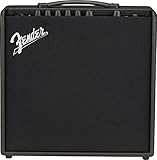
Overview: The Fender Mustang LT50 delivers 50 watts of versatile modeling power in a compact combo designed for serious practice and home recording. This amplifier combines Fender’s legendary build quality with modern digital flexibility, offering 30 preloaded presets spanning multiple genres. The integrated USB audio interface transforms it into a direct recording solution, eliminating the need for separate interfaces. Measuring 20x19.5x11.5 inches, it balances portability with substantial output suitable for small gigs and rehearsals.
What Makes It Stand Out: The USB recording interface sets the LT50 apart from competitors, enabling seamless DAW integration for silent recording. Its 25 onboard effects—including distortion, modulation, reverb, and delay—provide studio-grade tones without external pedals. The 30 presets offer instant access to iconic sounds, while the 2-year Fender warranty ensures long-term reliability. The 50-watt power section delivers clean headroom and dynamic response that smaller amps lack.
Value for Money: Priced competitively against other 50-watt modeling amps, the LT50 justifies its cost through the integrated USB interface alone—comparable standalone units cost $50-100. The comprehensive effects library and preset collection eliminate the need for additional gear, making it an all-in-one solution for home studios. While slightly pricier than entry-level models, the Fender badge and robust construction offer superior resale value.
Strengths and Weaknesses: Strengths include powerful 50-watt output, USB recording capability, extensive effects, and Fender’s reliable construction. The 2-year warranty provides peace of mind. Weaknesses involve potential feature overkill for casual players, and the digital interface may intimidate traditionalists. The amp lacks stereo output, limiting its spatial effects potential.
Bottom Line: Ideal for intermediate players seeking a practice amp that doubles as a recording interface. The LT50 excels in home studios where versatility and quality matter more than tube authenticity.
7. Fender Mustang LT40S Guitar Amplifier, with 2-Year Warranty

Overview: The Mustang LT40S positions itself as Fender’s compact desktop solution for home practice and jamming, delivering 40 watts of stereo power in a space-saving format. This amplifier shares DNA with its LT50 sibling but optimizes for intimate playing environments. With 20 amp models and 25 effects, it covers vast tonal territory from pristine cleans to high-gain metal. The 30 presets provide immediate gratification for players exploring different genres without menu-diving complexity.
What Makes It Stand Out: Stereo power distinguishes the LT40S from most practice amps, creating immersive soundscapes that enhance modulation and delay effects. Its desktop-friendly footprint fits seamlessly into modern living spaces where traditional amp shapes feel obtrusive. The identical preset library to the LT50 ensures no creative compromise despite the smaller size. Fender’s 2-year warranty backs the solid-state reliability.
Value for Money: The LT40S occupies a sweet spot between entry-level models and professional gear. While lacking the LT50’s USB recording interface, its stereo architecture justifies the price premium over basic 20-watt amps. For home players not requiring direct recording, it offers 80% of the LT50’s functionality at a reduced cost. The compact design saves space without sacrificing tonal options.
Strengths and Weaknesses: Strengths include stereo output, compact desktop design, extensive amp models, and trusted Fender quality. The 40-watt power is ample for home use. Weaknesses include the absence of USB connectivity, limiting its recording appeal. The stereo advantage requires proper speaker placement to fully appreciate. Some may find the digital character less inspiring than tube amps.
Bottom Line: Perfect for apartment dwellers and serious hobbyists prioritizing space efficiency and stereo effects. The LT40S excels when playing for pleasure, not production.
8. SONICAKE 10W BT Guitar Amplifier, Multi-effect Digital Modeling Speakers with APP, Portable Desktop All-in-one Guitar Amp with 80 Effects 100 Preset for Bedroom Practice, OTG AMPCUBE QAM-20

Overview: The SONICAKE AMPCUBE QAM-20 redefines portable amplification with its 1.4kg chassis and comprehensive digital architecture. This 10-watt desktop amp targets bedroom players seeking maximum versatility in minimal space. Bluetooth 5.0 and USB connectivity enable app-based editing and recording, while the built-in battery liberates players from wall outlets. With 80 effects and 100 presets, it surpasses many full-sized competitors in tonal options despite its 3-inch speaker size.
What Makes It Stand Out: Unprecedented portability combined with professional-grade effect count makes this a travel-friendly powerhouse. The app integration allows deep parameter editing impossible through hardware controls alone. USB recording and Bluetooth audio streaming transform it into a multimedia hub for practice and content creation. Battery operation provides true grab-and-go flexibility for street performance or couch sessions.
Value for Money: Exceptional value proposition—competing amps with similar effect counts cost twice as much. The inclusion of Bluetooth, USB, and battery power at this price point creates an unbeatable feature-to-cost ratio. While the 10-watt output limits gigging utility, bedroom players receive capabilities exceeding their needs. It’s a budget-friendly alternative to premium desktop amps.
Strengths and Weaknesses: Strengths include extreme portability, massive effects library, app control, battery power, and affordability. The built-in tuner adds convenience. Weaknesses involve limited volume headroom, small speaker compromising low-end response, and lesser brand recognition affecting resale. Build quality may not match established competitors.
Bottom Line: A no-brainer for budget-conscious players prioritizing features over brand prestige. The AMPCUBE excels as a practice tool for apartment living and mobile musicians.
9. Yamaha THR5 10-Watt Desktop Guitar Combo Amp

Overview: Yamaha’s THR5 revolutionized the desktop amp concept by merging guitar amplification with hi-fi audio principles. This 10-watt combo employs Virtual Circuitry Modeling (VCM) technology to authentically replicate five classic amp voicings. Developed with Yamaha’s AV division, it delivers true stereo sound through custom-designed speakers, creating an audiophile experience for guitarists. Battery or AC power options enhance its portability, while the minimalist design complements modern décor.
What Makes It Stand Out: The hi-fi approach produces room-filling tone that transcends traditional amp limitations, making it ideal for extended listening sessions. VCM technology captures nuanced tube behavior rarely achieved in digital amps this size. Yamaha’s engineering pedigree ensures exceptional component quality and reliability. The amp doubles as a USB audio interface, seamlessly integrating with recording setups.
Value for Money: Positioned as a premium practice amp, the THR5 commands a higher price than basic models but delivers superior sonic fidelity. Its recording capability and exceptional sound quality justify the investment for serious hobbyists. While effect options are limited compared to competitors, the core tone quality surpasses most. It represents long-term value through durable construction and timeless design.
Strengths and Weaknesses: Strengths include stunning audio quality, authentic amp modeling, stereo imaging, premium build, and brand reliability. USB recording adds versatility. Weaknesses include limited amp models (only five), minimal effects, and higher cost-per-feature ratio. The 10-watt rating may mislead those expecting traditional amp loudness.
Bottom Line: Best suited for tone purists and recording enthusiasts who value quality over quantity. The THR5 remains the benchmark for desktop amp audio fidelity.
10. Marshall Amps Guitar Combo Amplifier (M-MG10G-U)

Overview: The Marshall MG10G represents the iconic brand’s entry-level offering, delivering no-frills practice amplification in a compact package. This 10-watt combo carries Marshall’s legendary aesthetic and fundamental rock tone DNA. While feature details are minimal in the listing, the MG series traditionally provides clean and overdrive channels, basic tone controls, and a single custom speaker. It serves as an accessible gateway to the Marshall sound for beginners and budget-conscious players.
What Makes It Stand Out: The Marshall badge itself is the primary differentiator, offering aspirational brand value at an entry-level price point. The classic Marshall styling provides authentic visual appeal that budget competitors cannot replicate. Its straightforward operation eliminates learning curves, allowing immediate focus on playing rather than programming. The MG series’ reputation for reliability continues here.
Value for Money: As one of the most affordable Marshall amps available, it delivers brand prestige and acceptable tone for minimal investment. While lacking digital effects and USB connectivity found in similarly priced competitors, the analog simplicity ensures durability and immediate usability. For players specifically seeking Marshall crunch on a budget, alternatives cannot match its brand authenticity.
Strengths and Weaknesses: Strengths include iconic Marshall branding, simple operation, dependable construction, and genuine rock tone. The compact size suits small spaces. Weaknesses involve minimal features (no effects, no USB), limited tonal versatility, and lower fidelity compared to digital modeling amps. The 10-watt output restricts it to bedroom practice only.
Bottom Line: Perfect for beginners craving the Marshall experience without complexity. Choose this for brand loyalty and simplicity, not feature richness.
Understanding Direct Recording vs. Live Amplification
The fundamental difference between stage and studio modeling amps lies in their signal path optimization. Live units prioritize real-time feel and interaction with physical speakers, often sacrificing pristine DI quality for robustness and stage-ready features. Studio-focused modelers invert this priority, treating the digital output as the primary signal rather than an afterthought.
The Shift from Stage to Studio-Centric Design
In 2026, manufacturers have largely abandoned the one-size-fits-all approach. Studio-centric modeling amps feature dedicated direct-recording circuitry that bypasses unnecessary power amp simulation when sending signal to your interface. This isn’t just a software toggle—it’s a hardware design philosophy. Look for units with isolated transformer-balanced XLR outputs and dedicated ground lift switches specifically engineered for interface connectivity. The presence of word clock input options often indicates a device built for digital studio integration rather than stage convenience.
Why “Direct” Matters for Modern Producers
Direct recording isn’t merely about eliminating microphones; it’s about capturing a controlled, repeatable signal that sits perfectly in a mix without extensive post-processing. A true direct-recording modeler provides a post-effects, pre-power amp signal that integrates with your DAW’s re-amping workflow. This means the unit must maintain consistent digital clocking, avoid introducing unwanted coloration, and preserve transient response in ways that live-oriented units simply aren’t designed to do.
Key Digital Audio Technologies in 2026
The modeling amp landscape in 2026 revolves around several non-negotiable digital technologies that separate professional tools from consumer gadgets. Understanding these underlying architectures will prevent you from investing in obsolete platforms.
Impulse Response (IR) Quality and Flexibility
Impulse response technology has become the bedrock of convincing direct tone, but not all IR implementations are equal. Focus on units offering at least 2048-sample IRs with minimal fade-out truncation. The critical spec is user-loadable IR support—can you import third-party IRs via USB or Wi-Fi, or are you locked into the manufacturer’s ecosystem? Advanced units now support blended IRs with adjustable microphone phase alignment and proximity controls that function independently of the amp model, giving you the same flexibility as a multi-mic setup in a world-class studio.
Amp Modeling Algorithms and DSP Architecture
The difference between 2026’s state-of-the-art and previous generations lies in component-level modeling versus circuit emulation. Modern DSPs run algorithms that simulate individual capacitors, resistors, and transformer saturation in real-time, rather than simply approximating the final sound. Look for terms like “dynamic circuit response” and “voltage sag modeling” in technical specifications. The DSP chip itself matters—next-generation ARM-based processors with dedicated neural processing units (NPUs) can handle more complex non-linear equations, resulting in more authentic touch sensitivity and harmonic content when recorded directly.
Cabinet Simulation vs. Third-Party IR Support
While built-in cabinet simulations have improved dramatically, the ability to bypass them entirely remains crucial. A professional direct-recording amp should allow you to disable its internal cab sim while still utilizing its power amp modeling. This hybrid approach lets you pair the amp’s authentic tube power stage emulation with your favorite third-party IRs in your DAW, providing sonic flexibility that all-in-one solutions can’t match. Check for a “cabinet off” or “pre-cab” output mode in the technical documentation.
Essential Connectivity for Seamless Integration
Your modeling amp’s connectivity suite determines how gracefully it integrates into existing studio workflows. In 2026, connectivity options have expanded beyond simple USB audio.
USB-C Audio Interface Capabilities
USB-C connectivity is now standard, but implementation varies wildly. Prioritize units that function as multi-channel audio interfaces, not just stereo devices. The gold standard provides at least four simultaneous audio streams: a stereo processed signal, a dry DI signal for re-amping, and a separate stereo effects loop return. Verify driver support for your operating system—ASIO 2.4 compliance on Windows and Core Audio certification on macOS are non-negotiable for low-latency performance. USB 3.2 Gen 1 bandwidth ensures adequate headroom for high-sample-rate recording without compression artifacts.
XLR Direct Outputs and Grounding Solutions
Balanced XLR outputs remain the most reliable connection method for professional interfaces, but the devil is in the details. Seek units with transformer-isolated outputs featuring dedicated ground lift switches and pad controls (-10dB to -20dB). This prevents ground loop hum when connecting to studio gear and allows proper gain staging with professional line-level inputs. Some 2026 models include automatic impedance detection that adjusts output levels based on whether you’re connecting to a mic preamp or line input—this seemingly small feature eliminates hours of troubleshooting.
Digital I/O: SPDIF, AES/EBU, and Ethernet Audio
For the ultimate in digital purity, bypass analog conversion entirely. SPDIF coaxial and AES/EBU XLR digital outputs maintain a pure digital signal path from the modeling amp’s DSP directly to your interface. This eliminates potential coloration from the unit’s DACs and your interface’s ADCs. Emerging in 2026, Ethernet audio connectivity (AES67 or Dante) offers multi-channel, ultra-low-latency digital audio over standard network infrastructure—ideal for complex routing scenarios and remote session work where the amp lives in a live room while you mix in the control room.
Latency: The Silent Studio Killer
Latency can transform an inspiring recording session into a frustrating, unplayable experience. When evaluating modeling amps for direct recording, latency specs deserve more scrutiny than amp model count.
Understanding Round-Trip Latency Specs
Manufacturers often quote misleading latency figures that only account for analog-to-digital conversion, ignoring the complete signal path. True round-trip latency includes analog input buffering, DSP processing, digital output buffering, and your DAW’s buffer setting. In 2026, professional units achieve sub-3ms round-trip latency at 96kHz with a 32-sample buffer. Be skeptical of units that don’t publish round-trip specs—the omission usually indicates poor performance. Test the unit yourself by recording a click track through the amp and measuring the delay in your DAW.
Buffer Settings and Your DAW Workflow
The interaction between your modeling amp’s internal buffer and your DAW’s audio buffer can create unexpected latency spikes. Advanced units feature buffer size synchronization, automatically matching the DAW’s buffer to prevent double-buffering delays. This is particularly crucial when using the amp as your audio interface. Look for adjustable block sizes in the unit’s driver control panel—being able to drop to 16 or 32 samples for tracking, then increase to 1024 for mixing without reconfiguring the hardware, streamlines your workflow dramatically.
Software Ecosystem and DAW Integration
Hardware specs tell only half the story. The software ecosystem surrounding your modeling amp determines long-term usability and integration depth.
Standalone Editor Software vs. Plugin Control
In 2026, the best modeling amps function as both standalone hardware and native plugins within your DAW. This dual-mode operation lets you dial in tones with the physical controls, then automate parameters via the plugin during mixdown. The plugin should support AAX, VST3, and AU formats with full parameter automation and recall. Crucially, verify that the plugin can operate without the hardware connected—this allows re-amping and editing sessions when the amp is being used elsewhere. Cloud-based preset synchronization across hardware and software instances has become a differentiating feature, letting you capture ideas on the hardware unit and refine them in the plugin later.
Preset Management Across Sessions
Professional recording involves hundreds of presets tied to specific songs and sessions. Evaluate the amp’s preset management system—does it support nested folders, tagging, and metadata searching? Can you export entire preset libraries as single files for backup and version control? The ability to embed presets directly into DAW project files ensures that recalling a session six months later reproduces the exact tone, even if the hardware settings have changed. Some 2026 platforms now integrate with studio management software like SoundFlow or Stream Deck, enabling macro-based preset switching that accelerates workflow efficiency.
Sound Quality Factors Beyond Marketing Hype
Marketing materials bombard you with impressive-sounding specs, but several underlying technical factors truly determine recording quality.
Bit Depth and Sample Rate Support
While 24-bit/96kHz has become the baseline, 2026’s premium units support 32-bit float recording at 192kHz. This isn’t just spec-chasing—32-bit float provides essentially unlimited headroom, preventing digital clipping during tracking and allowing level adjustments in post without degradation. More importantly, verify that the DSP processes internally at high bit depths. Units that process at 32-bit or higher maintain signal integrity through complex effects chains, while those that truncate to 24-bit between each effect stage accumulate noise and lose resolution.
Dynamic Range and Noise Floor Performance
A modeling amp’s dynamic range specification reveals its true recording quality. Professional units achieve >110dB dynamic range (A-weighted) with noise floors below -90dBu. This matters because direct recording captures every nuance without the masking effect of a physical cabinet’s ambient noise. Test this by recording silence with maximum gain settings—what you hear is the unit’s inherent noise floor. High-quality units exhibit a smooth, uniform hiss that sits benignly in a mix; poor implementations produce digital artifacts, clock noise, or cyclical interference that ruins quiet passages.
DSP Power: Headroom for Complex Signal Chains
Your tone is only as good as the DSP’s ability to handle complex signal chains without compromise. In 2026, amp modeling has become just one element in elaborate processing networks.
Mono vs. Stereo Processing Power
Many units boast impressive polyphony for guitar synth sounds but stumble when processing stereo effects post-amp. Verify that the DSP allocation is symmetrical—can you run dual amp rigs with independent stereo reverb and delay tails without voice-stealing or quality reduction? The spec to investigate is “stereo processing headroom” or “dual-path DSP utilization.” Units with dedicated DSP cores per channel maintain consistent latency and quality in stereo, while shared-DSP designs may drop to lower oversampling rates when processing stereo signals.
User Interface: Balancing Depth with Speed
In a recording environment, you need to dial in tones quickly without menu-diving, yet access deep parameters when crafting signature sounds.
Hardware Controls vs. Touchscreen Workflow
Physical knobs and switches provide tactile feedback essential for creative flow, but touchscreens offer visualization of signal flow and parameter curves that hardware can’t match. The ideal 2026 modeling amp hybridizes both—motorized faders and encoders that update their position when presets load, complemented by a high-resolution touchscreen for deep editing. Evaluate the screen’s refresh rate and touch latency; sub-100ms response times feel immediate, while slower screens create a disconnect between adjustment and auditory feedback. Gesture support (pinch-to-zoom on EQ curves, swipe navigation) has become standard on premium units and dramatically accelerates editing speed.
Genre-Specific Considerations
Different musical genres place unique demands on direct-recording modelers. Your choice should align with your primary sonic landscape.
High-Gain Tightness and Low-End Response
Modern metal and progressive genres require exceptional low-end clarity and note separation when recorded direct. Evaluate how the modeling amp handles palm-muted chugs and fast arpeggios—does the low end remain tight and focused, or bloom into mush? The key parameter is the amp model’s “resonance” or “thump” control independence from the cabinet simulation. Advanced units separate power amp resonance from cabinet low-end response, letting you achieve tight, modern metal tones without sacrificing body. Test this by recording DI tracks with sustained low notes and analyzing the waveform for consistent amplitude versus drooping sustain.
Clean Headroom and Pedal Platform Behavior
For jazz, country, and ambient players, the modeling amp must function as a pristine pedal platform. This requires exceptionally clean preamp modeling with high input impedance (1MΩ minimum) and ample headroom before digital clipping. The unit should respond to overdrive pedals with the same dynamics as a vintage tube amp, meaning the DSP must model not just the circuit but the interaction between pedal output impedance and amp input stage. Check for adjustable input impedance settings—this allows optimizing the front end for vintage fuzzes (low impedance) versus modern buffers (high impedance).
Future-Proofing Your 2026 Investment
Technology evolves rapidly, and your modeling amp should remain relevant through firmware updates and expandable architectures.
Firmware Update Policies and Community Support
Investigate the manufacturer’s track record for firmware updates. Do they add features years after release, or merely fix bugs? The best companies publish detailed release notes and maintain active beta programs. Community support via user forums and third-party preset marketplaces indicates a healthy ecosystem. In 2026, some manufacturers have adopted open-source IR formats and published DSP development kits, enabling third-party amp model creation that extends hardware longevity indefinitely.
Expandability Through Cloud Services
Cloud connectivity has matured from gimmick to genuine utility. Premium units now offer cloud-based IR libraries, AI-powered tone matching services, and collaborative preset sharing. The key question: can you access these services without a subscription fee? Evaluate whether the cloud features require ongoing payments or if they’re included in the purchase price. Additionally, verify offline functionality—will the unit operate fully if the manufacturer discontinues the cloud service? True professional gear remains fully functional regardless of internet connectivity.
Price Tiers and Value Proposition
Budget constraints are real, but direct recording quality follows a non-linear price curve where strategic investments yield disproportionate returns.
Budget-Conscious Options Without Compromise
Sub-$500 modeling amps in 2026 can deliver professional direct recording quality if you prioritize correctly. Focus on units with excellent core amp modeling and USB audio interface functionality, even if they lack extensive effects. The critical compromise to avoid is limited sample rate support or high noise floors. Many budget options achieve impressive DSP quality by omitting expensive hardware controls in favor of app-based editing—acceptable for studio use where you’re already at your computer. The value proposition hinges on whether the unit supports third-party IRs; this single feature can elevate a budget model’s cabinet simulation from mediocre to mix-ready.
Premium Features That Justify the Cost
Above $1500, you’re paying for workflow acceleration, not just better tone. Premium features include multi-channel USB audio with re-amping loops, Dante networking for large facilities, motorized controls with DAW automation, and 32-bit float processing throughout. The justification comes from time saved—if a $2000 unit saves you 30 minutes per session in setup and troubleshooting, it pays for itself within months of heavy use. Additionally, premium units often include professional support channels with guaranteed response times, crucial when the gear is central to your income.
Frequently Asked Questions
1. Can I use any modeling amp for direct recording, or do I need a studio-specific model?
While most modern modeling amps offer direct outputs, studio-specific models feature isolated digital audio paths, lower noise floors, and driver architectures optimized for DAW integration. Live models often compromise on these aspects to prioritize stage durability and simplicity.
2. What’s more important: amp model count or IR flexibility?
IR flexibility overwhelmingly wins for direct recording. A single great amp model paired with professional IRs yields infinitely more usable tones than 100 amp models with mediocre cabinet simulation. Third-party IR support fundamentally determines long-term value.
3. How do I test latency before buying if I can’t try the unit in person?
Request the manufacturer provide round-trip latency specs at specific buffer sizes (32, 64, 128 samples) and sample rates. Cross-reference user reports in professional audio forums. Many retailers now offer 30-day return policies specifically for digital gear—take advantage of this to perform real-world latency tests in your own studio environment.
4. Is 32-bit float recording worth the extra cost in 2026?
For direct recording, absolutely. 32-bit float eliminates digital clipping during tracking and provides unlimited headroom for level adjustments in post. This is particularly valuable when recording dynamic performances where peaks are unpredictable. The cost premium has dropped significantly, making it accessible even in mid-tier units.
5. Should I record with effects from the modeling amp or add them in the DAW?
Record both simultaneously using multi-channel USB. Send a stereo processed track with effects and a dry DI track to separate DAW channels. This gives you the creative inspiration of playing through effects while maintaining the flexibility to re-amp or modify effects during mixing. Never commit to wet-only recordings unless you’re certain of the sound.
6. How do I avoid ground loop hum when connecting my modeling amp to my interface?
Use transformer-isolated XLR outputs with the ground lift engaged. If using USB audio, connect the amp and computer to the same power conditioner or UPS. For persistent issues, invest in a USB isolator or use digital SPDIF/AES connections to eliminate analog ground paths entirely. Quality units include galvanic isolation in their design.
7. What’s the ideal sample rate for direct recording with modeling amps?
96kHz provides the sweet spot between fidelity and DSP efficiency. While 192kHz offers marginally better high-frequency response, it doubles your CPU load and file sizes with diminishing audible returns. Most professional IR libraries are captured at 96kHz, making it the de facto standard. Always record at the same sample rate your IRs were created at to avoid conversion artifacts.
8. Can modeling amps replicate the feel of playing through a real amp when recording direct?
Modern DSP with sub-3ms latency and component-level modeling convincingly replicates playing feel. The key is the amp’s input impedance matching and voltage sag modeling. High-end units now include “feel” parameters that adjust pick attack response and compression characteristics independent of tone, bridging the gap between digital and analog responsiveness.
9. How important is firmware update frequency when choosing a modeling amp?
Critical. The hardware is a static platform; firmware updates determine its evolution. Manufacturers with quarterly updates that add features, amp models, and workflow improvements demonstrate long-term commitment. Check update histories on company websites—consistent improvement over 3+ years indicates a product that will remain relevant.
10. Should I choose a modeling amp with built-in recording interface or use a separate audio interface?
All-in-one units simplify setup and guarantee optimized signal paths, but separate interfaces offer more flexibility for multi-instrument sessions. The deciding factor is the modeling amp’s interface quality—if it provides multi-channel recording, low latency, and reliable drivers, the convenience outweighs separate components. For complex studios with multiple musicians, a dedicated interface remains preferable.
See Also
- 10 Affordable Modeling Amps That Rival $2000 Rigs for Home Recording
- The 10 Most Versatile Modeling Amps for Cover Musicians in 2026
- 10 Budget Modeling Amps That Include 100+ Presets in 2026
- We Tested 50 Tube Guitar Amps—Here Are the 10 Best for Recording Studios in 2026
- 10 Premium Modeling Amps Worth the Splurge for Session Players in 2026