Table of Contents
The lights are dim, the crowd is buzzing with anticipation, and your name just got called—it’s your moment at the open-mic. But as you step up to the venue’s battered house microphone, you’re met with muffled sound and questionable hygiene. Every serious performer knows that owning your own vocal microphone isn’t just about audio quality; it’s about consistency, confidence, and controlling your artistic voice. In 2026, the landscape of budget-friendly vocal mics has evolved dramatically, offering open-mic warriors professional-grade features without the professional-grade price tag.
Whether you’re a singer-songwriter testing new material, a poet projecting intimate verses, or a comedian timing punchlines, the right microphone can transform your performance from forgettable to magnetic. This comprehensive guide walks you through everything you need to know about selecting the perfect budget vocal microphone for open-mic nights—no brand bias, no sponsored recommendations, just pure technical insight and practical wisdom to help you make an informed decision.
Top 10 Vocal Microphones For Open Mic
Detailed Product Reviews
1. Phenyx Pro Dynamic Vocal Microphone, Cardioid Microphone with 16.4 ft XLR Cable, Mic Clip, Storage Bag, Wired Handheld Mic for Singing, Stage, Studio, Karaoke (PM-25)

Overview: The Phenyx Pro PM-25 positions itself as a budget-conscious alternative to industry stalwarts, delivering a complete vocal solution for emerging performers and karaoke enthusiasts. This full-metal dynamic microphone arrives ready for action with a generous 16.4-foot XLR cable, mic clip, and protective storage bag, eliminating the need for immediate additional purchases.
What Makes It Stand Out: The PM-25 distinguishes itself through its exceptionally low 260Ω impedance, requiring less gain from mixers while maintaining robust output. Its cardioid pattern effectively rejects off-axis noise, while the internal foam windscreen tames plosives without external accessories. The comprehensive kit approach means users can unbox and perform immediately.
Value for Money: Priced significantly below the Shure SM58, the PM-25 includes essential accessories the SM58-LC lacks. For home studios, small venues, and karaoke setups, this represents substantial savings without sacrificing core functionality. The all-metal construction rivals premium brands, offering durability that budget competitors rarely match.
Strengths and Weaknesses: Pros: Complete accessory package; low impedance design; solid metal build; optimized vocal EQ curve; ready-to-use solution. Cons: Brand lacks Shure’s legacy; slightly lower sensitivity may require gain adjustment on some interfaces; resale value diminishes compared to established brands.
Bottom Line: An excellent entry-point microphone for vocalists seeking professional features without the premium price tag. The PM-25 delivers reliable performance for karaoke, small gigs, and home recording where budget constraints matter.
2. Shure SM58 Professional XLR Dynamic Vocal Microphone – Cardioid Mic for Live Performance, Studio Recording, Podcasting & Broadcasting (SM58-LC)

Overview: The SM58 needs no introduction—this microphone has defined live vocal performance for over fifty years. The SM58-LC variant provides the legendary capsule without a cable, assuming professionals already own preferred XLR cabling. Its spherical grille houses a meticulously engineered dynamic element tailored for speech and vocals.
What Makes It Stand Out: Decades of relentless reliability create unmatched trust. The uniform cardioid pattern maintains consistency across any venue, while the internal pneumatic shock mount dramatically reduces handling noise. The built-in pop filter eliminates plosives without external windscreens, and its steel-mesh grille withstands drops that destroy lesser microphones.
Value for Money: While commanding a premium price, the SM58 delivers ROI through indestructible construction and consistent performance that never requires replacement. Its universal acceptance means instant compatibility with any professional sound system worldwide, eliminating technical surprises during gigs.
Strengths and Weaknesses: Pros: Unmatched durability; industry-standard status; excellent resale value; consistent sound across units; minimal handling noise. Cons: Higher initial cost; LC version excludes cable; may be over-engineered for casual karaoke users; slightly colored midrange not ideal for studio purists.
Bottom Line: The definitive choice for serious performers and venues. If your livelihood depends on reliable vocal reproduction, the SM58 remains the undisputed champion worth every penny.
3. Bowens Dynamic Mic XLR – Wired Karaoke Microphone with 15ft Cable, Handheld Vocal Microphone for Singing, Dj, Podcasting, and PA Systems, Complete 7 Piece Microfono Kit

Overview: Bowens delivers an all-inclusive entry-level package targeting budget-conscious users who need immediate functionality. This seven-piece kit bundles a dynamic cardioid microphone with a 15-foot XLR cable, 1/4-inch adapter, foam windscreen, mic clip, cable tie, and carrying pouch. Designed for karaoke hosts, wedding DJs, and beginner podcasters, it eliminates compatibility guesswork while providing acceptable performance for speech and casual vocal applications.
What Makes It Stand Out: The included XLR-to-1/4" adapter dramatically expands connectivity options, allowing direct connection to consumer-grade speakers, guitar amps, and karaoke machines lacking professional XLR inputs. The reinforced metal body and steel mesh grille provide durability uncommon at this price point, while the 50Hz-15kHz frequency response captures the essential vocal range for intelligible reproduction.
Value for Money: This kit represents exceptional affordability, costing less than most standalone professional microphones while including accessories that would require separate purchases elsewhere. For occasional users, the convenience of a single-package solution outweighs sonic compromises, delivering functional vocal amplification for under $40.
Strengths and Weaknesses: Pros: Complete accessory bundle with adapter; versatile connectivity; budget-friendly pricing; adequate vocal clarity; decent 15-foot cable length. Cons: Limited 15kHz high-frequency extension reduces vocal airiness; brand lacks professional reputation; no on/off switch; may lack long-term roadworthiness for heavy touring.
Bottom Line: Ideal for casual users prioritizing convenience and affordability over audiophile refinement. The Bowens kit solves the “what else do I need” problem for occasional performers, karaoke enthusiasts, and event hosts who need functional gear without professional-grade investment.
4. Fifine Karaoke Microphone, Dynamic Vocal Microphone for Speaker, 6.35MM Wired Handheld Mic with On and Off Switch and 14.8ft Detachable Cable-K6

Overview: The Fifine K6 embraces karaoke specialization with a native 6.35mm (1/4-inch) connector that plugs directly into home audio systems, guitar amplifiers, and karaoke machines without adapters or interfaces. Its detachable 14.8-foot cable and integrated on/off switch prioritize user convenience for informal performances where simplicity trumps technical flexibility. This microphone targets non-technical users seeking immediate, hassle-free vocal amplification.
What Makes It Stand Out: The direct 1/4" connection eliminates the need for preamps, mixers, or audio interfaces, making this the simplest plug-and-play option for consumer-grade equipment. The on/off switch provides instant muting between songs or speakers—a practical feature absent from many professional mics. The 50Hz-18kHz frequency range captures vocal detail while the cardioid pattern reduces feedback in live situations.
Value for Money: Positioned as an ultra-affordable karaoke solution, the K6 costs less than most microphone cables. For users with 1/4" equipped speakers, it eliminates additional equipment expenses entirely, delivering functional vocal amplification with minimal investment and zero learning curve.
Strengths and Weaknesses: Pros: Direct 1/4" connectivity; integrated on/off switch; detachable cable; extremely affordable; easy operation for beginners. Cons: Limited to 1/4" devices (no XLR); unsuitable for professional mixing consoles; lower build quality than stage-ready mics; minimal resale value; not ideal for studio recording.
Bottom Line: Perfect for home karaoke enthusiasts and casual presenters using consumer audio equipment. The K6’s simplicity and direct connectivity make it ideal for non-technical users, but serious performers and studio engineers should invest in XLR-based alternatives.
5. Phenyx Pro Vocal Microphone, Supercardioid Dynamic Mic with 16.4 ft XLR Cable, Mic Clip, Storage Bag, Wired Handheld Microphone for Singing, Stage, Studio, Karaoke (PM-26S)
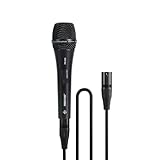
Overview: The PM-26S refines Phenyx Pro’s formula with a supercardioid polar pattern for enhanced isolation in challenging acoustic environments. Sharing the same robust metal construction and comprehensive accessory bundle as its sibling PM-25, this variant adds an on/off switch and tighter pickup pattern, targeting performers battling stage volume, monitor feedback, and ambient noise in loud venues.
What Makes It Stand Out: The supercardioid pattern provides superior side rejection compared to standard cardioid designs, crucial for rock vocalists and worship leaders surrounded by loud instruments. The integrated on/off switch enables quick muting between sets without adjusting mixer levels. Its 580Ω impedance and -50dB sensitivity deliver strong output while maintaining clean noise floor performance across various audio interfaces.
Value for Money: Slightly pricier than the PM-25, the premium buys meaningful upgrades for specific scenarios. For performers in high-volume settings, the enhanced feedback rejection and muting convenience justify the modest cost increase over standard cardioid alternatives, competing with microphones twice its price.
Strengths and Weaknesses: Pros: Superior side rejection minimizes feedback; convenient on/off switch; complete accessory package; solid full-metal construction; strong output level. Cons: Supercardioid pattern requires more precise mic technique; higher impedance demands quality preamps; less forgiving for moving vocalists; minimal brand recognition in professional circles.
Bottom Line: A smart upgrade for performers in high-volume settings where feedback suppression matters. The PM-26S delivers professional features at a fraction of legendary brand prices, making it a practical choice for working musicians on tight budgets who need reliable stage tools.
6. Pyle Professional Dynamic Vocal Microphone - Moving Coil Dynamic Cardioid Unidirectional Handheld Microphone with ON/OFF Switch Includes 15ft XLR Audio Cable to 1/4’’ Audio Connection - PDMIC59

Overview: The Pyle PDMIC59 positions itself as an entry-level workhorse for aspiring vocalists and musicians seeking professional form factor without premium pricing. This no-frills dynamic microphone delivers the essential cardioid pickup pattern and rugged construction that defines stage-ready gear, packaged with a serviceable 15-foot XLR-to-1/4" cable for immediate setup. Designed for bedroom studios, small venues, and rehearsal spaces, it prioritizes reliability over refinement.
What Makes It Stand Out: Its standout feature is the complete out-of-box readiness—unlike competitors requiring separate cable purchases, Pyle bundles everything needed for basic amplification. The zinc die-cast housing and steel mesh windscreen with anti-dent ring provide unexpected durability at this price tier, mimicking professional-grade build quality. The integrated on/off switch adds practical stage control rarely seen in budget microphones, while the ultra-wide frequency response claims transparency beyond typical entry-level specs.
Value for Money: Positioned in the sub-$30 category, the PDMIC59 delivers remarkable value for beginners testing the waters. While it won’t rival Shure’s clarity, it costs 80% less than industry standards, making it a low-risk investment for first-time performers. The included cable alone represents a $10-15 savings, effectively making the microphone itself cost less than a dinner out. For hobbyists and small church groups, this represents unbeatable economy.
Strengths and Weaknesses: Strengths include robust all-metal construction, complete accessory package, effective background noise rejection, and moisture resistance for reliable performance. Weaknesses manifest in slightly muddy midrange reproduction, lower sensitivity requiring more gain, and a somewhat harsh high-end that demands EQ adjustment. The 1/4" connection limits professional mixer integration compared to XLR-only setups.
Bottom Line: The Pyle PDMIC59 is an intelligent starting point for absolute beginners and budget-conscious users. It sacrifices sonic nuance for durability and completeness, but delivers functional performance where it counts. If you’re launching your first band or podcast on a shoestring, this microphone removes financial barriers while providing adequate quality for learning the ropes.
7. FIFINE USB/XLR Dynamic Microphone for Podcast Recording, PC Computer Gaming Streaming Mic with RGB Light, Mute Button, Headphones Jack, Desktop Stand, Vocal Mic for Singing YouTube-AmpliGame AM8

Overview: The FIFINE AM8 represents the modern hybrid microphone designed for content creators straddling the line between casual streaming and serious recording aspirations. This dual-mode dynamic microphone seamlessly transitions from plug-and-play USB operation for gaming and podcasting to professional XLR connectivity for studio-grade production. With integrated RGB lighting, tactile controls, and real-time monitoring, it targets the gaming community while offering legitimate recording capabilities.
What Makes It Stand Out: The AM8’s dual connectivity is its crown jewel—beginners can start with USB simplicity and graduate to XLR setups without purchasing new hardware. The customizable RGB ring with 10+ colors and memory function adds personality to streams, while the tap-to-mute button provides instant privacy protection independent of software. The headphone jack with volume control and gain knob offers real-time audio management typically reserved for higher-end interfaces, eliminating latency concerns during live broadcasts.
Value for Money: Priced in the $60-80 range, the AM8 delivers extraordinary feature density. Competing USB mics lack XLR upgrade paths, while entry-level XLR mics omit USB convenience and onboard controls. You’re effectively getting two microphones plus an audio interface in one chassis. For streamers and podcasters seeking future-proofing, this eliminates a $50-100 upgrade cost later, making it financially savvy.
Strengths and Weaknesses: Strengths include versatile connectivity, intuitive controls, attractive RGB customization, zero-latency monitoring, and solid noise rejection. Weaknesses include RGB and function keys disabling in XLR mode (limiting professional appeal), plastic construction feeling less robust than all-metal alternatives, and sensitivity requiring close 2-6 inch positioning that may constrain movement. The XLR performance, while decent, doesn’t match dedicated studio dynamics.
Bottom Line: The FIFINE AM8 excels as a creator’s first serious microphone, perfectly balancing gaming aesthetics with recording functionality. It’s ideal for streamers, YouTubers, and podcasters wanting professional upgrade paths without immediate complexity. While purists may prefer separate dedicated mics, this hybrid approach makes exceptional sense for budget-conscious creators planning to evolve their setup gradually.
8. Amazon Basics Dynamic Microphone - Professional Vocal Mic with Cable for Karaoke, Podcasting, Live Performance

Overview: Amazon Basics delivers its signature minimalist approach with this entry-level dynamic microphone, stripping away marketing fluff to provide fundamental vocal reproduction capability. This cardioid dynamic mic targets casual karaoke enthusiasts, beginning podcasters, and small venue presenters who need functional audio capture without complexity. The package includes an XLR-to-1/4" cable, emphasizing immediate usability over advanced features.
What Makes It Stand Out: Its primary distinction is brutal simplicity—there are no switches, no controls, no branding pretension. The spherical windscreen and pop filter integration shows attention to basic performance needs, while the zinc die-cast housing provides adequate durability for occasional use. Amazon’s ubiquitous distribution and hassle-free return policy offer unique purchasing confidence unmatched by niche brands. The microphone’s utter lack of frills means zero learning curve for absolute beginners.
Value for Money: Typically priced under $25, this represents the absolute floor for functional microphone hardware. You’re receiving a complete vocal chain for less than a restaurant meal, making it nearly disposable in cost terms. While build and sonic quality reflect the price point, it delivers the essential cardioid pattern and dynamic capsule that define the category. For temporary setups, children’s performances, or testing interest levels before investing seriously, the financial risk is negligible.
Strengths and Weaknesses: Strengths include unbeatable price, straightforward operation, acceptable noise rejection for quiet environments, and Amazon’s customer service backing. Weaknesses reveal themselves in thin, brittle sound quality lacking warmth, minimal gain before feedback compared to professional models, flimsy cable quality, and absence of any onboard controls or accessories beyond the basic cable. The steel mesh feels less robust than premium alternatives.
Bottom Line: The Amazon Basics microphone is a tool of last resort or first introduction—nothing more. It serves adequately for karaoke parties, classroom presentations, or podcasting experiments where audio fidelity takes a back seat to functionality. Serious creators should invest $20 more for significant quality jumps, but for its intended audience of curious beginners and casual users, it removes every barrier to entry except expectations of excellence.
9. Shure SM58 Pro XLR Dynamic Microphone with On/Off Switch - Professional Studio & Live Performance Cardioid Mic for Vocals, Podcasting, and Recording (SM58S)

Overview: The Shure SM58S isn’t just a microphone—it’s the global benchmark against which all vocal microphones are measured. This legendary dynamic microphone has defined live performance for decades, delivering the same tailored frequency response and bulletproof construction that professionals trust from clubs to stadiums. The “S” variant adds a recessed on/off switch, providing stage control while maintaining the identical capsule and circuitry that built the SM58’s reputation.
What Makes It Stand Out: Unmatched durability forms the SM58S’s foundation—this microphone survives drops, moisture, and decades of abuse while delivering consistent performance. The pneumatic shock mount system effectively reduces handling noise, while the spherical grille combines with an integrated pop filter to create the signature warm, present vocal tone that cuts through dense mixes. Shure’s quality control ensures every unit matches specification, creating predictable results across multiple microphones.
Value for Money: At approximately $100-110, the SM58S represents premium pricing but lifetime value. This microphone often lasts decades, amortizing its cost to pennies per use. Unlike budget alternatives requiring replacement every few years, the SM58S maintains resale value and remains serviceable. When vocal clarity, reliability, and professional credibility matter, no cheaper alternative suffices. It’s an investment that pays dividends in performance confidence and audio quality.
Strengths and Weaknesses: Strengths include indestructible construction, proven frequency response optimized for vocals, exceptional feedback rejection, minimal handling noise, and universal industry acceptance. Weaknesses are minimal but include higher upfront cost, requires quality XLR cables and preamps to shine, the on/off switch can accidentally engage if not recessed properly, and its focused midrange may require EQ for certain voices or instruments.
Bottom Line: The Shure SM58S is the only logical choice for serious performers, podcasters, and venues demanding professional results. While beginners may hesitate at the price, it eliminates upgrade cycles and delivers proven performance that budget mics cannot replicate. If your voice or reputation matters professionally, this microphone isn’t an expense—it’s essential equipment that earns its keep every time you plug it in.
10. Pyle 3 Piece Professional Dynamic Microphone Kit Cardioid Unidirectional Vocal Handheld MIC with Hard Carry Case & Bag, Holder/Clip & 26ft XLR Audio Cable to 1/4’’ Audio Connection (PDMICKT34),Black

Overview: The Pyle PDMICKT34 addresses the needs of groups and traveling performers by packaging three dynamic microphones into a comprehensive mobile system. This kit targets bands, small venues, conference organizers, and event companies requiring multiple vocal channels without multiplying costs. Each microphone mirrors the PDMIC59’s specifications—cardioid pattern, rugged metal construction, and integrated pop filters—while adding professional-length 26-foot cables and robust storage solutions.
What Makes It Stand Out: The complete ecosystem approach distinguishes this kit. The hard-shell carrying case with custom foam inserts protects three microphones, clips, and cables during transport, eliminating the need for separate purchases. The generous cable length accommodates larger stages and flexible positioning. Anti-dent rings on steel mesh grilles maintain appearance after repeated use. For ensembles, this single purchase solves multi-microphone needs instantly, something no single-mic competitor offers.
Value for Money: Priced around $70-80 for three complete microphone channels, the per-unit cost drops below $25—competitive with the cheapest functional microphones while including premium accessories. The case alone would retail for $30-40, making the microphones nearly free by comparison. For bands, karaoke hosts, or houses of worship needing reliable backup mics, this represents bulk purchasing power that individual buyers cannot match. The value multiplies for mobile applications requiring organized transport.
Strengths and Weaknesses: Strengths include exceptional cost-per-microphone, professional storage solution, lengthy cables, durable all-metal construction, and immediate multi-channel readiness. Weaknesses include the same sonic limitations as individual Pyle mics—slightly congested midrange and less refined high-frequency response compared to premium brands. The 1/4" connectors limit professional mixer integration, and the kit’s bulk makes it impractical for solo performers. Quality control may vary across three units.
Bottom Line: The Pyle PDMICKT34 is a pragmatic solution for groups prioritizing quantity and durability over audiophile perfection. It empowers bands, small venues, and event companies to mic multiple sources affordably while maintaining professional appearance and organization. Solo artists should invest in a single quality microphone instead, but for anyone regularly needing three vocal channels, this kit delivers practical value that individual purchases cannot touch.
Understanding Open-Mic Acoustic Challenges
The Unique Demands of Live Vocal Performance
Open-mic venues are notoriously unpredictable acoustic environments. One night you’re in a coffee shop with tile floors and harsh reflections; the next, you’re in a bar with carpeted walls and dead ambience. Your microphone becomes your first line of defense against these variables. Unlike studio recording, where you control every element, live performance demands a tool that can adapt to feedback-prone spaces, handle enthusiastic plosives, and cut through conversational crowd noise.
The ideal open-mic vocal mic must reject off-axis sound from monitors and amplifiers while maintaining vocal presence. It needs to survive transportation in gig bags, withstand occasional drops, and perform consistently whether you’re whispering a delicate ballad or belting a rock anthem. Understanding these environmental pressures helps you prioritize features over marketing hype.
Why Budget Doesn’t Mean Compromise in 2026
The audio industry has experienced a democratization revolution. Advanced manufacturing techniques, improved component availability, and fierce competition have blurred the lines between “budget” and “professional” tiers. In 2026, microphones under the $150 threshold often include features that were exclusive to $500+ models just five years ago: internal shock mounting, multi-stage pop filtering, and even digital connectivity options.
This shift means you’re no longer sacrificing durability or sound quality when shopping on a budget. Instead, you’re making strategic trade-offs between premium materials and smart engineering. The key is knowing which specifications genuinely impact your performance versus which are marketing fluff.
Key Microphone Specifications Decoded
Frequency Response: What Matters for Vocals
A microphone’s frequency response chart tells you how it colors different pitches, but reading it requires nuance. For open-mic vocals, look for a gentle presence boost between 3-6 kHz—this adds clarity and helps your voice sit above instrumentation without sounding harsh. Avoid exaggerated high-frequency spikes above 10 kHz, which can accentuate sibilance in untreated rooms.
The low-end response is equally critical. A gradual roll-off below 80 Hz reduces handling noise and stage rumble, while a slight proximity effect bump around 100-200 Hz can add warmth when you work the mic closely. Flat-response mics might sound “accurate” on paper, but they often require extensive EQ to compete in live settings.
Polar Patterns: Making the Right Choice
Cardioid remains the gold standard for open-mic scenarios, rejecting sound from the rear while capturing your voice from the front. However, not all cardioids are created equal. The tightness of the pattern—how quickly rejection happens off-axis—affects feedback resistance. Supercardioid patterns offer even tighter control but come with a rear lobe that requires careful monitor placement.
Some modern budget mics feature switchable polar patterns, giving you flexibility for different venues. This versatility can be invaluable if you also record at home or perform in duos. Just remember that omnidirectional patterns, while natural-sounding, are feedback magnets in most open-mic setups.
Sensitivity and SPL Handling Explained
Sensitivity measures how effectively a mic converts acoustic pressure to electrical signal. High-sensitivity mics capture subtle nuances but can overload in loud environments. For open-mic use, moderate sensitivity (around 2-4 mV/Pa) provides the best balance, ensuring your quiet passages register without distorting when you get passionate.
Maximum SPL (Sound Pressure Level) indicates how loud a source can get before distortion. Even if you’re not screaming, proximity effect can dramatically increase apparent volume. Look for mics rated above 140 dB SPL to handle any performance style comfortably.
Microphone Types for Open-Mic Performers
Dynamic vs. Condenser: The Eternal Debate
Dynamic microphones have long dominated live stages for good reason. Their rugged construction, natural feedback resistance, and minimal power requirements make them ideal for gigging musicians. The moving coil design handles high SPL effortlessly and rejects handling noise better than condensers.
Condenser mics, once considered too fragile and feedback-prone for budget live use, have evolved significantly. Modern electret condensers with internal battery power offer studio-like detail without requiring phantom power from sketchy venue mixers. They’re more sensitive to humidity and drops, but their extended high-frequency response can make vocals sparkle in dead-sounding rooms.
USB Microphones: Viable for Open-Mics?
The USB microphone market has exploded, but their relevance for open-mic nights remains limited. While they excel for home recording and streaming, most lack XLR outputs needed for professional PA systems. Some 2026 hybrid models now include both USB and XLR connectivity, offering dual-purpose value.
If you primarily perform at venues with digital mixers or portable PA systems that accept USB audio, these mics can simplify your setup dramatically. Just ensure they have zero-latency monitoring and analog gain control—features that prevent digital clipping and delayed feedback in your ears.
The Rise of Hybrid Digital/Analog Mics
The most exciting development in 2026 is the emergence of budget hybrid microphones with built-in DSP (Digital Signal Processing). These mics apply subtle compression, EQ, and de-essing before the signal even reaches the mixer. For open-mic performers without a dedicated sound engineer, this can mean the difference between a polished set and a shrill, uneven mess.
The trade-off is complexity. More features mean more potential failure points and a steeper learning curve. However, for tech-savvy performers, these intelligent mics represent a paradigm shift in what’s possible under $150.
Essential Features for Budget Vocal Mics
Build Quality and Durability Factors
A budget mic’s chassis material speaks volumes about its longevity. Zinc alloy bodies offer excellent strength-to-weight ratios, while all-metal construction ensures survival of repeated drops. Pay attention to the grille design—hardened steel mesh with multiple layers protects the capsule from plosive blasts and accidental impacts.
The shock mount system deserves scrutiny. Internal suspension reduces handling noise, but cheaper implementations can sag over time. Look for rubberized or silicone isolation points rather than simple spring mechanisms. The connector should be gold-plated to resist corrosion from humid bar environments.
Onboard Controls: When Less Is More
Pad switches (-10 dB or -20 dB) are invaluable for loud singers or when miking amplifiers. High-pass filters (80 Hz or 100 Hz roll-off) clean up low-end mud without requiring mixer adjustments. Some mics include presence boost toggles, but these often create more problems than they solve in untreated rooms.
Resist the temptation of mics with multiple switches unless you understand their impact. A simple, well-implemented high-pass filter is more useful than five esoteric pattern options you’ll never touch during a quick open-mic changeover.
Connectivity Options in 2026
XLR remains the universal standard, but connector quality varies dramatically. Neutrik-brand connectors signify professional-grade reliability, though several budget manufacturers now produce comparable clones. Locking mechanisms should engage positively without wobbling.
For performers using portable PA systems or busking setups, 1/4" TRS outputs offer convenience but sacrifice balanced signal integrity over long cable runs. The sweet spot for versatility is a mic with both XLR and TRS outputs, though these are rare in true budget categories.
Budget Considerations and Value Assessment
Defining “Budget” in the 2026 Market
The term “budget” has shifted significantly. In 2026, a sub-$100 mic competes with 2020’s $250 offerings, while the $100-150 range delivers features previously reserved for $400+ models. True budget mics under $50 exist but typically compromise on capsule quality or durability—acceptable for occasional use but frustrating for weekly performers.
Consider your performance frequency. A $120 mic used 50 times yearly costs $2.40 per use. A $60 mic that fails after 20 performances actually costs more in the long run. Budget should reflect value over time, not just purchase price.
Total Cost of Ownership
Your microphone investment extends beyond the initial purchase. Essential accessories include a quality XLR cable ($15-30), a sturdy stand clip ($10-20), and a cleaning kit ($5-10). Some budget mics include these, but bundled accessories are often low-quality replacements waiting to happen.
Factor in potential repairs. Mics with user-replaceable grilles and easily accessible capsules save money over factory service. Warranty terms matter too—two years should be the minimum expectation, with some manufacturers now offering limited lifetime coverage on mechanical parts.
Warranty and Support Factors
A generous warranty indicates manufacturer confidence. In 2026, leading budget mic companies offer 2-5 year warranties with straightforward RMA processes. Check user forums for real-world support experiences—some brands replace units quickly while others demand excessive proof of failure.
International support becomes crucial if you tour. Brands with global distribution networks can provide local service rather than requiring overseas shipping. This invisible factor often separates frustrating purchases from reliable long-term tools.
Sound Quality Factors on a Budget
Vocal Clarity vs. Character
Budget mics often force a choice: clinical clarity or colored character. Clarity-focused mics provide flat midrange response, letting your natural voice shine through. This works beautifully for spoken word, acoustic folk, and detailed vocal performances. However, they can sound sterile or reveal vocal imperfections.
Character mics intentionally boost certain frequencies, adding a “smile” to your voice. A gentle bump around 5 kHz adds air; a slight lift at 200 Hz adds warmth. For open-mic nights where you’re fighting chatter and poor acoustics, a mic with subtle character often cuts through more effectively than a “transparent” studio model.
Off-Axis Rejection Importance
How a microphone handles sound from the sides and rear determines its feedback resistance and isolation quality. Excellent off-axis rejection means the audience hears you, not the monitor squealing behind you. Test this by speaking into the mic from 90 degrees off-center—your voice should sound dramatically quieter and darker.
In 2026, some budget mics employ acoustic labyrinth designs in the grille that improve rejection without complex electronics. This mechanical approach proves more reliable than digital feedback suppression, which can create unnatural artifacts.
Proximity Effect Management
The bass boost that occurs when you work close to a cardioid mic can be a blessing or curse. Skilled performers use it for expressive effect, moving in for intimate passages and pulling back for belted notes. However, excessive proximity effect muddies your mix and emphasizes plosives.
Look for mics with gradual proximity effect buildup rather than abrupt changes. Some modern designs incorporate acoustic ports that naturally reduce extreme low-frequency buildup at close distances—perfect for performers who haven’t mastered mic technique yet.
Practical Performance Considerations
Feedback Resistance Strategies
Feedback destroys performances and confidence. Beyond polar pattern selection, internal damping materials in the mic body reduce resonant frequencies that trigger squeals. The grille’s acoustic properties also matter—multi-layer designs break up standing waves before they become problems.
Your mic technique dramatically impacts feedback. Mics with consistent polar patterns across frequencies maintain rejection even when you move slightly off-axis. Cheaper mics often show pattern narrowing at high frequencies, making them more feedback-prone when you tilt your head while performing.
Handling Noise Reduction
That thump when you grab the mic or set it down travels up the body and into the capsule. Modern budget mics combat this with internal floating suspension systems and ergonomic designs that encourage proper gripping away from sensitive electronics.
The material choice affects handling noise too. Heavier mics resist microphonic vibrations better than lightweight plastic models. Some designs incorporate rubberized grip zones that dampen hand noise while providing secure handling during energetic performances.
Windscreen and Pop Filter Necessity
Every open-mic performer needs a windscreen. Venue HVAC systems, audience movement, and your own breath create plosives that ruin recordings and distract audiences. Foam windscreens suffice for most situations, but they dull high frequencies slightly.
Metal mesh pop filters preserve clarity better but are bulkier. The ideal solution is a mic with an effective internal pop filter, supplemented by a removable foam cover for particularly windy or spitty performances. Replace foam screens regularly—they harbor bacteria and lose effectiveness when saturated with moisture.
Setup and Compatibility
Mixer and PA System Compatibility
Most open-mic venues run simple analog mixers with limited EQ. Your mic should sound good flat, without requiring drastic cuts or boosts. Mics with rising high-frequency responses can sound harsh on these systems, while overly dark mics disappear in the mix.
Digital mixers are increasingly common in 2026, often with auto-gain and preset libraries. Mics with consistent impedance and standard sensitivity work best with these automated systems. Avoid mics with extremely low output that forces the mixer into its noisy gain range.
Phantom Power Requirements
Condenser mics need phantom power (typically 48V), which most mixers provide—but not all. Battery-powered condensers offer independence but require monitoring battery levels. Some hybrid mics switch automatically between phantom and battery power, ensuring you never face a silent mic.
Dynamic mics need no power, making them plug-and-play reliable. For absolute peace of mind in venues with unknown equipment, dynamic remains the safest budget choice. However, modern phantom power circuits are robust, making condenser failure rare.
Cable Quality and Length
Your mic is only as good as its weakest link, and cheap cables are performance killers. Budget mics rarely include quality cables, so plan this additional investment. Star-quad cabling offers superior noise rejection for long runs in electrically noisy bar environments.
Cable length matters. Twenty-five feet covers most open-mic stages, but fifty feet provides flexibility for unusual setups. Always coil cables properly—tight kinks create internal fractures that cause intermittent failures mid-performance. Invest in a cable tester; it’s cheaper than replacing cables blindly.
Maintenance and Longevity
Cleaning and Sanitization Protocols
Shared microphones are germ factories. Owning your own mic eliminates this concern, but regular cleaning remains essential. Saliva, makeup, and beer spray accumulate on grilles and can migrate to the capsule. Weekly cleaning with isopropyl alcohol on the grille (never the capsule) prevents buildup.
UV sanitizing wands designed for microphones have become affordable in 2026, offering quick sterilization between sets. For deeper cleaning, removable grilles that can be soaked and dried are invaluable. Never submerge the entire mic, and always allow 24-hour drying time before use.
Storage and Transport Best Practices
Temperature extremes kill microphones. Leaving your mic in a car trunk on a summer day can melt internal adhesives; winter cold makes components brittle. Use a padded case with desiccant packets to control humidity. Hard cases offer better protection than soft pouches but add bulk.
Store mics vertically when possible. Horizontal storage can cause diaphragm sag over years, though this is less critical with modern materials. Detach cables during storage to prevent connector strain, and keep windscreens separate to avoid compressing the foam permanently.
Common Failure Points to Avoid
The most frequent budget mic failures involve connectors and grilles. Loose XLR pins cause intermittent signal loss; inspect them monthly and gently realign if needed. Stripped grille threads result from overtightening—finger-tight is sufficient.
Capsule contamination from moisture is another killer. Always allow your mic to air-dry after performances, especially in humid venues. Some performers keep silica gel packets in their mic cases to absorb residual moisture overnight. If your mic gets soaked (rain gig, spilled drink), remove the grille and let it dry vertically for 48 hours before powering up.
The Future of Budget Vocal Mics
Emerging Technologies in 2026
MEMS (Micro-Electro-Mechanical Systems) microphone technology, previously limited to smartphones, is entering the budget live sound market. These solid-state devices offer incredible durability and consistency, though traditionalists argue they lack the “air” of condenser capsules. Early implementations show promise for spoken word and acoustic vocals.
Wireless technology has become more affordable, but budget wireless mics still face interference challenges in crowded venues. The 2.4 GHz band is saturated; look for units operating in the 5 GHz range or using digital spread-spectrum technology that hops frequencies to avoid dropouts.
AI-Enhanced Features on the Horizon
Artificial intelligence is beginning to appear in budget mics as simple machine-learning algorithms that adapt to your vocal style over multiple performances. These systems subtly adjust EQ and compression based on your consistent tendencies—perhaps boosting your natural frequency dips or taming your habitual sibilance.
While exciting, these features raise concerns about reliability and artistic control. A mic that “learns” to process your voice might behave unpredictably when you intentionally change your style for a particular song. For 2026, treat AI features as helpful assistants, not replacements for solid technique.
Making Your Final Decision
Creating Your Personal Checklist
Before browsing, define your non-negotiables. Do you need absolute durability above all? Prioritize all-metal dynamics with simple electronics. Is vocal detail paramount? Accept the fragility trade-off of a condenser. Do you perform in multiple languages requiring crisp consonants? Focus on high-frequency response and pop filtering.
Rank these priorities: feedback resistance, sound character, build quality, weight, connectivity, and included accessories. Your top three should guide every decision. A mic that excels at your priorities but is mediocre elsewhere will serve you better than a jack-of-all-trades master of none.
Testing Mics Before Buying
Whenever possible, test mics in an environment similar to your typical venue. Music stores are often too quiet and acoustically treated. Ask to step into a live room or bring a portable speaker to simulate stage monitors. Record yourself on your phone from audience distance—this reveals how the mic translates in a room, not just through headphones.
Bring your own cable and test the connector fit. A loose connection in a store will only get worse with gigging. Check the weight and balance in your hand. A mic that feels awkward during a two-minute test will become painful during a twenty-minute set.
Community Recommendations and Reviews
Online reviews are useful but require context. A five-star review from a podcaster praising a mic’s “intimate detail” might indicate it’s too feedback-prone for live use. Search specifically for “live performance” or “open mic” in reviews. Pay attention to reviewers who mention their vocal style—baritone singers have different needs than sopranos.
Join local musician forums and ask about venue-specific challenges. A mic that works perfectly in your city’s acoustic coffee shops might fail miserably in its noisy bars. Community knowledge beats generic reviews every time, especially when it comes to reliability in real gigging conditions.
Frequently Asked Questions
What’s the realistic lifespan of a budget vocal microphone with regular open-mic use?
With proper care, a quality budget mic should last 5-7 years of weekly open-mic performances. The capsule typically outlives the connectors and grille. Replace foam windscreens annually, and budget for a professional connector replacement every 3-4 years if you gig frequently. Mics with user-serviceable parts extend this timeline indefinitely.
Can I use the same budget mic for both live performances and home recording?
Absolutely, but understand the trade-offs. Dynamic mics excel live but may lack the detail wanted for studio work. Condensers record beautifully but risk feedback on stage. A hybrid mic with both XLR and USB connectivity offers the best dual-purpose value, though it may cost slightly more. Consider your primary use case and compromise on the secondary application.
How do I know if a venue’s phantom power is safe for my condenser mic?
Most modern phantom power circuits are well-regulated and safe. However, older mixers can have voltage spikes. Bring a simple phantom power tester (under $20) to gigs. If voltage reads above 52V or below 44V, use your mic’s battery power option instead. Never plug a dynamic mic into a questionable phantom source—while unlikely, damage is possible.
Is it worth buying a wireless system for open-mic nights?
For most performers, no. Wireless adds complexity, requires battery management, and introduces interference risks. The freedom of movement rarely justifies the cost and potential failure points in a 10-15 minute open-mic slot. Invest in a quality cable and save wireless for full gigs where stage mobility is essential.
What’s the optimal microphone cable length for open-mic scenarios?
A 25-foot cable handles 90% of open-mic stages comfortably. Carry a 10-foot extension for cramped setups and a 50-foot cable for festival-style events. Longer cables pick up more electromagnetic interference, so choose star-quad design for runs over 30 feet. Always coil cables properly to prevent internal damage.
How can I reduce feedback without sacrificing vocal presence?
Position monitors slightly behind the mic’s rejection zone (130-150 degrees off-axis). Use the high-pass filter on your mic or mixer to cut frequencies below 80 Hz. Reduce monitor volume slightly and ask the sound person for a narrow 2-3 dB cut around the ringing frequency rather than broad EQ moves. A mic with tight cardioid pattern and good off-axis rejection is your best tool.
Should I prioritize sensitivity or SPL handling for my vocal style?
Loud, aggressive singers need high SPL handling (above 140 dB) to prevent distortion. Soft, intimate performers benefit from higher sensitivity to avoid pushing the mixer into noisy gain ranges. Most vocalists land in the middle—moderate sensitivity (2-4 mV/Pa) and SPL handling around 135 dB provides flexibility for dynamic performances.
What’s the best way to test a mic’s feedback resistance in a store?
Bring a small powered speaker and set it up behind the mic at a 45-degree angle, simulating a monitor. Gradually increase volume while speaking normally. The point where ringing begins indicates feedback threshold. Also, test off-axis by walking around the mic while speaking—your voice should drop off significantly at the sides and rear.
Are foam windscreens or metal pop filters better for live vocals?
Metal pop filters preserve high-frequency detail better and are more durable, but they’re bulky and can look intimidating. Foam windscreens are discreet and offer adequate protection for most performers. The ideal compromise is a mic with effective internal pop filtering, supplemented by a thin foam screen for especially plosive performances or outdoor gigs.
How do I clean my microphone without damaging the capsule?
Remove the grille and clean it separately with isopropyl alcohol and a soft brush. Never spray cleaner directly on the mic body. For the capsule area, use dry compressed air held at least six inches away. If moisture reaches the capsule, place the mic in a sealed bag with desiccant for 48 hours. Never use heat to dry a mic, as this can melt internal components.
See Also
- 10 Essential Vocal Microphones for Open-Mic Comedians in 2026
- 10 Budget Vocal Microphones Under $200 That Sound Pro in 2026
- 10 Best Vocal Microphones for Female Rock Singers in 2026
- 10 Feedback-Rejecting Vocal Microphones for Worship Leaders in 2026
- 10 Budget Ribbon Microphones for Lo-Fi Hip-Hop Producers in 2026