Table of Contents
There’s a peculiar magic that happens when you plug into a tube amp that just gets it. That spongy attack, the harmonic complexity that blooms under your fingers, the way chords breathe and single notes sing—it’s the sound that launched a thousand records. For years, guitarists were told this sonic nirvana required a mortgage payment, that boutique tone was reserved for those with four-figure budgets and secret waiting lists. But here’s what the gear elite don’t want you to know: the past decade has seen a quiet revolution in budget tube amp design, and today, $800 can buy you shockingly close to that hand-wired, custom-shop sound.
The secret isn’t in the price tag—it’s in understanding which corners can be cut without sacrificing tone, and which components are absolutely non-negotiable. Modern PCB construction, overseas manufacturing, and smart circuit design have democratized quality tube tone in ways that would make 1990s gear snobs weep. But navigating this landscape requires more than scrolling through spec sheets. It demands a fundamental understanding of what actually creates that coveted boutique character, and how to spot it hiding in plain sight on crowded music store shelves.
Top 10 Tube Guitar Amplifiers
Detailed Product Reviews
1. Monoprice 5-Watt, 1x8 Guitar Combo Tube Amplifier with Celestion Speaker - Stage Right Series

Overview: The Monoprice Stage Right 5-watt tube amp delivers authentic vintage tone at an accessible price point. This no-frills combo features genuine tube circuitry with an ECC83 preamp and 6V6GT power tube driving a Celestion Super 8 speaker. Designed for bedroom practice and studio recording, it strips away digital complexity in favor of pure analog warmth.
What Makes It Stand Out: True tube architecture sets this apart from budget modeling amps. The dual inputs (High and Low) offer signal attenuation for matching your guitar’s output, while the Celestion speaker provides professional-grade voicing typically found in pricier amps. Its 5-watt design creates natural power tube saturation at reasonable volumes—perfect for achieving cranked tones without overwhelming your space.
Value for Money: At a fraction of the cost of boutique tube amps, this Monoprice offering is a remarkable entry into true tube tone. Comparable amps from premium brands often cost 3-4 times more. While it lacks effects and features, the money goes directly into core tone-producing components, making it an exceptional value for tone purists.
Strengths and Weaknesses: Strengths include authentic tube dynamics, quality Celestion speaker, simple operation, and recording-friendly low wattage. Weaknesses are limited headroom for clean tones, no built-in effects, basic EQ controls, and insufficient power for live gigs. The 8-inch speaker also limits low-end response compared to larger combos.
Bottom Line: This amp excels as a studio secret weapon or practice room tone machine. If you crave genuine tube saturation without breaking the bank, it’s unbeatable. However, gigging musicians will need more power and features.
2. Fender Champion II 50 Guitar Amp, 50 Watts, with 2-Year Warranty, Features 12 Built-In Effects Models

Overview: The Fender Champion II 50 is a versatile solid-state workhorse that bridges practice and performance. Delivering 50 watts through a 12-inch Fender Special Design speaker, this two-channel amp packs 12 built-in effects and multiple amp voicings into a reliable, gig-ready package backed by Fender’s two-year warranty.
What Makes It Stand Out: The amp’s versatility shines through its dual channels and comprehensive effects suite, covering reverb, delay, chorus, tremolo, and Vibratone. Fender’s amp modeling provides authentic voicings from clean to high-gain, while the 12-inch speaker delivers full-range response that smaller practice amps can’t match. It’s essentially a grab-and-go solution for diverse musical situations.
Value for Money: Fender’s branding and warranty support add significant value, while the 50-watt power section offers genuine gigging capability. Competing amps with similar features often lack the trusted Fender name or robust construction. For players needing one amp for home, rehearsal, and small gigs, it eliminates the need for multiple purchases.
Strengths and Weaknesses: Strengths include ample volume for live use, quality effects, Fender reliability, and versatile tone shaping. Weaknesses involve solid-state architecture that won’t satisfy tube purists, potential feature overload for beginners, and weight that reduces portability. The shared EQ between channels can be limiting.
Bottom Line: An excellent all-in-one solution for intermediate players and gigging musicians. If you need reliable Fender tone with modern flexibility, this delivers. Tube tone seekers should look elsewhere.
3. Fender Mustang LT25 Guitar Amp, 25-Watt Combo Amp, with 2-Year Warranty, 30 Preset Effects with USB Audio Interface for Recording

Overview: The Fender Mustang LT25 targets beginners and home recordists with a compact 25-watt modeling amp. Featuring an 8-inch speaker and 1.8-inch color display, it offers 30 presets covering various genres. The integrated USB audio interface enables direct recording, while Fender’s two-year warranty ensures peace of mind for new players.
What Makes It Stand Out: The user-friendly color display simplifies preset navigation and editing, making complex amp modeling accessible to novices. Thirty preloaded presets provide instant gratification across musical styles, while the USB interface transforms it into a recording interface without additional gear. Its compact footprint fits easily in bedrooms or apartments.
Value for Money: For beginners, this packs tremendous value: amp models, effects, tuner, and recording interface in one affordable package. Separate purchases would cost significantly more. While 25 watts won’t shake walls, it’s perfectly matched to the target audience’s needs, offering room to grow without overwhelming complexity.
Strengths and Weaknesses: Strengths include intuitive interface, versatile presets, USB recording, headphone output for silent practice, and Fender build quality. Weaknesses are the 8-inch speaker’s limited bass response, insufficient volume for band rehearsals, and digital tone that lacks tube warmth. Advanced players may find the presets limiting.
Bottom Line: Ideal first amp for aspiring guitarists. It combines practice convenience with recording capability in a beginner-friendly package. Serious performers will eventually outgrow it, but it’s perfect for starting your journey.
4. Flatsons FBA-10 Guitar Amp, 10W Mini Electric Guitar Amplifier with Clean/Drive Channel, 6H Working, USB-C Rechargeable, 3.5mm Headphone/AUX Jack, Wireless Portable Amp for Indoor Practice, Traveling

Overview: The Flatsons FBA-10 redefines portable guitar amplification with its battery-powered, Bluetooth-enabled design. This 10-watt mini amp delivers pure analog tone through full analog circuitry, offering both Clean and Drive channels. With six hours of USB-C rechargeable battery life and compact dimensions, it’s engineered for practice anywhere—from hotel rooms to park benches.
What Makes It Stand Out: True portability distinguishes this amp: no power outlet required, Bluetooth 5.3 audio streaming, and a headphone jack for silent practice. The analog signal path preserves natural tone despite its size, while the AUX input with independent volume control allows jamming along with backing tracks. Its vintage-inspired two-tone grille adds aesthetic appeal.
Value for Money: For traveling musicians, this eliminates the need to compromise on practice. While traditional 10-watt amps are cheaper, none offer this combination of battery power, Bluetooth, and analog circuitry. It’s a niche product that justifies its price through unmatched convenience and versatility for mobile players.
Strengths and Weaknesses: Strengths include exceptional portability, rechargeable battery, Bluetooth connectivity, headphone output, and analog tone. Weaknesses are limited 10-watt power, unknown brand longevity, potential Bluetooth latency issues, and speaker size constraints for full tone. It’s not suitable for performances or band practice.
Bottom Line: A must-have for guitarists on the move. If you need practice capabilities without location constraints, this delivers. Treat it as a supplemental practice tool rather than your primary amplifier.
5. LEKATO Mini Electric Guitar Amp 5W, Portable Guitar Amp Bluetooth with Built-in 4 Effects, Clean Distortion Overdrive Reverb, Rechargeable Small Amplifier for Practice, Black (JA-05G)

Overview: The LEKATO JA-05G is an ultra-compact 5-watt amplifier that attaches directly to your guitar strap, offering unprecedented mobility. This rechargeable mini amp includes four built-in effects—Clean, Distortion, Overdrive, and Reverb—plus Bluetooth audio streaming. Weighing mere ounces, it’s designed for impromptu practice sessions anywhere inspiration strikes.
What Makes It Stand Out: The plug-and-play design eliminates cables entirely, hanging from your guitar like a large effects pedal. Bluetooth functionality lets you stream backing tracks directly, while the rechargeable battery provides six hours of playtime. It’s arguably the most portable self-contained guitar amplification solution available.
Value for Money: As one of the cheapest rechargeable amps on the market, it offers basic functionality at a throwaway price. You won’t find this level of portability and wireless convenience elsewhere for less. However, the low price reflects compromises in audio fidelity and build quality.
Strengths and Weaknesses: Strengths include extreme portability, wireless design, built-in effects, Bluetooth streaming, and rechargeable battery. Weaknesses are limited 5-watt volume, marginal tone quality, potential durability concerns, and no headphone output. The attached plug may not fit all guitar types securely.
Bottom Line: A fun novelty item for casual practice or travel. Don’t expect professional tone, but for silent brainstorming and hotel room noodling, it’s surprisingly useful. Best as a backup practice tool rather than a serious amplifier.
6. Monoprice 1x12 Guitar Speaker Cabinet With Celestion Vintage 30, Designed to Match to our 30-Watt Stage Right Head - Stage Right Series
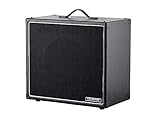
Overview:
Monoprice delivers serious pro tone with this 1x12 cabinet featuring the legendary Celestion Vintage 30 speaker. Designed to pair with their 30W Stage Right head, this cab delivers the same midrange punch and clarity heard on countless records from guitar heroes like Slash and Peter Frampton. The rugged construction features metal corner caps and black textured synthetic leather, creating a road-worthy enclosure that looks professional under stage lights. At 12 inches, it’s compact enough for transport yet substantial enough to project full, rich tones that cut through any mix. The cabinet’s 60-watt handling provides headroom for higher-powered heads while maintaining the V30’s signature response.
What Makes It Stand Out:
The Celestion V30 is the undisputed star—this isn’t a budget knockoff but the genuine article. The cabinet’s durability rivals cabs costing twice as much, with reinforced metal corners and a comfortable leather handle that gigging musicians will appreciate after loading in.
Value for Money:
Competing V30-loaded cabs from Mesa or Orange easily exceed $500. Monoprice offers the core professional tone for significantly less, making this ideal for gigging musicians who prioritize sound over brand status while still needing road-worthy reliability.
Strengths and Weaknesses:
- Strengths: Authentic V30 tone, robust construction, professional appearance, versatile impedance options, excellent projection
- Weaknesses: Synthetic leather instead of real tolex, no included casters, limited brand recognition, tolex may peel with extreme abuse
Bottom Line:
A no-brainer for tone-conscious players seeking professional sound without the premium price. Perfect for gigging, recording, or upgrading your rig.
7. Fender Frontman 20G Guitar Amp, 20 Watts, with 2-Year Warranty 6 Inch Fender Special Design Speaker, 10x16x16 inches

Overview:
The Fender Frontman 20G is a straightforward 20-watt solid-state practice amplifier built for reliability and simplicity. Featuring a 6-inch Fender Special Design speaker and compact 10x16x16-inch footprint, this amp fits comfortably in bedrooms and practice spaces without dominating the room. The dual-channel design offers a clean channel with three-band EQ and a switchable drive channel for gritty tones. Practice-friendly features include an 1/8" auxiliary input for backing tracks and a headphone jack for silent sessions that won’t disturb housemates. The iconic silver grille cloth adds classic Fender aesthetics.
What Makes It Stand Out:
Fender’s legendary build quality and brand trust at an entry-level price point. The 2-year warranty demonstrates confidence in longevity rarely seen in budget amps. Its intuitive layout makes it ideal for beginners still learning tone shaping, while pros will appreciate the grab-and-go simplicity for warmups.
Value for Money:
Priced competitively against other practice amps, the Fender badge and warranty justify any slight premium. It’s built to last through learning years, eliminating the need for immediate upgrades as skills develop.
Strengths and Weaknesses:
- Strengths: Trusted brand, excellent warranty, simple operation, practice features, durable construction
- Weaknesses: 6" speaker lacks low-end depth, 20 watts insufficient for drummers, basic digital distortion, no built-in effects
Bottom Line:
A reliable, no-frills practice companion perfect for beginners. Won’t dazzle tone hounds, but delivers consistent Fender quality for home practice and learning.
8. GLARRY Electric Guitar Amp, Portable Guitar Tube Amp with Headphone MP3 Input, 20W Practice Guitar Combo Amplifier Speaker Accessories with Bass, Volume, Treble, and Middle Controls
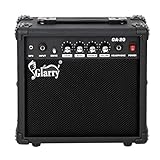
Overview:
The GLARRY Electric Guitar Amp positions itself as the ultimate portable practice solution, weighing just 6.61 pounds and featuring a built-in belt clip for true grab-and-go convenience. This 20-watt combo pushes sound through a 6.5-inch speaker while offering surprising tonal flexibility via dedicated bass, middle, treble, and gain controls. The built-in overdrive button delivers thick distortion on demand, and essential practice features include a 1/4" headphone output for silent playing and 1/8" MP3 auxiliary input for jamming with tracks. Hard rubber edges protect against bumps during transport, making it surprisingly road-ready for its price.
What Makes It Stand Out:
Unmatched portability in the practice amp category. The hard rubber edge protection and lightweight design make it ideal for buskers, students, or players with limited space. Multiple EQ controls provide more tone-shaping than typical budget amps, giving creative beginners room to experiment with their sound beyond basic presets.
Value for Money:
Among the cheapest options available, packing features normally found in pricier models. Perfect for absolute beginners testing commitment without financial risk, though seasoned players will immediately recognize sonic limitations that justify higher-priced alternatives.
Strengths and Weaknesses:
- Strengths: Extremely portable, protective rubber edges, full EQ section, headphone practice, unbeatable price
- Weaknesses: Unknown long-term reliability, inferior speaker quality, questionable durability, no brand warranty mentioned, tone lacks sophistication
Bottom Line:
A functional ultra-budget option for beginners prioritizing portability over tone. Acceptable for practice but expect to upgrade as skills progress.
9. Fender Champion II 100 Guitar Amp, 100 Watts, with 2-Year Warranty, Features 15 Built-In Effects Models

Overview:
The Fender Champion II 100 is a 100-watt workhorse packing dual 12-inch Fender Special Design speakers and an impressive arsenal of 15 built-in effects models. This two-channel amplifier delivers everything from pristine cleans to high-gain distortion, with reverb, delay, chorus, tremolo, and Vibratone among the available effects. The amp voicings cover classic Fender tones to modern high-gain sounds, making it a versatile solution for gigging musicians who need flexibility without hauling a pedalboard. The closed-back cabinet enhances low-end response and projection.
What Makes It Stand Out:
Massive power and speaker configuration at a mid-range price point. The effects library eliminates the need for external pedals, while Fender’s 2-year warranty provides peace of mind. The dual speakers create a wide, full sound that projects exceptionally well on stage, filling venues with authoritative presence that single-speaker combos can’t match.
Value for Money:
Competes directly with modeling amps like Boss Katana, offering comparable power and features with Fender’s signature clean tones. The built-in effects alone would cost hundreds as individual pedals, making this a cost-effective all-in-one solution for cover band guitarists needing multiple sounds.
Strengths and Weaknesses:
- Strengths: Powerful 100W output, dual 12" speakers, extensive effects, versatile amp models, Fender warranty
- Weaknesses: Heavy and bulky, digital effects may not satisfy tube purists, learning curve for deep editing, overkill for bedroom practice
Bottom Line:
An excellent gigging amp for players wanting variety without complexity. Delivers Fender cleans plus modern versatility at a compelling price point.
10. Bugera V5 INFINIUM 5-Watt Class-A Tube Amplifier Combo with INFINIUM Tube Life Multiplier, Original Turbosound Speaker, Reverb and Power Attenuator

Overview:
The Bugera V5 INFINIUM is a hand-built 5-watt Class-A tube combo that brings authentic vintage tone to bedroom players and recording studios. Driven by an EL84 power tube and 12AX7 preamp tube, it delivers everything from purring blues cleans to mind-blowing crunch when pushed into overdrive. The revolutionary INFINIUM Tube Life Multiplier technology automatically adjusts bias to extend tube life indefinitely, while the built-in power attenuator lets you crank the amp for saturated tone at whisper volumes perfect for late-night inspiration. The vintage aesthetics match the classic ’60s-inspired circuit design beautifully.
What Makes It Stand Out:
INFINIUM technology solves tube maintenance anxiety that’s plagued tube amp owners for decades. The Turbosound speaker provides British-voiced clarity that belies its size, and the power attenuator is a genuine game-changer for home use, allowing power tube saturation at conversation levels without sacrificing tone.
Value for Money:
Among the most affordable all-tube amps available, with features that rival boutique builds costing triple. INFINIUM alone saves hundreds in tube replacements over time, while the included reverb and attenuator add exceptional value unmatched in this price class.
Strengths and Weaknesses:
- Strengths: Genuine tube tone, INFINIUM longevity, power attenuator, reverb, vintage vibe, hand-built quality
- Weaknesses: 5 watts can still be loud for apartments, 8" speaker lacks deep bass response, Bugera’s historical reliability concerns, no effects loop
Bottom Line:
A stellar entry into tube amplification for tone purists. The attenuator and INFINIUM tech make it surprisingly practical for modern players seeking vintage sound without vintage headaches.
Why Boutique Tone Doesn’t Require Boutique Prices
The Tube Amp Recipe: What Really Matters
Boutique amplifiers aren’t magic—they’re simply well-executed combinations of proven ingredients. The real tone lives in transformer quality, circuit topology, and component selection, not in the brand name etched on the faceplate. Budget manufacturers have finally cracked the code on which parts genuinely impact sound versus which ones just impact perceived value. That hand-wired turret board might look gorgeous on Instagram, but a well-designed PCB with thick traces and quality solder joints delivers identical electrical performance at a fraction of the cost.
The critical elements that define boutique character—touch sensitivity, harmonic richness, and dynamic response—stem from a few key areas. Output transformer quality matters more than nearly anything else; it’s the lungs of your amplifier, and a decent budget OT can still breathe life into your tone. Pre-amp tube selection and voicing determine your core sound signature, while the phase inverter design shapes how that signal drives the power section. Get these three elements right, and you’re 90% of the way to boutique territory.
Debunking the “More Expensive = Better Tone” Myth
Price in the amp world often reflects labor costs, brand prestige, and customization options—not pure tone. That $3,000 boutique head might offer point-to-point wiring, exotic tolex, and a six-month build time, but the actual circuit could be nearly identical to a smartly-designed $600 combo. The law of diminishing returns hits amplifiers particularly hard after the $500 mark, where you’re increasingly paying for exclusivity rather than improved sound.
What you’re really buying in the sub-$800 category is intelligent engineering that prioritizes sonically-critical components while streamlining everything else. Think of it like a well-executed farm-to-table restaurant versus a Michelin-starred experience—both can deliver an exceptional meal, but one focuses purely on the food while the other charges for the ceremony. Your job is to identify which budget amps are the culinary equivalents of that hidden gem neighborhood bistro.
Understanding Circuit Designs That Deliver
The Classic British El84 Approach
The EL84 power tube is the budget tube amp’s secret weapon. These compact pentodes deliver glorious chime, smooth overdrive, and that signature “jangly” upper-midrange character at relatively low voltages, making them perfect for cost-effective designs. In push-pull configurations, EL84s produce that coveted Vox-style sparkle and Marshall-esque grit when pushed, depending on the preamp voicing. The magic lies in their natural compression—they’re inherently more forgiving than 6L6 or EL34 tubes, which means budget circuits can sound musical even without premium components.
Look for designs that run these tubes at proper plate voltages rather than starved-plate configurations. A well-designed EL84 amp in the 15-30 watt range can hang with boutique gear in studio and small club settings, offering touch sensitivity that responds to pick attack and volume knob dynamics. The key is in the phase inverter and tone stack implementation—simple cathodyne phase inverters and interactive tone stacks often sound more organic than complex, feature-laden designs.
American 6V6 Warmth on a Budget
For those chasing blackface-style cleans and tweed-era overdrive, the 6V6 tube offers unparalleled bang-for-buck. These beam tetrodes deliver that signature American “sparkle” and robust low-end that defines classic rock, blues, and country tones. Modern production 6V6s are more reliable than ever, allowing budget manufacturers to build 20-40 watt amps that rival vintage designs.
The 6V6’s linear response means the preamp voicing becomes even more critical. Budget amps that nail this design typically employ simple, clean signal paths with minimal gain staging. The result is a pedal-friendly platform that takes boost, overdrive, and modulation exceptionally well—essentially becoming a boutique-grade foundation for your pedalboard. Pay attention to negative feedback implementation; too much kills dynamics, while just the right amount tightens bass response without sacrificing touch sensitivity.
Single-Ended vs. Push-Pull Configurations
This technical distinction fundamentally shapes your amp’s character, and understanding it helps you shop smarter. Single-ended designs (like a 5-watt champ-style circuit) use one output tube and produce even-order harmonics that many describe as “sweet” or “bloom.” They’re simpler, cheaper to build, and deliver glorious tube saturation at manageable volumes. The trade-off is less clean headroom and a looser, spongier feel.
Push-pull designs use two or four output tubes in opposition, canceling even-order harmonics and emphasizing odd-order harmonics for a tighter, more aggressive tone with greater headroom. Most budget amps under $800 use push-pull because it’s more efficient and provides more volume per dollar. For gigging musicians, push-pull is usually the practical choice, but don’t dismiss single-ended amps for recording and practice—they’re tone machines that punch way above their price class.
Wattage Wisdom: Right-Sizing Your Amp
Bedroom vs. Stage: Finding Your Sweet Spot
The wattage question trips up more buyers than any other spec. Here’s the truth: a 5-watt tube amp can still be deafeningly loud, while a 50-watt amp can sound anemic if the circuit design is poor. The key is matching your actual needs, not imaginary scenarios. For 90% of players, 15-30 watts represents the holy grail—enough clean headroom for small gigs and rehearsals, but still manageable enough to push into natural overdrive without alienating neighbors.
Consider your primary playing environment. If you’re strictly a bedroom player, 5-15 watts with a good master volume gives you saturated tone at sane levels. Gigging musicians should target 20-40 watts for unmiked club work, which keeps you firmly in sub-$800 territory. The boutique trick is understanding that transformer quality matters more than wattage—a well-built 15-watt amp with a massive output transformer can feel bigger and more powerful than a cheaply-built 30-watter.
Attenuators and Master Volume Solutions
Modern budget amps increasingly include effective master volume circuits that actually work, preserving tone at lower levels. Look for post-phase-inverter master volumes (PPIMV) or dual-volume designs that maintain the power tube interaction even when quiet. These circuits let you crank the preamp for grit while keeping speaker volume reasonable.
If your chosen amp lacks this feature, budget $100-150 for a quality attenuator. This transforms any amp into a bedroom-friendly tool while retaining that pushed-power-tube magic. The key is choosing a reactive load attenuator rather than a simple resistive pad—reactive models maintain the speaker’s impedance curve, preserving the amp’s feel and frequency response. This single addition can make a $500 amp sound like a $2,000 boutique rig at apartment volumes.
Speaker Secrets: The Unsung Hero of Tone
Ceramic vs. Alnico Magnets in Budget Territory
The speaker is your final tone filter, and budget amp manufacturers often cheap out here first. Ceramic magnet speakers dominate the sub-$800 market because they’re affordable and efficient, delivering tight bass and aggressive mids that cut through a mix. Modern ceramics from reputable builders can sound fantastic, especially for rock and metal applications where punch and clarity matter.
Alnico magnets, with their softer compression and vintage-voiced harmonic content, define the classic boutique sound. While rare in budget amps, some manufacturers now include budget-friendly alnico models that capture 80% of the magic at 30% of the cost. If your amp ships with a generic ceramic speaker, consider it a placeholder. A $100-150 speaker upgrade can transform a mediocre amp into a tone monster, often delivering bigger sonic improvements than swapping tubes.
Aftermarket Speaker Upgrades
Planning a speaker swap should be part of your buying strategy. Check the amp’s impedance options—8-ohm speakers offer the widest aftermarket selection. Measure the cabinet’s internal dimensions and baffle thickness before buying; some budget cabs are too thin or improperly braced to handle high-efficiency speakers. The boutique approach is viewing the stock speaker as a starting point, not a final destination.
Weber, Eminence, and WGS produce exceptional budget-friendly speakers that rival Celestion’s premium lines. A 12" ceramic speaker with British voicing can nail that mid-forward crunch, while an American-voiced alnico pair delivers blackface-style sparkle. The trick is matching speaker efficiency to your amp’s wattage—overly efficient speakers in low-wattage amps can sound harsh and sterile, while inefficient speakers rob high-wattage amps of their punch.
Build Quality Indicators on a Budget
Transformers: The Heart of Your Amp
You can judge an amp’s potential by its transformers from across the room. Heavy transformers indicate substantial iron cores, which translates to better low-end response, tighter bass, and improved headroom. Pick up the amp—if it feels surprisingly dense for its size, that’s a good sign. Budget amps that prioritize tone use oversized output transformers, often weighing 5-7 pounds alone. Cheap amps skimp here, using tiny transformers that saturate early and sound flubby.
Look for transformers mounted on the chassis with rubber isolation washers to reduce mechanical vibration. Check for proper ventilation around them—overheating transformers drift in value and fail prematurely. The boutique secret is that transformers are the one place where physical mass directly correlates with sonic performance, and even budget brands are catching on.
Cabinet Construction and Resonance
Thick plywood baffles (at least 5/8") and solid corner joints indicate an amp designed to project tone rather than just contain components. Tap on the cabinet sides—a dead, thudding response suggests dense material that won’t color your sound with unwanted resonance. Avoid MDF cabinets entirely; they might look fine but absorb high frequencies and fall apart under touring conditions.
Open-back cabs offer room-filling sparkle and are more forgiving of budget construction, while closed-back designs require precise engineering to avoid boxy mids. For sub-$800 amps, open-back combos often deliver more expensive-sounding tone because the cabinet’s sonic contribution is less critical. The boutique mindset here is recognizing that a slightly ugly but solidly-built cabinet is preferable to a beautiful one that rattles and buzzes when cranked.
Features That Actually Matter
Effects Loops: Necessity or Luxury?
The eternal debate rages on, but here’s the pragmatic view: if you run delay and reverb, a series effects loop is invaluable. It keeps time-based effects clean and prevents preamp distortion from turning your pristine delay into mush. Budget amps with properly buffered loops are rare but worth seeking out. Look for loops with send and return level controls, which indicate the designer actually considered how players use them.
For pedal-platform amps, a loop is less critical because you’re likely getting dirt from pedals anyway. But for amps where you rely on the amp’s own overdrive, a loop moves from “nice to have” to “essential.” The boutique approach is using the loop only for modulation and time-based effects, never for boost or drive pedals—that’s what your input jack is for.
Reverb and Tremolo: Analog vs. Digital
Spring reverb tanks cost money and add shipping weight, so budget amps increasingly use digital reverb. High-quality digital reverb can sound excellent, but cheap implementations add noise and sterile decay. If the amp has digital reverb, test it at high volumes—if it gets harsh or artificial-sounding, plan on using a pedal instead.
Analog tremolo circuits, on the other hand, are simple and cheap to implement properly. A bias-vary tremolo (modulating the power tube bias) sounds richer and more organic than op-amp-based designs. The boutique perspective is that reverb can be replicated with pedals, but great amp-based tremolo is a rare and beautiful thing that’s worth prioritizing in your search.
The Used Market Goldmine
What to Inspect When Buying Vintage
The used market under $800 is where boutique tone truly lives for the savvy buyer. Vintage silverface Fenders, Gibson amps from the 60s, and obscure Japanese-made tube combos from the 70s regularly appear in this price range. The key is knowing what kills an amp’s value (and performance). Test every knob for scratchiness—cleaning pots is cheap, but persistent noise indicates deeper issues. Power up the amp and listen for hum that changes with the volume control; this suggests filter cap problems that require immediate replacement.
Inspect the output transformer for rust or physical damage. Bring a flashlight and mirror to check the tube sockets for corrosion and cracked solder joints. Play the amp at stage volume for at least 10 minutes—many issues only appear when components heat up. The boutique buyer’s mantra: “caps and transformers” are the expensive repairs; everything else is maintenance.
Negotiating Strategies for Pre-Owned Gear
Private sellers often overvalue their gear based on sentiment, while guitar shops price based on cosmetic condition rather than circuit health. Your leverage is knowledge. Research recent sold listings, and if the amp needs work (new tubes, cap job, speaker replacement), quantify those costs and subtract them from your offer. Bring a printout of replacement part prices to negotiations—it shows you’re serious and informed.
Cash is king. Offering cash on the spot often knocks 10-15% off the asking price. For store purchases, bundle deals work wonders: “I’ll buy this amp and a set of tubes if you throw in a cover and knock $50 off.” The boutique approach to used gear is buying the amp’s potential, not its current condition. A $400 amp that needs $150 in upgrades still costs less than a new $800 amp and can sound superior when properly sorted.
Modding: Your Secret Weapon
Simple Tweaks That Transform Tone
The difference between a good budget amp and a great one is often a $15 capacitor. Swapping the tone stack capacitors for premium film types can reduce noise and improve clarity. Changing the cathode bypass caps values lets you fine-tune bass response and gain structure. These mods require basic soldering skills but no schematic tracing—most follow simple, documented formulas.
Bias adjustment mods are the most impactful upgrade for fixed-bias amps. Adding a trim pot or external bias test points lets you dial in the perfect idle current for your specific tubes, dramatically improving tone and tube life. Many budget amps ship biased cold for reliability; warming them up unlocks harmonic richness that rivals boutique gear. The boutique mindset is viewing the amp as a platform for personalization, not a finished product.
When to Stop: Avoiding the Money Pit
There’s a fine line between strategic upgrades and throwing good money after bad. Set a hard limit: never invest more than 50% of the amp’s purchase price in mods. Beyond that point, you’re better off selling and buying a higher-tier amp. Avoid mods that require major circuit surgery—if you’re replacing more than 20% of the components, you’ve bought the wrong amp.
Focus on reversible mods that enhance rather than replace the amp’s character. Speaker swaps, tube rolling, and bias adjustments are low-risk, high-reward. Chopping up the circuit board to add a half-baked channel switching system is a recipe for disappointment and wasted cash. The boutique philosophy is restraint: upgrade the weaknesses, preserve the soul.
Genre-Specific Considerations
Clean Pedal Platforms vs. High-Gain Monsters
Budget high-gain amps often achieve their distortion through cascaded gain stages and diode clipping, which can sound fizzy and compressed compared to boutique designs that rely on power tube saturation. For metal and hard rock, look for amps with at least two preamp tubes dedicated to the clean channel—this ensures your cleans don’t suffer when the gain channel is designed for maximum saturation.
Clean pedal platforms are the budget tube amp’s strongest suit. A simple, low-gain preamp with minimal tone shaping gives your pedals room to breathe. The boutique trick is finding amps with just enough preamp gain to push power tubes into compression, then using a boost pedal to hit the front end for dirt. This hybrid approach delivers dynamics that pure high-gain amps lack, and it’s remarkably easy to find in the sub-$800 range.
British Crunch vs. American Sparkle
Your tonal preference should guide your circuit choice, but don’t get locked into stereotypes. British-style circuits (EL84/EL34 based) excel at mid-forward crunch that cuts through dense mixes. They respond beautifully to overdrive pedals and compress naturally when pushed. The “boutique” version emphasizes the power tube breakup, keeping preamp gain moderate for touch sensitivity.
American-style circuits (6V6/6L6 based) offer extended lows and shimmering highs perfect for pristine cleans and pedal-heavy rigs. The boutique character comes from robust power supplies and oversized transformers that maintain headroom while adding subtle harmonic complexity. In budget amps, American designs often make better pedal platforms because their inherent clarity doesn’t mask pedal nuances.
Common Pitfalls to Avoid
The Spec Sheet Trap
Manufacturers love listing features that sound impressive but mean nothing. “High-voltage preamp” is meaningless without context—every tube amp runs high voltage. “Custom-voiced” speakers are often just rebranded budget models. “All-tube” can include solid-state rectifiers and digital reverb, which isn’t necessarily bad, but it’s not the whole story.
Instead of features, focus on architecture. How many gain stages? What’s the phase inverter topology? Is the effects loop buffered? These answers reveal more than any marketing bullet point. The boutique buyer reads between the lines, recognizing that a simple amp executed perfectly beats a feature-laden compromise every time.
Impedance Mismatches and Other Technical Gotchas
That 16-ohm external speaker jack seems convenient until you realize the amp’s internal speaker is 8 ohms, and running both creates a mismatched load that stresses the output transformer. Budget amps sometimes cut corners on impedance switching, offering minimal options. Before buying, map out your speaker extension plans and verify the amp can handle them.
Tube rectifier vs. solid-state rectifier is another spec that gets oversimplified. Tube rectifiers sag beautifully under load, creating that vintage bounce, but they’re expensive and less reliable. Modern solid-state rectifiers with sag simulation circuitry offer 90% of the feel with bulletproof reliability. Don’t dismiss an amp solely because it lacks a tube rectifier—many boutique builders are making the same switch for consistency.
Maximizing Your Investment
Essential Accessories That Complete Your Rig
Your $800 amp budget should really be a $650 amp budget plus $150 in crucial accessories. A quality attenuator, as mentioned, is non-negotiable for home use. A matched set of spare tubes (preamp and power) ensures you’re never sidelined by a microphonic tube at a gig. A proper amp cover extends lifespan dramatically, and quality cables preserve the signal chain you’ve so carefully constructed.
Don’t overlook the humble tube buffer or clean boost pedal. These inexpensive tools can add that final 5% of boutique polish, pushing the front end just enough to sweeten the tone without adding distortion. The boutique mindset is holistic: the amp is the foundation, but the supporting cast makes the magic happen.
Maintenance Habits That Preserve Tone
Tube amps are living, breathing creatures that reward proper care. Let your amp warm up for at least 30 seconds before flipping off standby—this extends tube life and reduces thermal shock. Power down with the volume at zero to avoid speaker pops. Every six months, check and tighten all tube socket connections and chassis screws; vibration loosens them over time, causing microphonic noise.
Biasing your power tubes annually (or whenever you replace them) is the single most important maintenance task. A $30 bias probe pays for itself by preventing premature tube failure and ensuring optimal tone. Clean your pots with contact cleaner at the first sign of scratchiness—don’t wait for them to become unusable. These habits cost virtually nothing but transform your budget amp into a reliable, great-sounding instrument that rivals gear costing multiples more.
Frequently Asked Questions
What’s the realistic lifespan of tubes in a budget amp compared to boutique gear?
Tube life depends entirely on circuit design and usage, not price tier. A budget amp biased properly can see 2,000+ hours from power tubes, identical to boutique amps. The difference is boutique amps often run tubes harder for tone, potentially shortening lifespan. Preamp tubes typically last 5,000-10,000 hours regardless of amp cost. Your playing volume and how hot the amp runs matter far more than the brand on the chassis.
Can a sub-$800 tube amp really handle live gigging without falling apart?
Absolutely. The key is construction, not cost. Many budget amps use the same chassis steel and cabinet hardware as pricier models. Focus on physical inspections: are corners reinforced? Is the handle solid? Does the chassis flex when you lift it? Gigging kills amps through vibration and thermal cycling, not through insufficient tone. A well-built budget amp with proper maintenance will outlast a delicate boutique amp that can’t handle the road.
How do I know if an amp’s “tube tone” is being faked with solid-state components?
Look for the tube count and layout. A true push-pull tube amp needs at least two power tubes and one preamp tube minimum. If it claims 30+ watts with a single 12AX7 and one EL84, something’s fishy. Check the weight—solid-state power sections are feather-light. Listen for pick attack; genuine tube compression has a spongy, reactive quality that’s nearly impossible to digitally replicate. When in doubt, remove the chassis (if you’re comfortable) and verify the tube sockets are wired into the signal path, not just for show.
Is it better to buy a new budget amp or a used higher-end model for the same price?
Generally, used higher-end amps offer better component quality and resale value, but come with unknown maintenance history. New budget amps provide warranties and modern reliability. The sweet spot is 3-5 year old used mid-tier amps that have depreciated into your budget—someone else took the initial hit, but the amp is still modern enough to be reliable. Avoid 20+ year old amps unless you’re prepared for a cap job, which can add $150-300 to your real cost.
Will replacing the speaker void my warranty?
Most manufacturers allow speaker swaps without voiding warranties, as long as you don’t modify the wiring or cabinet. Keep the original speaker and reinstall it if you need warranty service. Some warranties specifically exclude speakers anyway, treating them as wear items. Read the fine print, but generally, a speaker upgrade is the safest mod you can make. Document everything with photos before and after the swap.
What’s the minimum wattage I need to gig unmiked with a drummer?
For most rock and blues contexts, 20-30 watts is the practical minimum. A 15-watt amp can work with an efficient speaker and a light-handed drummer, but you’ll be running near maximum clean headroom. Metal players need 40+ watts for clean passages to cut through double-kick drums. Remember, speaker efficiency matters as much as wattage—a 20-watt amp through a 103dB speaker is louder than a 50-watt amp through a 96dB speaker. Always factor speaker sensitivity into your calculations.
How important is a bias adjustment feature on a budget amp?
It’s the difference between an amp you tolerate and an amp you love. Fixed bias without adjustment means you’re stuck with whatever the factory set, often cold and lifeless. A bias pot or external test points let you dial in the sweet spot for your specific tubes and taste. Some budget amps hide trim pots inside the chassis—worth asking about. If the amp lacks bias adjustment, factor a $150 tech visit into your budget for a bias mod; the tone improvement is that significant.
Can I really achieve professional recording tones with a cheap tube amp?
Studio magic cares about performance, not pedigree. Many iconic guitar tracks were cut with humble practice amps. Your $600 amp through a quality microphone (SM57s are $100) into a decent preamp can sound absolutely pro. The secret is mic placement and room treatment, not amp cost. In fact, budget amps often record better because they’re less boomy and easier to fit in a mix. Spend your money on a reflexion filter and mic stands before upgrading an already capable amp.
What’s the deal with “hand-wired” vs. PCB in budget amps?
True hand-wiring is rare under $800 and often poorly executed when you find it. Modern PCBs with thick copper traces and quality solder joints are sonically transparent and more consistent. The real issue is serviceability—hand-wired amps are easier to repair, while PCBs can be a nightmare if traces lift. Look for hybrid designs with hand-wired tube sockets mounted to the chassis and PCB for the rest. This gives you the best of both worlds: reliable construction with serviceable high-stress points.
Should I prioritize an amp with multiple channels or a great single channel?
In the sub-$800 range, a stellar single channel beats mediocre multi-channel designs every time. Channel switching adds complexity, cost, and potential failure points. Boutique philosophy says one amazing sound is better than three compromised ones. Use pedals for variation. The exception is if you genuinely need pristine cleans and high-gain dirt in the same set with no pedalboard—then a well-designed two-channel amp makes sense. But verify both channels sound great independently; many budget amps have a killer lead channel and a useless clean channel, or vice versa.
See Also
- 10 Affordable Tube Guitar Amplifiers Under $500 That Rival Boutique in 2026
- 10 Low-watt Tube Guitar Amplifiers for Cranked Tone at Bedroom Levels in 2026
- Top 10 Best Tube Guitar Amplifiers for Blues Tone Purists in 2026
- 10 Hand-wired Tube Guitar Amplifiers for Boutique Studio Sessions in 2026
- 10 Solid State Guitar Amplifiers That Nail Dimebag Tone for Thrash in 2026