Table of Contents
The rise of music-centric Twitch streaming has transformed bedroom producers into global performers, but traditional acoustic drums remain a logistical nightmare for most creators. Between angry neighbors, finicky microphones, and the sheer physical footprint, acoustic kits are practically anti-streaming devices. That’s why electronic drum sets have become the secret weapon for rhythm-focused content creators—offering pristine audio capture, silent practice sessions, and direct integration with streaming software. As we barrel into 2026, the budget e-drum market has evolved dramatically, blurring the lines between entry-level and professional features in ways that directly benefit streamers.
But here’s the catch: not all budget electronic kits are built for the unique demands of live broadcasting. A set that works perfectly for silent practice might introduce latency that destroys your stream’s audio sync. A kit with great-feeling pads might lack the connectivity options OBS requires. This guide cuts through the marketing fluff to focus specifically on what Twitch streamers need to know before investing in a budget electronic drum set for 2026. We’re talking technical deep-dives, streaming-specific features, and the hidden pitfalls that only become apparent when you’re live in front of an audience.
Top 10 Electronic Drum Sets
Detailed Product Reviews
1. Donner DED-80 Electronic Drum Set with 4 Quiet Mesh Pads, 180+ Sounds, 2 Pedals, Throne, Headphones, Sticks, and Melodics Lessons

Overview: The Donner DED-80 is an entry-level electronic drum kit designed for beginners and apartment dwellers. This complete package includes four 6-inch mesh pads, three 10-inch cymbals, a sturdy metal frame, drum module, throne, headphones, sticks, and all necessary cables. The kit’s compact footprint and foldable design make it ideal for small spaces where acoustic drums would be impractical.
What Makes It Stand Out: The DED-80’s strongest selling points are its educational features and neighbor-friendly design. The drum coach function, 30 accompaniment tracks, and Melodics lessons integration provide structured learning for novices. The double-layered mesh heads offer a realistic feel uncommon at this price point, while the USB MIDI connectivity allows for DAW integration and music production.
Value for Money: At its price point, the DED-80 delivers exceptional value for beginners. The inclusion of mesh heads, a throne, headphones, and educational content typically costs more with competitors. While it requires an external amplifier for room-filling sound, the headphone capability enables silent practice—a crucial feature for apartment living.
Strengths and Weaknesses: Strengths include the realistic mesh heads, comprehensive beginner package, compact foldable design, and robust educational features. Weaknesses are the small 6-inch pads that limit playing surface, limited 180-sound library compared to pricier alternatives, and lack of built-in speakers requiring external amplification.
Bottom Line: The Donner DED-80 is an excellent choice for beginning drummers in noise-sensitive environments. It provides everything needed to start learning immediately, with features that support skill development. While experienced players will quickly outgrow its limitations, it’s arguably the best entry-level value for apartment practice.
2. Alesis Nitro Max Kit Electric Drum Set with Quiet Mesh Pads, 10" Dual-Zone Snare, Bluetooth, 440+ Authentic Sounds, Drumeo, USB MIDI, Kick Pedal
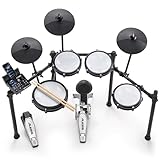
Overview: The Alesis Nitro Max represents a significant step-up in the entry-level electronic drum market, offering an 8-piece configuration with premium features. The kit boasts a 10-inch dual-zone mesh snare, three 8-inch mesh toms, kick drum tower with pedal, and three 10-inch cymbals including a chokeable crash. The upgraded drum module provides professional-grade BFD sounds and Bluetooth connectivity.
What Makes It Stand Out: The Nitro Max distinguishes itself through its sound engine and connectivity. With over 440 BFD multi-velocity samples and 32 ready-to-play kits, it delivers acoustic drum authenticity rarely heard at this price. Bluetooth audio streaming allows drummers to play along with music wirelessly, while the included 90-day Drumeo subscription provides access to 200+ instructors and 5,000+ songs.
Value for Money: This kit punches well above its weight class, offering professional sounds and features typically found in kits costing twice as much. The BFD library alone justifies the price premium over basic entry-level sets, making it an intelligent investment for serious beginners or intermediate players seeking authentic feel and tone.
Strengths and Weaknesses: Strengths include the expansive 440+ sound library, 10-inch dual-zone snare, Bluetooth connectivity, Drumeo integration, and USB MIDI for recording. Weaknesses are the still-modest 8-inch tom pads and occasional rack stability issues during aggressive playing. The module interface can feel cluttered compared to simpler units.
Bottom Line: The Alesis Nitro Max is the sweet spot for drummers ready to move beyond beginner kits without breaking the bank. Its professional sounds, educational resources, and expandability make it a long-term investment that grows with your skills. Highly recommended for serious students and home recorders.
3. Donner DED-200 Electric Drum Sets with Quiet Mesh Drum Pads, 2 Cymbals w/Choke, 31 Kits and 450+ Sounds, Throne, Headphones, Sticks, USB MIDI, Melodics Lessons (5 Pads, 3 Cymbals)

Overview: The Donner DED-200 bridges the gap between entry-level and intermediate electronic drums, offering an 8-piece configuration with five mesh pads and three cymbals. The kit includes an 8-inch dual-zone snare, three 8-inch toms, 6-inch kick drum with double-pedal compatibility, 10-inch hi-hat, crash, and ride cymbals with choke functionality. This comprehensive package comes with a stable four-post rack, throne, headphones, and sticks.
What Makes It Stand Out: The DED-200’s primary advantage is its expanded playing surface and sound library at a competitive price point. With 450+ sounds and 31 drum kits, it provides significantly more sonic versatility than its DED-80 sibling. The double-pedal compatible kick drum and larger 8-inch pads offer a more authentic playing experience, while the built-in 50 play-along songs and recording function support skill development.
Value for Money: This kit delivers impressive specifications for the mid-range price, particularly the larger dual-zone snare and extensive sound library. While it costs more than entry-level options, the enhanced realism and features justify the upgrade for committed learners. However, it faces stiff competition from established brands like Alesis at this price point.
Strengths and Weaknesses: Strengths include the larger 8-inch pads, dual-zone snare, double-pedal kick compatibility, 450+ sounds, and stable four-post rack. Weaknesses involve the Donner brand’s lesser reputation compared to industry giants, a less intuitive module interface, and cymbals that lack the sensitivity of premium competitors.
Bottom Line: The Donner DED-200 is a solid choice for advancing beginners seeking more realistic feel without premium pricing. It offers substantial upgrades over entry-level kits, though brand-conscious buyers might prefer Alesis alternatives. Ideal for dedicated students ready to invest in their progression.
4. AKLOT Acoustic-Style Electric Drum Set: Independent 16’’ Wooden Bass Drum and 12’’ Snare, Triple-Zone Ride Cymbal, Standalone Hi-Hat, Full Mesh Pads, 460 Sounds, USB MIDI, Throne, Sticks (B-CORE543)

Overview: The AKLOT B-CORE543 is a premium acoustic-style electronic drum set designed for experienced drummers seeking authentic feel and response. This flagship configuration features wooden shells including a 12-inch dual-zone snare and 16-inch kick drum, a true two-piece independent hi-hat system, 14-inch triple-zone ride cymbal, and dual 12-inch crash cymbals. The advanced sound module offers 460 studio-sampled voices with deep editing capabilities.
What Makes It Stand Out: The B-CORE543’s acoustic-style design sets it apart from typical e-drums. The wooden shells deliver 30% faster beater rebound and natural punch, while the independent hi-hat system precisely tracks foot splashes and half-open articulations. The triple-zone ride captures bell, bow, and edge strikes with exceptional clarity. Studio-grade effects, 20 user kits, and comprehensive sensitivity adjustments provide professional customization.
Value for Money: While commanding a premium price, this kit justifies its cost through uncompromising build quality and playability that rivals kits costing significantly more. The wooden construction and independent hi-hat alone represent substantial value for serious musicians requiring acoustic-like response for practice and performance.
Strengths and Weaknesses: Strengths include authentic wooden shell construction, independent two-piece hi-hat, triple-zone ride, 460 studio-quality sounds, deep editing capabilities, and professional-grade hardware. Weaknesses are the large footprint unsuitable for tight spaces, premium pricing that may exceed hobbyist budgets, and complexity that could overwhelm beginners.
Bottom Line: The AKLOT B-CORE543 is a professional instrument for discerning drummers who refuse to compromise on feel. Its acoustic-style response makes it perfect for serious practice and studio work. While overkill for casual players, it’s an exceptional value for professionals seeking true acoustic nuance in an electronic package.
5. AODSK Electric Drum Set for Beginner with 150 Sounds,4 Quiet Drum Pads,2 Pedal,Throne,Sticks,Electronic Drum with Headphone,AED-400

Overview: The AODSK AED-400 is an ultra-compact electronic drum set targeting absolute beginners and budget-conscious buyers. This 7-piece kit includes four 6.5-inch silicone drum pads, three 8-inch cymbals, a basic drum module, foldable metal frame, throne, headphones, and sticks. Designed for portability and simplicity, it offers 150 sounds across 15 drum kits with 10 demo songs.
What Makes It Stand Out: The AED-400’s primary distinction is its extreme portability and affordability. The lightweight, foldable design allows for practice anywhere, while the straightforward setup makes it accessible to complete novices. USB MIDI and AUX input provide basic connectivity for playing along with music or recording, though the feature set remains intentionally simple.
Value for Money: This is among the most affordable ways to begin drumming electronically. While sound quality and pad responsiveness can’t match pricier alternatives, the complete package includes all essentials for immediate play. It’s a low-risk entry point for testing interest before investing in serious gear, though long-term value is limited by basic specifications.
Strengths and Weaknesses: Strengths include rock-bottom pricing, extreme portability, simple operation, and complete accessory package. Weaknesses involve limited 150-sound library, small 6.5-inch pads that hinder technique development, basic silicone heads lacking mesh realism, and minimal educational features compared to competitors.
Bottom Line: The AODSK AED-400 serves one purpose: providing the cheapest possible entry to electronic drumming. It’s suitable for young children or absolute beginners unsure about their commitment. However, serious learners should invest slightly more in mesh-head kits like the Donner DED-80 for better technique development and long-term satisfaction.
6. Alesis Turbo Max Electric Drum Set with Quiet 8" Mesh Pads, Lessons, Bluetooth and Accessories, Foldable

Overview:
The Alesis Turbo Max delivers a complete entry-level drumming solution for beginners seeking a quiet, apartment-friendly practice kit. This 7-piece electronic drum set features responsive 8-inch mesh heads across four drums and three cymbals, paired with a feature-rich sound module that eliminates the learning curve typically associated with digital percussion.
What Makes It Stand Out:
Bluetooth streaming capability sets this kit apart, allowing wireless play-along practice from any smart device. The foldable, space-saving rack collapses for under-bed storage or transport, while the included full-size pedals, throne, headphones, and sticks provide everything needed to start immediately—no hidden purchases required.
Value for Money:
Positioned competitively in the entry-level market, the Turbo Max justifies its price through comprehensive bundling and genuine mesh heads rather than cheaper rubber pads. Comparable kits often lack Bluetooth or require separate hardware purchases, making this an economical one-stop solution for new drummers.
Strengths and Weaknesses:
Strengths include ultra-quiet mesh heads perfect for shared living, seamless Bluetooth connectivity, and a truly portable foldable design. The 12 included kits and 20 play-along tracks offer solid variety. Weaknesses are the smaller 8-inch pads that may feel cramped for advanced techniques and limited sound expansion compared to professional modules.
Bottom Line:
For beginners prioritizing neighbor-friendly volume and convenience, the Turbo Max excels. It’s an ideal first kit that grows with you through foundational skills, though serious players will eventually crave larger pads and more sounds.
7. Donner Electric Drum Set, DED-70 Electronic Drum Kit for Beginner with 150 Sounds, 4 Quiet Mesh Pads, 9" Cymbals, USB MIDI, Type-C Charging, 2 Pedal, Throne, Headphones, Sticks, Melodics Lessons

Overview:
The Donner DED-70 targets young learners aged 6-14 with a scaled-down electronic kit that balances authentic feel with apartment-friendly silence. Four dual-layer 6.5-inch mesh pads and oversized 9-inch silicone cymbals provide realistic rebound while keeping noise levels minimal for family living situations.
What Makes It Stand Out:
USB Type-C charging and portable power bank compatibility liberate this kit from wall outlets, enabling backyard practice or travel performances. The height-adjustable rack grows with children, and the 150 built-in sounds across 15 kits offer surprising tonal variety for an entry-level youth instrument.
Value for Money:
This kit punches above its weight class with premium features like mesh heads and oversized cymbals typically found in more expensive models. The inclusion of a throne, headphones, and sticks adds value, though parents should factor in the cost of a separate amplifier if the child wants to play out loud.
Strengths and Weaknesses:
Strengths include exceptional portability with dual power options, age-appropriate sizing, and quieter mesh heads. The 9-inch cymbals feel substantial for a junior kit. The primary weakness is the mandatory external amplifier for audible performance—a hidden cost. The 6.5-inch pads may also feel small as skills advance.
Bottom Line:
The DED-70 is a smart investment for parents nurturing a child’s rhythmic interest. Its portable power design and growth-adjustable hardware make it perfect for kids, provided you budget for an amplifier.
8. HAMPBACK MK-0 Electric Drum Set with 7’’ Quiet Mesh Drum Pads, 8’’ Full Rubber Cymbals, 12 Kits and 68 Authentic Sounds, USB MIDI, Throne, Sticks, Headphone, 2 Switch Pedals for Beginners & Kids

Overview:
The HAMPBACK MK-0 enters the market as an ultra-compact, budget-conscious electronic drum set designed for absolute beginners and kids. Featuring 7-inch mesh pads and 8-inch rubber cymbals, this 7-piece kit prioritizes portability and simplicity over expansive features, making it an accessible entry point into digital drumming.
What Makes It Stand Out:
Power bank compatibility enables truly mobile drumming sessions without hunting for outlets, while the foldable rack stores discreetly under beds or against walls. The standout feature is HAMPBACK’s two-year warranty, providing rare long-term protection in the budget tier and demonstrating manufacturer confidence.
Value for Money:
This is among the most affordable mesh-head kits available, making it a low-risk introduction to drumming. While the 68 sounds and 12 kits are modest compared to pricier alternatives, the complete package—including throne, headphones, and sticks—delivers essential value for tentative beginners testing their interest.
Strengths and Weaknesses:
Strengths center on extreme portability, power flexibility, and that reassuring warranty. The mesh pads offer decent feel for the price point. Weaknesses include limited sound library depth, basic rubber cymbals lacking the realism of silicone or metal, and no mention of advanced connectivity like Bluetooth or extensive MIDI implementation.
Bottom Line:
Perfect for curious beginners unwilling to commit significant funds, the MK-0 provides the drumming essentials with confidence-inspiring warranty protection. Serious learners will outgrow it quickly, but it serves as a capable trial instrument.
9. Donner DED-200 MAX Electronic Drum Set with Industry Standard Mesh Heads, 10’’ Snare, 8“ Tom, 10’’ Tom, 12’’ Crash, 450+ Authentic Sounds for Optimal Performance and Feel NEW

Overview:
The Donner DED-200 MAX represents a significant step-up from entry-level kits, targeting serious learners with professional-grade 2-ply mesh heads and expanded pad sizes. This kit features a 10-inch snare, 8-inch and 10-inch toms, and 12-inch crash and ride cymbals, delivering authentic feel and precise triggering for developing drummers.
What Makes It Stand Out:
The 450+ sounds and 31 drum kits provide professional sonic depth rarely seen in this price bracket. Real metal hoops and drum shell aesthetics enhance the acoustic-like experience, while built-in recording, sequencing, and 50 play-along tracks offer comprehensive practice tools without requiring a computer.
Value for Money:
This kit bridges the gap between beginner and professional setups, offering mesh-head quality and pad sizes that rival kits costing twice as much. The omission of a built-in speaker is understandable at this price, though it necessitates additional headphone or amplifier investment. For dedicated students, the feature set justifies every penny.
Strengths and Weaknesses:
Strengths include large, responsive mesh heads, extensive sound library, and robust practice features. The 12-inch cymbals provide ample striking area. Weaknesses are the lack of built-in speakers and no mention of Bluetooth connectivity, limiting wireless play-along convenience. The module interface may overwhelm absolute beginners.
Bottom Line:
The DED-200 MAX is ideal for committed drummers ready to invest in realistic feel and sonic versatility. It’s a future-proof choice that supports skill progression through intermediate and advanced levels.
10. Alesis Nitro Pro Electric Drum Set with Dual-Zone Quiet Mesh Pads, 500+ Authentic BFD Sounds, Bluetooth, Drumeo, USB MIDI, Double Kick Compatible

Overview:
The Alesis Nitro Pro establishes itself as a professional-grade electronic drum set with 8-piece configuration and industry-leading BFD sound library. Dual-zone 10-inch mesh snare and three 8-inch mesh toms provide expressive playability, while 10-inch cymbals with choke functionality deliver authentic performance dynamics for serious drummers.
What Makes It Stand Out:
The BFD module packs 500+ multi-velocity samples across 36 preset and 16 user kits, creating hyper-realistic acoustic drum emulation. Bluetooth connectivity, USB MIDI, and included Drumeo 90-day membership with 5,000+ songs provide unmatched educational value. Double-kick pedal compatibility future-proofs the kit for metal and hard rock styles.
Value for Money:
While priced at the premium end of the mid-tier market, the Nitro Pro justifies its cost through professional BFD sounds, dual-zone pads, and extensive bundled software. Comparable kits with this sound quality and educational content often cost hundreds more, making it a smart long-term investment for dedicated players.
Strengths and Weaknesses:
Strengths include exceptional sound realism, robust steel rack, professional pad sizes, and comprehensive learning resources. The dual-zone snare enables rimshots and cross-sticks. Weaknesses include a higher price point that may intimidate casual beginners, and the complexity of features could overwhelm those seeking a simple practice kit.
Bottom Line:
For drummers committed to mastery, the Nitro Pro delivers professional tools and sounds that grow from intermediate through gigging levels. It’s overkill for dabblers but perfect for serious students.
Why Electronic Drums Are Perfect for Twitch Streaming
The Streaming-Ready Advantage
Electronic drum sets eliminate the three biggest obstacles Twitch drummers face: noise pollution, audio bleed, and space constraints. Unlike acoustic drums that require extensive soundproofing and multiple microphones, e-drums output a clean, direct signal that bypasses room acoustics entirely. This means your audience hears exactly what you intend—no unwanted resonance, no neighbor’s dog barking through your overhead mics, and no awkward volume wars with housemates. The ability to practice silently with headphones while simultaneously sending a separate audio mix to your stream is a game-changer for creators in shared living spaces.
Noise Control for Apartment Creators
The physical noise of pad strikes still exists, but modern mesh heads and rubber cymbals operate at a fraction of acoustic drum volume. In 2026, most budget kits feature dual-layer mesh technology that was premium-only just three years ago. The thump of a kick pedal remains your loudest element, but even that can be mitigated with isolation platforms and low-volume beaters. For streamers in apartments or late-night schedules, this 70-80% volume reduction means you can broadcast during peak viewer hours without risking eviction.
Understanding the 2026 Streaming Landscape
Evolving Platform Requirements
Twitch’s audio processing has become more sophisticated, with the platform now recommending 48kHz/24-bit audio for Partner and Affiliate channels seeking better discoverability. While not mandatory, this standard affects how your drum module should be configured. Budget kits in 2026 increasingly support these specs natively through USB audio, but some older entry-level models still max out at 44.1kHz/16-bit. The difference might seem minor, but upsampling in OBS can introduce subtle artifacts that sharp-eared viewers notice during quiet passages.
Viewer Expectations for Audio Quality
Your audience’s ears have been trained by years of polished music streams. Muffled, compressed drum audio from a smartphone mic no longer cuts it. Viewers expect the crisp snap of snares, the shimmer of cymbals, and the punch of kick drums to translate clearly through their headphones. Budget e-drum manufacturers have responded by including higher-quality samples and better module processing power, even at sub-$500 price points. The baseline for “acceptable” streaming audio has risen, which works in your favor as a buyer.
Key Features That Define “Budget” in 2026
Price Range Realities
In 2026, the budget category for streaming-ready electronic drums spans roughly $400 to $900. Below $400, you’ll struggle to find kits with reliable USB audio interfaces or low enough latency for live performance. Above $900, you’re entering mid-tier territory with features that, while nice, aren’t essential for most streamers. The sweet spot lives between $550 and $750, where manufacturers bundle streaming-conscious features like multi-channel USB audio and Bluetooth monitoring without inflating costs with pro-studio capabilities you won’t use.
What You’re Sacrificing (and Keeping)
Budget doesn’t mean unusable, but trade-offs exist. You’ll typically get fewer preset kits (30-50 instead of 100+), simpler rack hardware without infinite adjustability, and rubber cymbals instead of silicone or real metal. However, core streaming essentials—USB MIDI and audio, acceptable latency, and mesh snare/toms—are now standard even at the low end. Manufacturers have realized that streamers drive sales, so they’ve prioritized connectivity over luxury feel in budget designs.
The Sweet Spot for Value
The $600-$700 range in 2026 delivers the best streaming-specific ROI. Here, you’ll find modules with dual-zone snare pads (essential for realistic rimshots), chokeable cymbals, and crucially, independent volume control for headphones and master outputs. This last feature lets you craft a monitor mix for yourself while sending a balanced drum mix to OBS—a fundamental requirement for comfortable streaming sessions.
Core Technical Specifications for Streamers
Latency: The Silent Killer
Latency above 10ms creates a perceptible delay between your stick strike and the sound you hear, causing performance-killing timing issues. For streaming, you must consider two latency paths: the internal drum module processing, and the round-trip through your computer to OBS. Budget modules in 2026 typically advertise 3-6ms internal latency, which is acceptable. The bigger concern is USB audio buffer size. Look for modules that support ASIO drivers (Windows) or Core Audio optimization (Mac) with buffer settings down to 64 samples. Anything higher and you’ll need to monitor directly from the module, not through your DAW or OBS.
MIDI vs. USB Audio Connectivity
This distinction trips up many streamers. USB Audio sends the module’s actual sounds to your computer—what your audience hears is the drum brain’s samples. USB MIDI sends only trigger data (which pad was hit, how hard), requiring a VST plugin to generate sound. For budget streamers, USB Audio is simpler and more reliable. It requires zero setup in OBS beyond selecting the drum module as an audio input. MIDI offers superior sound quality through plugins like Superior Drummer, but adds complexity, CPU load, and potential sync issues. Unless you’re already comfortable with VSTs, stick to USB Audio for your first streaming kit.
Multi-Channel Output Options
Basic kits send a stereo mix of all drums down one USB channel. Better streaming-ready kits offer at least two stereo pairs—one for drums, one for backing tracks—allowing separate level control in OBS. Premium budget options might provide individual channels for kick, snare, and overheads, letting you compress and EQ each drum independently. This is overkill for most, but having some separation between your drums and click track/metronome is invaluable for maintaining clean audio.
Sample Rate and Bit Depth Explained
Your module’s sample rate (44.1kHz vs. 48kHz) should match OBS’s settings to avoid resampling. Bit depth (16-bit vs. 24-bit) determines dynamic range—24-bit captures softer ghost notes and louder crashes without distortion. For streaming, 24-bit gives you more headroom to adjust levels in post without noise floor issues. Most 2026 budget modules support 24-bit, but verify the USB audio spec sheet, not just the module’s sample playback specs.
Module Features That Matter for Live Streaming
Built-in Audio Interface Quality
The difference between a $500 and $700 kit often lies in the audio interface chip. Cheaper modules use generic USB audio that can introduce noise or inconsistent levels. Look for modules advertising “low-noise preamps” or “streaming-optimized audio paths.” Test for hiss by recording silence in OBS and amplifying the clip—any audible noise will be magnified when you compress your drum audio for broadcast.
Bluetooth Integration: Yay or Nay?
Bluetooth MIDI and audio are common in 2026 budget kits, but treat them as convenience features, not primary streaming tools. Bluetooth audio has inherent latency (40-80ms) making it useless for monitoring. Bluetooth MIDI can work for triggering stream alerts or lighting, but wired USB remains more reliable for your main audio feed. Use Bluetooth to play along with Spotify for practice, but disable it during live streams to avoid interference.
Customizable Kits and Quick Switching
Streamers often need different sounds for different songs or segments. A module that lets you save custom kits and switch them via button press or MIDI command is invaluable. Some 2026 models allow kit changes through PC commands, meaning you could automate sound changes with Stream Deck or hotkeys. Check if the module sends/receives program change messages—this unlocks advanced workflow automation.
Metronome and Recording Functions
A module with a dedicated metronome output lets you send click to your in-ear monitors without it bleeding into the stream mix. Similarly, onboard recording to SD card or USB drive provides a clean backup if your streaming PC crashes. These features separate streaming-ready kits from practice-only models.
Hardware Considerations Beyond the Module
Mesh vs. Rubber Pads: The Feel Factor
All 2026 budget kits feature mesh snare pads, but tom pad quality varies. Single-ply mesh toms feel bouncier and less realistic but are quieter—useful for mic bleed if you use vocal mics. Dual-ply mesh offers better stick response but slightly more volume. For streaming, prioritize the snare pad quality; that’s what you’ll play most. A dual-zone snare with rimshot capability adds expressive possibilities that viewers can hear.
Cymbal Types and Choke Functionality
Budget kits use rubber cymbals, but not all support choking (grabbing the cymbal to stop its sound). Choke functionality adds realism that viewers appreciate, especially during dynamic breakdowns. Look for at least two chokeable cymbals—typically the crash pads. The hi-hat should be a separate stand-mounted controller, not just a single pad, for realistic open/closed sounds.
Rack Stability and Vibration Management
A wobbly rack causes phantom triggers and looks unprofessional on camera. Budget racks use thinner tubing and plastic joints, but some designs incorporate anti-vibration collars. Test rack stability by playing full-volume 16th notes on the snare—if the whole kit shimmies, you’ll fight false triggers and noise. For streaming, a stable rack also ensures consistent camera framing between sessions.
Kick Drum Tower vs. Pedal Pad
Budget kits either include a small kick tower (accepts a real pedal) or a hinged pedal pad. Towers feel more realistic and allow using your own pedal, but take more space and transmit more floor vibration. Pedal pads are compact and quieter but can feel mushy. For streaming, consider your floor situation—if you’re upstairs in an apartment, a pedal pad with a tennis ball isolation riser might be neighbor-friendlier.
Space Optimization for Streaming Setups
Compact Footprint Designs
Many 2026 budget kits feature redesigned racks that fold flatter against walls when not streaming. Some even include wall-mounting brackets. Measure your streaming space carefully—remember you need room for a throne, camera tripod, and lighting stands. A 4-foot by 5-foot rectangle is the practical minimum; 5x6 feet is comfortable.
Cable Management Strategies
Nothing looks worse on stream than a rat’s nest of cables. Modern budget kits use color-coded cables and include clips for rack mounting. Plan your cable runs so they’re hidden from your primary camera angle. Some streamers mount a small power strip and USB hub directly to the rack, creating a single cable exit point. This also simplifies teardown if you stream from a shared space.
Camera Angle Friendliness
Consider pad height and rack design relative to your camera placement. Low-hanging horizontal rack bars can obscure your hands from overhead camera angles. Vertical rack designs offer cleaner sightlines. If you use a face cam, ensure the hi-hat stand doesn’t block your expression. Some streamers mount a small camera directly to the rack for a drummer’s-eye view—check if the rack has accessory mounting threads.
Audio Routing for Twitch: A Deep Dive
Separate Mixes for You and Your Audience
The most critical streaming feature is independent volume control for headphones and master outputs. Without this, you’re forced to monitor through OBS, adding latency. Connect your headphones to the module’s headphone jack for zero-latency monitoring. Route the module’s main outputs (or USB audio) to OBS. Adjust the module’s master volume to set stream levels, and headphone volume for your comfort. This dual-mix approach is non-negotiable for professional-sounding streams.
OBS Integration Techniques
In OBS, add your drum module as an Audio Input Capture source. Set it to monitor-only (mute output) to prevent echo. Use a Compressor filter with a 3:1 ratio to even out dynamic drumming—viewers listen at lower volumes than you play, so compression prevents quiet ghost notes from disappearing. Add a Limiter at -1dB to catch peaks and prevent distortion. Finally, use a Noise Gate to eliminate module hiss between songs.
Handling Drum Monitoring
If you must monitor through OBS (perhaps for VST drums), set your audio buffer to the lowest stable setting (usually 128 samples). Use ASIO4ALL on Windows or aggregate devices on Mac to reduce latency. However, even with optimization, expect 8-12ms delay—borderline for tight playing. The better solution is a small analog mixer: route module audio to both your headphones and your audio interface, bypassing the computer for monitoring while still sending signal to OBS.
MIDI Integration with Streaming Software
VST Plugins and Virtual Instruments
If you choose the MIDI route, you’ll need a VST host. Many streamers use Reaper as a lightweight, low-cost option running in the background. Load your drum VST (like Steven Slate Drums or GetGood Drums), route MIDI from your module, and use ReaStream plugin to send audio to OBS. This setup adds complexity but delivers studio-quality drum sounds. Ensure your PC has at least 16GB RAM and a modern CPU—VSTs are resource-hungry.
Triggering Stream Alerts with Drums
Here’s a pro trick: configure your module to send specific MIDI notes for rimshots or bell hits. In OBS, use the “OBS MIDI” plugin to map those notes to scene changes or alert triggers. A rimshot could fire a “new follower” animation, creating interactive moments viewers love. This requires a module that sends distinct MIDI notes for all zones, not just a generic “snare” message.
Syncing with DAWs for Live Production
Advanced streamers multitrack their performance into a DAW while streaming. This requires a module with audio interface capabilities that support multi-channel output. You can stream a stereo mix while recording individual drum tracks for later mixing. Check if the module’s ASIO driver supports multi-client operation—letting OBS and your DAW access it simultaneously without conflicts.
The Importance of Expandability
Adding Extra Cymbals or Toms
Your first kit might have three cymbals and four drums, but streaming demands grow. Maybe you need a second crash for complex fills, or a splash cymbal for accents. Check the module’s pad inputs—budget models usually have one or two spare jacks. Verify they support both single and dual-zone pads, and that you can assign sounds freely. Some cheap modules lock you into specific pad types, limiting growth.
Upgrading Individual Components
A smart budget strategy is buying a kit with a great module but mediocre pads, then upgrading pieces over time. Ensure the module supports aftermarket pads from major brands. Most use standard TRS cables, but some budget kits use proprietary connectors. A module with universal compatibility lets you slowly build a premium kit around your streaming core.
Cross-Brand Compatibility
Roland pads won’t work with Alesis modules without wiring adapters. However, many 2026 budget kits use more standardized trigger conventions. Research the module’s trigger MIDI note numbers—if they follow General MIDI standards, you have flexibility. Non-standard mapping locks you into that brand’s ecosystem, which might be fine if their budget line meets all your needs, but restrictive long-term.
2026 Connectivity Standards to Watch
USB-C Adoption
USB-C has finally replaced USB-B on most new budget modules, providing more reliable connections and power delivery. Some kits even draw power from USB-C, eliminating one wall wart. Ensure your streaming PC has available USB-C ports, or budget for a quality hub. USB-C also enables faster MIDI data transfer, reducing potential bottlenecking when sending multiple simultaneous triggers.
Wireless MIDI Protocols
Bluetooth LE MIDI is now stable enough for non-critical functions like changing kits from a tablet. However, don’t rely on it for primary audio. Some cutting-edge budget kits include Wi-Fi MIDI for ultra-low latency, but this requires router proximity and creates potential network interference with your streaming PC. Treat wireless as a backup, not your main pipeline.
Network Audio Integration
Audinate’s Dante protocol is trickling down to sub-$1000 kits in 2026. Dante lets you route audio over Ethernet with sub-millisecond latency and perfect sync between multiple devices. While overkill for solo streamers, it future-proofs your kit if you plan to expand to multi-instrument streams or collaborate remotely. Check if the module supports Dante Via software even without native hardware.
Common Streaming-Specific Pitfalls
Crosstalk and False Triggering
Crosstalk occurs when hitting one pad triggers another. Budget kits are more susceptible due to lighter racks and less sophisticated module filtering. This manifests on stream as ghost notes that you didn’t play—incredibly unprofessional. Most modules have crosstalk adjustment settings; spend time calibrating these before going live. A stable rack and proper pad mounting torque are equally important.
Ground Loop Hum in Audio
USB connections between drum module and PC can create ground loops, resulting in 60Hz hum in your stream audio. This is especially common with laptops. Solutions include: using a USB isolator ($30), connecting module and PC to the same power outlet, or using the module’s analog outputs to a separate audio interface instead of USB audio. Test your setup for hum before your first stream.
Managing Viewer Audio Fatigue
Drums are physically fatiguing to listen to for hours. Budget module samples can be overly bright or harsh, especially cymbals. Use OBS’s EQ to roll off frequencies above 10kHz slightly, and compress the dynamic range more aggressively than you would for a studio recording. Consider your audience’s listening environment—many are on laptop speakers or earbuds. A slightly darker, more compressed drum sound streams better than a pristine, dynamic one.
Budget Allocation Strategy
Where to Splurge vs. Save
Prioritize module quality over pad count. A $600 kit with a powerful module and four pads beats a $500 kit with six pads and a brain. The module determines your streaming audio quality, latency, and connectivity. You can upgrade pads later; you can’t upgrade a module’s audio interface chip. Spend extra for a kit with independent headphone/master volume controls—this single feature improves streaming quality more than fancy cymbal sounds.
Hidden Costs (Thrones, Headphones, Cables)
Your $700 kit budget is really $850. You’ll need a throne ($50-100), closed-back headphones for monitoring ($80-150), a carpet to protect floors and reduce noise ($30), and potentially a USB-C hub ($40). Don’t forget a quality pair of drum sticks—e-drum sticks are slightly lighter and reduce pad wear. Budget for a spare pair of sticks monthly if you stream regularly.
Warranty and Support Considerations
Budget kits have higher failure rates. A two-year warranty is standard; some brands offer three years for the module. Check the manufacturer’s RMA process—do they require you to ship the entire kit back for a single bad pad? Brands with good streaming communities often have faster support response times. Search Reddit and Discord for “[brand] streaming” to gauge real-world support quality.
Setting Up Your Stream-Ready Drum Rig
Step-by-Step Configuration Guide
Start with physical setup: assemble the rack, mount pads loosely, then adjust heights while seated. Tighten everything gradually in a star pattern, like lug nuts. Connect cables, routing them away from your throne area. Power on the module and update its firmware—2026 kits often ship with outdated firmware affecting USB stability. In module settings, disable all effects (reverb, compression) for streaming; handle that in OBS instead. Set pad sensitivity so ghost notes trigger but accidental brushes don’t.
Optimal Gain Staging
Set your module’s master output so its loudest hits peak at -12dB in OBS. This leaves headroom for unexpected hard hits and OBS’s processing. Your headphone volume should be comfortable but not blasting—hearing damage is cumulative. If using analog outputs, set them to line level, not mic level, to avoid unnecessary gain at your interface. Test with your hardest-playing song, not a gentle groove.
Creating Scene Profiles in OBS
Make separate OBS scenes for different stream segments: “Practice Mode” with just drums and your voice, “Performance Mode” with backing tracks, and “Lesson Mode” with your face cam larger. Each scene should have the same drum audio source but different processing chains. Save these as a Scene Collection so you can quickly switch between streaming setups without reconfiguring audio filters.
Frequently Asked Questions
1. Can I use any electronic drum set for Twitch streaming, or do I need specific features?
While any e-drum set can technically work, streaming-specific features like independent headphone/master volume, USB audio interface, and low latency are essential for professional results. Kits lacking these will cause sync issues, audio bleed, and monitoring problems that degrade stream quality.
2. How much should I realistically budget for a streaming-ready electronic drum kit in 2026?
Plan for $550-$750 for the kit itself, plus $200-$300 for accessories like a throne, headphones, cables, and isolation solutions. The total investment should be around $750-$1,000 for a complete, stream-ready setup.
3. Will a budget electronic drum set sound good enough for viewers, or do I need expensive VST plugins?
Modern budget modules in 2026 include surprisingly high-quality samples that are perfectly acceptable for streaming. VSTs offer superior sound but add complexity and CPU load. Start with your module’s sounds and only upgrade to VSTs if you’re comfortable with audio routing and have a powerful PC.
4. How do I prevent my drum audio from desyncing with my webcam video?
Monitor directly from the drum module’s headphone jack, not through OBS. This eliminates monitoring latency. In OBS, set your audio source to “monitor only” and use the video capture device’s timestamp as your sync reference. Most drum modules have negligible internal latency, keeping audio and video aligned.
5. What’s the biggest mistake new streamers make when buying budget e-drums?
Choosing the kit with the most pads instead of the best module. A kit with four high-quality pads and a powerful module with great USB audio will serve you better than six pads with a brain that introduces latency and noise.
6. Can I stream electronic drums in an apartment without bothering neighbors?
Yes, but invest in an isolation platform for the kick pedal and use tennis ball risers under the rack. The physical thump of pedals transmits through floors more than pad noise. Streaming during reasonable hours and communicating with neighbors helps too—many are more accepting when they know it’s for content creation.
7. Do I need a separate audio interface, or is USB audio from the module sufficient?
For most streamers, the module’s USB audio is sufficient and simpler. Only consider a separate interface if you experience ground loop hum that can’t be resolved, or if you need to route multiple analog sources (e.g., drums + synth) simultaneously.
8. How do I handle drum monitoring if I also need to hear game audio or Discord chat?
Use a small analog mixer. Route drum module audio to one channel, PC audio (game/chat) to another, and your microphone to a third. Mix them to your headphones while sending only the drum signal to OBS. This gives you full control without latency.
9. What maintenance do budget electronic drums require for consistent streaming?
Wipe down pads after each session to prevent sweat buildup. Check cable connections monthly—vibration loosens them. Update module firmware quarterly. Replace mesh heads annually if you stream daily. Keep a spare trigger cable and drum key in your streaming kit for quick repairs.
10. Will a budget kit bought in 2026 become obsolete quickly?
Not likely. The fundamental technology (piezo triggers, MIDI, USB audio) is mature. The main risk is connectivity—ensure your kit has USB-C and supports current driver standards. Expandability is key; a kit that lets you upgrade pads and add inputs will grow with your channel without requiring a complete replacement.
See Also
- 10 Budget Electronic Drum Sets for College Dorm Practice in 2026
- 10 Premium Electronic Drum Sets for Studio Recording in 2026
- 10 Junior Electronic Drum Sets with Game Apps in 2026
- Stop Sacrificing Tone: 10 Budget Beginner Drum Sets That Sound Pro in 2026
- 10 Electronic Drum Sets with Mesh Heads That Feel Like Acoustic Skins in 2026