Table of Contents
The landscape of home music-making has evolved dramatically, and 2026’s digital piano bundles represent the smartest fusion of value, technology, and convenience we’ve seen yet. Gone are the days when “budget” meant compromising on touch response or settling for flimsy accessories that wobble during passionate fortissimo passages. Today’s bundled packages—carefully curated with matching benches and stands—deliver cohesive playing experiences that honor both your wallet and your musical aspirations.
Whether you’re a parent nurturing a child’s budding interest, an adult revisiting lessons from decades past, or a gigging musician needing a reliable practice instrument, understanding what separates exceptional bundles from mediocre ones has never been more critical. This guide dives deep into the features, specifications, and shopping strategies that define true value in the 2026 market, ensuring you invest in a setup that grows with you rather than holds you back.
Top 10 Piano Bundles
Detailed Product Reviews
1. Roland FP-10 Digital Piano - Black Bundle with KSC-FP10 Stand, Bench, Sustain Pedal, Instructional Book, Online Lessons, Instructional DVD, and Austin Bazaar Polishing Cloth

Overview: The Roland FP-10 bundle delivers authentic piano fundamentals in a complete package. This entry-level digital piano features 88 hammer-action keys and Roland’s acclaimed SuperNATURAL sound engine, providing a realistic acoustic piano experience. Austin Bazaar includes a matching stand, bench, sustain pedal, instructional book, DVD, online lessons, and polishing cloth—everything needed for immediate practice.
What Makes It Stand Out: The PHA-4 Standard keyboard with Escapement technology replicates genuine acoustic piano touch, a rarity at this price point. Bluetooth MIDI connectivity enables seamless app integration, while Twin Piano mode splits the keyboard for effective teacher-student lessons. The SuperNATURAL engine produces remarkably nuanced tones that respond naturally to dynamics, elevating it above typical entry-level pianos.
Value for Money: Priced around $500-600, this bundle rivals instruments costing twice as much. Comparable Yamaha or Kawai bundles typically run $100-200 higher. Acoustic pianos start at $3,000 plus $200+ annual maintenance, making this digital alternative financially smart. The included educational materials accelerate learning, delivering immediate ROI for dedicated students.
Strengths and Weaknesses: Strengths: Authentic hammer-action keyboard; expressive SuperNATURAL sound; Bluetooth connectivity; comprehensive accessory bundle; 96-note polyphony. Weaknesses: Basic onboard speakers; limited non-piano sounds; plastic chassis feels less premium; included pedal is single-switch type; no built-in screen.
Bottom Line: Perfect for serious beginners who prioritize authentic piano feel over features. The FP-10’s realistic touch and tone support proper technique development without acoustic piano expense. While it lacks bells and whistles, its core experience is unmatched at this price. Highly recommended for committed students and intermediate players.
2. Alesis Melody 61 MK4 Keyboard Piano for Beginners with 61 Keys, Speakers, Stand, Bench, Headphones, Tablet/Sheet Music Stand, 300 Sounds and Music Lessons
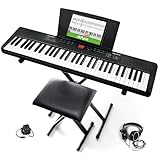
Overview: The Alesis Melody 61 MK4 is a lightweight, portable keyboard designed for absolute beginners. With 61 non-weighted keys, 300 built-in sounds, and a complete accessory package, it offers an accessible entry point to piano learning. Weighing just 6.6 pounds and offering battery power, it’s built for flexibility and casual practice anywhere.
What Makes It Stand Out: The massive 300-sound library and 300 accompaniment rhythms provide endless exploration beyond piano basics. Battery operation (6 AA batteries) enables true portability for outdoor playing or travel. The bundle includes every accessory a beginner needs—adjustable stand, bench, headphones, tablet stand, and power adapter—at a budget price point that removes financial barriers.
Value for Money: At approximately $150-200, this represents one of the most affordable complete keyboard packages available. While it won’t satisfy advancing players, it costs less than three months of piano lessons, making it ideal for testing a child’s interest. However, its limitations mean most students will outgrow it within 6-12 months, requiring another purchase.
Strengths and Weaknesses: Strengths: Extremely affordable; highly portable; battery-powered option; vast sound library; complete accessory bundle. Weaknesses: Non-weighted keys hinder technique development; only 61 keys limit repertoire; basic piano sound quality; plastic construction; limited polyphony.
Bottom Line: Best suited for young children (ages 5-10) exploring musical interest or casual hobbyists. The lack of weighted keys makes it unsuitable for serious technique development. Consider this a trial instrument—if interest persists, upgrade to a weighted-key digital piano within a year. For true beginners on a strict budget, it’s serviceable but temporary.
3. Roland FP-10 Digital Piano - Black Bundle with Adjustable Stand, Bench, Sustain Pedal, Instructional Book, Online Lessons, Instructional DVD, and Austin Bazaar Polishing Cloth

Overview: This Roland FP-10 bundle pairs the acclaimed entry-level digital piano with an adjustable stand for flexible setup. The 88-key PHA-4 hammer-action keyboard and SuperNATURAL sound engine deliver authentic piano fundamentals, while the height-adjustable stand accommodates various player sizes and spaces. Complete with bench, pedal, and instructional materials, it’s a versatile practice solution.
What Makes It Stand Out: The adjustable stand offers superior flexibility compared to fixed furniture-style stands, making it ideal for growing children or multi-user households. The PHA-4 keyboard’s Escapement mechanism provides authentic acoustic-piano touch rarely found at this price. Bluetooth MIDI connectivity expands learning through apps, while Twin Piano mode enables effective side-by-side instruction. The SuperNATURAL engine’s dynamic response supports expressive playing.
Value for Money: Similar to the KSC-FP10 bundle at $500-600, this version trades furniture aesthetics for ergonomic versatility. The adjustable stand benefits families with multiple players or those needing custom height configurations. Compared to acoustic pianos ($3,000+) or higher-end digitals, it delivers 90% of the playing experience at 20% of the cost, with zero maintenance expenses.
Strengths and Weaknesses: Strengths: Authentic hammer-action keys; height-adjustable stand; SuperNATURAL sound; Bluetooth connectivity; comprehensive bundle. Weaknesses: Adjustable stand less stable than furniture-style; basic speakers; limited non-piano sounds; plastic construction; basic sustain pedal.
Bottom Line: Choose this bundle over the KSC-FP10 version if flexibility trumps aesthetics. The adjustable stand better serves growing children or teachers who transport their instrument. For serious beginners prioritizing authentic touch and long-term usability, this remains an exceptional value. The core FP-10 piano delivers professional fundamentals that support proper technique development.
4. Nord Stage 4 88 Digital Piano Bundle with Adjustable Stand, Bench, Sustain Pedal, Headphones, Instrument Cable, and Austin Bazaar Polishing Cloth
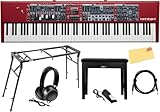
Overview: The Nord Stage 4 88 is a professional-grade stage piano designed for demanding performers. This powerhouse combines premium piano, organ, and synth engines in a road-ready package. The bundle includes a sturdy adjustable stand, bench, sustain pedal, headphones, instrument cable, and polishing cloth—everything a gigging musician needs for immediate performance and practice.
What Makes It Stand Out: The Wave 2 synth engine delivers virtual analog, FM, wavetable, and sample-based synthesis with three independent layers. Physical LED drawbars provide authentic organ control, while the new Preset Library offers gig-ready sounds instantly. Dedicated LED faders for each layer enable intuitive real-time sound shaping. The advanced arpeggiator and premium effects—including Pump and Spin—create complex textures effortlessly.
Value for Money: At approximately $4,500-5,000, this represents a significant investment justified only for professional musicians. For gigging keyboardists needing piano, organ, and synth in one board, it replaces three separate instruments worth $6,000+. However, it’s extreme overkill for beginners or home hobbyists who can achieve similar results with software and a MIDI controller for under $1,000.
Strengths and Weaknesses: Strengths: Unmatched sound quality; premium build; three powerful sound engines; intuitive panel; professional connectivity. Weaknesses: Extremely expensive; excessive for beginners; heavy (41 lbs); limited internal storage; no built-in speakers.
Bottom Line: This is a professional tool, not a practice piano. Ideal for serious gigging musicians, studio professionals, and performers who require road-worthy reliability and studio-grade sound. Beginners should look elsewhere—your money is better spent on lessons and a simpler instrument. For its target audience, it’s arguably the best stage piano available.
5. Piano Adventures Primer Level 2nd Edition Bundle Set By Nancy Faber - Lesson, Theory, Performance, Technique & Artistry Books & Juliet Music Piano Keys 88/61/54/49 Full Set Removable Sticker

Overview: This comprehensive educational package provides the complete Piano Adventures Primer Level curriculum by Nancy Faber, America’s leading piano method author. The bundle includes four essential books—Lesson, Theory, Performance, and Technique & Artistry—plus removable keyboard stickers for visual learning. It’s designed for absolute beginners, typically ages 5-7, establishing solid foundational skills.
What Makes It Stand Out: The Faber method’s spiral curriculum integrates technique, theory, and musicianship seamlessly. The Technique & Artistry book develops proper hand position and expressive playing from day one. Included removable stickers help young students visualize note names without permanent keyboard damage. The Performance book provides early success through musical, teacher-duet pieces. This systematic approach prevents gaps in learning better than piecemeal methods.
Value for Money: At approximately $30-40, this represents exceptional educational value. Individual books retail for $8-10 each, so the bundle offers modest savings. More importantly, it provides a proven, sequential curriculum that eliminates guesswork for parents and teachers. Compared to uncoordinated method books, this integrated approach accelerates progress, saving months of potential confusion and backtracking.
Strengths and Weaknesses: Strengths: Proven, pedagogically sound curriculum; comprehensive 4-book approach; removable stickers aid visual learners; engaging music; teacher duets. Weaknesses: Requires teacher guidance for best results; stickers may become crutch if overused; limited appeal for self-taught adults; assumes child learner.
Bottom Line: Essential purchase for young beginners studying with a qualified teacher using the Faber method. The integrated curriculum builds solid technique and musicianship systematically. While stickers help initially, remove them after a few months to encourage note-reading. For parents, this bundle eliminates curriculum guesswork. Adult self-learners may prefer method books with more explanatory text.
6. Casio CT-X700 Portable Keyboard Bundle with Adjustable Stand, Bench, Headphones, Sustain Pedal, Power Supply, Instructional DVD, and Austin Bazaar Polishing Cloth

Overview: The Casio CT-X700 bundle delivers a complete entry-level piano experience from a trusted name in electronic instruments. With 61 full-size touch-responsive keys, this portable keyboard targets beginners and intermediate players seeking authentic feel without the acoustic piano price tag. The comprehensive package eliminates guesswork, providing every essential accessory for immediate practice sessions.
What Makes It Stand Out: The CT-X700’s 600 tones and 195 rhythms dramatically outclass competitors offering only 255 presets, providing exceptional sonic variety for exploration. Casio’s touch-responsive keys respond to playing dynamics—an essential feature rarely found at this price point. The bright backlit LCD display ensures effortless navigation during performances, while the included sustain pedal adds genuine piano expression. The bundle’s instructional DVD offers structured guidance, making it ideal for self-learners.
Value for Money: Priced in the mid-range, this bundle justifies every dollar through Casio’s reliability and component quality. Individual purchases of comparable stands, benches, and pedals would exceed the package cost. While cheaper alternatives exist, they lack Casio’s proven sound engine and durability. You’re investing in a instrument that retains value and won’t need immediate replacement as skills progress.
Strengths and Weaknesses: Pros include the prestigious brand reputation, superior 600-tone library, touch-sensitive keys, and truly complete accessory package. The backlit display excels in dim environments. Cons involve the 61-key limitation restricting advanced classical repertoire, and the price may stretch ultra-tight budgets. The included headphones are functional but not premium.
Bottom Line: This bundle serves serious beginners perfectly. If you prioritize authentic playing feel, sonic diversity, and long-term reliability over rock-bottom pricing, the Casio CT-X700 delivers exceptional value. It’s a smart investment that grows with the student.
7. 61 Key Portable Electronic Keyboard Piano w/Lighted Full Size Keys, LCD, Headphones, X-Stand, Stool, Music Rest, Microphone, Note Stickers, Built-In Speakers,3 Teaching Modes

Overview: This JIKADA-branded keyboard targets absolute beginners through aggressive pricing and light-up key guidance. With 61 full-size keys and a bundled microphone, it positions itself as an all-in-one music station for novices exploring both piano and vocal elements. The three teaching modes promise structured learning without instructor costs.
What Makes It Stand Out: The integrated microphone sets this apart from most bundles, enabling singing practice alongside playing. Three teaching modes—one-key, follow, and ensemble—provide progressive learning pathways. The status memory function preserves your custom settings mid-performance, a thoughtful touch absent in many budget keyboards. Light-up keys offer visual learners immediate feedback on note placement.
Value for Money: This represents exceptional budget value, often priced 30-40% below name-brand competitors. The inclusion of a microphone, X-stand, stool, headphones, and note stickers eliminates all startup costs. While build quality reflects the price point, the feature set exceeds expectations for the segment. It’s an affordable experiment for uncertain beginners.
Strengths and Weaknesses: Pros include the microphone inclusion, light-up teaching system, memory function, and unbeatable price-to-feature ratio. The LCD display provides clear visual feedback. Cons involve questionable long-term durability, generic sound quality with only 255 tones, and the puzzling “not for users under 12” warning that limits its educational market. Off-brand status means limited support.
Bottom Line: Perfect for budget-conscious beginners testing their musical interest. If you want maximum features for minimum investment and don’t mind trading brand prestige for functionality, this bundle delivers. Consider upgrading within a year if commitment grows.
8. AQNIEGEP 61-Key Electric Keyboard Piano with Lighted Keys, Christmas Gifts, Premium Bundle: Stand, Bench, Mic,Headphones, Music Stand, Stickers, 70 Demos 200 Tones/Rhythms, Beginners/Adults

Overview: AQNIEGEP markets this as a “premium” beginner bundle, though the brand lacks Casio or Yamaha recognition. With 61 lighted keys and 200 tones/rhythms, it covers essential bases for novice pianists. The package includes a microphone and foldable upholstered bench, targeting comfort during extended practice sessions.
What Makes It Stand Out: The foldable upholstered bench with “high-quality sponge” prioritizes player comfort—a detail often overlooked in budget bundles. Rhythm programming capability allows custom pattern creation, fostering composition skills. The adjustable stand accommodates various player heights, making it family-friendly. Seventy demo songs provide ample learning material.
Value for Money: Positioned in the budget-midrange segment, this bundle offers fair value but carries brand risk. While competitively priced against similar off-brand offerings, it lacks the proven reliability of established manufacturers. The comfortable bench adds tangible value, but sonic quality and key action remain unknowns without hands-on testing.
Strengths and Weaknesses: Pros include the comfortable seat design, rhythm programming feature, complete accessory set, and adjustable stand. The light-up keys aid visual learning. Cons center on the unknown brand’s track record, vague “orchestra quality” marketing claims, and limited 200-tone library compared to Casio’s 600. Build quality and customer support remain question marks.
Bottom Line: A decent gamble for beginners prioritizing comfort and features over brand assurance. If the upholstered bench appeals and you’re willing to accept potential quality variability, it’s worth considering. For guaranteed reliability, spend slightly more on established brands.
9. Piano Adventures Level 1 2nd Edition Bundle Set By Nancy Faber - Lesson, Theory, Performance, Technique & Artistry Books & Juliet Music Piano Keys 88/61/54/49 Full Set Removable Sticker

Overview: This isn’t a keyboard—it’s the gold-standard piano method book set for Level 1 students. Nancy Faber’s Piano Adventures series dominates modern pedagogy through its holistic approach, combining lesson material with theory, performance, technique, and artistry development. The included removable key stickers support home practice on any keyboard size.
What Makes It Stand Out: The four-book integration creates a complete learning ecosystem unmatched by single-method books. Faber’s “Technique & Artistry” book specifically develops expressive playing, not just note-reading. The removable stickers work across 49 to 88-key instruments, providing universal compatibility. This method emphasizes musicality from day one, not just rote memorization.
Value for Money: Exceptional value for serious students. Purchasing books separately costs 15-20% more, and the included stickers ($10-15 separately) add further savings. Compared to months of private lessons, this $30-40 investment provides structured curriculum for weeks of self-study or supplemental teacher material. It’s the most cost-effective way to learn proper technique.
Strengths and Weaknesses: Pros include Faber’s pedagogical excellence, comprehensive four-book approach, removable sticker versatility, and proven success with millions of students. The spiral binding lies flat on music stands. Cons require self-discipline without a teacher, and the method progresses quickly—some students need additional reinforcement material. You’ll eventually need Level 2 books.
Bottom Line: Essential purchase for any beginning pianist, regardless of keyboard brand. Pair this with a quality instrument for optimal results. If you’re serious about learning correctly from the start, this bundle is non-negotiable. It’s the best investment in your musical education.
10. Best Choice Products 61-Key Beginners Complete Electronic Keyboard Piano Set w/Lighted Keys, LCD Screen, Headphones, Stand, Bench, Teaching Modes, Note Stickers, Built-In Speakers - Black
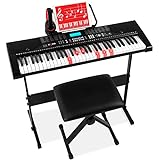
Overview: Best Choice Products delivers a feature-packed budget bundle targeting absolute beginners. With 61 lighted keys, 255 tones/rhythms, and three teaching modes, it checks all standard entry-level boxes. The USB port for external audio playback distinguishes it from basic competitors, while the H-style stand offers superior stability over X-frames.
What Makes It Stand Out: The USB port enables playing along with custom MP3s, transforming practice into interactive jam sessions. H-style stand construction prevents the wobbling common with X-stands, crucial for confident playing. The “Best Choice Products” brand, while budget-tier, maintains consistent availability and basic customer support—unlike fly-by-night off-brands. Three teaching modes include one-key, follow, and ensemble functions.
Value for Money: Among the best budget values, frequently undercutting competitors by $20-30 while matching their feature sets. The USB port and H-stand alone justify the minimal price premium over bare-bones keyboards. While sonic authenticity can’t match Casio, the functionality-per-dollar ratio is outstanding for casual learners.
Strengths and Weaknesses: Pros include USB connectivity, stable H-stand, light-up teaching system, complete accessory package, and reliable budget brand presence. The 255 tones cover basics adequately. Cons involve generic piano samples, questionable key durability under heavy use, and limited dynamic expression without touch sensitivity. Speakers lack depth for serious listening.
Bottom Line: Ideal for casual learners and gift-givers seeking maximum features at minimum cost. If you want stability, USB functionality, and teaching tools without brand premiums, this delivers. Serious students should invest in touch-sensitive keys, but for hobbyists, it’s a smart budget choice.
Why Bundle Deals Make Perfect Sense for Budget-Conscious Pianists
The Hidden Costs of Buying Separately
When you piece together a digital piano setup component by component, the price tag rarely tells the full story. That attractively priced keyboard might require a separate power adapter ($25-40), a sustain pedal that doesn’t slip ($30-50), and a stand with adequate stability ($80-150). By the time you add a bench that won’t collapse within six months ($60-120), you’ve overspent by 30-40% compared to a well-designed bundle. Manufacturers now engineer these packages with cost-saving synergies—matching connectors, unified power systems, and bulk-packaged accessories that pass savings directly to you.
Warranty and Compatibility Advantages
Bundle purchases in 2026 typically trigger enhanced warranty coverage that piecemeal buying cannot match. Many manufacturers offer extended protection plans—sometimes up to three years—when you buy the complete ecosystem. More importantly, compatibility headaches vanish: the bench height aligns perfectly with the keyboard’s playing surface, the stand’s mounting brackets fit without modification, and the sustain pedal connects with the correct polarity out of the box. This integration eliminates the frustrating trial-and-error that plagues separate purchases.
Understanding “Budget” in the 2026 Digital Piano Market
Price Range Realities
The term “budget” in 2026 spans $400 to $900 for complete bench-and-stand bundles. Below this threshold, you’re likely encountering toy-grade instruments with non-weighted keys and suspect durability. Above it, you enter intermediate territory where features like wooden key actions and multi-speaker arrays become standard. The sweet spot—$550 to $750—now delivers fully-weighted hammer-action keys, minimum 128-note polyphony, and Bluetooth 5.2 connectivity, benchmarks that were premium-only just three years ago.
What “Budget” Doesn’t Mean: Quality Non-Negotiables
Budget should never translate to unplayable. In 2026, even entry-level bundles must include graded hammer-standard (GHS) or equivalent key action, where lower keys feel heavier than higher ones. Sound sampling should derive from authentic acoustic pianos, not synthesized approximations. The bench must support at least 250 pounds without creaking, and the stand should tolerate vigorous playing without lateral movement. These aren’t luxury features—they’re baseline requirements that separate legitimate instruments from expensive decorations.
Essential Features That Define Value in 2026
Key Action and Touch Sensitivity
The difference between a motivating practice session and a frustrating chore lives in the keybed. Modern budget bundles employ contactless sensor technology that detects key velocity with microscopic precision, eliminating the mechanical degradation that plagued older membrane systems. Look for terms like “escapement mechanism” or “let-off simulation”—features that replicate the subtle click felt when pressing acoustic piano keys slowly. Three sensitivity curves (soft, medium, hard) should be standard, allowing you to customize response to your playing style.
Sound Engine Technology
2026’s budget instruments leverage AI-enhanced sampling that stretches fewer original samples across the keyboard more intelligently. Rather than recording every key at every velocity (prohibitively expensive), manufacturers use machine learning to generate convincing intermediate samples. The result? A 20GB sound library that behaves like a 200GB one. Pay attention to “damper resonance” and “string sympathetic vibration” settings—these digital modeling techniques create the lush, ringing harmonics that make simple chords sound orchestral.
Polyphony Count: Why 128 is the New Minimum
With sustain pedal use and layered sounds, 64-note polyphony—once acceptable—now causes premature note stealing in moderately complex pieces. A 128-note polyphony engine ensures that sustained bass notes don’t mysteriously disappear when you add a melodic line. For students tackling intermediate classical repertoire or jazz voicings with pedal, this isn’t optional. Some 2026 bundles offer 192-note polyphony through firmware optimization, providing headroom for dual-mode playing (piano + strings) without compromise.
Connectivity Standards in 2026
USB-C has finally replaced the mishmash of USB-B and proprietary connectors, offering faster data transfer and power delivery over a single cable. Bluetooth 5.2 provides latency as low as 20ms—imperceptible to most players—enabling wireless connection to tablets for interactive apps. Look for “audio over Bluetooth” capability, which streams backing tracks directly through the piano’s speakers, turning your instrument into a multimedia hub. MIDI 2.0 support future-proofs your investment, though few apps fully utilize it yet.
The Bench: More Than Just a Seat
Adjustable vs. Fixed-Height Benches
Fixed-height benches save $20-30 but cost far more in posture problems. Your elbow should form a 90-110 degree angle when your fingers rest on the keys. With adjustable benches offering 18" to 22" height ranges, multiple household members can achieve proper ergonomics. Pneumatic adjustment mechanisms have trickled down to budget bundles, allowing smooth height changes without pinching fingers in metal brackets. The adjustment range should be clearly marked—vague “adjustable” claims often mean just one or two preset positions.
Storage Compartments and Build Quality
A flip-top storage compartment transforms your bench from passive furniture to active music organizer. Depth matters: 3-4 inches accommodates sheet music, while 5+ inches swallows metronomes, cables, and even small tablets. Inspect product photos for hinge quality—continuous piano hinges distribute weight better than two small butt hinges. The wood should be at least ¾-inch thick plywood or MDF; particle board absorbs moisture and collapses under weight over time.
Ergonomics and Posture Considerations
The ideal bench depth (front to back) is 12-14 inches—shallow enough to plant feet flat on the floor, deep enough to support your sitting bones. Budget benches often skimp here, offering 10-inch depths that force perching. Padding should be high-density foam (2-3 inches) wrapped in vinyl or faux leather that wipes clean. Avoid fabric upholstery; it pills and stains within months. Some 2026 bundles include benches with subtle forward tilt (5-10 degrees), promoting natural spinal alignment during long practice sessions.
The Stand: Stability Meets Practicality
X-Frame vs. Z-Frame vs. Console-Style
X-frames dominate budget bundles for their foldability, but not all are equal. Look for double-braced designs where the center hinge includes a locking mechanism—single-braced stands sway under fortissimo playing. Z-frames offer superior stability with a smaller footprint, making them ideal for apartments. Console-style stands, once premium-only, now appear in budget bundles through molded plastic construction that mimics furniture aesthetics while cutting weight. These often include integrated pedal boards and cable management channels.
Portability vs. Permanent Setup
If you plan to gig or store the piano after practice, weight becomes critical. Quality X-frames weigh 10-15 pounds and fold to 4-inch profiles. However, portability sacrifices stability—expect some lateral flex. For permanent placement, Z-frames or console stands offer rock-solid platforms that feel like acoustic piano foundations. Quick-release mechanisms have improved dramatically; 2026 models use cam-lock levers that secure in seconds without tools, eliminating the frustration of lost wingnuts.
Weight Capacity and Durability
The stand’s rated capacity should exceed your piano’s weight by at least 50%. A 25-pound keyboard needs a stand rated for 40+ pounds—this buffer accounts for dynamic playing forces. Check for rubberized grips at contact points; hard plastic scratches piano bottoms and allows creeping. Powder-coated steel resists corrosion better than painted finishes, crucial in humid climates. Some budget bundles now include aluminum stands that shave weight while maintaining strength, though they cost $10-15 more to manufacture.
2026’s Must-Have Technological Integrations
Bluetooth MIDI and Audio Standards
The 2026 baseline includes simultaneous Bluetooth MIDI and audio connection—previously, you could only use one at a time. This lets you play along with instructional videos while the app records your performance wirelessly. Latency compensation algorithms in the piano’s firmware align the signals, so what you hear matches what you play. Verify the bundle specs mention “dual Bluetooth mode” or “wireless multiplexing.” Without this, you’ll still be tethered by cables for serious learning.
App Ecosystems and Learning Platforms
Budget bundles now partner with subscription-based learning apps, often including 3-6 month trials. These aren’t gimmicks—AI-powered feedback analyzes your timing and dynamics, offering corrections in real-time. The piano’s display (even simple LED screens) shows app-generated sheet music and fingerings. Look for bundles advertising “MIDI 2.0 Property Exchange” support, which allows apps to automatically configure the piano’s settings for specific lessons, removing technical barriers for beginners.
USB-C and Power Delivery Updates
USB-C PD (Power Delivery) means your piano can charge a connected tablet while transferring MIDI data, eliminating the “low battery” interruption mid-practice. The port should deliver at least 15W—enough to maintain an iPad’s charge during active use. Some 2026 bundles include powered USB hubs in the stand itself, letting you connect phones, lights, or recording interfaces without cluttering the piano’s single port. This turns your stand into a command center.
Room Acoustics and Speaker Configurations
Onboard Speaker Systems
Budget bundles have abandoned downward-firing speakers that muddy bass in carpeted rooms. Forward-facing 2-way systems (tweeter + woofer) with bass reflex ports deliver clarity even at low volumes. Total wattage around 20W suffices for home practice, but speaker placement matters more than power. Speakers mounted near the keybed, angled slightly upward, project sound toward your ears rather than your belly. Some bundles include “acoustic modeling” settings that EQ the output based on room placement—corner, wall, or open space.
Headphone Technology and Silent Practice
The headphone amplifier quality in 2026 budget pianos rivals dedicated DACs from five years ago. Look for impedance matching—32-ohm headphones should sound full, not tinny. Binaural sampling technology, once exclusive to $2000+ instruments, now appears in budget models, creating a 3D soundstage that makes silent practice immersive rather than isolating. The bundle should include a headphone hook on the stand; otherwise, you’re draping expensive cables over the piano’s edge, risking jack damage.
Spatial Considerations for Your Setup
Measuring Your Space
A full 88-key digital piano with stand requires a 55-inch width minimum, but don’t forget depth: allow 24 inches from the wall to the keybed front, plus 30 inches of playing space behind the bench. Height matters too—console-style stands raise keyboards to 28-30 inches, requiring ceiling clearance if placing under shelves. Use painter’s tape to outline the footprint before purchasing. Many 2026 returns stem from “it doesn’t fit” issues, not performance problems.
Aesthetic Integration
Budget no longer equals black plastic monoliths. Manufacturers offer bundles in white, rosewood grain, and even matte sage green finishes. The bench upholstery might sport contrast stitching or button tufting that mimics mid-century modern furniture. Consider your room’s existing wood tones and metal finishes—brushed nickel stand legs clash with oil-rubbed bronze light fixtures. Some bundles include reversible panels: one side classic black, the other woodgrain, letting you redecorate without buying new gear.
Where to Shop Smart in 2026
Online vs. Brick-and-Mortar
Online retailers offer 15-20% lower prices but limited trial periods. However, 2026’s generous return policies—often 45 days with free return shipping—mitigate risk. Physical stores let you test key action, but their bundle selection is limited to high-margin models. The hybrid approach: test in-store, then search online for exclusive bundle SKUs (different model numbers) that include upgraded benches not available in showrooms. These “online-only” bundles frequently offer better value.
Seasonal Buying Patterns
Post-holiday January sees 25-30% discounts as retailers clear inventory before new spring models launch. Back-to-school season (August) triggers education discounts—often 10-15% extra with a student email address. Amazon Prime Day and equivalent events feature lightning deals on bundles, but research beforehand: some deals use last-generation stock with older Bluetooth versions. Manufacturers’ fiscal year-ends (often March) bring direct-from-brand sales with extended warranties thrown in.
Open-Box and Refurbished Opportunities
Certified refurbished bundles from major retailers undergo rigorous testing and include full warranties. The savings—typically 30-40%—outweigh the risk if the vendor offers at least a 90-day guarantee. Open-box items (returned within 30 days) are nearly new but discounted 15-20%. Inspect the return policy: “open-box” should mean complete repackaging and inspection, not just reselling someone else’s problem. In 2026, many refurb units are simply overstock from model year transitions, not defective returns.
Avoiding Common Budget Bundle Pitfalls
The “Too Good to Be True” Red Flag
A $299 bundle with 88 weighted keys and a bench is mathematically impossible without severe compromises. Either the keys use spring action (not hammer), the polyphony is 32 notes (unplayable with pedal), or the stand is rated for 15 pounds (collapse risk). Check the “included accessories” list carefully—some bundles substitute a “sustain switch” (on/off button) for a proper pedal. Others advertise “Bluetooth” but only include audio, not MIDI, limiting app functionality.
Vague Warranty Terms
“Bumper-to-bumper” warranties mean nothing without specifics. Quality bundles separate coverage: 3 years on electronics, 5 years on key action, 1 year on bench upholstery. Be wary of “limited lifetime” claims that only cover manufacturing defects, not wear. In 2026, reputable brands publish warranty PDFs online—read them before buying. Pay attention to shipping costs for warranty service; some manufacturers require you to pay freight for a 40-pound keyboard, negating the bundle’s savings.
Non-Standard Power Adapters
Proprietary power bricks with 19V outputs and unusual connectors lock you into expensive replacements ($40-60). Quality bundles use standard 12V DC barrels or USB-C PD, letting you substitute universal adapters in a pinch. Check the adapter’s amperage rating—underpowered supplies cause audio distortion and random reboots. The bench should never require power; motorized height adjustment in budget bundles signals cost-cutting elsewhere.
Extending Your Investment’s Lifespan
Maintenance Basics
Dust is the enemy of key action. Use the included dust cover or a breathable cotton sheet—plastic traps moisture. Monthly, vacuum between keys using a brush attachment. The bench hinges need annual lubrication with silicone spray, not WD-40 (which attracts dust). For console-style stands, tighten all bolts every six months; vibration loosens them gradually. Keep liquids 3 feet away; a single coffee spill can destroy the key sensor membrane.
Firmware Updates
2026’s digital pianos receive over-the-air updates via Wi-Fi or Bluetooth. These aren’t just bug fixes—they add features. A piano might gain new instrument voices, improved reverb algorithms, or enhanced app compatibility a year after purchase. Check the manufacturer’s update history online; brands with regular updates extend your instrument’s relevance. Disable auto-update during critical practice periods (recital week), as updates can reset custom settings.
When to Upgrade
Your bundle should serve 5-7 years before limitations become frustrating. Upgrade triggers include: needing audio recording direct to USB (budget models often lack this), requiring more than 2 headphone jacks for teaching, or wanting wooden key actions for advanced classical technique. Sell your old bundle as a complete unit; the matched bench and stand fetch 40% more than a keyboard alone. Time upgrades for new model releases, when used prices peak before the market floods.
Frequently Asked Questions
1. Can I really get a playable weighted-key digital piano with bench and stand for under $600 in 2026?
Absolutely. The $550-600 range now includes GHS key action, 128-note polyphony, and Bluetooth connectivity as standard. Manufacturers achieve this through economies of scale and AI-optimized sound engines. The bench will be adjustable with adequate padding, and the stand will be double-braced X-frame or entry Z-frame. Compromises appear in speaker quality (adequate but not inspiring) and advanced features like wooden keys or audio recording.
2. How do I verify the bench height will work for both my 8-year-old and myself?
Measure elbow height from floor in a seated position: your child likely needs 19-20 inches, you need 21-22 inches. Choose a bench with at least 4 inches of pneumatic or threaded adjustment range. Some 2026 bundles include “dual-mode” benches with quick-release levers, allowing tool-free height changes in seconds. If the product specs don’t list minimum and maximum heights, contact the seller—vague claims often hide limited adjustability.
3. What’s the real difference between Bluetooth MIDI and Bluetooth Audio, and do I need both?
Bluetooth MIDI transmits your key presses and pedal movements to apps wirelessly, enabling interactive lessons and recording. Bluetooth Audio streams sound from your phone/tablet through the piano’s speakers, letting you play along with backing tracks. Having both means you can use a lesson app that hears your playing (MIDI) while you hear the app’s accompaniment through the piano (Audio). In 2026, demand simultaneous dual-mode Bluetooth—single-mode connections force you to choose between learning features and audio convenience.
4. Are X-frame stands really stable enough for serious practice?
Modern double-braced X-frames with locking center hubs handle vigorous playing if rated for 1.5x your keyboard’s weight. The secret is the anti-slip end caps: rubberized grips with teeth that bite into carpet or hardwood prevent creeping. For daily practice, they’re sufficient. However, if you practice fortissimo Romantic-era pieces or have a heavy playing style, a Z-frame offers 30% more lateral stability and is worth the small price premium often found in upgraded bundles.
5. How long should I expect a budget bundle to last before needing replacement?
With proper care, the electronic components (piano) should function flawlessly for 7-10 years. The bench padding compresses after 3-5 years of daily use but remains serviceable. Stand durability depends on type: X-frames may develop wobble at joints after 5 years; Z-frames and console stands last indefinitely. The first failure point is usually the sustain pedal’s internal switch (2-4 years). Replace it with a heavy-duty aftermarket pedal ($30) rather than junking the entire bundle.
6. Can I upgrade individual components later, like swapping the bench for a better one?
Yes, but compatibility matters. The keyboard’s bottom mount pattern must match the stand’s top plate. Most use standard 17-inch spacing, but some budget models have proprietary holes. Benches are universally swappable—just ensure the new bench’s height range overlaps with your current setup. If upgrading to a console-style stand later, verify it supports your piano’s weight and has the correct mounting brackets. Buying a bundle with standard fittings preserves future upgrade paths.
7. What maintenance will void my warranty?
Opening the piano’s chassis to “fix” a sticky key instantly voids electronics coverage. Using non-approved power adapters or cleaning solutions (especially alcohol-based) on keys cancels warranties. However, routine maintenance—vacuuming between keys, lubricating bench hinges, tightening stand bolts—is expected and encouraged. Keep records (photos, receipts) of any aftermarket parts like replacement pedals; these don’t void warranties unless they cause damage. Always check the warranty PDF’s “owner serviceable items” list.
8. Is it better to buy a bundle during Black Friday or wait for post-holiday clearance?
Post-holiday clearance (January-February) offers deeper discounts (25-35% vs. 15-20% on Black Friday) but limited selection. Black Friday bundles are often specially manufactured with just enough features to hit price points, sometimes using last-generation chipsets. January sales clear authentic current inventory. If you need a piano immediately, Black Friday is fine. If you can wait, January’s selection may be smaller, but you’ll get a properly engineered bundle at a steeper discount.
9. How do I know if a bundle’s “educational app partnership” is actually useful or just marketing fluff?
Research the app independently in your device’s app store. Quality apps have 4.5+ stars with 10,000+ reviews and offer full functionality without the piano. Check if the bundle’s “free trial” requires credit card entry (red flag) or automatically converts to a paid subscription. Legitimate partnerships provide 6-month no-strings trials and include lesson content from recognized publishers like Hal Leonard or Faber. The best apps offer offline mode, so you’re not dependent on Wi-Fi for every practice session.
10. What should I do if my bundle arrives with shipping damage?
Document everything before opening: photograph the box from all angles, especially any crushing or punctures. Open on video if possible. If damage is visible, stop and contact the seller immediately—most have 48-hour damage claim windows. Don’t assemble damaged components; doing so can be construed as acceptance. Reputable retailers ship replacement parts or entire bundles with expedited shipping at no cost. For minor cosmetic damage, you can often negotiate a 10-15% partial refund while keeping the functional unit. Always communicate through the platform’s messaging system to maintain records.
See Also
- 10 Budget Digital Pianos with Stand and Bench Under $700 for Families in 2026
- 10 Affordable Digital Pianos with Bench and Stand for Holiday Gifts in 2026
- How to Choose the 10 Best Digital Pianos with Stand and Bench for Home Studios in 2026
- 10 Affordable Digital Pianos with Stand & Bench for College Dorms in 2026
- 10 Budget-Friendly Beginner Digital Pianos Under $400 for Kids in 2026