Table of Contents
Navigating college life on a shoestring budget while nurturing your musical passion might seem like a contradiction, but it doesn’t have to be. Between ramen-fueled study sessions and navigating campus life, a quality acoustic guitar can become your ultimate stress-buster, creative outlet, and social magnet. The good news? In 2026, the budget guitar market has evolved dramatically, offering surprisingly playable instruments that won’t force you to choose between groceries and gear. Guitar packs—those all-in-one bundles designed for beginners—have become particularly sophisticated, delivering genuine value that extends far beyond the cheap starter kits of yesterday.
Understanding what separates a worthwhile investment from a campus clutter-creator requires looking beyond flashy marketing and focusing on the features that genuinely impact your playing experience. Whether you’re planning dorm-room jam sessions, acoustic sets at the campus coffee shop, or simply need a reliable companion for late-night songwriting, knowing how to evaluate these packages will save you money, frustration, and the dreaded buyer’s remorse that haunts so many first-time guitar purchases.
Top 10 Acoustic Guitar Packs
Detailed Product Reviews
1. Fender California Debut Redondo Series Acoustic Guitar Pack, Beginner Guitar, 2-Year Warranty, Includes Gig Bag, Stand, and More, Natural

Overview: The Fender California Debut Redondo Pack delivers everything a beginner needs in one convenient box. This comprehensive starter set centers around a laminate dreadnought acoustic with Fender’s iconic 6-in-line headstock, backed by the brand’s 75-year legacy of craftsmanship and a reassuring two-year warranty.
What Makes It Stand Out: Beyond the guitar itself, the included Fender Play subscription provides thousands of structured video lessons at no extra cost—arguably the most valuable feature for absolute beginners. The package thoughtfully includes a gig bag, stand, strap, clip-on tuner, picks, and spare strings, eliminating guesswork about necessary accessories. The C-shaped neck and walnut fingerboard create a comfortable playing experience that encourages practice, while sealed-gear tuners maintain stable intonation.
Value for Money: Purchasing these items separately would easily exceed $300, making this bundle a smart financial choice. The Fender Play subscription (typically $10/month) adds substantial long-term value. While laminate construction keeps costs down, it’s a practical choice for beginners who need durability over premium tone.
Strengths and Weaknesses: Pros include the complete package, trusted brand name, excellent learning resources, and durable build. Cons are the laminate top limiting tonal complexity and the basic accessories that advancing players may eventually outgrow.
Bottom Line: Ideal for absolute beginners seeking a hassle-free start, this Fender pack combines quality, education, and essential accessories into one reliable package that removes every barrier to entry.
2. LOMEVE Guitar Accessories Kit Include Acoustic Strings, Tuner, Capo, 3-in-1 Restring Tool, Picks, Pick Holder, Bridge Pins, Nuts & Saddles, Finger Protector, Chord Chart (58PCS)
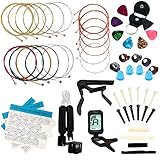
Overview: This 58-piece accessories kit from LOMEVE is designed for guitarists who already own an instrument but need to stock up on essentials. It includes three sets of coated bronze strings, maintenance tools, and learning aids—everything except the guitar itself. The package addresses common maintenance needs while providing useful practice accessories.
What Makes It Stand Out: The innovative 3-in-1 restring tool combines a winder, cutter, and bridge pin puller into one compact device that simplifies string changes dramatically. The clever 3-corner picks offer three thickness options (.5mm, .75mm, 1.0mm) in a single piece. A leather pick holder with keychain ensures picks are always accessible, while the laminated chord chart cards provide quick reference for practice sessions anywhere.
Value for Money: With three string sets alone worth $30-40, this kit represents exceptional value. Buying each component individually would cost significantly more, making it an economical way to experiment with different string colors and maintain your instrument without frequent store visits. The included tuner and capo add further savings.
Strengths and Weaknesses: Pros include incredible variety, smart multi-function tools, budget-friendly price, and convenience. Cons are the basic string quality suitable for beginners but not professionals, and the lack of a guitar makes this useless for first-time buyers. Some accessories may feel generic compared to premium brands.
Bottom Line: Perfect for students, teachers, or casual players wanting a comprehensive maintenance and accessories stash. Not for those seeking premium components, but unbeatable for practical utility and value.
3. Fender CC-60S All-Mahogany Concert V2 Pack Acoustic Guitar, with 2-Year Warranty, Natural, with Gig Bag and Accessories

Overview: The CC-60S Concert Pack upgrades the beginner experience with an all-mahogany body that delivers richer, warmer tones than typical laminate starters. This V2 bundle includes essential accessories plus a 3-month Fender Play subscription, positioning it as a step-up option for serious learners who prioritize sound quality.
What Makes It Stand Out: The concert-sized body offers superior comfort for smaller players or those who prefer intimate sessions over large dreadnoughts. Solid mahogany top, back, and sides create a cohesive, resonant voice with excellent midrange focus. The shorter scale length reduces string tension, making barre chords easier for developing hands while the 6-in-line headstock maintains Fender’s classic aesthetic.
Value for Money: While pricier than entry-level packs, the all-solid wood construction justifies the investment with superior tone that grows with your skills. The included gig bag, strap, and extra strings provide immediate playability. However, the 3-month Fender Play trial feels stingy compared to competitors offering longer subscriptions, representing the pack’s main value drawback.
Strengths and Weaknesses: Pros include premium tonewoods, comfortable concert size, trusted Fender quality, and gig-ready accessories. Cons are the shorter subscription period and mahogany’s darker tone may not suit all musical styles. The concert size lacks the volume of larger bodies for group playing.
Bottom Line: An excellent choice for committed beginners wanting authentic acoustic tone without the full dreadnought bulk. The CC-60S rewards practice with a voice that remains satisfying as technique improves.
4. Fender California Debut Redondo CE Series Acoustic Guitar, Beginner Guitar, 2-Year Warranty, Includes Built-In Tuner, 2-Tone Sunburst

Overview: The Redondo CE adds modern versatility to Fender’s beginner line with built-in electronics and a cutaway design. This stage-ready acoustic-electric features the same reliable laminate construction as its acoustic sibling but includes an onboard preamp and tuner for seamless amplification and easy tuning without external devices.
What Makes It Stand Out: The cutaway body provides effortless access to higher frets, expanding creative possibilities for advancing students. The integrated tuner ensures you’re always performance-ready without fumbling for clip-ons. The striking 2-tone sunburst finish gives this beginner instrument a professional appearance that belies its accessible price point, while the iconic 6-in-line headstock maintains brand heritage.
Value for Money: For roughly $50 more than the acoustic version, you gain significant flexibility. The pickup system alone would cost $100+ to install aftermarket. While the 2-year warranty provides peace of mind, note that this is guitar-only—no accessories are included, requiring additional investment in a bag, strap, and other essentials that the acoustic pack includes.
Strengths and Weaknesses: Pros include versatile electronics, convenient onboard tuning, upper fret access, and eye-catching aesthetics. Cons are the lack of included accessories and laminate construction that still limits tonal depth compared to solid wood. The electronics may be overkill for pure beginners practicing at home.
Bottom Line: Perfect for beginners who anticipate performing soon or want amplification options from day one. The CE variant offers future-proof versatility, though you’ll need to budget for accessories separately.
5. Donner Black Acoustic Guitar for Beginners, Adult, Teens, Starter Kits - Full Size 41’’ Steel-String Acustica Guitarra Bundle Set with Free Online Lesson, Gig Bag, Strap, Tuner, Cutaway, DAG-1CB
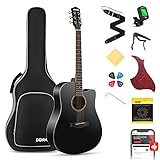
Overview: Donner’s DAG-1CB bundle challenges established brands by offering a full-size cutaway acoustic with solid spruce top at an aggressive price point. This comprehensive kit targets budget-conscious beginners unwilling to sacrifice core quality for affordability, including everything needed to start playing immediately.
What Makes It Stand Out: The solid spruce top with mahogany back and sides, reinforced by X-bracing, delivers surprising resonance and sustain typically found in more expensive instruments. The cutaway design allows easy upper-fret access, while phosphor bronze strings on a high-carbon steel core provide balanced tone and tuning stability. Every accessory is included—gig bag, strap, clip-on tuner, capo, picks, pickguard, and even an Allen wrench for adjustments.
Value for Money: This package undercuts Fender’s offerings by $50-100 while providing a solid wood top—a critical tonal advantage. The free online lessons compete with Fender Play, and the sheer completeness leaves nothing to purchase separately. For beginners testing their commitment, this minimizes financial risk while maximizing features.
Strengths and Weaknesses: Pros include exceptional value, solid spruce top, cutaway versatility, complete accessory package, and stable tuning. Cons involve Donner’s lesser brand recognition and potential quality control inconsistencies. The included gig bag offers minimal protection compared to premium options, and resale value may be lower.
Bottom Line: A remarkable value proposition that doesn’t cut corners on core components. The DAG-1CB is perfect for budget-minded beginners wanting solid wood tone and full features without the premium price tag.
6. Jim Dunlop Acoustic Pick Variety Pack - 12 Pack
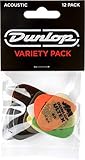
Overview: The Jim Dunlop Acoustic Pick Variety Pack delivers a curated selection of plectrums specifically chosen to enhance acoustic instrument tone and playability. This 12-pack collection features diverse materials and gauges, allowing guitarists to explore different feels and sonic characteristics without committing to a full dozen of one type. As a Made in USA product from one of the most respected names in guitar accessories, it carries immediate credibility.
What Makes It Stand Out: Unlike generic variety packs, Dunlop’s offering focuses specifically on acoustic applications, with picks selected to complement natural wood resonance and string response. The assortment typically includes their popular Tortex, Nylon, and Celluloid options in various thicknesses, giving players a practical range from delicate strumming to aggressive flatpicking. This thoughtful curation saves trial-and-error time.
Value for Money: Priced competitively for a branded 12-pack, this set offers substantial savings compared to purchasing individual picks at music store prices. For acoustic players seeking their ideal match, it’s an economical experimentation toolkit. The quality consistency across Dunlop’s manufacturing justifies the modest premium over budget alternatives.
Strengths and Weaknesses: Strengths include trusted brand quality, acoustic-specific selection, and durable materials that resist wear. The variety accelerates the discovery process for finding your perfect pick. Weaknesses are minor: the predetermined assortment may not include every player’s ideal combination, and those seeking only one specific gauge will find most picks unused.
Bottom Line: This variety pack serves as an excellent starting point for acoustic guitarists refining their preferences or stocking up on reliable options. It balances quality, variety, and price effectively.
7. D’Addario Guitar Humidifier System - Humidipak Maintain Kit - Automatic Humidity Control System - Maintenance-Free, Two-Way Humidity Control System For Guitars

Overview: The D’Addario Humidipak Maintain Kit revolutionizes guitar care through its maintenance-free, two-way humidity control system. This automatic solution maintains a constant 45-50% relative humidity inside your instrument case, protecting against climate-related damage like warping, cracking, and bridge lifting. The system eliminates the guesswork and mess associated with traditional sponge-based humidifiers.
What Makes It Stand Out: As the only true two-way humidity control for guitars, it both adds and removes moisture as needed, adapting automatically to seasonal changes and geographic locations. Unlike refillable units, it requires no water, no manual monitoring, and no seasonal adjustments. The system works silently in the background, providing peace of mind for valuable instruments.
Value for Money: While initially more expensive than basic humidifiers, the Humidipak prevents costly repairs from humidity damage. Replacement packs are needed every 2-6 months, creating ongoing costs. However, for guitars worth hundreds or thousands of dollars, this investment is minimal insurance. It compares favorably to high-end case humidifiers offering less precise control.
Strengths and Weaknesses: Strengths include completely automatic operation, precise humidity maintenance, no-mess convenience, and proven effectiveness. The two-way control is genuinely unique. Weaknesses involve recurring replacement costs and the fact it only works when the case remains closed. It cannot humidify a room or open environment.
Bottom Line: For serious guitar owners, particularly in dry climates or regions with dramatic seasonal shifts, this system is essential protection that justifies its price through unparalleled convenience and effectiveness.
8. 21 Packs Guitar Picks With Organizer Box Bass Picks Thin, Medium & Heavy 3 Different Thickness For Electric Acoustic Guitars Ukulele Bass, Guitar Gifts For Men Women Players

Overview: This 21-pack guitar pick set (containing 15 actual picks plus an organizer) provides a practical solution for players seeking variety and organization. With three thicknesses—thin (0.46mm), medium (0.71mm), and heavy (0.96mm)—this celluloid-based collection suits electric, acoustic, and bass guitars. The included transparent storage box addresses the universal problem of lost picks.
What Makes It Stand Out: The integrated organizer box distinguishes this from bulk pick bags, offering immediate storage convenience. The celluloid material delivers that classic, bright attack favored by many traditional players. With seven picks per thickness, it provides ample opportunity to determine your preference while maintaining backups. The gift-ready packaging makes it presentation-friendly.
Value for Money: This budget-friendly package delivers excellent quantity-to-price ratio. The organizer adds value absent in comparably priced competitors. For beginners unsure of their ideal gauge or experienced players wanting emergency backups, the cost is negligible. While not premium-tier, the picks perform adequately for practice and casual performance.
Strengths and Weaknesses: Strengths include exceptional affordability, useful organizer box, variety of thicknesses, and gift-worthy presentation. Celluloid provides familiar feel and tone. Weaknesses involve potentially inconsistent quality control, faster wear than premium materials like Tortex or Ultex, and a less established brand reputation compared to industry leaders.
Bottom Line: An outstanding value proposition for beginners, students, or any player tired of searching for misplaced picks. It prioritizes practicality and economy over premium durability.
9. D’Addario Acoustic Guitar Strings, 80/20 Bronze, EJ11, Light Gauge 12-53, 6-String Set, Pack of 1

Overview: D’Addario’s EJ11 80/20 Bronze strings represent a historic partnership between John D’Addario Sr. and John D’Angelico, delivering the bright, bold tone that defined acoustic guitar sound since the 1930s. These light gauge (12-53) strings feature precision winding over a hexagonal high-carbon steel core, providing crisp projection and articulate note definition for versatile playing styles.
What Makes It Stand Out: As the original 80/20 bronze formulation, these strings offer an authentic vintage-inspired voice with exceptional high-frequency response. The precision manufacturing ensures consistency from set to set, while the recyclable VCI packaging includes a Players Circle code for reward points. Made in USA quality control guarantees reliable performance.
Value for Money: Positioned in the mid-price range, EJ11s deliver professional-grade tone without premium cost. They compete directly with Ernie Ball and Martin counterparts while offering the loyalty program benefit. For players seeking that classic bronze sparkle, the price-to-performance ratio is compelling, though frequent players may prefer multi-pack options.
Strengths and Weaknesses: Strengths include bright, articulate tone; consistent manufacturing; trusted brand heritage; and reward points. The light gauge suits fingerstyle and strumming. Weaknesses involve 80/20 bronze’s faster tonal degradation compared to phosphor bronze, and the single-pack format offers less value than bulk purchases for regular string changers.
Bottom Line: A dependable choice for acoustic players wanting traditional bright response and proven reliability. Ideal for recording and live situations requiring crisp articulation.
10. D’Addario Acoustic Guitar Strings, 80/20 Bronze, EJ11-3D, Light Gauge 12-53, 6-String Set, Pack of 3

Overview: The D’Addario EJ11-3D three-pack delivers the same renowned 80/20 Bronze strings as the single set, offering bulk convenience for regular players. These light gauge (12-53) strings maintain the historic formula co-created in the 1930s, providing the signature bright, bold acoustic tone with crisp projection. Each set features precision winding over hexagonal high-carbon steel cores for consistent performance.
What Makes It Stand Out: This multi-pack format provides identical sonic characteristics to the single EJ11 set—bright articulation and strong high-frequency response—while delivering approximately 15-20% savings per set. The three-pack suits players who change strings frequently due to heavy gigging, recording schedules, or acidic perspiration that accelerates corrosion.
Value for Money: The bulk packaging significantly improves cost-effectiveness for dedicated musicians. While requiring higher initial investment, the per-set price reduction makes economic sense for anyone changing strings monthly or more often. The same Players Circle points and Made in USA quality apply, maximizing the value proposition against competitors’ multi-packs.
Strengths and Weaknesses: Strengths include bulk savings, consistent quality across sets, convenient backup supply, and the same bright 80/20 tone. The packaging reduces environmental waste per set. Weaknesses mirror the single pack: 80/20 bronze loses brilliance faster than phosphor bronze, and the upfront cost may deter casual players.
Bottom Line: Perfect for committed acoustic players who’ve settled on this specific tone. The three-pack delivers smart economics without compromising the trusted D’Addario quality.
Why Budget Guitar Packs Make Sense for College Students
College presents unique challenges for aspiring musicians: limited storage space, tight budgets, and the need for portability between home, dorm, and classes. A well-curated guitar pack addresses all these concerns while providing everything you need to start playing immediately. Unlike piecing together individual components—which can quickly exceed $400 even with budget gear—manufacturers bundle these packs at a significant discount, passing savings directly to students who need them most.
The real genius of modern guitar packs lies in their curation. Companies now understand that a beginner’s success hinges on having the right accessories from day one. This means you’re not just getting a guitar; you’re receiving a complete ecosystem designed to support your learning journey. For college students specifically, this translates to less time researching individual components and more time actually playing between classes.
Understanding the $300 Price Point: What to Realistically Expect
The sub-$300 category sits in a sweet spot between toy instruments and serious beginner gear. At this price point in 2026, you’re looking at laminated wood constructions, factory setups that are “good enough” but not perfect, and hardware that prioritizes functionality over longevity. However, “budget” no longer means “unplayable.” Manufacturing improvements in Southeast Asia have elevated the baseline quality dramatically.
Expect to encounter mostly dreadnought and concert body styles, with occasional parlor or travel-sized options. Electronics will be basic if present at all—this price range typically focuses on pure acoustic tone. The included accessories will be functional but not premium: think polyurethane gig bags rather than padded canvas, basic clip-on tuners, and thin picks. Understanding these limitations upfront prevents disappointment and helps you focus on what truly matters: playability and sound.
The Anatomy of a Guitar Pack: Essential Components
Every acoustic guitar pack worth considering includes several non-negotiable items. The guitar itself should feature a truss rod (essential for neck adjustments), decent tuning machines that don’t slip, and a bridge that securely anchors the strings. Beyond the instrument, a gig bag with at least 5mm of padding protects your investment during campus commutes.
Quality packs also include a tuner—clip-on varieties dominate this price range—a strap for playing while standing, multiple picks of varying thicknesses, and a spare set of strings. Some bundles add a capo, which is invaluable for learning songs in different keys without mastering barre chords immediately. Watch for packs that substitute these essentials with filler items like polish cloths or cheap stickers; these are red flags that the manufacturer is padding the package rather than focusing on playability.
What’s Typically Included vs. What You Might Need to Add
While packs provide the basics, college life demands specific additions. Most bundles skip a guitar stand, which is crucial in cramped dorm rooms where leaning your guitar against a wall invites disaster. A basic wall hanger or compact A-frame stand becomes essential. You’ll also want to invest in a humidifier if you’re attending school in a dry climate or running aggressive dorm heating—laminated guitars are more stable than solid wood, but they’re not immune to cracking.
Consider adding a metronome app subscription (many are free or student-discounted) and a comfortable strap if the included one feels flimsy. A pack of quality picks in various gauges helps you discover your preference, while a small notebook or phone app for chord charts completes your mobile practice setup. These modest additions rarely exceed $30 but dramatically improve your daily experience.
Key Features That Matter Most in Budget Acoustic Guitars
When evaluating guitars in this category, prioritize playability over fancy specifications. A comfortable neck profile and low action (string height) will keep you practicing longer than exotic wood veneers ever could. Check for consistent fretwork—run your finger along the neck edges; sharp fret ends indicate poor quality control and will make playing painful.
The nut width significantly impacts comfort. Wider nuts (1.75 inches) provide more space for fingerpicking but can feel stretchy for smaller hands. Standard 1.69-inch nuts offer versatility for most playing styles. Scale length matters too; shorter scales (24.75 inches) reduce string tension, making bends easier, while standard 25.5-inch scales deliver brighter tone and tighter string feel.
Body Styles and Sizes: Finding Your Perfect Fit
Dreadnoughts dominate budget packs for good reason: their large bodies produce big, balanced sound that works for strumming and flatpicking. However, their bulky size makes them awkward in tight dorm spaces and challenging for smaller-framed players. Concert and orchestra models (OM body styles) offer a middle ground with slightly smaller dimensions while maintaining respectable volume.
Parlor guitars have made a significant comeback in budget lines, offering vintage aesthetics and portability that resonates with college students. Their compact size fits easily in dorm closets and under beds, while their focused midrange cuts through noisy environments surprisingly well. Travel-sized mini-dreadnoughts represent another excellent option, though their reduced bass response might disappoint singer-songwriters seeking full accompaniment.
Tonewoods on a Budget: Laminated vs. Solid Wood
At under $300, solid wood tops are rare but not impossible to find. More commonly, you’ll encounter laminated spruce or mahogany. Laminated wood consists of multiple thin layers pressed together, making it more durable and resistant to humidity changes—actually advantageous for campus life where climate control is unpredictable. While laminated tops don’t resonate with the complexity of solid wood, modern manufacturing has narrowed the tonal gap considerably.
Focus on the top wood rather than back and sides; the soundboard drives 80% of your guitar’s tone. Laminated spruce remains the gold standard for budget acoustics, offering bright, articulate response. Avoid guitars with unspecified “select hardwood” tops—these are typically low-grade plywood that sounds dead and lifeless. Mahogany tops provide warmer, mellower tones that suit folk and blues, making them worth considering if that matches your musical direction.
Neck Profile and Playability: The Comfort Factor
The neck shapes your entire playing experience. Budget guitars typically feature C-shaped necks—versatile and comfortable for most hand sizes. However, subtle variations exist. Slim-taper profiles appeal to electric guitar converts and players with smaller hands, while chunkier vintage-style necks provide more to grip for aggressive strumming.
The fingerboard radius (its curvature) affects chord comfort. Flatter radii (around 12 inches) facilitate clean barre chords, while more curved boards (9.5 inches) feel natural for open-position strumming. Most budget acoustics hover around 12 inches, striking a practical balance. The finish matters too; satin necks feel faster and less sticky than glossy poly finishes, especially during long practice sessions or humid campus gigs.
Hardware and Electronics: What You’re Getting at This Price
Budget guitar hardware prioritizes function over finesse. Chrome-plated die-cast tuning machines have become standard, offering adequate stability if you’re not performing extreme string bends. Avoid guitars with plastic tuning buttons—they’re prone to cracking and slippage. The bridge pins will likely be plastic; while functional, they can be upgraded to ebony or bone later for improved tone transfer.
Built-in electronics remain rare under $300, but some packs include basic undersaddle pickups with volume controls. These systems are functional for open mics and casual recording but lack the nuance of premium systems. If amplification isn’t immediately necessary, prioritize acoustic tone over mediocre electronics. You can always add a soundhole pickup later for around $50 when you’re ready to perform.
Tuning Machines: Stability on a Shoestring
Quality tuning machines prevent the frustration of constant retuning—a motivation killer for beginners. Look for sealed, die-cast tuners with a 14:1 or 18:1 gear ratio. Higher ratios allow finer tuning adjustments. Test them in-store if possible; they should turn smoothly without wobble or grinding.
Locking tuners are virtually non-existent in this price range, but that’s fine. Proper string winding technique achieves similar stability. Avoid guitars with open-gear tuners unless they’re specifically vintage-styled; these expose gears to dust and moisture, requiring more maintenance in campus environments. The buttons should feel solid—if they flex or feel hollow, they’ll likely fail within a year.
Bridge and Nut Materials: The Unsung Heroes
The bridge and nut transfer string vibration to the guitar body, profoundly impacting tone and sustain. Budget guitars typically feature plastic components—a compromise that keeps costs down. While functional, plastic lacks the density of bone or synthetic alternatives like TUSQ. Fortunately, both bridge saddles and nuts are easily replaceable upgrades that can transform a budget guitar’s voice for under $20.
Check that the bridge is securely glued without gaps or excess glue squeeze-out. The saddle should sit snugly in its slot, not wobbling or crooked. At the nut, string slots should be properly spaced and not too deep—strings sitting too low in the nut cause buzzing in open positions. These details reveal a manufacturer’s quality control standards more than any marketing claim.
The Importance of a Good Gig Bag for Campus Life
Your gig bag is more than a carrying case—it’s your guitar’s primary protection against the rigors of campus life. Budget packs typically include bags with 5-10mm of foam padding, which suffices for careful transport but won’t survive being dropped down stairs or crushed in an overloaded car. Look for bags with reinforced stitching at stress points, comfortable backpack straps for hands-free carrying, and at least one large pocket for sheet music and accessories.
Water resistance becomes crucial when sprinting across campus in unexpected rain. While not fully waterproof, decent bags feature water-repellent nylon exteriors that keep moisture out during brief exposures. Some include rain flaps over zippers—a small detail that prevents water intrusion. The interior should be soft, non-abrasive material that won’t scratch your guitar’s finish during daily jostling.
Protecting Your Investment Between Classes
College environments pose unique threats to guitars: temperature fluctuations from steamy dorm radiators to frigid lecture halls, careless roommates, and constant movement. Always store your guitar in its bag when not playing, even in your dorm. This buffers against rapid humidity changes and prevents accidental knocks from becoming expensive cracks.
Consider a basic hygrometer to monitor your dorm’s humidity. Ideal levels hover between 45-55%. In dry winter months, a soundhole humidifier prevents the top from shrinking and cracking. Conversely, in humid climates, silica gel packets in the gig bag case absorb excess moisture. These inexpensive precautions cost less than a textbook but can save your guitar from catastrophic damage.
Accessories That Actually Matter vs. Filler Items
Manufacturers pad packs with accessories to increase perceived value, but not all add-ons are created equal. Essential accessories include a functional tuner, comfortable strap, varied pick assortment, and spare string set. These directly impact your ability to play and maintain the instrument. Quality packs also include an Allen wrench for truss rod adjustments—crucial for maintaining playability as seasons change.
Filler items to be wary of include generic polish cloths (any soft cotton works), cheap stickers or decals, and “instructional DVDs” in an era of YouTube tutorials. Some packs include miniature amps for acoustic-electric models—these are universally poor quality and better skipped in favor of putting that cost toward the guitar itself. Focus on packs that invest in core playability rather than gimmicks.
Picks, Straps, and Strings: The Essentials
The included picks are typically thin (.46mm) and medium (.71mm) celluloid picks—adequate for learning but not necessarily suited to your style. Experiment with different thicknesses and materials once you develop preferences. Thicker picks (1.0mm+) offer more control for single-note lines, while textured picks prevent slippage during sweaty practice sessions.
Straps in budget packs often prioritize light weight over comfort. Check that the strap has reinforced leather or synthetic ends that won’t tear under the guitar’s weight. Adjustable length matters—ensure it can accommodate both sitting and standing positions. As for strings, the included set gets you started, but budget for a string change within the first month. Fresh strings dramatically improve tone and playability, and learning to restring is an essential skill.
Tuners and Capo: Must-Haves for Learning
Clip-on tuners have revolutionized beginner guitar playing, and most packs now include them. These detect vibrations through the headstock, allowing silent tuning perfect for dorm life. Ensure the display is bright and readable; some budget tuners have dim screens that are useless in stage lighting or bright sunlight. The tuner should offer multiple modes (chromatic, guitar, bass) though you’ll primarily use chromatic.
A capo opens up countless songs without requiring advanced chord knowledge. Budget pack capos are usually spring-loaded models that work fine but may apply uneven pressure. Test that it clamps all strings firmly without pulling them sharp. If the pack lacks a capo, prioritize adding one—it’s one of the most cost-effective accessories for expanding your playable repertoire instantly.
Where to Shop Smart: Retailers and Timing Strategies
Major online retailers offer convenience and competitive pricing, but local music stores provide something invaluable: the ability to physically test guitars. Every acoustic guitar, regardless of price, has a unique voice and feel. Visiting a store allows you to find the one that resonates with you literally and figuratively. Many local shops also offer free setups with purchase, a service that typically costs $50-75 and can transform a budget guitar’s playability.
Timing your purchase strategically saves significant money. Back-to-school sales in late August and early September target students specifically, often bundling extra accessories or offering 10-15% discounts. Black Friday and Cyber Monday deals can slash prices further, though inventory becomes limited. January sales clear out previous year models, offering excellent value if you don’t mind last year’s cosmetics.
New vs. Used: The Great Debate for Budget Buyers
The used market offers tantalizing possibilities—a $300 guitar might sell for $150 after a year of light use. However, buying used requires knowledge to avoid inheriting someone else’s problems. Check for neck warps, lifting bridges, and fret wear. Bring a experienced player or teacher if possible. Online used purchases are risky; insist on detailed photos and return policies.
New guitars from reputable retailers include warranties (typically one year) and return windows, crucial protections for beginners who can’t diagnose hidden issues. Factory setups are often mediocre, but they’re consistent. Used guitars may have had professional setups that improve playability, or they may have been neglected. For college students without repair experience, the peace of mind of a new instrument often outweighs potential used savings.
Making Your Decision: The 5-Minute Campus Test
When evaluating a guitar in-store, conduct a quick assessment that simulates campus life. First, sit with the guitar in a chair similar to dorm furniture—does it feel comfortable and balanced? Strum open chords with moderate force; listen for buzzing or dead notes that indicate setup issues. Press each string at each fret, checking for sharp edges or high spots.
Test the tuners by gently pulling on each string while tuned—they should hold pitch without slipping. Finally, put the guitar in its gig bag and carry it around the store for a minute. Does it feel cumbersome? Would it fit under your arm while unlocking your dorm door? These practical considerations matter more than specifications when you’re living in 200 square feet with a roommate.
Setting Up Your New Guitar: Out-of-the-Box Expectations
Budget guitars rarely arrive perfectly adjusted. The action might be slightly high, the intonation could be off, and the strings are often old stock. Plan for a basic setup within the first month. This involves adjusting the truss rod for proper neck relief, filing the saddle for comfortable action, and possibly adjusting the nut slots. Many music stores offer student discounts on setups—ask about them.
You can perform some adjustments yourself with guidance. Truss rod tweaks are less scary than they seem; small quarter-turn adjustments with the included Allen wrench can dramatically improve playability. Just research proper technique first. Changing strings is non-negotiable; learn this skill immediately. Fresh, quality strings appropriate for your style (light gauge for beginners) make any budget guitar sound remarkably better.
Maximizing Your Investment: Care and Maintenance Tips
Your guitar will reward consistent, basic care. Wipe down strings after each playing session with a clean cloth—this removes acidic sweat that corrodes them, extending string life by weeks. Keep the guitar in its bag when not in use, standing upright in a closet rather than flat under a bed where weight can warp the neck.
Learn to humidify properly. In winter, a soundhole humidifier used weekly prevents cracks. In summer, store silica gel packs in the gig bag case if you’re in a humid climate. Check the neck relief monthly by fretting the first and fourteenth frets and checking the gap at the seventh fret—a business card’s thickness is ideal. If it’s too tight or loose, a small truss rod adjustment restores playability.
Frequently Asked Questions
Can I realistically learn guitar on a $300 budget pack, or will I need to upgrade quickly?
Absolutely. Modern budget guitars are far more playable than entry-level instruments from even five years ago. Focus on consistent practice rather than gear limitations. Many professional players started on similar instruments and only upgraded after developing their skills and understanding their specific needs. A $300 guitar that stays in tune and feels comfortable can easily carry you through your first two years of playing.
How do I practice in a dorm without annoying my roommate or neighbors?
Consider string dampening techniques like palm muting or using a soft pick. Practice during reasonable hours—most dorms have quiet hours starting around 10 PM. Some budget packs include practice amps with headphone jacks for acoustic-electric models; otherwise, focus on fingerstyle techniques that are inherently quieter than aggressive strumming. Communicate with your roommate about practice schedules; they might appreciate the free entertainment.
What’s the best body size for small dorm rooms and carrying around campus?
Concert and parlor sizes excel here. Their compact dimensions fit easily in cramped spaces while still delivering full sound. Parlor guitars, in particular, have seen a renaissance in budget lines and offer vintage aesthetics that stand out. If you’re primarily a strummer, a smaller dreadnought or mini-dreadnought provides balance between portability and volume. Always prioritize comfort over specifications—if it feels too big, you won’t play it.
Should I prioritize a guitar with built-in electronics for performing at campus events?
Only if you plan to perform amplified within your first six months. Electronics add cost that could otherwise improve the guitar’s core acoustic quality. A good acoustic tone miked properly often sounds better than a cheap undersaddle pickup. If you do need amplification later, soundhole pickups costing $40-60 can be added to any acoustic guitar and often outperform factory-installed budget systems.
How often will I need to change strings on a budget guitar?
Expect to change strings every 6-8 weeks with regular playing. Budget guitars often ship with older strings, so plan your first change within a month. Signs it’s time: strings look dull or discolored, feel rough, or won’t stay in tune. Wiping strings after playing extends their life, but college life—sweaty hands, irregular cleaning—accelerates corrosion. Keep a spare set in your gig bag always.
Can I use a budget acoustic guitar for genres beyond folk and singer-songwriter material?
Definitely. While budget acoustics excel at strumming, they’re capable of blues, country, rock rhythm parts, and even fingerstyle jazz. The player makes the genre, not the instrument. Many punk and indie artists deliberately use cheap acoustics for their raw character. Focus on technique and tone production; a skilled player can make any functional guitar sound musical across genres.
What humidity level should I maintain in my dorm for my guitar?
Aim for 45-55% relative humidity. Dorm heating systems often drop humidity below 30% in winter, risking cracks. A $15 soundhole humidifier used weekly solves this. Conversely, humid climates above 60% can cause swelling and glue failure. In those cases, store silica gel packets in your gig bag and avoid leaving the guitar in direct sunlight. A simple hygrometer helps you monitor conditions.
Is it better to buy online for the best price or in-store for the service?
For your first guitar, prioritize in-store purchase if possible. The ability to test multiple instruments and receive immediate setup advice is invaluable. Many stores price-match online retailers, giving you the best of both worlds. Online purchases make sense only if you have experience evaluating guitars or the retailer offers a generous return policy. The $20 you might save online isn’t worth receiving a guitar with a warped neck.
How do I know if a guitar’s action is too high or too low?
Press the low E string at the first and fourteenth frets simultaneously. Look at the gap between the string and the seventh fret. It should be about the thickness of a business card. Lower action feels easier to play but buzzes if too low. Higher action prevents buzzing but requires more finger pressure. If you’re unsure, have a teacher or store tech evaluate it. Most budget guitars benefit from a professional setup costing $50-75.
What’s the upgrade path from a $300 guitar pack? When should I consider it?
Upgrade when you can articulate what your current guitar lacks for your playing style—not because you hit an arbitrary skill level. Common upgrade triggers include wanting better electronics for performing, needing a different body size for comfort, or desiring specific tonal characteristics for recording. Many players keep their first guitar for travel or alternate tunings even after upgrading. Focus on mastering your $300 guitar; it’s capable of far more than you might think.
See Also
- 10 Budget Acoustic Guitar Packs for Teen Beginners Under $300 in 2026
- 10 Best Value Acoustic Guitars for College Students on a Budget in 2026
- 10 Top-Rated Acoustic Guitar Packs for College Dorms in 2026
- 10 Most Revolutionary Acoustic Guitar Packs for Classroom Teaching in 2026
- 10 Essential Beginner Acoustic Guitar Packs Under $300 in 2026