Table of Contents
There’s something almost sacred about the way a vintage guitar responds to a perfectly placed capo. For those of us who’ve spent years chasing the ghost of a ‘59 Les Paul or a pre-war Martin, every piece of hardware matters. The capo isn’t just a utility—it’s an extension of your instrument’s voice. And in 2026, brass capos have emerged as the undisputed champion for players who hear the difference between “good enough” and “exactly right.”
The marriage of brass and vintage tone isn’t just romantic nostalgia; it’s physics meeting artistry. While the market floods with lightweight alloys and surgical steel, tone purists keep returning to brass for its unique ability to complement rather than compete with aged spruce, mahogany, and decades of wood resonance. This guide dives deep into what makes brass capos the choice for serious vintage enthusiasts, exploring the metallurgy, mechanics, and subtle nuances that separate a mere clamp from a tone-enhancing tool.
Top 10 Brass Capos
Detailed Product Reviews
1. Shubb C1B Brass Capo for Steel String Guitars

Overview: The Shubb C1B represents the gold standard for steel-string guitar capos, combining 35 years of refined engineering with uncompromising materials. Crafted from unplated brass, this capo delivers the precise pressure needed for both acoustic and electric guitars without compromising tone or intonation. Its minimalist design hides a sophisticated roller mechanism that has made Shubb the professional’s choice worldwide.
What Makes It Stand Out: The patented roller design sets the C1B apart from generic spring-loaded capos. Once you set the tension for your instrument, the locking lever maintains perfect pressure every time—no squeezing, no guesswork. The custom rubber pad mimics a human finger’s softness while distributing pressure evenly, eliminating the tuning issues that plague lesser capos. The brass construction develops a natural patina, telling the story of countless gigs and sessions.
Value for Money: At approximately $20-25, the C1B costs triple basic capos but outlasts them by decades. While Kyser and Paige offer competent alternatives, neither matches Shubb’s pressure consistency. For players who value their instrument’s setup and tuning stability, this is insurance against compromised tone. It’s a one-time investment that pays dividends in reliability and peace of mind.
Strengths and Weaknesses:
- Pros: Unmatched pressure consistency; no retuning required; durable brass construction; smooth one-handed operation; preserves natural string resonance
- Cons: Heavier than aluminum capos; brass tarnishes (some dislike the aged look); initial adjustment requires patience
Bottom Line: The Shubb C1B is non-negotiable for serious guitarists who prioritize tone and tuning stability. Accept no substitutes for your primary instrument.
2. Shubb Guitar Capo (C2B) Brass, standard

Overview: Specifically engineered for classical guitars with flat fretboards, the Shubb C2B brings the company’s legendary precision to nylon-string instruments. While visually similar to its steel-string sibling, this model features a perfectly flat rubber contact surface that ensures even pressure across the wide, radiused neck typical of classical and flamenco guitars. The unplated brass construction maintains the same heft and durability.
What Makes It Stand Out: The C2B’s flat-bar design is crucial for classical guitars—using a radiused capo on a flat board creates string buzz and intonation nightmares. The same “set it and forget it” roller mechanism ensures consistent pressure without crushing the softer nylon strings. The brass body’s weight provides steady, even pressure that lighter capos can’t match, particularly important for the wider neck and higher action common in classical instruments.
Value for Money: Priced identically to the C1B, the C2B occupies a more niche market but delivers equal value. Classical guitarists have fewer quality options, making this capo practically mandatory for serious players. Generic alternatives either lack the flat surface or apply uneven pressure, potentially damaging nylon strings. Over years of use, the reliability justifies every penny.
Strengths and Weaknesses:
- Pros: Perfectly flat contact for classical guitars; gentle on nylon strings; consistent pressure; one-handed operation; lifetime durability
- Cons: Useless for radiused necks; overkill for beginners; brass requires occasional polishing
Bottom Line: If you play classical guitar, the C2B isn’t optional—it’s the only capo that respects your instrument’s unique geometry. Essential gear.
3. Shubb C9B Standard Ukulele Capo – Brass

Overview: The Shubb C9B distills three decades of capo innovation into a purpose-built tool for ukulele players. This scaled-down brass capo handles the uke’s delicate nylon strings and narrow fretboard with the same precision that made Shubb famous among guitarists. The unplated brass finish and roller mechanism are identical to its larger siblings, just miniaturized for the ukulele’s unique voice and tension.
What Makes It Stand Out: Unlike guitar capos clumsily adapted for ukes, the C9B applies precisely calibrated pressure for the instrument’s lighter string tension. The proprietary rubber pad grips like a fingertip, preventing the sharp intonation spikes common with generic capos. Its “set it and forget it” design means one adjustment covers your soprano, concert, or tenor uke—no re-adjusting between instruments. The compact size stays out of your way during play.
Value for Money: While cheaper ukulele capos exist, they often mute the instrument’s charming resonance or require constant retuning. At around $20, the C9B costs twice budget options but delivers professional-grade stability. For ukulele players who perform or record, the tuning reliability alone justifies the premium. It’s a small price to preserve your uke’s voice.
Strengths and Weaknesses:
- Pros: Perfect pressure for uke strings; no tuning drift; compact and unobtrusive; works across uke sizes; durable brass build
- Cons: Premium price for a beginner’s instrument; brass tarnishes; unnecessary for casual strummers
Bottom Line: Serious ukulele players deserve serious gear. The C9B ensures your uke stays in tune and sings true—worth every penny for performers.
4. C3B Shubb Original Series 12-string Guitar Capo - Brass
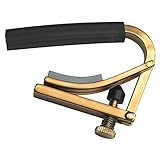
Overview: The C3B tackles the unique challenge of 12-string guitars, where double the strings mean double the tension and tuning instability. This widened brass capo applies even pressure across all twelve strings without crushing the delicate octave courses. Built on Shubb’s 35-year legacy, it’s the only capo engineered specifically for the 12-string’s massive string pull and wider neck profile.
What Makes It Stand Out: The C3B’s extended rubber pad and reinforced spring mechanism handle the 12-string’s formidable tension without buzzing or pulling strings sharp. The “set it and forget it” system is crucial here—each string course receives identical pressure, preventing the octave strings from going sharp while the main strings stay true. The brass construction provides the necessary mass to hold firm against the neck’s 200+ pounds of tension.
Value for Money: 12-string players accept that quality gear costs more, and the C3B delivers. Priced around $25-30, it’s marginally more expensive than the standard C1B but infinitely more effective than using two capos or struggling with inadequate pressure. Generic capos consistently fail on 12-strings, making the Shubb not just preferable but practically mandatory for serious players.
Strengths and Weaknesses:
- Pros: Handles extreme string tension; even pressure across all 12 strings; eliminates octave-string sharpness; robust brass build; one-handed operation
- Cons: Overkill for 6-string guitars; heavier than standard capos; specialized use limits versatility
Bottom Line: For 12-string guitarists, the C3B is the definitive solution. It transforms a tuning nightmare into a non-issue—absolutely essential.
5. C7B Shubb 3 string Partial Capo - Brass

Overview: The C7B partial capo is Shubb’s creative wildcard, covering only strings 2-3-4 or 3-4-5 to unlock alternate tunings without re-tuning. This brass innovation lets guitarists explore open-string voicings, drone effects, and complex chord shapes while maintaining standard fingering. It’s a specialty tool for adventurous players seeking to expand their sonic palette beyond conventional capo use.
What Makes It Stand Out: Partial capoing creates “virtual” alternate tunings—think open G without losing your standard chord shapes. The C7B’s precision is critical; uneven pressure on three strings would be disastrous. Shubb’s roller mechanism ensures perfect, repeatable pressure every time. The brass body provides stability while the custom rubber grips exactly three strings without affecting neighbors, enabling Celtic drones, slide-style licks, and unique harmonic textures.
Value for Money: At $25-30, the C7B is a niche investment. For singer-songwriters and fingerstyle players, it replaces hours of retuning and opens compositional avenues. While you could DIY a cut capo, the precision and reliability aren’t comparable. It’s cheaper than a second guitar in an alternate tuning but offers 80% of the creative benefit.
Strengths and Weaknesses:
- Pros: Unlocks creative tunings instantly; precise three-string pressure; durable brass; no guitar modification needed; inspires new compositions
- Cons: Steep learning curve; limited instructional resources; not for beginners; premium price for a specialty tool
Bottom Line: The C7B is a secret weapon for creative guitarists. If you compose or arrange, this capo will revolutionize your approach—highly recommended for explorers.
6. Kyser Quick-Change Guitar Capo for 6-string acoustic guitars, Gold, KG6GA

Overview:
The Kyser Quick-Change Capo represents the gold standard for acoustic guitarists who value speed and reliability. This iconic gold-finished aluminum capo features a patented one-handed operation mechanism that allows seamless repositioning during performances. The robust steel spring delivers consistent clamping pressure while maintaining a remarkably lightweight profile that won’t weigh down your instrument’s neck. Designed for 6-string acoustic guitars, it’s become a fixture in countless gig bags since its introduction.
What Makes It Stand Out:
The ingenious headstock parking feature sets this apart—simply clip it to your headstock when not in use, eliminating the risk of dropping it mid-set. Kyser’s lifetime guarantee underscores its American-made durability, while the corrosion-resistant gold finish maintains its professional appearance through years of use. The quick-release mechanism operates smoothly even after thousands of cycles.
Value for Money:
Positioned in the premium tier, the Kyser justifies its price through exceptional longevity. While cheaper spring-loaded capos exist, they rarely offer lifetime warranties. Considering you’ll likely never need to replace it, the cost-per-use makes this an economical choice for serious musicians. Comparable professional capos without the warranty cost nearly as much.
Strengths and Weaknesses:
Pros include genuine one-handed operation, durable aircraft-grade aluminum construction, convenient headstock storage, and transferable lifetime guarantee. The fixed spring tension, while perfect for most modern steel-string acoustics, may be excessive for vintage instruments or lighter string gauges, occasionally causing intonation issues. It’s also slightly bulkier than minimalist designs.
Bottom Line:
For performers needing rapid, reliable capo changes, the Kyser Quick-Change is virtually unbeatable. Its combination of convenience, durability, and lifetime backing makes it a wise investment for any serious acoustic guitarist.
7. Dunlop Acoustic Trigger, Curved, Gold Guitar Capo

Overview:
Dunlop’s Acoustic Trigger Capo brings ergonomic innovation to the traditional spring-loaded design. Crafted from aircraft-quality aluminum with a distinctive curved profile, this gold-finished capo prioritizes player comfort during extended sessions. The padded handle reduces finger fatigue while providing precise control over placement, making it suitable for both 6 and 12-string acoustic guitars.
What Makes It Stand Out:
The ergonomic shaping isn’t just marketing—it genuinely reduces hand strain during repeated adjustments. The curved design follows the fingerboard radius of most acoustic guitars, ensuring even pressure distribution across all strings. Its gold finish and robust spring mechanism reflect Dunlop’s commitment to professional-grade hardware.
Value for Money:
Dunlop positions this capo as a mid-to-premium option, competing directly with Kyser and Shubb models. The 6/12-string versatility adds value for players who own multiple instruments, eliminating the need for separate capos. Made in USA quality ensures you’re not buying a disposable accessory.
Strengths and Weaknesses:
Pros include comfortable padded grip, strong clamping force, versatile multi-string compatibility, and durable construction. However, like most spring-loaded capos, it lacks adjustable tension, which may cause tuning issues on some instruments. The ergonomic shape, while comfortable, makes it slightly larger than minimalist designs, and it doesn’t offer the convenient headstock storage of the Kyser.
Bottom Line:
The Dunlop Trigger excels for players who prioritize comfort and versatility. If you frequently switch between 6 and 12-string guitars and value ergonomic design, this American-made capo deserves serious consideration despite its few limitations.
8. Shubb C6B Deluxe Squareneck Resonator Guitar Capo – Brass

Overview:
The Shubb C6B Deluxe is a specialized tool for squareneck resonator guitar players, featuring the company’s legendary lever-operated design in an elegant brass finish. Unlike spring-loaded capos, this adjustable model allows precise pressure setting once, then locks and unlocks with a simple flip. The brass construction adds mass that can enhance sustain while providing exceptional durability.
What Makes It Stand Out:
The “set it and forget it” system is revolutionary for resonator players who need consistent, repeatable pressure. The custom rubber mimics a human fingertip, maintaining intonation better than traditional capo materials. Its squareneck-specific design ensures proper fit on the wide, flat fingerboards of resonator guitars—something universal capos struggle with.
Value for Money:
As a specialized tool, the C6B commands a premium price, but for resonator players, it’s invaluable. Generic capos rarely work properly on squareneck instruments, making this a necessary investment rather than a luxury. The brass construction and precision engineering justify the cost for serious resonator guitarists.
Strengths and Weaknesses:
Pros include perfect squareneck fit, adjustable pressure prevents tuning issues, durable brass build, and excellent intonation maintenance. The main drawback is specialization—this won’t work on standard acoustic guitars. The initial setup requires careful adjustment, and operation is slower than spring-loaded alternatives. It’s also heavier than aluminum capos.
Bottom Line:
For squareneck resonator guitarists, the Shubb C6B is essentially mandatory equipment. Its precision and tuning stability far outweigh the minor inconvenience of slower changes. Standard acoustic players should look elsewhere.
9. C1BA Shubb Original Series Acoustic Guitar Capo - Brass

Overview:
The Shubb Original Series C1BA brings the company’s revered lever-operated design to standard acoustic guitars in a handsome brass finish. Trusted by professionals for over 35 years, this capo eliminates the tuning issues common with spring-loaded models through its innovative adjustable pressure system. Set your desired tension once, then lock and unlock with a simple lever flip.
What Makes It Stand Out:
The finger-like rubber material is the secret sauce—it conforms to string contours like a real fingertip, maintaining exceptional intonation across the neck. Unlike one-handed spring capos, the Shubb requires deliberate two-handed operation, which prevents accidental adjustments during vigorous playing. The brass construction develops a desirable patina over time.
Value for Money:
This mid-priced capo offers professional performance at a reasonable cost. While pricier than basic spring-loaded models, the tuning stability and durability provide excellent long-term value. You won’t need to retune after every capo change, saving precious time during gigs and sessions.
Strengths and Weaknesses:
Pros include superior tuning stability, adjustable pressure, durable brass construction, and compact profile. Cons include slower operation than spring-loaded capos, initial learning curve for proper adjustment, and requirement for two-handed use. The brass finish, while attractive, is heavier than aluminum alternatives and may tarnish if not maintained.
Bottom Line:
For recording artists and tone purists who prioritize intonation over speed, the Shubb C1BA is a top-tier choice. Accept the minor speed trade-off for superior tuning stability and lifelong reliability.
10. Shubb C5 Standard Banjo Capo – Polished Nickel

Overview:
The Shubb C5 Standard Banjo Capo applies the company’s proven lever-operated design specifically to banjo necks. Featuring polished nickel plating over robust steel, this capo addresses the unique challenges of banjo fretting with Shubb’s signature “set it and forget it” adjustable pressure system. The finger-like rubber maintains the bright, clear tone banjo players demand while preventing string pull.
What Makes It Stand Out:
Banjo necks are thinner and strings are lighter than guitars, making adjustable pressure crucial. The C5’s precise tension control prevents the sharping common with spring-loaded capos on banjos. The lever action is smooth and reliable, while the rubber material is formulated specifically to maintain banjo tone without muting overtones or affecting the signature banjo “chime.”
Value for Money:
As a specialized banjo accessory, the C5 is moderately priced for a precision tool. Generic guitar capos often fail on banjos, either fitting poorly or causing tuning instability, making this a smart investment for serious players. The durable construction and timeless design ensure decades of service without replacement.
Strengths and Weaknesses:
Pros include perfect banjo neck fit, adjustable pressure prevents tuning issues, preserves banjo tone quality, and durable nickel finish. The main limitation is instrument specificity—it won’t function well on guitars or mandolins. Like all Shubb capos, it’s slower to reposition than spring-loaded alternatives and requires two-handed operation. The nickel plating is durable but may show wear over time with heavy use.
Bottom Line:
Banjoists seeking tuning stability and tone preservation need look no further. The Shubb C5 is the professional standard for good reason, despite its single-purpose design and minor speed trade-offs.
Why Brass Resonates with Vintage Tone Purists
Brass possesses a unique molecular structure that creates sympathetic vibrations with vintage instrument construction. Unlike harder metals that can produce harsh overtones, brass’s copper-zinc alloy composition shares harmonic characteristics with the brass hardware already present on many classic instruments. This isn’t coincidence—it’s chemistry working in your favor. The material’s density and softness create a damping effect that preserves the fundamental frequencies while allowing the upper harmonics to breathe naturally.
Understanding Brass Alloys and Their Sonic Signature
Not all brass is created equal, and the specific alloy ratio dramatically affects your tone. Yellow brass (70% copper, 30% zinc) offers the warmest response, closely mimicking the hardware found on 1950s Gibson models. Red brass with higher copper content delivers even warmer tones, perfect for vintage acoustics. The trace elements—lead for machinability, tin for corrosion resistance—each leave their sonic fingerprint. Understanding these ratios helps you match a capo’s metallurgical character to your instrument’s specific voice.
The 360 vs 385 Brass Debate
Machinability brass (C360) contains lead, making it easier to manufacture but potentially affecting sustain characteristics. Free-machining brass (C385) offers a slightly different tonal response with less lead content. For vintage purists, the difference is audible: C360 tends to roll off ultra-high frequencies that can make modern capos sound sterile, while C385 maintains more harmonic content in the 2-5kHz range where vintage guitars sing.
The Physics of Pressure: How Capos Affect Vintage Instruments
A capo’s fundamental job is applying consistent pressure across all six strings, but on a vintage neck, this becomes a delicate balancing act. Too much pressure chokes the sustain and pulls notes sharp. Too little creates buzz and weak tone. Brass’s natural weight—typically 20-30% heavier than aluminum—provides mechanical advantage, allowing adequate pressure without excessive spring tension. This is crucial for vintage instruments with delicate necks that have already experienced decades of string tension.
Calculating Optimal Downforce
The ideal capo pressure equals approximately 1.5 times your string gauge’s total tension. For a vintage acoustic with light strings (12-53), that’s roughly 12-14 pounds of downward force distributed across the fingerboard. Brass capos achieve this sweet spot more naturally than their lighter counterparts, which require stronger springs that can compress vintage frets over time.
Vintage Neck Profiles and Capos Compatibility
Vintage instruments feature neck profiles that modern capos often misunderstand. The substantial V-shape of a 1930s Martin or the chunky C-profile of a ‘54 Strat requires a capo that distributes pressure evenly across a wider surface area. Brass capos typically feature wider contact bars that match these generous dimensions. The material’s thermal conductivity also means it warms to your hand temperature quickly, reducing cold-metal tonal harshness during those first few songs.
The Compound Radius Challenge
Many vintage instruments have a 7.25" fingerboard radius, dramatically different from modern 12" or 16" radii. A flat capo bar on a curved fingerboard creates uneven pressure—tight on the outer strings, loose on the middle strings. Quality brass capos address this with radiused bars or adaptive padding that conforms to vintage curves without muting the wound strings’ overtones.
Spring Tension vs Screw-Adjust Mechanisms
The eternal debate among vintage enthusiasts centers on mechanism type. Spring-loaded capos offer speed but sacrifice precision. Screw-adjust models provide exact pressure control but slow down key changes. Brass’s density makes both mechanisms more effective—the weight assists spring designs in achieving smooth action while giving screw-adjust models a satisfying heft that feels substantial in hand.
Hybrid Mechanisms: The Best of Both Worlds
Some modern brass capos incorporate a “set-and-forget” spring system with micro-adjustment screws. This allows you to dial in the perfect pressure for your specific instrument, then enjoy quick one-handed operation. For vintage guitars, this means finding the sweet spot that doesn’t pull your slightly worn nut or stress your vintage tuners.
The Patina Factor: Aging Gracefully with Your Instrument
One of brass’s most appealing qualities for vintage enthusiasts is its ability to develop a natural patina. Unlike chrome or nickel plating that flakes and looks shabby, brass ages with dignity. The oxidation process creates a protective layer that deepens the tone visually and can subtly affect the capo’s damping characteristics. Many purists intentionally accelerate this process, treating their brass capo with the same reverence as their vintage hardware.
Accelerated Aging vs Natural Patina
The debate between letting brass age naturally versus using treatments to create instant vintage appeal divides purists. Natural patina develops over 6-18 months of regular handling, creating unique patterns from finger oils and environmental exposure. Accelerated methods using mild acids or ammonia vapors can achieve similar results in days but may create uneven coloration that purists consider inauthentic.
Intonation Preservation with Brass Capos
The bane of any capo user is altered intonation. Vintage guitars, with their uncompensated saddles and hand-shaped nuts, are particularly susceptible. Brass capos help by providing consistent, predictable pressure that doesn’t vary with temperature like elastic or spring materials can. The key is finding a brass capo with a perfectly flat, polished contact surface that doesn’t create string “pinch points” that pull notes sharp.
Micro-Adjustment for Perfect Pitch
Some advanced brass capos feature tiny set-screws that allow you to tweak the bar’s angle relative to the fretboard. This is invaluable for vintage instruments where the zero fret might be slightly worn or the nut slots aren’t perfectly level. A quarter-turn can mean the difference between sweet, ringing chords and that slightly sour quality that makes your ears twitch.
Weight Considerations for Balance and Sustain
A brass capo typically weighs 2.5-4 ounces, noticeably heavier than the 1.5-ounce aluminum alternatives. This weight becomes an asset on vintage instruments. Placed on the headstock, it can subtly affect the neck’s resonant frequency, sometimes taming a boomy low-end or adding focus to muddy mids. On the fingerboard, the mass couples more effectively with the neck wood, transferring vibrations in a way that lightweight capos simply cannot.
The Headstock Hang Test
Try this: place your brass capo on the headstock behind the nut and play an open chord. Listen to the decay. Now move it to the first fret. The difference in sustain and harmonic content reveals how much the capo’s mass influences your instrument’s voice. Vintage guitars, with their already complex resonance, benefit from this coupling effect more than modern, stiffer necks.
Brass vs Bronze vs Steel: The Metallurgy Debate
While this guide focuses on brass, understanding the alternatives clarifies why brass wins for vintage applications. Bronze (copper-tin alloy) is harder and brighter, often adding unwanted metallic edge to acoustic instruments. Steel is too rigid, creating a harsh damping effect that kills the subtle harmonics vintage guitars are prized for. Brass hits the sweet spot—soft enough to be musical, dense enough to be effective.
Phosphor Bronze Capos: A Special Case
Some manufacturers offer phosphor bronze capos, marketing them as “premium” alternatives. While excellent for certain applications, their 5-10% tin content creates a slightly harder contact surface that can emphasize string noise on vintage instruments with lower action and worn frets. Stick to traditional brass alloys for the most authentic vintage response.
Radius Matching for Vintage Fingerboards
The 7.25" radius common on pre-1965 Fenders and the 12" radius on many Gibsons require different capo profiles. A mismatch here is worse than using the wrong strings—it creates uneven pressure that makes some strings choke while others buzz. Quality brass capos come in specific radius options or feature adaptive designs that conform to your fingerboard’s curve.
The Radius Gauge Method
Invest in a radius gauge set (they cost less than a set of vintage-correct strings). Measure your fingerboard at the 5th and 12th frets. If they differ—common on well-played vintage guitars—you need a capo that can accommodate this compound radius. Some brass capos feature a slightly curved bar with adaptive padding that compresses differently across its width.
String Buzz Prevention Techniques
Vintage guitars often have lower action and slightly uneven frets—character, not flaws. A brass capo can exacerbate buzzing if not properly matched. The solution lies in pressure distribution. Look for brass capos with wide, padded contact surfaces that apply pressure over at least 3/8" of string length. This spreads the load and prevents the capo from acting like a tiny, misplaced fret.
The “Sweet Spot” Placement
On vintage necks, placing the capo directly behind the fret isn’t always optimal. Try positioning it about 1/16" back from the fret wire—this allows the string to vibrate more naturally and can reduce the “capo honk” that plagues lesser designs. Brass’s weight helps maintain pressure even when positioned slightly back from the fret.
Aesthetic Harmony with Vintage Hardware
A modern, shiny chrome capo on a vintage guitar with tarnished brass tuners looks as out of place as LED headlights on a ‘57 Chevy. Brass capos age to match your existing hardware, creating visual cohesion. Many vintage purists seek out unlacquered brass that will develop the same honey-brown patina as their 60-year-old tuning machines.
Matching Hardware Finishes
If your vintage guitar has nickel hardware (common on 1960s Fenders), look for nickel-plated brass capos. The underlying brass still provides the tonal benefits while the nickel plating matches cosmetically. For Gibson enthusiasts with their classic gold tuners, raw brass is the only authentic choice.
Price Tiers and What They Actually Mean
Brass capos range from $15 budget models to $150+ artisan pieces. The difference isn’t just marketing. Budget brass often uses lower-grade alloys with more zinc, creating a harsher tone. Mid-range options ($40-70) typically use proper C360 brass with decent machining. Premium models ($80+) feature hand-polished surfaces, precision mechanisms, and often come with radius-specific options.
The Law of Diminishing Tone Returns
Beyond the $100 mark, you’re paying for craftsmanship, not necessarily better tone. A well-made $60 brass capo will sound 95% as good as a $150 boutique model. The difference lies in longevity, mechanism smoothness, and pride of ownership. For a $10,000 vintage guitar, that extra $90 investment feels insignificant.
Maintenance and Care for Brass Capos
Brass requires occasional maintenance to perform optimally. A simple wipe-down after each session prevents acidic sweat from creating uneven patina. Monthly, apply a tiny drop of mineral oil to the moving parts—never use petroleum-based products that can damage vintage finishes if they drip. Annual deep cleaning with a brass polish restores the contact surface without removing desirable patina from visible areas.
The Toothbrush Method for Precision Cleaning
Use a soft-bristled toothbrush and mild soap to clean the string contact bar. This removes grime buildup that can dampen sustain without scratching the polished surface. For the pivot points, a dry graphite lubricant works better than oil, attracting less dust that can gum up the mechanism over years of use.
Common Mistakes Vintage Guitarists Make with Capos
The biggest error is treating a vintage instrument like a modern guitar. Cranking down a spring-loaded capo to eliminate every possible buzz is a recipe for pulling notes sharp and compressing vintage frets. Another mistake is using a capo with a flat bar on a radiused fingerboard, creating uneven tone. Finally, many players ignore the capo’s effect on their pickup’s magnetic field—brass is non-magnetic, but the steel spring in some designs can interfere with single-coil pickups.
The “Set It and Forget It” Fallacy
Even the best brass capo needs occasional adjustment. Vintage guitars change with seasons, humidity, and string choice. Check your capo pressure monthly, especially during seasonal transitions. A capo that was perfect in August might pull sharp in January when your guitar’s neck has settled into winter dryness.
Frequently Asked Questions
Will a brass capo damage my vintage frets?
When properly adjusted, a brass capo is actually gentler than aluminum alternatives. The key is using minimal pressure—just enough to eliminate buzz. Brass’s natural weight means you don’t need excessive spring tension. Check pressure by fretting each string individually; you should feel slight give, not rock-hard resistance.
How do I know if my vintage guitar needs a radiused or flat capo?
Measure your fingerboard radius at the 5th fret using a radius gauge or a simple printable template. Pre-1965 Fenders typically need 7.25", vintage Gibsons 12", and most acoustics 12"-16". If you play multiple vintage instruments, invest in a capo with interchangeable radius bars or an adaptive design that conforms to different curves.
Does the patina on a brass capo affect tone?
Slightly, yes. A thin, natural patina can add a touch of warmth by creating a microscopically softer string contact. However, heavy oxidation or green verdigris acts as a dampener and should be gently polished from the string contact surface. Keep the patina on visible areas for aesthetics, but maintain a clean contact bar.
Why does my brass capo sound different on various positions of the neck?
This usually indicates your neck’s radius changes along its length (common on well-played vintage guitars) or your frets have uneven wear. Try a capo with a narrower contact bar for higher positions or have your frets professionally leveled. The brass itself isn’t the issue—it’s revealing existing geometry problems.
Can I use a brass capo on a vintage 12-string?
Absolutely, but you need a model specifically designed for 12-string tension. The doubled courses require wider contact bars and stronger mechanisms. Look for brass capos with at least 2" of width and reinforced springs. The weight of brass is actually beneficial here, providing better coupling across all 12 strings.
How often should I clean the contact surface of my brass capo?
Clean the string contact bar every 10-15 uses, or whenever you notice sustain degradation. Use a microfiber cloth with a drop of naphtha or lighter fluid to remove oils and residue. Avoid abrasive polishes that scratch the surface—a polished contact bar is crucial for even pressure distribution.
Will a brass capo work with vintage-style compensated nuts?
Yes, and it often works better than modern materials. Vintage compensated nuts were hand-filed for specific string sets, and brass’s consistent pressure preserves these subtle intonation adjustments. Just ensure the capo sits perfectly parallel to the fret; any angle negates the nut’s compensation.
What’s the ideal weight for a brass capo on a vintage acoustic?
Aim for 2.8-3.2 ounces. This provides enough mass for effective coupling without overwhelming the instrument’s natural balance. Lighter brass capos under 2.5 ounces often require stronger springs, while heavier models over 3.5 ounces can slightly dampen high-frequency response on delicate vintage tops.
Can I leave my brass capo on the headstock?
Yes, and many players do. The weight can subtly alter the neck’s resonant frequency, sometimes beneficially. However, on exceptionally light vintage necks (some 1960s Gibsons), this can add slight neck dive. If you notice balance issues, store the capo in your pocket between songs instead of on the headstock.
Why do some brass capos cost three times more than others?
Price differences reflect alloy quality, machining precision, mechanism design, and finish work. Expensive models use higher copper content brass, hand-polished surfaces, and smoother operating mechanisms. For vintage guitars, the sweet spot is $50-80—beyond that, you’re paying for artisanal craftsmanship rather than functional improvement.
See Also
- Stop Fret Wear: 10 Toggle Capos with Soft Padding for Vintage Guitars in 2026
- 10 Thumb-Screw Capos for Perfect Intonation on Vintage Guitars
- 10 Shubb-Style Toggle Capos for Precise Pressure Control on Vintage Necks
- The 10 Most Durable Guitar Capos for Touring Musicians After 6 Months on the Road
- 10 Classical Capos for Wide Flat Fingerboards in 2026