Table of Contents
The marriage between violin and loop pedal has revolutionized solo performance, transforming a single musician into a full string ensemble with the tap of a foot. But here’s the truth that separates amateurish, thin-sounding loops from rich, layered masterpieces: your pickup isn’t just capturing sound—it’s defining the entire DNA of your performance. In 2026, with loop stations offering 24-bit depth, stereo imaging, and AI-assisted harmony detection, using an outdated or mismatched violin pickup is like trying to stream 4K video through dial-up internet.
Whether you’re building minimalist ambient textures or complex, multi-part arrangements, the transducer you choose determines how accurately your bow’s nuance translates through multiple layers, how cleanly your signal drives your pedal’s input, and whether your lowest bassline loops will coexist peacefully with your highest melodic phrases. This guide dismantles the technical complexity and gives you the decision-making framework to select a pickup system that doesn’t just work with your loop pedal—it elevates it.
Top 10 Violin Pickups
Detailed Product Reviews
1. Fishman V-200 Classic Series Violin Pickup
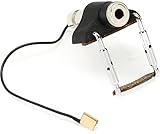
Overview:
The Fishman V-200 Classic Series represents decades of pickup innovation from one of the most trusted names in acoustic amplification. This bridge-wing piezo-ceramic pickup mounts effortlessly between the wings of your violin’s bridge without any modification, delivering reliable performance for students and working musicians alike.
What Makes It Stand Out:
Fishman’s reputation alone sets this apart, but the V-200’s true genius lies in its simplicity. The lightweight design preserves acoustic resonance while the piezo-ceramic element captures string vibration with clarity. Its passive operation means no batteries, and the optional preamp compatibility offers flexibility for different performance environments.
Value for Money:
Positioned in the mid-range category, the V-200 justifies its price through proven durability and brand support. While cheaper alternatives exist, Fishman’s consistent quality control and widespread availability of replacement parts make it a smarter long-term investment than budget imports that may fail during critical performances.
Strengths and Weaknesses:
Strengths include effortless installation, zero instrument modification, trusted brand heritage, and minimal weight. The pickup’s universal fit works with most bridges. Weaknesses involve potential feedback issues in high-volume settings without a preamp, a somewhat bright tone that lacks warmth, and absence of onboard volume control for quick adjustments.
Bottom Line:
Ideal for intermediate players and gigging musicians seeking reliable amplification without commitment. The V-200 delivers consistent performance and peace of mind, though serious performers may eventually upgrade to a system with integrated volume control or more natural tonal characteristics.
2. KNA VV-3V Portable Piezo Pickup for Violin and Viola – Lightweight, Easy-Install Sensor with Volume Control, Natural Acoustic Sound, No Instrument Modification, Handcrafted in Europe

Overview:
The KNA VV-3V elevates the violin pickup game with its handcrafted European construction and integrated volume control. This premium bridge-mounted system installs discreetly in the bridge eye, offering professional-grade amplification without permanent modification. The solid ebony jack housing with cork-lined clamp provides both aesthetic elegance and functional stability.
What Makes It Stand Out:
The integrated volume knob on the jack housing is the star feature, allowing real-time level adjustments without reaching for your amp or mixer. The handcrafted wooden sensor casing resonates sympathetically with your instrument, while the cork-lined mounting system protects your violin’s finish. This combination of tone, control, and craftsmanship is rare in the pickup world.
Value for Money:
Priced at the higher end of the spectrum, the VV-3V justifies every penny through its artisanal build quality and performance capabilities. Competing systems with similar features often cost significantly more, making this an excellent value for serious musicians who demand both tonal authenticity and practical control.
Strengths and Weaknesses:
Strengths include the convenient volume control, exceptional build quality, natural acoustic tone, secure cork-lined mounting, and handcrafted European manufacturing. The system is also fully detachable. Weaknesses include a premium price point that may deter beginners, and the wooden sensor requires careful handling to prevent cracking.
Bottom Line:
A top-tier choice for professional violinists and violists who perform regularly. The VV-3V combines authentic acoustic reproduction with practical stage-ready features, making it worth the investment for serious musicians who refuse to compromise on tone or convenience.
3. Vaveren Piezo Contact Microphone Pickup with Volume Control Portable Wireless Violin Pickup Professional Piezo Transducer Pickup with Cable for Guitars Mandolin Banjo Bass

Overview:
The Vaveren pickup offers a budget-friendly, multi-instrument solution for amplifying violins, mandolins, guitars, and more. This passive piezo transducer features a lightweight wooden housing that wedges into the bridge eye, providing a no-fuss approach to live amplification for beginners and casual performers.
What Makes It Stand Out:
Versatility defines this pickup—it transfers between instruments easily, making it ideal for multi-instrumentalists. The included non-slip rubber pads and chin rest key demonstrate thoughtful design for instrument protection. Its passive design preserves your violin’s natural voice without battery-related tone coloration.
Value for Money:
This is among the most affordable professional-appearing pickups available. For players uncertain about committing to amplification, it provides a low-risk entry point. However, the rock-bottom price reflects generic manufacturing and potential quality control inconsistencies that professional musicians cannot afford.
Strengths and Weaknesses:
Strengths include universal instrument compatibility, protective rubber padding, passive operation, and simple installation. The price makes experimentation accessible. Weaknesses involve questionable long-term durability, a generic tone that lacks refinement, potential fit issues with non-standard bridges, and the lack of brand support or warranty clarity.
Bottom Line:
Suitable for students, hobbyists, and those testing the waters of amplification. While it functionally amplifies your instrument, discerning players will quickly notice its tonal limitations and build quality concerns. Treat it as a disposable entry-level tool rather than a long-term investment.
4. KNA VV-3 Portable Piezo Pickup for Violin and Viola – Lightweight Bridge-Mounted Sensor, Natural Acoustic Sound, Easy Installation, 1/4" Output Jack, No Instrument Modification, Handcrafted in Europe

Overview:
The KNA VV-3 delivers handcrafted European quality in a streamlined package, omitting the volume control to offer a more affordable entry into professional-grade amplification. Like its sibling VV-3V, this system mounts discreetly in the bridge eye with a wooden sensor and ebony cork-lined jack housing.
What Makes It Stand Out:
The VV-3 maintains the same premium construction and natural tone as the VV-3V while sacrificing only the onboard volume knob. This makes it an intelligent choice for players who control levels at their amp or mixer. The detachable design allows you to remove it for acoustic-only sessions, preserving your instrument’s pure aesthetic.
Value for Money:
Offering nearly identical performance to the VV-3V at a reduced price, this model represents exceptional value. You retain the handcrafted quality, natural acoustic capture, and secure mounting system while saving money. For performers with existing preamps or volume pedals, this is the smarter financial choice.
Strengths and Weaknesses:
Strengths include authentic acoustic tone, lightweight wooden construction, secure cork-lined mounting, handcrafted European manufacturing, and full detachability. The absence of volume control is the primary weakness, requiring external level management. The premium price relative to budget options may also deter casual players.
Bottom Line:
Perfect for accomplished musicians who prioritize tone and build quality over onboard controls. The VV-3 offers professional performance without unnecessary features, making it ideal for studio work and stage performances where your signal chain already includes volume management capabilities.
5. Barcus Berry 3100 Clamp-On Bridge Violin Piezo Pickup

Overview:
The Barcus Berry 3100 employs a classic clamp-on design that attaches directly to the bridge, offering a different approach than bridge-eye systems. This piezo pickup provides wide-band frequency response and excellent string balance while maintaining easy installation and removal without any instrument modification.
What Makes It Stand Out:
The clamp-on mechanism allows for the fastest installation and removal in the category—perfect for players who switch between acoustic and amplified performances frequently. Barcus Berry’s proprietary feedback rejection technology provides excellent signal isolation, making this particularly valuable for high-volume stage environments where feedback can be problematic.
Value for Money:
Mid-range pricing reflects the established Barcus Berry brand name and proven technology. While newer bridge-eye designs offer more discreet installation, the 3100’s reliability and feedback resistance justify the cost for gigging musicians who value quick setup and robust performance over minimalist aesthetics.
Strengths and Weaknesses:
Strengths include rapid clamp-on installation, excellent feedback rejection, wide frequency response, no instrument modification, and trusted brand heritage. Weaknesses involve the bulkier appearance compared to modern bridge-eye designs, potential tonal coloration from clamp pressure, and less natural acoustic character than premium competitors.
Bottom Line:
An excellent workhorse pickup for performing musicians who frequently alternate between amplified and acoustic playing. The Barcus Berry 3100 prioritizes practicality and feedback resistance over subtlety, making it ideal for loud stage environments where reliability trumps absolute tonal perfection.
6. KNA VV-Wi Wireless Violin Viola Pickup (Updated) – UHF Piezo System with Volume Control, 50m Range, Ultra-Low Latency, Easy Install, Professional Sound for String Instruments

Overview: The KNA VV-Wi represents the latest evolution in wireless violin amplification, offering professional-grade sound without the constraints of cables. This updated UHF piezo system delivers exceptional audio fidelity while providing the freedom modern performers demand. Designed specifically for violin and viola, it captures the nuanced acoustic character of your instrument through a discreet wooden sensor that nestles in the bridge eye.
What Makes It Stand Out: The wooden sensor seamlessly integrates into your instrument’s bridge eye, maintaining acoustic aesthetics while capturing authentic tone. The updated firmware significantly extends battery life, addressing a common pain point for gigging musicians who need reliable power through extended sets. With 50 meters of range and ultra-low latency, this system performs flawlessly in demanding live situations from intimate venues to large stages.
Value for Money: While positioned in the premium tier, the VV-Wi justifies its cost through reliable wireless performance and natural sound reproduction that rivals systems costing twice as much. The included USB-C charging cable adds modern convenience, though you’ll need to supply your own adapter. For regularly gigging musicians, the time saved and freedom gained quickly offset the initial investment.
Strengths and Weaknesses: Strengths include pristine audio quality, impressive wireless range, discreet installation, and extended battery life. The UHF transmission resists interference in crowded RF environments. Weaknesses involve the premium price point and the need to remember charging before performances. Some traditionalists may prefer wired solutions for absolute reliability, and the system requires occasional firmware updates.
Bottom Line: The KNA VV-Wi excels for professional violinists and violists seeking wireless freedom without sonic compromise. Its combination of natural tone, robust wireless performance, and extended battery life makes it a top-tier choice for serious gigging musicians who prioritize both sound quality and mobility.
7. UHF Wireless Violin Cello Microphone System Violin Pickup Clip-on Instrument Microphones with Transmitter and Receiver for Musicians, Teachers, Stage Performances, Active PA Systems, 196ft Range

Overview: The KENBAIDIO U-730 delivers a comprehensive wireless microphone solution for violin and cello players seeking versatility and extended range. This UHF system combines a sensitive cardioid condenser mic with advanced digital transmission technology, offering professional features at a competitive price point. The system includes dedicated clips for both violin and cello, making it immediately useful for multi-instrumentalists.
What Makes It Stand Out: With 200 selectable UHF channels and a remarkable 196-foot transmission range, this system thrives in complex wireless environments. The LED digital screen provides real-time feedback on frequency, battery status, and volume levels. The innovative retractable silicone clamping system accommodates instruments from 1.18 to 2.28 inches, ensuring secure attachment without damaging precious finishes.
Value for Money: This system offers exceptional versatility, supporting both violin and cello with dedicated clips included. The multi-channel flexibility prevents interference when multiple systems operate simultaneously, making it ideal for ensembles. Comparable systems with fewer features often cost significantly more, positioning this as a smart value proposition for educators and performing groups.
Strengths and Weaknesses: Strengths include outstanding range, crystal-clear sound reproduction, intuitive LED interface, and flexible mounting options. The cardioid pattern effectively reduces stage noise. Weaknesses include the visible clip-on design, which some players find aesthetically intrusive, and the transmitter’s bulk compared to integrated solutions. The learning curve for channel selection may challenge technophobic musicians.
Bottom Line: Perfect for stage performers, teachers, and ensemble players needing reliable wireless performance across multiple instruments. The U-730’s combination of range, flexibility, and sound quality makes it an excellent choice for working musicians who prioritize functionality and value over minimalist design.
8. Realist RLSTVSC - SoundClip Pickup for Violin and Viola - Reflects Instrument’s True Sound - Easy to Mount - Sounds Great Instantly - Adjusting Placement Varies Tone Color and Sensitivity

Overview: The Realist SoundClip offers a refreshingly simple approach to violin and viola amplification, eschewing batteries and electronics for pure passive pickup technology. This brass clamp-on device captures your instrument’s authentic voice while eliminating the maintenance concerns associated with active systems. It reflects the true acoustic character without permanently modifying your valuable instrument.
What Makes It Stand Out: The SoundClip’s genius lies in its simplicity—no batteries, no preamps, no charging required. Its placement-based tone control allows musicians to adjust color and sensitivity by simply moving the pickup within the F-hole, offering nuanced sonic customization. The corner block-mounted jack keeps weight off the tailpiece and enables cable concealment for unrestricted movement during performance.
Value for Money: As a one-time purchase with zero ongoing costs, the SoundClip delivers exceptional long-term value. Its durable brass construction ensures years of reliable service, and the lack of electronic components means nothing to fail or replace. This passive design philosophy saves money while delivering professional-grade sound that competes with active systems costing significantly more.
Strengths and Weaknesses: Strengths include instant readiness, natural tonal reproduction, robust build quality, and zero maintenance requirements. The discreet profile preserves instrument aesthetics and playability. Weaknesses involve cable dependency, which limits mobility compared to wireless options. Passive output may require a quality amplifier with sufficient gain, and finding optimal placement demands experimentation and patience.
Bottom Line: Ideal for acoustic purists and traditionalists who prioritize reliability and authentic tone over wireless convenience. The Realist SoundClip excels in studio and stationary performance settings where cable management is feasible, offering uncompromising sound without electronic complexity.
9. The Feather Violin Pickup with Flexible Micro-Gooseneck by Myers Pickups
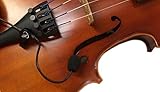
Overview: Myers Pickups’ “The Feather” lives up to its name as an exceptionally lightweight and versatile amplification solution for violinists and multi-instrumentalists. This active pickup combines a flexible micro-gooseneck with an internally powered preamp, delivering rich, full-bodied sound without requiring external phantom power. Its universal design works with virtually any instrument, making it a flexible tool for creative musicians.
What Makes It Stand Out: The Feather’s micro-gooseneck provides unparalleled positioning flexibility, allowing precise placement for optimal tone capture across various instruments. Weighing mere grams, it won’t affect instrument balance or playability. The included pre-installed battery and comprehensive mounting hardware enable true plug-and-play operation straight from the box, with each unit meticulously tested before shipping.
Value for Money: While priced in the mid-to-high range, The Feather’s universal compatibility across instruments makes it economical for multi-instrumentalists. The made-in-USA construction ensures quality craftsmanship, and the active preamp’s rich output often eliminates need for external preamplification, saving additional equipment costs. For players seeking one pickup for multiple instruments, it offers compelling value.
Strengths and Weaknesses: Strengths include extraordinary lightness, flexible positioning, excellent sound quality, and broad instrument compatibility. The active preamp delivers strong, clear signal with natural warmth. Weaknesses include eventual battery replacement needs and the visible gooseneck design, which some find less elegant than integrated solutions. The mounting system, while versatile, may require careful adjustment for optimal stability.
Bottom Line: Perfect for musicians who play multiple instruments and demand premium sound without permanent installation. The Feather excels in studio and live settings where tonal flexibility and instrument preservation are paramount, making it a worthwhile investment for serious players seeking maximum versatility.
10. adeline Violin pickup, no damage to paint, carrying volume adjustment

Overview: The adeline Violin Pickup positions itself as an affordable, no-frills amplification solution for budget-conscious violinists and violists. This clip-on system prioritizes instrument safety and simplicity, offering basic volume control without permanent modification or finish damage. It targets students and casual players seeking their first foray into amplified performance without significant financial commitment.
What Makes It Stand Out: The adjustable clamp barrels accommodate various instrument dimensions while protecting delicate varnish finishes—a crucial consideration for valuable instruments. The integrated volume control provides immediate level adjustment without reaching for your amplifier. Its straightforward design eliminates complicated setup procedures, making it accessible for beginners and students who need reliable, simple amplification for practice or small performances.
Value for Money: This pickup competes in the entry-level price bracket, making amplified performance accessible to students and casual players who might otherwise forego amplification. While lacking advanced features of premium systems, it delivers adequate sound reinforcement for practice, small ensembles, and beginning performers. The focus on paint protection saves potential repair costs, adding hidden value for owners of quality instruments.
Strengths and Weaknesses: Strengths include affordability, instrument-safe clamping, simple operation, and basic volume control. The lightweight design minimally impacts instrument acoustics and playability. Weaknesses involve limited sound quality compared to higher-end pickups, lack of tone shaping features, and unknown brand reputation for long-term durability. The wired connection restricts movement compared to wireless alternatives, and the basic components may not satisfy discerning ears.
Bottom Line: Suitable for students, educators, and casual players seeking an entry-level pickup that won’t damage their instrument. While professionals will require more sophisticated solutions, the adeline pickup provides acceptable performance for its price point, making it a reasonable starter option for those new to amplified violin performance who prioritize instrument safety above all.
Why Your Violin Pickup Choice Defines Your Loop Performance
The Unique Demands of Loop Pedal Architecture
Loop pedals operate differently than traditional amplifiers or recording interfaces. They’re capturing, compressing, and replaying your signal in real-time, often stacking multiple generations of audio on top of each other. Each pass through the looper introduces subtle generation loss and compounds any imperfections in your original signal. A pickup with poor transient response will create loops where every note sounds rounded-off and lifeless after just three layers. Conversely, a system with exceptional clarity preserves the attack of your bow change even after you’ve built a six-part canon.
The input stage of popular loop stations in 2026 typically expects a line-level signal with input impedance between 470kΩ and 1MΩ. Violin pickups, particularly piezo-electric designs, natively produce high-impedance, low-current signals that can exceed 2MΩ. This impedance mismatch creates the infamous “piezo quack” and loads down your pickup, robbing it of low-end warmth before your loop pedal ever digitizes the first note. Understanding this interaction is fundamental to building a signal chain that remains transparent across infinite layers.
How Pickup Technology Has Evolved for 2026
This year’s breakthrough isn’t just incremental improvement—it’s a paradigm shift in how pickups interface with digital ecosystems. Modern systems now incorporate active impedance-matching circuits that auto-detect your loop pedal’s input characteristics and adjust output accordingly. We’re seeing the emergence of “loop-aware” preamps that apply subtle dynamic EQ, compensating for the frequency buildup that occurs when layering similar tonal ranges. Some manufacturers have even begun integrating micro-DSP chips directly into pickup housings, offering onboard high-pass filtering specifically tuned to eliminate the low-frequency rumble that plagues looped arco passages.
Wireless systems have also matured beyond the latency issues that made them unusable for loop timing. 2026’s low-latency digital transmission protocols operate at sub-2ms delay, making them viable for real-time overdubbing where rhythmic precision is non-negotiable. However, this introduces new considerations: digital compression artifacts in wireless transmission can become magnified through multiple loop layers, creating a harshness that isn’t apparent in mono monitoring.
Understanding Violin Pickup Types
Piezo vs. Magnetic vs. Microphone-Based Systems
Piezo-electric transducers remain the dominant technology, prized for their feedback resistance and high output. They work by converting mechanical pressure into voltage, typically mounted under the bridge or in the wing slots. The best designs use multiple sensing elements—one per string—to capture individual string balance, crucial for loop performers who might isolate specific strings for basslines or harmonies. However, piezos inherently produce a signal rich in ultrasonic content that can sound brittle without proper buffering.
Magnetic pickups, borrowed from electric guitar technology, sense string vibration directly through magnetic flux changes. They’re immune to body noise and room resonance, which can be either a blessing or curse for loop artists. While they eliminate feedback concerns entirely, they also strip away the violin’s acoustic character—the subtle body resonances that give repeated loops their organic evolution. Some loop performers actually prefer this clinical precision, especially in high-volume live settings where feedback would make layering impossible.
Microphone-based systems, either internal gooseneck mics or contact microphones, capture the most natural sound but present the greatest feedback risk. In 2026, we’re seeing sophisticated phase-canceling designs that pair a bridge-mounted mic with a body sensor, allowing you to blend acoustic airiness with direct string attack. For loop pedal use, this hybrid approach offers unparalleled tonal versatility, letting you dial in more direct signal for rhythmic loops and more mic for sustained, ambient layers.
The Rise of Hybrid Pickup Configurations
The most forward-thinking designs now combine two or three transducer types into a single system with independent outputs or onboard mixing. Imagine sending your piezo signal to your loop pedal for tight, rhythmic parts while simultaneously routing your microphone signal to a reverb pedal for lush pads—then blending both at your mixer. This parallel processing capability fundamentally changes what’s possible in solo looping performance.
Some 2026 systems even offer per-transducer EQ settings stored in memory presets, accessible via footswitch. For loop artists, this means you can switch from a dark, muted tone for pizzicato basslines to a bright, airy setting for melodic overdubs without touching your instrument. The key is ensuring your loop pedal’s input can handle the combined output level without clipping, which often requires a dedicated summing preamp with headroom to spare.
Key Technical Specifications Explained
Impedance Matching and Your Loop Pedal’s Input Stage
Let’s get technical without getting lost in jargon. Your violin pickup’s output impedance and your loop pedal’s input impedance form a voltage divider. When the pickup’s impedance is significantly higher than the pedal’s, most of your signal voltage drops across the pickup itself, never reaching the looper’s preamp. This is why passive piezos sound thin and quacky directly into loop stations.
The solution isn’t just “add a preamp”—it’s about adding the right preamp with the correct input impedance (typically 1MΩ to 10MΩ) and output impedance (under 100Ω). In 2026, we’re seeing smart preamps that display real-time impedance matching on OLED screens, showing you exactly how much signal loss you’re preventing. For loop performers, this translates to consistent dynamics across layers; your pianissimo passages retain their intimacy while your fortissimo double-stops don’t clip the input.
Frequency Response and the Violin’s Full Range
A violin produces fundamentals from 196Hz (G3) to 2,637Hz (E7), but the real magic lies in the harmonics, which extend well above 10kHz. Your pickup needs to capture this harmonic series accurately because loop pedals will layer these frequencies repeatedly. A pickup with a rolled-off high-end might sound warm on a single pass, but after four layers, your tone becomes muddy and indistinct.
Conversely, excessive high-frequency response captures every bow scrape and finger noise, which becomes unbearable when multiplied across loops. The sweet spot for loop pedal use is a pickup with a gentle presence peak around 3-5kHz for articulation, flat response through the critical 200Hz-2kHz range where body resonance lives, and controlled roll-off above 8kHz to prevent harshness accumulation. Many 2026 systems now offer switchable voicing profiles specifically designed for layered performance.
Signal-to-Noise Ratio in Layered Performances
Here’s a brutal truth: every 6dB of noise in your pickup system becomes 12dB after two layers, 18dB after three. Cheap piezos with 60dB signal-to-noise ratios might work for single-pass playing, but they’re unusable for serious looping. Modern professional systems achieve 85dB+ SNR through shielded cabling, active noise cancellation, and isolated power supplies.
For loop pedal performers, this specification is more critical than tonal color. A noisy pickup forces you to use noise gates, which create unnatural cutoffs in sustained loops. Worse, the noise floor becomes a textured bed that makes each added layer sound progressively more distorted. Invest in a system with excellent SNR specs—even if it means sacrificing some “character”—because cleanliness in the source signal is non-negotiable for looping.
Installation Methods and Their Impact
Bridge-Mounted Systems
Bridge-mounted pickups remain the gold standard for direct string capture. The 2026 crop of wing-slot piezos features micro-adjustable pressure screws, letting you fine-tune the balance between strings without removing the bridge. For loop artists, this is revolutionary: you can boost your C-string output for basslines without affecting the E-string’s response for melodies.
The installation requires careful bridge fitting—too tight and you choke the violin’s acoustic tone, too loose and you get microphonic rattles that loop pedals magnify into rhythmic chaos. Professional installation typically involves custom bridge carving, costing $150-300 but worth every penny for touring musicians who can’t afford mid-set failures.
Body-Contact and Under-Bridge Designs
Contact microphones that adhere to the violin’s top plate capture body resonance that bridge-mounted systems miss. For looping, this adds organic evolution to sustained pads; each loop pass subtly shifts as the wood continues resonating. The trade-off is susceptibility to handling noise—every tap of your foot on the loop pedal transmits through your body to the instrument.
Under-bridge designs that mount on the violin’s belly beneath the bridge feet offer a compelling compromise, capturing both string and body vibration. However, they’re more permanent modifications, often requiring a luthier to slightly lower the bridge height. The 2026 versions use thinner, more compliant transducers that minimize acoustic impact while maximizing output, but they still represent a commitment to a primarily electric performance style.
The Professional Luthier Approach
The highest-tier installations now involve a full system integration approach. A luthier will evaluate your specific violin’s tap tones, identify nodal points where feedback is likely, and install a combination of pickups with strategic damping. They’ll route cables through the violin’s interior, install a dedicated output jack in the tailpiece, and integrate a rechargeable battery system into the chinrest cavity.
This isn’t vanity—it’s about creating an instrument that becomes a seamless extension of your loop pedal rig. The cost ($800-2,000+) is justified when you consider that a poorly installed pickup can make a $10,000 violin sound like a $200 electric fiddle through a looper. For loop performers building entire shows around layered violin, this investment pays for itself in reliability and sonic consistency.
Sound Quality Considerations
Taming the Piezo “Quack”
The dreaded piezo quack—that nasal, plastic overtone—is actually a frequency spike around 1.5-2kHz combined with a thin low-end. In looping, this problem compounds because you’re stacking that same offensive resonance with each layer. Modern solutions go beyond simple EQ; they involve multi-band compression within the preamp that dynamically reduces the quack frequency only when it exceeds a threshold.
Some 2026 preamps offer “loop mode,” which applies different EQ curves to your live signal versus what’s sent to the looper. Your monitor mix can retain the direct piezo attack for playing feel, while the looper receives a smoothed, rounded tone that layers gracefully. This dual-path processing is arguably the most important advancement for solo violin loop artists in the past five years.
Achieving Natural Bow Noise and Resonance
Paradoxically, the sounds we try to eliminate in classical playing—bow changes, fingerboard string slaps, slight pitch variations—become essential textural elements in looping. A pickup that’s too clean produces loops that sound sterile and artificial. The challenge is capturing these nuances without overwhelming the musical content.
Bridge-mounted piezos excel at bow noise but often miss the violin’s blooming resonance. Adding a subtle amount of body mic signal (10-15% in the blend) restores this acoustic dimension. The key is phase-alignment; these two signals arrive at different times, causing comb-filtering that makes your loops sound hollow. Professional systems now include adjustable delay lines (0-5ms) on one transducer to time-align the signals before they reach your looper, ensuring coherent, full-bodied layers.
Phase Coherence Across Multiple Loops
When you record a loop, then overdub while monitoring the first loop, phase relationships become critical. If your pickup’s phase response isn’t linear, the interaction between your live playing and the recorded loop creates subtle cancellations and reinforcements that make timing feel “off,” even when you’re perfectly in tempo.
This manifests as a “swimming” sensation where notes seem to push and pull against the loop. High-quality pickups maintain phase linearity within ±15° across the audible spectrum. Some advanced preamps offer phase rotation controls, letting you manually dial in coherence for your specific loop pedal’s converters. For complex multi-rhythm looping, this control is as important as your metronome.
Integration with Loop Pedal Ecosystems
Buffering and True Bypass Configurations
Your pickup’s output signal is delicate—high impedance and low voltage. Plugging directly into a true-bypass loop pedal means your signal travels through several feet of cable when the pedal is engaged, creating capacitive loading that rolls off high frequencies. The result? Each loop layer sounds duller than the last as your effective cable length multiplies.
The solution is a high-quality buffer placed immediately after your pickup, before any pedal. But not all buffers are equal; many use discrete transistor designs that color the tone. Look for audiophile-grade op-amp buffers with slew rates exceeding 20V/μs, which preserve transient detail. In 2026, we’re seeing buffers with switchable impedance, letting you optimize for different pedalboard configurations without rewiring.
Preamp Placement in Your Signal Chain
Where you place your preamp dramatically affects your looping workflow. Option one: preamp before the looper, giving you tonal control over what gets recorded. This is ideal for performers who want consistent tone across all layers. Option two: preamp after the looper, affecting only your live signal. This allows recorded loops to remain dry while you process your current playing with EQ and effects—a powerful technique for creating contrast.
The professional approach uses a preamp with a dedicated “thru” output for the looper and an “effected” output for your live signal. This parallel routing, now standard in 2026’s flagship preamps, effectively gives you two independent violin tones: one for recording loops, one for soloing over them. This is the secret behind those seemingly impossible performances where the loop sounds like a different instrument entirely.
Price Tiers and Value Propositions
Budget-Conscious Solutions
Entry-level systems ($80-200) have improved dramatically, now offering active electronics and decent shielding. For loop performers, these represent a viable starting point if you understand their limitations. They typically lack the headroom for aggressive playing and may have fixed voicing that doesn’t suit all loop styles. However, many include surprisingly good buffers that solve the most critical impedance issues.
The smart investment at this tier is a passive pickup paired with a separate budget preamp. This modular approach lets you upgrade components individually. A $40 passive wing-slot piezo combined with a $120 preamp often outperforms all-in-one systems at twice the price, giving you the impedance matching and basic EQ necessary for clean looping.
Professional-Grade Investments
Mid-tier systems ($300-700) offer the sweet spot for serious loop artists. Here you’ll find multi-transducer designs, switchable voicing, and robust construction. The key value isn’t just sound quality—it’s reliability. A mid-set failure during a loop-based performance is catastrophic; you can’t just switch instruments mid-song without losing your loops.
These systems typically include rechargeable lithium batteries with 20+ hour life, essential for festival days with multiple sets. They also feature isolated grounds to prevent the hum that occurs when your loop pedal shares power with other digital gear. For performers building loop-based shows, this tier represents the minimum viable professional tool.
The Hidden Costs of Upgrades
The sticker price is never the final cost. Professional installation adds $150-400. A quality preamp if not included adds $200-500. Custom cables with proper shielding for pedalboard use run $50-100. And if your pickup system requires a dedicated power supply isolated from your pedalboard’s daisy chain, that’s another $80-150.
Factor in that many high-end systems use proprietary connectors, forcing you to buy their branded cables. The 2026 trend toward USB-C power helps—most new systems charge from standard power banks—but verify compatibility before purchasing. A $500 pickup that requires $300 in ancillary equipment and installation is really an $800 investment.
Emerging Technologies for 2026
AI-Powered Feedback Suppression
Feedback is the loop performer’s nemesis, especially when building dense layers with gain. New pickups integrate MEMS (Micro-Electro-Mechanical Systems) accelerometers that detect the onset of feedback before it becomes audible. These sensors communicate with an onboard DSP that applies a precise, narrow notch filter at the offending frequency—often within 2ms.
Unlike traditional notch filters that gut your tone, these AI systems identify feedback by its characteristic exponential growth pattern, differentiating it from intentional sustain. For loop artists, this means you can crank your amp for solo sections without fear that your underlying loops will suddenly howl. The technology is still in its first generation and adds $200-300 to system cost, but it’s revolutionizing what’s possible in live looping.
Wireless Systems and Latency Considerations
Wireless freedom is intoxicating for stage performers, but latency is the hidden killer. At 5ms delay—the spec many 2025 wireless systems advertised—your brain perceives the delayed monitoring as a distinct echo, making precise loop timing nearly impossible. The 2026 standard is sub-2ms, achieved through adaptive frequency hopping and direct digital transmission.
However, wireless introduces compression artifacts that become apparent through loop layering. The 2.4GHz band, crowded with phones and venue WiFi, can cause micro-dropouts that ruin loops. New systems operating in the 5.8GHz band with forward error correction offer studio-grade reliability. They also transmit digital data alongside audio, letting you change pickup voicing from a pedalboard controller without running additional cables.
Performance and Practical Considerations
Feedback Management on Stage
Your pickup’s feedback threshold determines your maximum stage volume before loops become unstable. Bridge-mounted piezos typically handle 105dB SPL before feeding back, while microphone-based systems might struggle past 95dB. But here’s the loop-specific concern: when you layer multiple passes, each layer adds 3-6dB to your overall stage volume, pushing you closer to feedback with every overdub.
Strategic pickup placement can buy you 10-15dB more headroom. Mounting the transducer closer to the bridge feet increases output but raises feedback risk; moving it toward the fingerboard reduces feedback but loses attack. The 2026 innovation is adjustable mounting hardware that lets you reposition your pickup between songs using a small hex key, optimizing for the feedback characteristics of each venue.
Durability for Touring Musicians
A pickup failure during a loop performance means losing your entire show structure. Modern touring pickups feature Kevlar-reinforced cables, mil-spec connectors, and epoxy-potted electronics that withstand temperature swings from outdoor festivals to air-conditioned clubs. Look for IP54 or higher ratings, which guarantee protection against sweat and spilled drinks.
The weak point is always the output jack. Side-mounted jacks get tugged by cables; tailpiece-mounted jacks stress the afterlength. The 2026 solution is a breakaway magnetic connector that detaches under stress without damaging the instrument or interrupting signal—a brief moment of silence as it reconnects is far preferable to a ripped-out jack mid-loop.
Quick-Change Systems for Versatility
Some performers switch between multiple violins mid-set—acoustic for loops, electric for solos. Quick-change systems use a common output jack with detachable pickup elements. You can transfer the active electronics between instruments in under 30 seconds, keeping your loop pedal signal chain consistent.
These systems use a standardized connector that clips onto temporary adhesive mounts on each violin. While not quite as robust as permanent installation, the convenience for multi-instrumentalists is unmatched. The 2026 versions include auto-calibration that senses which violin is connected and loads instrument-specific EQ presets.
Troubleshooting Common Issues
Ground Loop Hum and Your Loop Station
That persistent 60Hz hum often isn’t your pickup’s fault—it’s a ground loop created when your loop pedal’s power supply shares a ground path with your pickup’s preamp. The hum becomes louder with each loop layer because you’re adding correlated noise that builds constructively.
The fix is an isolation transformer in your signal path, but this adds slight high-frequency rolloff. Better yet, use a preamp with galvanic isolation—optical coupling that breaks the electrical connection while preserving audio. For 2026, many preamps include a “ground lift” switch that intelligently detects and corrects ground loops without manual troubleshooting.
Signal Dropout and Buffering Solutions
Intermittent signal loss, heard as crackles or complete dropouts, destroys loop timing. This often stems from cable capacitance overwhelming your pickup’s output, especially with true-bypass pedals in the chain. The problem worsens with longer cables needed for larger stages.
A buffer with adequate drive current (able to source/sink at least 10mA) eliminates this issue. Test your buffer’s effectiveness by playing while a friend jiggles every cable connection. If you hear crackling, your buffer lacks sufficient current capacity. The 2026 spec is 20mA minimum, ensuring rock-solid signal integrity even with 50-foot cable runs to a loop pedal at the back of the stage.
Maintenance and Longevity
Cleaning and Care Protocols
Sweat and rosin dust are corrosive enemies. Clean your pickup’s contacts monthly with DeoxIT Gold, a conductive lubricant that prevents oxidation without leaving residue. For bridge-mounted systems, remove the bridge every three months and clean the pickup wing slots with compressed air and isopropyl alcohol—rosin buildup here creates uneven string balance that becomes glaringly obvious in looped passages.
Never use steel wool near magnetic pickups; the microscopic steel particles become permanently embedded in the pole pieces, creating rust and noise. Instead, use a soft brush and naphtha for cleaning. For microphone-based systems, the mesh grille can be removed and washed in warm, soapy water—just ensure it’s completely dry before reassembly.
When to Replace vs. Repair
Piezo elements degrade slowly over 5-7 years, losing output and developing uneven string response. If you notice your loops sounding progressively thinner despite fresh batteries, it’s likely the piezo crystals fatiguing. Replacement is usually straightforward and costs 40-60% of a new system.
Preamp failures, however, often signal it’s time to upgrade. Repairing a failed op-amp or capacitor costs nearly as much as a new unit, and you’ll gain updated features. The exception is high-end systems with modular preamp boards—these can be swapped in minutes for the cost of the board alone. Keep your original installation hardware; it’s often compatible with newer generations from the same manufacturer.
Frequently Asked Questions
1. Can I use a guitar pickup on my violin for looping?
Technically yes, but the results will disappoint. Guitar pickups are voiced for steel strings and a much narrower frequency range. They’ll miss the violin’s upper harmonics and won’t respond to bowing nuances, creating loops that sound flat and lifeless. The string spacing is also wrong, causing uneven volume across strings. Invest in a purpose-built violin pickup—your loops will thank you.
2. How do I prevent my loop layers from getting progressively louder and feeding back?
This is a gain-staging issue, not a pickup problem. Set your pickup’s output so your loudest playing hits -6dB on your looper’s input meter. Record your first loop at this level, then resist the urge to turn up for subsequent layers. Use your looper’s “input level” control rather than your amp’s volume. Some 2026 preamps include a “loop mode” that automatically reduces output by 3dB after each layer, maintaining consistent levels.
3. Do I need a stereo pickup for stereo loop pedals?
Not necessarily. Most “stereo” loop pedals create stereo images through panning and effects, not from a stereo source. However, dual-element pickups with separate outputs for high and low strings can be routed to left/right channels, creating natural stereo separation that makes loops sound massive. This requires a pickup with two isolated outputs and a loop pedal that accepts stereo input. For most performers, a quality mono pickup with good effects downstream is more practical.
4. Why does my violin sound great acoustically but terrible through my looper?
Your ears hear the violin’s sound from several feet away, where the body’s resonant modes have blended. The pickup hears it millimeters from the source, capturing a raw, unblended version. Loops exaggerate this disparity because you’re removing the acoustic space. The solution is a pickup that captures some body resonance (like a contact mic blend) plus subtle reverb before the looper, creating a recorded sound that resembles what your ears expect.
5. How long should I expect a violin pickup to last with daily looping use?
Professional systems last 7-10 years with proper care. The constant vibration from looping doesn’t actually stress the pickup more than regular playing. The real wear comes from sweat corrosion and cable flexing. If you loop for hours daily, budget for cable replacement every 2-3 years and preamp battery replacement annually. Piezo elements themselves are remarkably durable; it’s the supporting electronics that fail first.
6. Can I use the same pickup for both looping and traditional acoustic playing?
Yes, but with compromises. A pickup that mounts in the bridge wing slots without modification is ideal—just unplug and play acoustically. Systems that require bridge modification or body drilling will permanently alter your instrument’s acoustic voice. For loop performers who also play acoustic gigs, removable systems using temporary adhesive mounts offer the best flexibility, though they sacrifice some sound quality compared to permanent installations.
7. What’s the ideal output level from my pickup to my loop pedal?
Target -10dBV (consumer line level) for most loop pedals. This is typically achieved with a pickup output of 100-200mV RMS and a preamp gain of 20-30dB. Too hot (+4dBu pro level) and you’ll clip the looper’s input, creating digital distortion that compounds across layers. Too quiet and you’ll need to crank the looper’s input gain, raising the noise floor exponentially. Use your looper’s clip indicator and aim for yellow lights on peaks, never red.
8. Do wireless pickups work reliably for live looping?
In 2026, yes—if you choose wisely. Systems with sub-2ms latency and 5.8GHz transmission are reliable for looping. The key is using a system designed for instruments, not general audio. Wireless introduces a tiny amount of compression; test it by recording 10 layers of the same phrase and listening for accumulated artifacts. Budget systems will sound progressively more “crunchy.” Professional systems remain transparent through 20+ layers.
9. How do I balance my pickup’s output across all four strings for even loops?
First, ensure your bridge is properly carved and the curve matches your fingerboard. Uneven string height creates uneven pickup response. For adjustable pickups, start with all sensors at equal height, then play each string individually while watching your looper’s input meter. Adjust until all strings hit the same level. For non-adjustable systems, a preamp with per-string EQ (rare but available in 2026) can compensate. In your looper, you can also use a compressor with slow attack to even out string-to-string dynamics.
10. Should I upgrade my pickup or my loop pedal first for better sound quality?
Upgrade your pickup first. A superior loop pedal can’t fix a flawed source signal—it only reveals the pickup’s shortcomings more clearly. A $300 pickup into a $200 looper will sound better than a $50 pickup into a $600 looper. The pickup is your instrument’s voice; the looper is just a tape recorder. Once you have a transparent, low-noise pickup, then consider a looper with higher bit depth and better converters to capture that improved signal accurately.
See Also
- 10 Revolutionary Electric Violins for Loop Pedal Artists in 2026
- 10 High-Output Violin Pickups for Electric Violins in 2026
- 10 Budget Violin Cases Under $100 for Students in 2026
- 10 Collapsible Violin Stands for Gig Bags in 2026
- We Tested 50 Violin Shoulder Rests—Here Are the 10 Best for Long Practice Sessions