Table of Contents
There’s something magical about the way a pedal steel guitar can make a note cry, sigh, or shout with just a subtle foot movement and a smooth bar slide. That signature country twang—the sound that defined legends like Buddy Emmons and Paul Franklin—doesn’t just come from the instrument or the player. It lives and dies by the strings you choose. As we head into 2026, the pedal steel string market has evolved dramatically, with new materials, manufacturing techniques, and player-focused innovations that can make or break your tone.
Whether you’re a weekend warrior playing honky-tonk standards or a session cat chasing modern country sounds, understanding what makes pedal steel strings different from any other guitar strings is crucial. This isn’t about grabbing a set of “10s” off the wall and calling it good. It’s about matching gauge, material, core construction, and tension to your specific playing style, tuning setup, and tonal goals. Let’s dive deep into what separates good strings from great ones when you’re chasing that authentic country twang.
Top 10 Pedal Steel Guitar Strings
Detailed Product Reviews
1. SIT Strings Buddy Emmons Pedal Steel Strings Nickel (S.I.T.), E9th Tuning, BEE9th
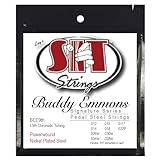
Overview: The SIT Buddy Emmons E9th strings represent a legacy collaboration with the “Big E” himself, delivering his signature tone to modern pedal steel players. These nickel-wound strings are specifically engineered for E9th tuning, capturing the clear, sustaining voice that made Emmons legendary. Manufactured in Akron, Ohio, they combine vintage tonal philosophy with contemporary manufacturing precision for serious steel guitarists.
What Makes It Stand Out: The Buddy Emmons pedigree sets these apart from generic strings. Players can choose between nickel for classic warmth or stainless steel for brighter attack, tailoring the tone to their style. The precision-wound construction ensures consistent tension across all ten strings, critical for the complex pedal and lever changes in E9th setups. The strings’ surface is optimized for smooth bar glides and confident note bends.
Value for Money: Positioned in the mid-to-premium tier, these strings justify their cost through professional-grade durability and authentic tone. While pricier than entry-level options, they outlast and outperform budget strings, making them economical for working musicians. The USA craftsmanship adds value for players prioritizing domestic manufacturing.
Strengths and Weaknesses: Strengths include exceptional tuning stability during pedal changes, outstanding sustain, authentic Emmons-era tone, and reliable intonation. The nickel version offers classic warmth perfect for country and western swing. Weaknesses are the premium price point that may deter beginners, and the need to purchase separate sets for different tunings. Some players might prefer more modern, brighter tones.
Bottom Line: These strings are essential for serious E9th pedal steel players seeking authentic, vintage-inspired tone. The Buddy Emmons name isn’t just marketing—it represents a proven formula that professional steel guitarists have relied on for decades. Highly recommended for gigging musicians and recording artists.
2. E9 Pedal steel

Overview: These premium NYXL pedal steel strings from D’Addario represent a technological leap in string design for E9th tuning. Engineered for maximum strength and tuning stability, they incorporate advanced metallurgy to withstand the extreme tension changes of pedal steel playing. The uncoated nickel-plated steel wrap delivers enhanced mid-range presence, helping players cut through dense mixes.
What Makes It Stand Out: D’Addario’s NY Steel core wire makes these strings up to 40% stronger than conventional strings, while providing 131% better tuning stability—a game-changer for pedal steel’s demanding mechanics. The strings can be bent two whole steps while remaining under 75% of their breaking point, offering unprecedented durability. The Players Circle rewards program adds value for loyal customers.
Value for Money: These sit at the premium end of the market, but the extended lifespan and reliability justify the investment. Professional players will save money over time through fewer string changes and reduced breakage during performances. The made-in-USA quality ensures consistency across every set.
Strengths and Weaknesses: Strengths include phenomenal tuning stability, exceptional strength and durability, enhanced mid-range clarity, and reliable performance under extreme tension. The strings maintain their tone longer than competitors. Weaknesses include the high price point and the generic product title which lacks brand clarity. Some traditionalists may find them too modern-sounding compared to vintage-style strings.
Bottom Line: Ideal for professional pedal steel players who prioritize reliability above all. The NYXL technology delivers on its promises of stability and strength, making these strings perfect for rigorous touring schedules and studio sessions where tuning consistency is non-negotiable.
3. D’Addario Electric Guitar Strings, NYXL Pedal Steel, NYXL1138PS, 10-String Pedal-Steel Guitars, Regular Light E9 11-38, Pack of 1

Overview: D’Addario’s NYXL1138PS brings their revolutionary NYXL technology specifically to 10-string pedal steel guitars in E9th tuning. This set features gauges from .011 to .038, providing a balanced feel optimized for the intricate pedal and lever work of modern steel players. As the premium offering from the world’s largest string manufacturer, these combine cutting-edge materials with decades of expertise.
What Makes It Stand Out: The NY Steel core delivers 40% more strength and 131% better tuning stability than traditional strings—critical benefits for pedal steel’s extreme bending. The nickel-plated steel wrap wire provides accentuated frequency response in the midrange, helping players articulate clearly in ensemble settings. The specific 11-38 gauge offers a lighter touch for faster playing while maintaining full tone.
Value for Money: These command a premium price but deliver professional performance that justifies the cost. The extended lifespan reduces replacement frequency, making them economical for working musicians. The included Players Circle points program provides additional long-term value. Made in New York to exacting standards, quality control is exceptional.
Strengths and Weaknesses: Strengths include outstanding tuning stability during pedal changes, remarkable durability under tension, enhanced mid-range presence, and consistent quality control. The lighter gauge facilitates quick bar work. Weaknesses are the high cost for hobbyists and limited tonal warmth compared to pure nickel strings. Some players may prefer heavier gauges for more resistance.
Bottom Line: A top-tier choice for serious E9th pedal steel players seeking modern performance and reliability. D’Addario’s NYXL technology provides measurable improvements in stability and strength, making these strings worth the premium for professionals and dedicated students who demand consistency.
4. SIT Strings Buddy Emmons Pedal Steel Strings Nickel (S.I.T.), C6th Tuning, BEC6th

Overview: The C6th tuning version of SIT’s legendary Buddy Emmons signature strings delivers the same iconic tone that made the E9th sets famous, adapted for the versatile C6th tuning. These nickel-wound strings capture Emmons’ signature clarity and sustain, making them ideal for jazz, western swing, and contemporary pedal steel styles. Handcrafted in Akron, Ohio, they represent American manufacturing at its finest.
What Makes It Stand Out: Developed with Buddy Emmons’ input specifically for C6th tuning, these strings provide the precise tension balance this complex tuning demands. The nickel winding offers classic warmth while maintaining definition across the C6th’s wider pitch range. Players switching between E9th and C6th can maintain consistent quality and feel across both instruments. The precision-wound construction ensures reliable performance during intricate neck pedal combinations.
Value for Money: These are priced for the professional market, reflecting their USA craftsmanship and legendary namesake. While more expensive than generic strings, they offer superior tuning stability and longevity, making them cost-effective for working musicians. The ability to replicate Emmons’ tone is worth the premium for serious students of the instrument.
Strengths and Weaknesses: Strengths include authentic vintage tone perfect for traditional genres, rock-solid tuning stability, smooth playing surface for bar technique, and excellent sustain. The nickel material provides warmth without muddiness. Weaknesses include the premium price and tuning-specific design that won’t work for E9th setups. Some modern players might want brighter stainless steel options.
Bottom Line: Essential for C6th pedal steel players seeking authentic, professional-grade tone. The Buddy Emmons legacy ensures these strings meet the highest standards for both recording and live performance. Highly recommended for traditionalists and anyone wanting to capture that classic Emmons sound on their C6th setup.
5. Stringjoy NW1238 Signatures Pedal Steel Guitar Strings E9th (12-38) Nickel Wound Pedal Steel Strings E9

Overview: Stringjoy’s NW1238 Signatures bring boutique craftsmanship to the pedal steel world with these E9th-tuned strings. As the only pedal steel strings made entirely in Nashville—the heart of steel guitar music—they offer a player-centric design philosophy. The 12-38 gauge set provides a slightly heavier feel than some competitors, delivering enhanced projection and control for discerning players.
What Makes It Stand Out: Being crafted in Nashville by fellow musicians gives these strings unique credibility. The carefully selected gauges create a perfectly balanced tension profile across all ten strings, reducing the need for constant adjustments. Stringjoy’s small-batch production ensures meticulous quality control, with each set inspected by actual players. The nickel-wound construction provides warm, articulate tone ideal for traditional and modern country.
Value for Money: These are competitively priced for boutique strings, offering artisanal quality without the premium markup of major brands. The durability and consistent performance provide excellent long-term value. For players wanting to support independent American manufacturers, these represent a smart investment. The direct-to-consumer model often means fresher strings.
Strengths and Weaknesses: Strengths include exceptional balance and playability, boutique quality control, Nashville heritage, and a slightly heavier gauge that many pros prefer. The tone is warm yet clear. Weaknesses include limited brand recognition compared to industry giants and potentially less availability in retail stores. The heavier gauge may not suit players preferring lighter touch.
Bottom Line: An outstanding choice for E9th players seeking boutique quality and supporting independent American manufacturing. The Nashville craftsmanship and player-focused design make these strings particularly appealing to serious musicians who value attention to detail and want a slightly heavier, more controlled feel.
6. GHS Strings - Pedal Steel String Set - Nickel Plated Steel - Model: GB-E9 SET

Overview: The GHS GB-E9 SET delivers a nickel-plated steel E9 tuning configuration designed for pedal steel guitarists who demand consistency and durability. These strings target players seeking reliable performance for both studio sessions and live gigs, offering GHS’s standard-setting construction quality in a classic nickel-plated format that balances warmth with articulation.
What Makes It Stand Out: GHS’s exclusive Nitro-Pack anti-corrosion packaging ensures each string arrives factory-fresh, eliminating the dead-tone issue common with older stock. The High Breakpoint Technology focuses on Ultimate Tensile Strength, dramatically reducing breakage during aggressive pedal work. Additionally, the LOCK TWIST ball-end design provides superior structural integrity where strings typically fail, giving players confidence during intense performances.
Value for Money: Positioned in the mid-range for premium pedal steel strings, the GB-E9 SET justifies its price through extended lifespan and reduced replacement frequency. The anti-corrosion packaging alone adds value, particularly for players who buy backup sets. Compared to generic alternatives, the proprietary technologies deliver measurable performance benefits that gigging musicians will appreciate during critical moments.
Strengths and Weaknesses: Strengths include exceptional freshness out of the package, outstanding break resistance, consistent tonal stability, and strong ball-end construction. The nickel-plated steel offers versatile tone suitable for multiple genres. Weaknesses include packaging benefits diminishing after opening, and nickel-plated steel may lack the ultra-brightness some modern country players prefer from pure stainless options.
Bottom Line: The GHS GB-E9 SET is a dependable workhorse for E9 pedal steel players prioritizing durability and consistent performance. The innovative packaging and construction technologies make it a smart investment for serious musicians. Highly recommended for gigging players.
7. GHS ST-E9 Super Steels (E9th Tuning) Guitar Steel Guitar

Overview: The GHS ST-E9 Super Steels represent the company’s stainless steel offering for E9th pedal steel guitar, engineered for players seeking maximum brightness and cutting power. This 10-string set features roundwound construction over a hexagonal core, delivering articulate tone that slices through dense mixes while maintaining the tuning stability critical for complex pedal steel arrangements.
What Makes It Stand Out: The stainless steel roundwound design produces a noticeably brighter, more aggressive tone than nickel-plated alternatives, making it ideal for modern country and rock applications. The hexagonal core enhances string stability and improves intonation consistency across the fingerboard. Manufactured in the USA, these strings meet exacting quality standards with precise gauge selection optimized for E9th tuning’s unique intervals.
Value for Money: Competitively priced within the premium pedal steel string category, the Super Steels offer excellent value through extended tonal lifespan. Stainless steel naturally resists corrosion and retains its bright character longer than nickel alloys, reducing replacement costs over time. For players requiring maximum projection and clarity, the performance justifies the investment over budget alternatives.
Strengths and Weaknesses: Strengths include exceptional brightness and sustain, superior durability, excellent tuning stability from the hex core, and consistent manufacturing quality. The tone cuts through amplified bands effortlessly. Weaknesses include stainless steel’s harsher feel on fingers, potentially excessive brightness for traditional country or jazz styles, and no specialized anti-corrosion packaging mentioned.
Bottom Line: The GHS ST-E9 Super Steels are perfect for E9 players demanding a bright, assertive voice with rock-solid stability. While not ideal for every genre, they excel in modern amplified contexts. Strongly recommended for contemporary pedal steel stylists.
8. D’Addario Set El Gt Nyxl Ped Steel 12-70 (NYXL1270PS)

Overview: D’Addario’s NYXL1270PS brings their revolutionary NYXL high-carbon steel technology to C6th pedal steel guitar, offering unprecedented strength and tuning stability. This premium 10-string set is engineered for advanced players who push their instruments with aggressive bar technique and frequent pedal changes, demanding strings that maintain pitch integrity under extreme stress while delivering enhanced mid-range presence.
What Makes It Stand Out: The high-carbon steel alloy provides up to 40% greater tensile strength than traditional nickel wound strings, drastically reducing breakage during performance. Improved tuning stability means faster setup and reliable intonation throughout long sessions. The corrosion-resistant packaging ensures freshness, while the custom medium gauge set is specifically optimized for C6th tuning’s complex interval relationships, offering balanced tension across all pedals and knee levers.
Value for Money: As a premium-tier product, the NYXL series commands a higher price, but the investment pays dividends for serious C6th players. The combination of break resistance, stable pitch, and extended tonal longevity reduces both replacement costs and performance anxiety. Compared to standard sets, the enhanced durability and consistency justify the premium for working musicians.
Strengths and Weaknesses: Strengths include exceptional break resistance, outstanding tuning stability, premium high-carbon tone with enhanced mids, and corrosion-resistant packaging. The strings respond beautifully to subtle dynamics. Weaknesses include the premium price point potentially exceeding budget-conscious players’ limits, and C6th-specific gauges limiting versatility for E9 players.
Bottom Line: The D’Addario NYXL1270PS sets the benchmark for C6th pedal steel strings. Its revolutionary strength and stability make it essential for professional players. Highly recommended despite the higher cost, as the performance benefits are immediately noticeable.
9. GHS Strings - Pedal Steel Strings - Nickel Rollerwound - Semi-Flat - E9 Tuning - Model:PF500 SET

Overview: The GHS PF500 SET carves a unique niche with its rollerwound semi-flat pure nickel construction for E9 tuning, catering to pedal steel players seeking a smoother playing experience and warmer tonal palette. This set diverges from traditional roundwounds by offering reduced finger noise and a more vintage-voiced character while retaining GHS’s reputation for durability and innovative packaging solutions.
What Makes It Stand Out: The semi-flat rollerwound design creates a smoother surface that reduces finger and bar noise while delivering the warm, rich character of pure nickel. This makes it ideal for jazz, western swing, and traditional country where excessive brightness is undesirable. The set incorporates GHS’s signature Nitro-Pack anti-corrosion packaging, High Breakpoint Technology for tensile strength, and LOCK TWIST ball-end construction, ensuring these specialized strings are as reliable as they are toneful.
Value for Money: Priced comparably to other premium GHS pedal steel sets, the PF500 offers distinct value through its unique voicing and playing feel. Players seeking to reduce string noise without sacrificing durability will find the cost justified. The specialized construction provides sonic options unavailable in standard roundwound sets, making it a worthwhile addition to any E9 player’s arsenal.
Strengths and Weaknesses: Strengths include exceptionally smooth playing feel, warm pure nickel tone, significantly reduced finger noise, and the same durability features as GHS’s roundwound offerings. The strings excel in low-volume and recording situations. Weaknesses include the semi-flat design lacking the aggressive bite of roundwounds, potentially limiting versatility for modern country, and pure nickel’s softer tone may not cut through dense mixes.
Bottom Line: The GHS PF500 SET is the go-to choice for E9 players prioritizing warmth and smooth playability. Its unique construction solves noise issues while maintaining quality. Highly recommended for traditional genres and recording applications.
10. GHS Pedal Steel Guitar Super Steel C6th 12-70 ST-C6

Overview: The GHS ST-C6 extends the Super Steel line to C6th tuning, providing stainless steel roundwound strings for players seeking maximum brightness and projection in this popular alternate tuning. This 10-string set delivers the same aggressive articulation and durability as its E9 counterpart, specifically gauged for C6th’s unique string layout and tension requirements, making it ideal for modern pedal steel applications.
What Makes It Stand Out: The stainless steel construction offers exceptional brilliance and sustain that helps C6th voicings cut through amplified bands with clarity. The hexagonal core design enhances tuning stability—a critical factor for C6th’s complex pedal and lever combinations. Proudly manufactured in the USA, the precise gauge selection (.012 to .070) ensures balanced feel across the neck while optimizing response for both traditional and contemporary C6th playing styles.
Value for Money: Offering premium stainless steel performance at a competitive price point, the ST-C6 delivers excellent value for dedicated C6th players. The extended lifespan of stainless steel reduces replacement frequency, while the specialized gauge set eliminates the need for costly custom string combinations. For working musicians, the durability and consistent tone justify the investment over economy options.
Strengths and Weaknesses: Strengths include brilliant cutting tone perfect for modern genres, excellent durability and corrosion resistance, stable tuning from hex core, and comprehensive C6th-specific gauge selection. The strings maintain clarity under heavy amplification. Weaknesses include stainless steel’s harsher feel, potentially excessive brightness for traditional styles, and no specialized anti-corrosion packaging mentioned, which is notable compared to other GHS offerings.
Bottom Line: The GHS ST-C6 is an outstanding choice for C6th players demanding bright, articulate tone with professional-grade stability. While genre-specific, it excels in contemporary settings. Strongly recommended for modern pedal steel stylists.
Understanding Pedal Steel’s Unique String Requirements
Pedal steel guitars operate under mechanical stresses that would snap conventional guitar strings in hours. With up to 10 pedals and 8 knee levers creating constant tension changes, your strings are essentially performing gymnastics every time you play a note. The average pedal steel string endures thousands of tension cycles per session—something no standard electric guitar string is designed to handle.
The Science Behind the Signature Twang
That distinctive country twang isn’t just about bright tone—it’s about transient response. When you pick a pedal steel string and immediately engage a pedal, you’re asking the string to shift pitch while still in its initial attack phase. This requires a specific combination of mass distribution and tensile strength. Strings that are too flexible create a muddy pitch shift, while overly stiff strings refuse to bend smoothly, creating that dreaded “slink” sound instead of a clean glissando.
The best strings for country twang maintain their harmonic integrity during these rapid tension changes. They preserve the upper-midrange frequencies that cut through a mix while allowing the fundamental note to shift cleanly. This balance is why material choice matters just as much as gauge.
Why Conventional Strings Miss the Mark
Standard electric guitar strings are engineered for a fixed-scale length and relatively stable tension. Slap them on a pedal steel and you’ll face three immediate problems: premature breakage at the changer, inconsistent pitch change under pedal pressure, and rapid tonal degradation from the constant stretching. Pedal steel strings feature specific ball-end designs and core-to-wrap ratios that accommodate the instrument’s unique changer mechanism and longer scale lengths, typically 23-24 inches compared to a standard guitar’s 25.5 inches.
Decoding String Gauges for Country Twang
Gauge selection on pedal steel is a completely different beast than on regular guitar. You’re not just thinking about playability—you’re calculating tension relationships across 10 or 12 strings that must work together as a mechanical system.
E9 vs C6 Tuning: Gauge Implications
The E9 tuning, dominant in modern country, typically uses lighter overall gauges ranging from .011 to .038. This tuning relies heavily on pedals for chord changes, meaning strings need enough mass to maintain pitch stability but light enough to respond quickly to pedal input. The C6 tuning, favored by Western swing and jazz players, generally runs heavier—from .012 to .042—because it depends more on bar technique and less on pedal manipulation for fundamental chord structures.
Your gauge choice must reflect which tuning is your primary voice. Many players keep separate guitars for each tuning specifically because optimal gauges differ so dramatically. If you’re using a universal tuning like D-10 (combining both E9 and C6), you’ll need to compromise, often settling in the middle ranges and adjusting your playing technique accordingly.
The Critical Middle Strings: 3rd and 4th Position
Here’s where most players get it wrong. The 3rd and 4th strings on an E9 setup (typically tuned to G# and E) handle the bulk of your expressive bending work. Go too light on these, and you’ll get pitch instability when engaging pedals. Go too heavy, and you’ll fight the strings during quick bar moves. Most country twang specialists recommend keeping these strings within .001-.002 inches of each other in gauge, creating a balanced feel that responds predictably to both pedal and bar input.
Material Selection: Tone, Feel, and Longevity
The alloy wrapped around your string’s core fundamentally shapes your twang character. In 2026, we’re seeing more hybrid materials, but three main categories still dominate the pedal steel world.
Nickel-Plated Steel: The Industry Benchmark
Nickel-plated steel strings deliver the archetypal country twang—a bright attack with a slightly scooped midrange that lets the note bloom naturally. The steel provides magnetic response for your pickups, while the nickel plating adds warmth and smooths out harsh overtones. For players seeking that classic Nashville session sound from the ’70s and ’80s, this material remains the starting point. They break in quickly, typically within an hour of playing, and maintain consistent tone for 2-3 weeks of heavy use.
Pure Nickel: Vintage Warmth and Complexity
Pure nickel strings have made a significant comeback for players chasing the mellow, woody twang of early pedal steel recordings. They produce fewer high-frequency harmonics, which actually helps in dense band mixes by reducing harshness. The trade-off is slightly less output and a slower attack. Many Western swing players prefer pure nickel for its smooth, vocal-like quality on ballads and mid-tempo shuffles. They also last longer tonally, often sounding consistent for 4-6 weeks, though they cost roughly 30% more than nickel-plated options.
Stainless Steel: Modern Clarity and Durability
Stainless steel strings offer the brightest, most articulate twang available. They resist corrosion better than any other material, making them ideal for players in humid climates or those who struggle with acidic sweat. The downside? They can sound almost too crisp, sometimes bordering on harsh in the upper registers. Modern country rock players love them for cutting through dense, amplified stage volumes, but traditionalists often find them lacking in “buttery” quality. They also tend to be harder on pickups and fingerpicks due to their increased magnetic pull and rougher surface texture.
Core Design: The Hidden Tone Factor
While everyone obsesses over wrap material, the core wire shape secretly controls your string’s elastic response—critical for pedal steel’s pitch-shifting demands.
Hex Core vs Round Core: Feel and Response
Hex core strings provide a mechanical grip between the core and wrap wire, creating a stiffer feel with faster attack and more precise intonation. Most modern pedal steel strings use hex cores because they handle the constant tension changes of pedal work without the wrap wire slipping. Round core strings, conversely, offer a more flexible, vintage feel with increased sustain and a softer attack. Some traditional players swear by round cores for their “forgiving” quality during bar slurs, but they require more frequent replacement as the wrap can shift over time.
How Core Construction Affects Pedal Steel Dynamics
The core’s tensile strength determines how much energy transfers from your picking motion into the string’s vibration. A higher-tensile core maintains pitch stability during pedal engages but can feel stiff under the bar. Lower-tensile cores offer buttery smoothness but may require more frequent tuning adjustments. In 2026, we’re seeing “hybrid tensile” cores that vary thickness along the string’s length, providing stiff tuning stability near the changer while remaining flexible under the playing area.
Winding Types: Texture and Tone Shaping
The profile of your string’s outer surface directly impacts both tone and the physical feel under your fingerpicks.
Roundwound: The Country Standard
Roundwound strings deliver maximum twang brightness and the textured surface that most pedal steel players expect. The grooves between the windings create micro-sonic artifacts that contribute to that cutting, articulate attack essential for chicken-pickin’ passages. They also provide the right amount of friction against your fingerpicks, preventing slippage during fast single-note runs. Nearly every signature country twang tone was recorded with roundwound strings.
Flatwound and Halfwound: Niche Applications
Flatwounds produce a dark, smooth tone with virtually no finger noise—useful for jazz-influenced country or recording situations where you want the steel to sit back in the mix. However, they lack the harmonic complexity that defines classic twang. Halfwounds (or groundwounds) split the difference, offering smoother feel than roundwounds while retaining some brightness. Some players experiment with flatwounds on the lower strings only (7-10) for a tighter bass response while keeping roundwounds on the melody strings.
The Coated String Conundrum
Coated strings promise extended life, but at what cost to your twang? The polymer coating that protects against corrosion also dampens high-frequency overtones.
How Polymer Coatings Impact Twang
That crisp, biting attack that defines country twang lives in the 2kHz-5kHz range—the exact frequencies most coatings suppress. While coated strings can last 3-4 times longer than uncoated versions, many players report their pedal steel sounds “blanketed” or “muffled” after switching. The coating also changes the string’s mass slightly, which can throw off your carefully calibrated pedal changes.
When Coated Strings Make Sense for Pedal Steel
If you live in a coastal environment or play outdoor festivals regularly, coated strings might save you money despite the tonal compromise. Some 2026 formulations use micro-thin coatings applied only to the wrap wire’s valleys, preserving more top-end while still protecting against moisture. These work reasonably well for rhythm playing or background pad work, but most lead players still prefer the unadulterated response of traditional strings.
Tension, Feel, and Playability
String tension isn’t just about how hard you have to press the pedals—it’s about the entire system’s mechanical balance.
Matching String Tension to Your Playing Style
Aggressive players who dig in hard with their picks need higher tension to prevent pitch warble during attack. Lighter-touch players benefit from lower tension that responds to subtle bar vibrato. The key is consistency across the neck. If your 5th string feels dramatically tighter than your 6th, your pedal engages will feel uneven. Most manufacturers provide tension charts—use them. Calculate your total tension per tuning and aim for balanced feel, not just convenient numbers.
The Pull-Release Factor in String Selection
Every time you engage a pedal, you’re temporarily increasing string tension. Strings that are already near their tensile limit will go sharp and stay sharp until you release. Quality pedal steel strings are engineered with enough elastic headroom to handle these cycles without permanent deformation. This is why cheap electric guitar strings fail quickly on pedal steel—they’re not designed for the constant stretch-and-release mechanics.
Budget vs Premium: Making Smart Investments
String price has skyrocketed in recent years, with premium sets now costing nearly double budget options. But what’s the real difference?
What Extra Dollars Buy You in 2026
Premium strings typically offer better quality control—more consistent gauge tolerances (often within .0005 inches), superior ball-end construction that resists unraveling, and carefully selected alloys with fewer impurities. They also use advanced packaging that prevents pre-installation corrosion. For recording sessions or critical gigs, this consistency matters. One dud string can ruin a take or an entire show.
Diminishing Returns and Sweet Spots
The jump from $8 bargain strings to $15 mid-tier options yields massive improvements in tone life and reliability. The jump from $15 to $30 premium sets offers more subtle benefits—slightly better intonation, marginally longer life, and incremental tonal refinement. Most working players find the mid-tier offers the best bang-for-buck, saving premium sets for special occasions.
Setup Synergy: Strings and Hardware
Your string choice must complement your guitar’s physical setup, not fight it.
Nut Slots and Bridge Compatibility
Pedal steel nuts and bridges are cut for specific gauge ranges. Installing significantly heavier strings can cause binding in the slots, leading to tuning instability and premature breakage. Conversely, going too light can create excessive slot gap, causing string rattle and imprecise intonation. Before changing gauges, check your manufacturer’s specs or consult a steel guitar tech. Sometimes a simple nut file adjustment opens up new gauge possibilities.
Break Angles and String Trees
The angle at which your string leaves the changer and approaches the bridge affects both tone and tuning stability. Steeper angles increase downforce on the bridge, enhancing sustain but requiring higher-tension strings to maintain proper feel. Shallower angles reduce tension but can cause buzzing. Your string choice should account for these angles—lighter strings work better with steeper break angles, while heavier strings compensate for shallow ones.
Maintenance for Maximum Twang Preservation
Even the best strings die quickly without proper care. Pedal steel strings face unique challenges from the constant metal-on-metal contact at the changer and the copious amounts of finger oils transferred during play.
Daily Habits for String Longevity
Wipe down every string individually after each playing session. Use a clean, dry microfiber cloth, running it under each string to remove residue from the windings. For uncoated strings, a quick pass with a string cleaner every few sessions removes buildup without deadening tone. Avoid alcohol-based cleaners on the plain strings—they can cause microscopic cracks that lead to breakage.
Climate Control and Storage Solutions
Pedal steel strings are exquisitely sensitive to humidity. A 20% swing in relative humidity can change your tuning by several cents across all strings. Store your steel in a case with humidity control packs, especially if you live in variable climates. For stage use, consider a dehumidifier in your rehearsal space. Strings that maintain stable moisture content last longer and stay in tune better.
Avoiding Tone-Killing Mistakes
Many players sabotage their twang through simple string-related errors that are easily avoidable.
Mixing brands and types across a single instrument is the most common sin. Each brand uses different core-to-wrap ratios and tension characteristics. A .017 from Company A might have 20% more tension than Company B’s .017, creating uneven feel and unpredictable pedal response. Stick with matched sets designed specifically for pedal steel.
Another mistake is changing strings right before a gig. New strings need 30-60 minutes of playing time to stabilize and reach their full tonal potential. They stretch, settle, and develop their characteristic voice during this break-in period. Always change strings at least a day before any important performance.
Looking Ahead: 2026 String Technology Trends
The pedal steel string market is finally embracing precision manufacturing techniques borrowed from aerospace and medical industries. Laser-measured tension matching, AI-driven alloy composition, and micro-layer coatings that don’t kill twang are becoming mainstream. We’re also seeing a shift toward more sustainable materials, with some manufacturers experimenting with recycled steel cores that maintain traditional tone while reducing environmental impact.
Perhaps most exciting is the emergence of “smart” strings with embedded micro-tension sensors that communicate with smartphone apps, helping players dial in perfect pedal compensation. While still in early stages, this technology promises to revolutionize how we think about string setup and maintenance.
Frequently Asked Questions
How often should I change my pedal steel strings for optimal twang?
For professional players gigging multiple times per week, change them every 2-3 weeks. Weekend warriors can stretch to 4-6 weeks. If you notice diminished brightness, tuning instability, or any corrosion, it’s time. Recording sessions demand fresh strings—never record with strings older than two weeks if you want that crisp twang.
Can I use regular electric guitar strings on my pedal steel in a pinch?
Technically yes, but it’s a false economy. They’ll break within days, intonate poorly, and lack the balanced tension needed for smooth pedal action. In an emergency, you might use a standard .011 or .012 for your high E, but expect tuning issues and plan to replace the full set immediately.
What’s the ideal gauge for achieving classic Nashville country twang?
For E9 tuning, most Nashville session players use .011-.014-.018-.022-.026-.030-.034-.038, with variations on the 2nd and 3rd strings. The key is keeping the middle strings balanced. C6 players typically run .012-.014-.018-.022-.028-.032-.036-.042 for that full, rich swing sound.
Do heavier strings really give you more twang?
Not necessarily. Twang lives in the upper mids and attack transients, which lighter strings actually accentuate. Heavier strings provide more fundamental tone and sustain but can sound dark and stiff. The secret is matching gauge to your pickups and playing style rather than assuming heavier is better.
How does humidity affect my pedal steel strings?
Humidity causes steel strings to oxidize faster and can swell the wooden components of your guitar, altering neck relief and string action. High humidity makes strings feel sluggish and deadens twang; low humidity can cause them to become brittle and prone to breakage. Maintain 40-50% relative humidity for optimal performance.
Should I use a string lubricant on my pedal steel?
Avoid petroleum-based lubricants—they attract dust and deaden tone. A tiny amount of graphite in the nut slots can help tuning stability, but modern pedal steel nuts are typically self-lubricating. Focus on proper setup rather than chemical shortcuts.
What’s the difference between pedal steel strings and lap steel strings?
Lap steel strings are designed for fixed tunings with no pedal manipulation. They lack the elastic headroom and ball-end reinforcement needed for constant tension changes. Using lap steel strings on a pedal instrument will result in rapid breakage and poor tuning stability.
Can mixing string brands help me customize my tone?
This is risky. While some advanced players create “Frankensets,” doing so requires deep knowledge of each brand’s tension characteristics. Mismatched sets can cause uneven pedal feel and intonation nightmares. Until you can calculate total system tension, stick with matched pedal steel sets.
How do I know if my strings are too old for recording?
Do the “pick test.” Play a single note with a hard attack and listen to the decay. Fresh strings produce a clear, bell-like sustain with defined harmonic overtones. Dead strings sound thuddy, with a quick, dull decay. Also, check for visible discoloration or rough texture—these are sure signs your twang has left the building.
Will stainless steel strings damage my pickups?
Not directly, but their increased magnetic pull can cause microphonic feedback in older, unpotted pickups. They also wear down fingerpicks faster due to their rougher surface. Modern pickups handle them fine, but expect to replace your picks more frequently. The tonal brightness is worth the trade-off for many contemporary players.
See Also
- 10 Pedal Steel Strings for Country Swells in 2026
- 10 Budget Pedal Steel Strings Under $15 That Still Sing for Country Licks
- 10 Light-Gauge Pedal Steel Strings for Country Pedal Work Without Hand Cramps
- 10 Essential Pedal Steel Sets for Beginner Country Players in 2026
- 10 Pedal Steel Strings for Smooth Bends Without Breakage in 2026