Table of Contents
There’s something almost sacred about stepping onto a small stage with a guitar that feels like an extension of your own voice. The lights are low, the audience is close enough to catch every nuance, and the last thing you want is a booming dreadnought that overwhelms the room. This is where the parlor guitar shines—not with brute force, but with a whisper that carries. As we look toward 2026, the parlor acoustic guitar is experiencing a renaissance, blending vintage intimacy with modern innovation. Whether you’re a coffeehouse troubadour, a fingerstyle storyteller, or a songwriter who values connection over volume, understanding what makes these compact instruments special will transform your approach to live performance.
The magic of a parlor guitar lies not in its size, but in its ability to create a sonic space that feels personal and immediate. Unlike their larger cousins built for projection, parlor guitars are designed for conversation—with your audience, with the room, and with the song itself. In 2026, manufacturers are pushing boundaries with sustainable materials, advanced electronics, and ergonomic designs that honor the parlor’s 19th-century roots while solving 21st-century performance challenges. Let’s explore what separates exceptional small-stage parlors from the merely small.
Top 10 Parlor Acoustic Guitars
Detailed Product Reviews
1. Gretsch Jim Dandy Parlor Acoustic Guitar - Deep Cherry Burst

Overview: The Gretsch Jim Dandy Parlor channels 1930s ragtime aesthetics in a compact, budget-friendly package. This 24-inch scale guitar features a laminate top with nato neck and walnut fingerboard, delivering authentic vintage vibes without the vintage price tag. Perfect for couch playing, travel, or introducing beginners to the parlor format, its Depression-era styling captures Gretsch’s heritage in an accessible instrument.
What Makes It Stand Out: The Jim Dandy’s primary appeal lies in its retro-cool factor and extreme portability. The compact parlor body produces a surprisingly punchy, focused tone ideal for blues and fingerpicking. Its no-frills design includes period-correct details like vintage-inspired headstock and minimalist appointments that evoke pre-war instruments while maintaining modern playability standards.
Value for Money: Positioned as an entry-level instrument, this guitar excels in affordability. The all-laminate construction keeps costs low while maintaining durability. For under $200, you’re getting a playable instrument from an iconic American brand, making it an excellent choice for beginners or as a secondary “beater” guitar for experienced players who need something travel-ready.
Strengths and Weaknesses: Strengths include unbeatable price, authentic vintage styling, compact portability, and reliable build quality. The laminate construction proves durable for travel and humidity changes. Weaknesses are tonal limitations from laminated woods, basic hardware that may require upgrading, and a nato neck that lacks the premium feel of mahogany. The factory setup often benefits from professional adjustment.
Bottom Line: An ideal choice for beginners seeking style on a budget or experienced players wanting a travel-friendly couch guitar. Don’t expect premium tone, but the Jim Dandy delivers character and playability that punches above its weight class.
2. Fender CP-60S Parlor Acoustic Guitar, with 2-Year Warranty, 3-Color Sunburst

Overview: The Fender CP-60S Parlor brings modern build quality to the compact body shape, featuring a solid spruce top with laminated mahogany back and sides. This 24.75-inch scale guitar balances vintage proportions with contemporary playability, backed by Fender’s two-year warranty and reliable craftsmanship. The 3-Color Sunburst finish delivers classic Fender aesthetics.
What Makes It Stand Out: The solid spruce top is the star feature, offering authentic acoustic resonance rarely found at this price point. The shorter scale length and comfortably rolled fingerboard edges create an exceptionally playable neck. Chrome die-cast tuners provide stable tuning, while the mahogany back and sides contribute warmth and balance to the compact parlor voice.
Value for Money: This represents exceptional mid-range value. The solid top alone justifies the price premium over laminate competitors, while the warranty adds long-term security. Competing solid-top parlors often cost $100 more, making this a smart investment for serious learners who want an instrument that grows with their skills without breaking the bank.
Strengths and Weaknesses: Strengths include impressive solid-top tone quality, excellent playability, reliable hardware, and strong brand support. The shorter scale reduces string tension for easier fretting. Weaknesses include laminated back and sides that limit tonal complexity, no included case, and a slightly narrow nut width that may not suit all fingerstyle players. The tone improves significantly as the spruce top opens up.
Bottom Line: The CP-60S hits the sweet spot for intermediate players and committed beginners. The solid top provides room to grow musically, while Fender’s quality control ensures a reliable instrument that rewards practice with increasingly rich tone.
3. Fender CP-60S Parlor Acoustic Guitar, with 2-Year Warranty, Natural

Overview: The Natural finish version of Fender’s CP-60S Parlor offers identical specifications to its sunburst sibling but showcases the solid spruce top’s organic beauty. This guitar emphasizes player comfort with its easy-to-play neck shape and rolled fingerboard edges, making it particularly welcoming for developing technique. The clean aesthetic appeals to traditionalists.
What Makes It Stand Out: Beyond the understated look, the CP-60S Natural highlights Fender’s focus on ergonomic design. The rolled fingerboard edges eliminate the harsh feel common on budget instruments, while the optimized neck profile accommodates both strumming and fingerpicking. The natural finish allows players to watch the spruce grain mature over time, creating a personal connection with the instrument.
Value for Money: Sharing the same price point as the sunburst version, this model offers identical core value. The solid spruce top remains the primary investment, delivering tonal improvement over laminate alternatives. The two-year warranty and Fender’s resale value strengthen the proposition, making it financially sensible for players who might upgrade later.
Strengths and Weaknesses: Strengths mirror the sunburst model: solid top resonance, superior playability features, quality tuners, and reliable construction. The natural finish shows wear less obviously than darker bursts. Weaknesses include the same laminated back and sides, lack of included case, and a tone that may sound slightly bright and tight until the spruce opens up with playing.
Bottom Line: Choose this over the sunburst if you prefer understated aesthetics or want to watch your spruce top age. It’s equally suited for dedicated beginners and seasoned players seeking a quality parlor guitar that prioritizes comfort and traditional looks.
4. Gretsch Jim Dandy Parlor Acoustic Guitar - Frontier Stain

Overview: The Gretsch Jim Dandy in Frontier Stain offers the same compact parlor design as the Deep Cherry Burst variant, swapping glossy vintage sparkle for a rugged, rustic aesthetic. Built with a laminate top, nato neck, and walnut fingerboard, this 24-inch scale guitar targets players seeking Depression-era authenticity with weathered character and a matte finish.
What Makes It Stand Out: The Frontier Stain finish distinguishes this model with its raw, tobacco-brown appearance that suggests a well-traveled instrument. This matte finish enhances the vintage illusion while providing a different tactile experience. The guitar maintains the Jim Dandy’s core appeal: extreme portability and that distinctive parlor bark perfect for bluesy fingerpicking and ragtime accompaniment.
Value for Money: Identical in price to its Cherry Burst counterpart, this variant delivers the same budget-conscious value. The all-laminate construction ensures durability and affordability, making it ideal for beginners, travelers, or as a low-risk introduction to parlor guitars. You’re paying for character and brand heritage, not premium materials.
Strengths and Weaknesses: Strengths include the unique weathered aesthetic, ultra-compact body, reliable Gretsch branding, and surprising volume for its size. The matte finish feels comfortable and hides fingerprints well. Weaknesses are identical to the Cherry version: limited tonal depth from laminate woods, basic hardware, and a setup that typically benefits from professional adjustment for optimal playability.
Bottom Line: Your choice between Frontier Stain and Deep Cherry Burst should be purely aesthetic. Both deliver the same fun, no-frills playing experience. This finish particularly suits players wanting a rustic, road-worn look without the road-worn price tag.
5. Washburn R310K Victorian Parlor Acoustic Guitar w/Gigbag, Antique Brown

Overview: The Washburn R310K Victorian Parlor takes a more premium approach with its solid spruce top and exotic Trembesi back and sides. This 24.75-inch scale guitar features a comfortable soft V neck profile and includes a gigbag, targeting experienced players who want vintage vibe with modern specifications. The antique matte finish evokes 19th-century craftsmanship.
What Makes It Stand Out: The Trembesi wood sets this instrument apart, offering a tonal character similar to rosewood with enhanced midrange clarity. Washburn provides unusually specific neck thickness measurements (22.5mm at 1st fret, 25.7mm at 9th), demonstrating attention to ergonomic detail. The soft V neck profile excels for thumb-over playing styles, while the included gigbag adds immediate value.
Value for Money: While pricier than entry-level parlors, the R310K justifies its cost through premium tonewoods, included gigbag, and refined construction. The Trembesi back and sides add value uncommon in this segment, though the price approaches solid mahogany territory. It’s best viewed as a specialized instrument for discerning players rather than a budget option.
Strengths and Weaknesses: Strengths include unique tonewood selection, excellent neck profile for vintage-style playing, quality included gigbag, and distinctive aesthetics. The solid spruce top delivers proper acoustic resonance that improves with age. Weaknesses include Trembesi’s unproven status for some traditionalists, higher price point, and Washburn’s smaller brand presence compared to Fender or Gretsch.
Bottom Line: Perfect for experienced players seeking a parlor with character and premium feel. The soft V neck and Trembesi tonewoods offer a unique playing experience that justifies the price. Beginners may find better value elsewhere, but discerning players will appreciate the craftsmanship and included accessories.
6. Gretsch Jim Dandy Parlor Acoustic Guitar - Rex Burst

Overview: The Gretsch Jim Dandy Parlor Acoustic Guitar in Rex Burst embodies vintage Americana in an affordable, travel-friendly package. This 24-inch scale parlor guitar channels 1930s Gretsch designs with its compact body and distinctive two-tone sunburst finish. The laminate top, nato neck, and walnut fingerboard keep costs down while delivering authentic Gretsch aesthetics that belie its budget price tag.
What Makes It Stand Out: The Rex Burst finish and period-correct styling make this instantly recognizable among budget guitars. Its diminutive size makes it perfect for couch playing, camping trips, or small living spaces where a full-size guitar feels cumbersome. The Gretsch brand heritage at this price point is remarkable, offering authentic vibe that generic brands cannot replicate.
Value for Money: Priced well under $200, this competes with budget brands while offering superior style and playability. Comparable parlor guitars lack the iconic Gretsch vibe, making this exceptional value for beginners or collectors wanting a knockaround guitar that still looks professional on stage or social media.
Strengths and Weaknesses: Pros: Extremely affordable; highly portable; vintage aesthetics; comfortable short scale; decent build quality for price; lightweight. Cons: Laminate top limits tonal complexity and projection; basic hardware; may require setup; no electronics.
Bottom Line: The Jim Dandy is a character-rich instrument perfect for beginners, travelers, or seasoned players wanting a casual guitar. While tone purists will miss solid wood resonance, the unbeatable price and retro charm make it a worthy purchase for its intended purpose as a fun, accessible instrument.
7. Ibanez PN12E - Vintage Mahogany Sunburst

Overview: The Ibanez PN12E brings acoustic-electric versatility to the parlor guitar format at an entry-level price point. Featuring a sapele top with nyatoh back and sides, this 6-string offers built-in electronics in a compact, vintage-styled package. The “Nu” fingerboard appears to be a synthetic composite, representing Ibanez’s cost-conscious engineering while maintaining playability.
What Makes It Stand Out: The inclusion of an Ibanez AEQ-2T preamp with onboard tuner at this price distinguishes it from purely acoustic competitors. The Vintage Mahogany Sunburst finish provides professional aesthetics typically found on more expensive instruments. Its parlor dimensions make it comfortable for younger players or those seeking a couch-friendly guitar.
Value for Money: Retailing around $200-250, the PN12E competes directly with acoustic-only models while adding performance-ready electronics. For beginners needing amplification for open mics or recording, this eliminates a separate pickup installation costing $100+. Comparable all-wood fingerboards would raise the price significantly.
Strengths and Weaknesses: Pros: Built-in electronics with tuner; comfortable parlor size; quality sapele tonewood; attractive finish; reliable Ibanez construction. Cons: Synthetic fingerboard material; laminate construction limits tone; basic preamp tone shaping; gig bag not included.
Bottom Line: The PN12E excels as a first acoustic-electric for budget-conscious performers. While purists may scoff at the synthetic fingerboard, the functional electronics and solid build make it a pragmatic choice for players prioritizing plug-and-play convenience over traditional materials.
8. Gretsch Jim Dandy Deltoluxe Dreadnought Acoustic-electric Guitar - Black

Overview: The Jim Dandy Deltoluxe scales up the classic parlor formula to a full-size dreadnought body while adding stage-ready electronics. This acoustic-electric features the same nato neck and walnut fingerboard as its smaller sibling, but the larger laminate body projects significantly more volume. The sleek black finish gives it a rock-and-roll aesthetic that stands apart from traditional woodgrain guitars.
What Makes It Stand Out: The Deltoluxe preamp system provides basic amplification while maintaining the guitar’s affordable price point. The dreadnought shape delivers the volume and bass response that parlor guitars inherently lack, making it more versatile for strumming and flatpicking. The all-black finish offers a modern alternative to the vintage Rex Burst.
Value for Money: Positioned slightly above the acoustic Jim Dandy models, this represents strong value for players needing a loud acoustic voice and occasional amplification. Competing dreadnoughts with electronics typically start $50-100 higher, making this an accessible option for rock, blues, and country players on a budget.
Strengths and Weaknesses: Pros: Full-size dreadnought projection; built-in electronics; iconic Gretsch styling; comfortable nato neck; affordable. Cons: Laminate top lacks tonal depth; basic Deltoluxe electronics; black finish shows fingerprints; no onboard tuner.
Bottom Line: This dreadnought variant successfully expands the Jim Dandy line for players needing more acoustic presence. While the electronics are functional rather than exceptional, the combination of Gretsch attitude, larger body, and amplification capability makes it ideal for casual performers and beginners ready to play out.
9. Epiphone Blues King Studio Parlor Acoustic Electric, Dark Burst with Bag
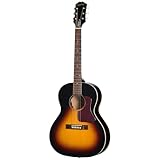
Overview: The Epiphone Blues King Studio elevates the parlor guitar with premium Fishman electronics and thoughtful vintage appointments. Its layered mahogany L-00-style body features traditional cream binding, while the 24.75" scale mahogany neck with rounded C profile delivers authentic blues-era playability. The included gig bag adds immediate portability for gigging musicians.
What Makes It Stand Out: The Fishman Presys VT preamp with S-Core under-saddle pickup provides professional-grade amplified tone that rivals systems in guitars costing twice as much. The shorter Gibson-style scale length reduces string tension, making it ideal for fingerstyle blues and slide playing. The L-00 body shape references Epiphone’s historic archtop designs.
Value for Money: At approximately $300-350, this represents exceptional value for a stage-ready parlor. The Fishman system alone justifies the price premium over basic acoustic-electrics. Comparable guitars with similar electronics start around $500, and the included gig bag saves an additional $30-50.
Strengths and Weaknesses: Pros: Professional Fishman electronics; comfortable short scale; vintage aesthetics; quality gig bag included; glued dovetail neck joint. Cons: Layered (laminate) body limits acoustic tone; no onboard tuner; cream binding may yellow over time.
Bottom Line: The Blues King Studio is arguably the best value acoustic-electric parlor available. While the laminated body won’t satisfy purists seeking pure acoustic resonance, the superb amplified tone, historic styling, and player-friendly features make it perfect for gigging blues and folk musicians.
10. Gretsch Limited-edition Jim Dandy Parlor Solid Top Acoustic Guitar - Heritage Burst

Overview: This limited-edition Jim Dandy upgrades the formula with a solid spruce top, representing a significant tonal improvement over laminate models. The Heritage Burst finish and laminated back/sides maintain affordability while the solid top provides enhanced resonance and dynamic response. Walnut fingerboard and nato neck preserve the comfortable, vintage-inspired playing feel.
What Makes It Stand Out: The solid spruce top is a game-changer in the sub-$300 parlor category, offering tonal maturity typically found in more expensive instruments. Limited edition status ensures collectibility and potential appreciation. The Heritage Burst provides a more sophisticated aesthetic than the standard Rex Burst.
Value for Money: Priced around $250-300, this delivers 80% of the tonal benefits of a solid-top guitar at 50% of the typical cost. Competing solid-top parlors from Martin or Taylor start at $600+, making this an unprecedented value proposition for tone-conscious buyers on a budget.
Strengths and Weaknesses: Pros: Solid spruce top for superior tone; limited edition collectibility; vintage Gretsch styling; affordable price; lightweight parlor comfort. Cons: No electronics; laminated back/sides still limit projection; limited availability; may require setup for optimal playability.
Bottom Line: This limited-edition model is the crown jewel of the Jim Dandy line, offering genuine solid-wood tone at an unbelievable price. For players who prioritize acoustic sound over amplification, this represents a rare opportunity to own a collectible, great-sounding parlor guitar without the usual financial barrier. Act quickly before it disappears.
What Makes a Parlor Guitar Perfect for Intimate Performances?
The Physics of Intimacy: Sound Projection vs. Volume
Parlor guitars operate on a completely different acoustic principle than dreadnoughts or jumbos. Their smaller soundboard moves less air, producing lower overall decibel levels, but this perceived limitation becomes their superpower in intimate settings. The focused, midrange-forward voice cuts through ambient room noise without overpowering vocals, creating a natural balance that sound engineers dream about. In 2026, advanced bracing patterns like modified X-bracing and hybrid ladder designs are enhancing this projection sweet spot, allowing parlors to maintain their characteristic warmth while adding just enough presence to reach the back of a 50-seat venue without a PA system.
Body Size and Playing Comfort
The traditional parlor body—typically around 18-19 inches in length and 13-14 inches at the lower bout—cradles naturally against your body, reducing fatigue during long sets. This ergonomic advantage means you’re not fighting the instrument physically, which translates to more relaxed playing and better stage presence. Modern designs are slightly refining these proportions, with some 2026 models featuring subtly expanded depth to increase low-end response while maintaining the classic comfortable footprint. The result is an instrument that disappears in your hands, letting your performance take center stage.
The Parlor Guitar’s Unique Voice
That distinctive parlor voice—often described as dry, woody, and articulate—excels at revealing the nuances of your playing style. Every hammer-on, pull-off, and subtle dynamic shift is rendered with crystalline clarity. This isn’t the guitar for burying mistakes; it’s for showcasing intention. The emphasis on midrange frequencies (typically peaking around 1.5-2.5 kHz) creates a vocal-like quality that complements singing voices rather than competing with them. In small rooms, this tonal character builds an almost conversational dynamic with listeners, making each performance feel like a shared secret.
Understanding Parlor Guitar Body Shapes and Sizes
Traditional vs. Modern Parlor Dimensions
Vintage parlors from the 1920s and ’30s were often remarkably small, sometimes with bodies under 18 inches long. Today’s “parlor” category has expanded to include what some makers call “concert” or “0-size” guitars, stretching to 20 inches. For true small-stage intimacy, the sweet spot remains the traditional dimensions—compact enough to focus the sound but large enough to support a full range of frequencies. In 2026, we’re seeing a trend toward “hybrid parlors” that maintain the narrow waist and shallow depth of vintage models while slightly widening the upper bout for improved string-to-string balance.
Scale Length Considerations
Scale length dramatically affects both tone and playability. Traditional parlors often featured short scales around 24 inches, which reduces string tension and makes bending easier—a boon for bluesy, expressive playing. However, many contemporary models use a standard 25.5-inch scale to maintain familiar string feel and increase articulation. The choice depends on your style: short scales favor vintage warmth and slinky playability, while longer scales deliver piano-like clarity and more headroom for aggressive fingerpicking. Some 2026 models now offer multi-scale (fanned fret) options, providing tight bass response and relaxed trebles in one instrument.
Tonewood Selection: The Heart of Your Sound
Sitka Spruce vs. Cedar for Tops
The soundboard is your tone’s engine, and the choice between Sitka spruce and cedar defines your guitar’s fundamental character. Sitka remains the gold standard for versatility, offering headroom, crisp note definition, and a bright, dynamic response that shines in mixed ensembles. Cedar, by contrast, delivers instant warmth, complex overtones, and a played-in feel right out of the box—perfect for solo singer-songwriters who prioritize emotional immediacy over cutting power. In 2026, torrefied (thermally aged) versions of both woods are becoming standard at mid-price points, accelerating the tonal maturation process and providing vintage responsiveness without the vintage price tag.
Mahogany, Rosewood, and Alternative Back/Sides
Back and side woods act as your guitar’s EQ and reverb tank. Mahogany provides focused, fundamental-rich tone with a quick decay—ideal for complex fingerwork where note separation is critical. Rosewood adds lush overtones, extended sustain, and a scooped midrange that creates a three-dimensional soundstage, though it can sometimes muddy the parlor’s inherent clarity. The real story in 2026 is the explosion of sustainable alternatives: African okoume offers mahogany-like warmth, ziricote provides rosewood’s complexity with stunning figure, and fast-growing bamboo delivers surprising projection and environmental peace of mind. These aren’t compromise choices—they’re tonal statements.
The Rise of Sustainable Tonewoods in 2026
Environmental regulations and player consciousness have made sustainability non-negotiable. Forward-thinking manufacturers are now using salvaged urban wood, responsibly harvested plantation species, and innovative composites that capture traditional tonal qualities. The new FSC-certified spruce alternatives from managed European forests are virtually indistinguishable from old-growth timber, while recycled carbon fiber reinforcement bars maintain structural stability without the ecological cost of ebony. This shift means your small-stage guitar can now tell a story of stewardship as compelling as the songs you play on it.
Electronics and Amplification: Capturing the Magic
Under-Saddle vs. Soundboard Transducers
Amplifying a parlor guitar requires finesse—its delicate voice can easily be crushed by heavy-handed pickup systems. Under-saddle piezos offer reliability and feedback resistance, but quality varies enormously. High-end 2026 systems now feature multiple piezo elements per string, capturing more harmonic information and reducing that characteristic “quack.” Soundboard transducers (SBTs) like contact microphones deliver a more organic, microphone-like tone by sensing the top’s actual movement, but they’re more prone to feedback and require careful placement. The best modern systems blend both, using piezos for fundamental pitch and SBTs for body and air.
Microphone Systems for Authentic Tone
For the purist, internal microphone systems provide the most realistic amplified tone. These mini condensers capture the guitar’s true voice—including the subtle finger noises and breathing characteristics that make live performance feel alive. The downside? They’re feedback magnets. New 2026 models incorporate phase-reversal technology and adaptive notch filtering that automatically hunts and eliminates feedback frequencies before they become problematic. Some systems even blend the mic with an under-saddle pickup, letting you dial in the perfect ratio of authenticity to practicality from your stage position.
The Importance of Onboard EQ and Tuner
Small stages rarely offer sophisticated EQ control at the mixing board. A quality onboard preamp with at least three-band EQ (bass, mid, treble) and a sweepable midrange is essential for adapting to room acoustics on the fly. The built-in tuner, once a luxury, is now a necessity—nothing breaks intimacy faster than fumbling with a pedal tuner between songs. Look for 2026 models with discrete LED displays that are visible in dim stage lighting but don’t distract from the instrument’s aesthetic. Some advanced systems now include Bluetooth connectivity, allowing you to sculpt your tone through a smartphone app during soundcheck and save venue-specific presets.
Neck Profile and Playability Factors
Fingerboard Radius and Width
Parlor guitars traditionally featured flat fingerboards (12-16 inch radius) that facilitated fingerstyle playing and barre chords. Modern players accustomed to electric guitars often prefer a more pronounced radius (9.5-12 inches) for comfortable bending and lead work. The trend in 2026 is compound radius fingerboards that start flatter at the nut for clean chording and gradually curve toward the body for effortless upper-fret soloing. This hybrid approach makes the parlor a legitimate crossover instrument for guitarists who split their time between acoustic intimacy and electric flash.
Nut Width for Fingerstyle vs. Strumming
Nut width determines string spacing and fundamentally shapes your right-hand technique. Traditional parlors often featured narrow 1-11/16” nuts, perfect for Travis picking and thumb-over-chord shapes. Contemporary fingerstyle players increasingly demand 1-3/4” or even 1-13/16” for more precise finger placement and complex patterns. The key is matching the nut width to your picking style—wider isn’t always better if you’re primarily a strummer, as it can slow down chord transitions. Many 2026 models offer interchangeable nuts, letting you experiment without permanent modification.
Hardware and Appointments: Details That Matter
Tuning Stability on Small Stages
There’s no quicker way to kill intimacy than stopping to retune mid-set. Quality open-back or sealed tuners with a high gear ratio (18:1 or higher) are non-negotiable. Vintage-style open-gear tuners look gorgeous and save weight, but modern sealed tuners offer better dust resistance and smoother action. In 2026, we’re seeing the adoption of locking tuners on acoustic guitars—a feature borrowed from electrics that makes string changes faster and improves stability by eliminating string slippage. Look for staggered post heights that increase the string break angle over the nut, improving sustain and reducing the need for string trees.
Bridge and Saddle Materials
The bridge is your tone’s final gateway to the strings. Traditional ebony provides excellent transmission and a crisp attack, while rosewood adds warmth. The real game-changer in 2026 is the widespread adoption of compensated bone saddles cut with laser precision. These aren’t just generic bone blanks—they’re specifically shaped for each model’s intonation quirks and string gauge preferences. Some manufacturers are experimenting with synthetic materials like TUSQ that offer consistent density and can be engineered with specific harmonic enhancements, though purists still argue nothing beats a well-cut piece of vintage-cured bone.
Budget Considerations: Finding Value in 2026
Entry-Level Parlor Guitars
The sub-$500 market has exploded with legitimate performance instruments. These guitars won’t feature solid rosewood backs or hand-scalloped bracing, but they offer solid spruce or cedar tops and reliable electronics. The key is understanding where corners are cut—laminated back and sides are acceptable at this price, but avoid laminated tops, which severely restrict tonal development. Many 2026 entry-level models include features that were premium five years ago: bone nuts and saddles, decent tuners, and even basic pickup systems. Focus on playability and solid construction; tone will improve as the wood opens up with playing.
Mid-Range Sweet Spots
Between $800 and $1,800 lives the parlor guitar golden zone. Here you’ll find all-solid construction, professional-grade electronics, and meticulous factory setup. This is where boutique features start appearing: torrefied tops, ebony fingerboards, and custom-voiced bracing patterns. The best values in 2026 come from smaller workshop brands that outsource manufacturing to highly regulated Asian factories but handle final setup and quality control domestically. You’re paying for expertise, not marketing. These instruments will satisfy serious gigging musicians and offer enough tonal sophistication to grow with your playing for decades.
Professional-Grade Investments
Premium parlors above $2,000 are handmade instruments built without compromise. You’re investing in master-grade tonewoods selected for specific tap tones, hand-voiced bracing that’s shaved to respond to the individual top, and electronics systems integrated during construction rather than added as an afterthought. The 2026 professional market emphasizes hyper-sustainability—guitars built from reclaimed old-growth timber with carbon-neutral manufacturing processes. These aren’t just tools; they’re heirlooms that appreciate in value while delivering a voice that mass-produced instruments simply cannot replicate.
The Impact of Finish and Construction Methods
Nitrocellulose vs. Polyurethane Finishes
The finish debate rages on, but with new nuance in 2026. Nitrocellulose lacquer remains the tonal purist’s choice—it’s thin, breathable, and allows the wood to resonate more freely, aging gracefully with checking that many find beautiful. However, modern polyurethane formulas have become remarkably sophisticated, offering 90% of nitro’s resonance with vastly superior protection against humidity and impact. The newest UV-cured polyester finishes are even thinner than nitro and cure in minutes rather than weeks, reducing environmental impact. For small-stage use, consider durability: nitro dings easily, while poly can withstand the rigors of weekly gigging.
Hand-Scalloped Bracing Patterns
Bracing is the soul of an acoustic guitar, and hand-scalloping is where luthiers earn their reputation. This process involves carefully shaving each brace to optimize its flexibility and strength, creating a top that responds to the lightest touch while remaining structurally sound. In 2026, computer-assisted carving ensures consistency, but the final voicing still requires human hands tapping and listening. Forward-shifted X-bracing patterns are increasingly common in parlors, moving the crossing point closer to the soundhole to enhance bass response without sacrificing the quick decay that makes these guitars so articulate. Some makers are experimenting with carbon fiber reinforcement in the bracing itself, adding stability in extreme climates while allowing for even lighter, more responsive top woods.
Playing Styles Best Suited to Parlor Guitars
Fingerstyle Nuance
Parlor guitars were practically built for fingerstyle. The quick note decay prevents harmonic mud in complex arrangements, while the focused midrange makes individual melody lines sing. The smaller body means less sympathetic vibration, so your bass notes stay tight and defined rather than blooming into harmonic chaos. In 2026, many fingerstyle specialists are gravitating toward parlors with slightly wider fingerboards and elevated fingerboards (raised above the top), which improve right-hand attack angle and reduce squeaking. The key is matching your attack to the guitar’s response—light touch yields surprising dynamic range, while heavy-handed playing can choke the tone.
Light Strumming and Travis Picking
Forget aggressive flatpicking; parlor guitars reward a lighter touch. Travis picking patterns shine on these instruments, with the alternating bass notes providing rhythmic drive while the treble strings sparkle with clarity. For strumming, think brush strokes rather than hammer blows. A thin pick or even bare fingers produces a warm, percussive rhythm that sits perfectly under vocals. The 2026 trend of “reverse strumming” (strumming near the fingerboard instead of the bridge) has gained traction among parlor players, exploiting the warmer overtones produced in that zone. This technique, combined with palm muting, turns the parlor into a rhythmic powerhouse despite its size.
Maintenance and Care for Your Parlor Guitar
Humidity Control for Smaller Bodies
Parlor guitars are more susceptible to humidity fluctuations than larger instruments because their smaller soundboards have less structural mass to resist movement. The ideal range is 45-55% relative humidity, and in 2026, smart humidity monitors that sync to your phone are inexpensive insurance policies. A small-body guitar can develop cracks or sink tops more quickly than a dreadnought, so diligent use of a case humidifier is non-negotiable. Consider a two-way humidity control system that both adds and removes moisture, essential if you’re gigging between dry heated venues and humid outdoor festivals.
String Selection and Changing
String gauge profoundly affects a parlor’s voice. Light gauges (.011-.052) are easier to play and let the top move freely, but can sound thin. Medium lights (.012-.054) offer the best balance for most players, providing enough mass to drive the smaller top without excessive tension. In 2026, coated strings have improved dramatically, with new polymer coatings that are 50% thinner than previous generations, preserving the raw string tone while extending life. When changing strings, always replace them one at a time to maintain neck tension, and consider a string lubricant at the nut and saddle to improve tuning stability—critical when you’re bending notes on a short-scale instrument.
Trying Before Buying: The In-Person Experience
You can’t judge a parlor guitar from specs alone. The intimate nature of these instruments means personal connection is everything. When testing, play without amplification first in a quiet room. Listen for evenness across all strings and frets—parlors can have wolf notes or dead spots that are exaggerated by their small bodies. Bring your own capo and play it at the 5th fret; this reveals how the guitar handles the increased string tension and whether the neck can maintain playability in alternate tunings. Ask to plug into an amp similar to what you’d use live, and test the electronics at stage volume, not just bedroom levels. Feedback issues that are absent quietly can emerge dramatically when pushed.
Online Purchasing Strategies for 2026
If you can’t try in person, leverage technology. Many retailers now offer high-resolution audio samples recorded with consistent mic placement, letting you compare models objectively. Look for sellers providing 360-degree video and detailed setup specifications. The 2026 innovation is AI-assisted matching: some sites analyze your playing style videos and recommend guitars based on your attack, genre, and technique. Always verify the return policy—30 days is standard, but you need to confirm you can return it even if you’ve installed strap buttons or made minor modifications. Check for factory warranty coverage and whether the seller includes a professional setup; many online shops now partner with local luthiers to provide post-purchase adjustments.
The Future of Parlor Guitars: Trends to Watch
Smart Guitar Technology Integration
The line between acoustic and digital is blurring. 2026 parlors are beginning to feature built-in accelerometers that track playing dynamics and transmit data via Bluetooth to control loopers, effects, or backing tracks. Some prototypes include micro-piezos in each brace that can isolate individual string signals for per-string compression or EQ. While purists may scoff, these tools are enabling new forms of solo performance where the guitar becomes a controller for an entire soundscape. The technology is unobtrusive, with all electronics housed in the endpin jack assembly, preserving the instrument’s acoustic integrity.
Sustainable Manufacturing Practices
The parlor guitar’s compact size makes it the perfect platform for sustainable innovation. Several 2026 manufacturers are using 3D-printed internal bracing made from recycled wood fiber, creating structures impossible to carve by hand that are both stronger and more resonant. Water-based finishes have achieved parity with solvent-based formulas, and solar-powered kilns are reducing the carbon footprint of wood drying. Some makers are even offering “carbon-neutral guitars” that include a certificate offsetting the instrument’s manufacturing emissions. For the environmentally conscious performer, these aren’t just marketing claims—they’re a statement of values that resonates with like-minded audiences.
Building Your Small-Stage Setup Around Your Parlor Guitar
Amplification and PA Considerations
Your parlor deserves an amp that complements its voice, not fights it. Acoustic amplifiers with 6-8 inch speakers often sound boxy, while 12-inch speakers can overpower the guitar’s subtlety. The sweet spot is a high-quality 8-inch speaker with a tweeter, providing full-range response without exaggerating any particular frequency. For PA systems, direct injection is often better than miking—the parlor’s focused projection means you can run a DI signal with minimal EQ and achieve a natural sound. In 2026, compact personal PA systems with built-in feedback suppression and room correction are becoming standard for small venues, letting you bring your own consistent sound without lugging heavy gear.
Effects Pedals That Complement Parlor Tones
Less is more with parlor guitars. A high-quality preamp/DI with subtle compression evens out dynamics without crushing them. Light reverb (preferably plate or room algorithms) adds depth to the naturally dry parlor voice. For color, consider a tape-style delay set to a single repeat for a slapback effect that thickens without cluttering. Avoid heavy modulation; a touch of chorus can add shimmer to fingerpicked arpeggios, but dial it back to 10-15% mix. The 2026 trend is toward “transparent” overdrives designed specifically for acoustic guitars, adding harmonic richness and sustain for solo sections while preserving the acoustic character. Think of effects as seasoning, not the main ingredient.
Frequently Asked Questions
1. Can a parlor guitar really fill a small venue without amplification?
Absolutely. A quality parlor guitar can project enough volume for audiences up to 50 people in an acoustically friendly space. The focused midrange cuts through conversation better than a boomy dreadnought, and the quick note decay prevents muddiness. For larger or noisier rooms, a small acoustic amp or PA system will seamlessly extend your reach while preserving the intimate character.
2. Are parlor guitars only for fingerstyle playing?
Not at all. While they excel at fingerstyle, parlors handle light to medium strumming beautifully, providing a warm, percussive rhythm that sits perfectly under vocals. They’re less suited to aggressive flatpicking or heavy strumming, which can overpower the small body and produce a boxy tone. Think finesse over force.
3. How do I prevent feedback when amplifying my parlor guitar?
Start with quality electronics designed for small-body guitars. Use a soundhole cover if needed, position yourself away from the amp, and roll off some bass on your preamp. Many 2026 pickup systems include adaptive feedback suppression that learns your guitar’s resonant frequencies and notches them out automatically. Always perform a soundcheck at stage volume to identify problem frequencies before the show.
4. Will a parlor guitar sound too thin compared to a dreadnought?
In isolation, parlors have less bass and overall volume, but in a mix—especially with vocals—they often sound more balanced. The perceived thinness disappears when you hear how the focused midrange supports your voice. Many players actually prefer the clarity and note separation, finding that dreadnoughts sound boomy and overpowering in intimate settings.
5. What string gauge works best for parlor guitars?
Medium-light (.012-.054) is the most versatile choice, providing enough mass to drive the top without excessive tension. If you primarily fingerpick, consider a custom set with a heavier third string (.024 instead of .022) to balance volume across strings. Always check your guitar’s setup when changing gauges, as the altered tension can affect neck relief and action.
6. Are short-scale parlor guitars harder to keep in tune?
Short scales can be more sensitive to string slippage at the nut, but quality tuners and proper string installation prevent most issues. Use a string lubricant at the nut and saddle, and make sure your strings are properly stretched. Locking tuners, now available on many 2026 models, eliminate slippage entirely and make string changes faster.
7. How important is solid wood construction for a parlor guitar?
For serious performance, a solid top is essential—it’s where 80% of your tone originates. Solid back and sides become more critical as you move up in price, but even laminated back/sides can sound excellent if the top is quality and the bracing is well-executed. That said, all-solid construction offers better long-term investment and tonal maturation as the wood ages.
8. Can I use a capo on a parlor guitar without affecting intonation?
Yes, but choose a capo designed for radiused fingerboards and lighter string tension. Shubb and G7th capos work exceptionally well with parlors. Always retune after placing the capo, as it can slightly alter string pitch. Some 2026 parlors feature compensated nuts that improve intonation when capoed at common positions like the 2nd or 5th fret.
9. What’s the best way to mic a parlor guitar on stage?
A small-diaphragm condenser mic positioned 12-18 inches from the 12th fret captures the most natural tone. For more isolation, try a clip-on mic like the DPA 4099, which attaches to the guitar and moves with you. Many engineers prefer blending a mic with the onboard pickup, using the mic for warmth and the pickup for clarity and feedback resistance.
10. Are parlor guitars suitable for beginners?
They can be excellent for beginners, especially younger players or those with smaller frames. The comfortable body size and lighter string tension (on short-scale models) reduce physical barriers to practice. However, beginners should be aware that parlors reveal every nuance of their technique, which can be discouraging. They’re best for students committed to developing a clean, controlled playing style rather than hiding behind high volume or effects.
See Also
- How to Solve Stage Feedback with the 10 Best Parlor Acoustic Guitars in 2026
- 10 Concert Acoustic Guitars for Small-Stage Performers in 2026
- Parlor Acoustic Guitars: The Secret Weapon for Fingerstyle Players in Small Venues
- 10 Must-Have Parlor Acoustic Guitars for Fingerstyle Players in 2026
- 10 Concert Acoustic Guitars That Solve Feedback Issues on Small Stages in 2026