Table of Contents
There’s something magical about a Celtic session in full swing—the furious bowing of a fiddle, the rhythmic drive of a bodhrán, and the bright, percussive chop of a mandolin cutting through the melodic tapestry. As a mandolin player in these traditional gatherings, you’re expected to navigate a labyrinth of keys, modes, and on-the-fly transpositions while maintaining perfect intonation and that signature Celtic sparkle. Your capo isn’t just an accessory; it’s your secret weapon for seamlessly moving between D major reels, A dorian jigs, and those occasional stubborn tunes in Bb or Eb that somehow always appear after the third pint.
But here’s the truth: not all capos are created equal, and what works brilliantly for a folk guitarist can be a disaster on your mandolin’s delicate double courses and short scale length. The wrong capo will choke your tone, pull your strings sharp, and leave you fumbling during critical tune transitions. This comprehensive guide dives deep into the essential features, design considerations, and session-specific wisdom you need to choose a mandolin capo that becomes an extension of your musical voice—not a hindrance to it.
Top 10 Mandolin Capos
Detailed Product Reviews
1. D’Addario NS Banjo Capo, Mandolin Capo - For 4 or 5 String Banjos and Mandolins - Micrometer Tension Adjustment for Buzz-Free, In-Tune Performance - Black

Overview: The D’Addario NS Capo brings precision engineering to banjo and mandolin players through its innovative micrometer tension system. Designed specifically for 4 and 5-string banjos and mandolins, this capo addresses the unique challenges of these instruments’ shorter necks and higher string tensions. The aircraft-grade aluminum construction keeps weight minimal while ensuring durability for gigging musicians.
What Makes It Stand Out: The micrometer adjustment mechanism is the star feature, allowing players to dial in exact pressure rather than relying on spring tension. This eliminates the guesswork and prevents both buzzing from insufficient pressure and tuning issues from excessive force. The single-hand operation makes quick changes feasible between songs, while the sleek black finish maintains a professional stage appearance.
Value for Money: Positioned in the mid-to-premium range, this capo justifies its cost through precision and reliability. Comparable adjustable capos often cost more, while budget spring-loaded alternatives can’t match its fine-tuned control. For serious players who frequently use a capo, the investment pays dividends in consistent performance and instrument protection.
Strengths and Weaknesses:
- Pros: Precise tension control eliminates buzz and tuning issues; lightweight yet durable construction; single-hand usability; fits multiple instrument types.
- Cons: Slower to reposition than trigger-style capos; higher learning curve for beginners; price may deter casual players.
Bottom Line: This is the ideal choice for intermediate to advanced players who prioritize intonation accuracy and are willing to trade some speed for precision. The D’Addario NS capo delivers professional-grade performance that justifies its premium positioning.
2. Kyser Musical Products Quick-Change Capo, KBMBA, Black - For Banjos, Ukuleles, & Mandolins, Made in USA, Quality, Strong, Lightweight, Quick & Easy Key Changes, Innovative, Perfect Fit
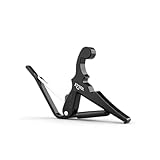
Overview: Kyser’s Quick-Change Capo represents the gold standard in spring-loaded capo design, now adapted for banjos, ukuleles, and mandolins. This American-made tool has earned its reputation through decades of reliable service across countless stages and studios. The aircraft-grade aluminum body provides strength without adding noticeable weight to your instrument’s neck.
What Makes It Stand Out: The original trigger-style mechanism enables lightning-fast key changes with genuine one-handed operation—simply squeeze, move, and release. The optimized radius specifically accommodates ukulele necks while working equally well on banjos and mandolins. Perhaps most conveniently, it parks securely on your headstock when not in use, ensuring it’s always within reach during performances.
Value for Money: While priced slightly above budget options, the Kyser delivers exceptional value through proven durability and time-saving convenience. The made-in-USA quality control ensures consistent performance, and its longevity means you won’t be replacing it annually like cheaper alternatives. For working musicians, the speed and reliability easily justify the modest premium.
Strengths and Weaknesses:
- Pros: Instant one-handed operation; rugged construction; convenient headstock storage; proven track record; American manufacturing.
- Cons: Fixed spring tension may be too strong for some vintage instruments; no fine-tuning capability; slightly bulky profile.
Bottom Line: Perfect for performers who need speed and reliability above all else. The Kyser Quick-Change capo is a workhorse that earns its place in any gig bag through consistent, hassle-free performance.
3. Banjo, Mandolin & Ukulele Capo – Nickel-Plated Steel, Handcrafted in USA – Adjustable Center Tension for Clean Sound (Capo- Paige)

Overview: Paige’s handcrafted capo brings old-world craftsmanship to modern stringed instruments. Made in the USA from nickel-plated steel, this capo emphasizes quality materials and precise engineering over mass-production convenience. Its slim profile and adjustable center tension mechanism cater specifically to the nuanced needs of banjo, mandolin, and ukulele players who demand tonal purity.
What Makes It Stand Out: The center tension control screw allows for micro-adjustments that spring-loaded capos simply cannot match, ensuring each string receives optimal pressure. The behind-the-nut storage capability keeps it accessible without interfering with playing. Handcrafted construction means each unit receives individual attention, resulting in tighter tolerances and smoother operation than factory-produced alternatives.
Value for Money: This premium-priced capo targets serious musicians who view equipment as long-term investments. While costing more than Asian-made alternatives, the American craftsmanship, superior materials, and lifetime durability make it economically sensible over years of use. You’re paying for precision and longevity rather than convenience features.
Strengths and Weaknesses:
- Pros: Handcrafted USA quality; precise tension adjustment; slim, unobtrusive design; behind-nut storage; excellent durability.
- Cons: Highest price point in this comparison; slower adjustments than spring capos; requires two hands for repositioning.
Bottom Line: Discerning players who value craftsmanship and tonal accuracy above speed will find the Paige capo worth every penny. It’s a precision tool for musicians who treat their capo as seriously as their instrument.
4. Ukulele Capo for 4 String Guitar and Mandolin, Mini Size Professional Ukulele Capo (Gold)

Overview: This budget-friendly capo targets entry-level players and those seeking an affordable backup option. The gold-finished metal alloy construction and included picks make it an attractive starter package for children and beginners exploring ukulele, mandolin, or 4-string guitars. Its mini size is specifically proportioned for smaller instrument necks.
What Makes It Stand Out: The flashy gold aesthetic and inclusion of three picks provide immediate value for novices. At its price point, it makes capo use accessible to students and casual players who might otherwise skip this essential accessory. The steel spring mechanism offers straightforward operation without complicated adjustments.
Value for Money: This is among the most inexpensive functional capos available, making it ideal for beginners unsure about long-term commitment. While professional musicians will find its limitations frustrating, the price-to-functionality ratio is unbeatable for learners. It serves adequately as a backup or beater capo that you won’t worry about losing at a jam session.
Strengths and Weaknesses:
- Pros: Extremely affordable; includes picks; attractive gold finish; simple operation; suitable for children.
- Cons: Unknown brand reliability; non-adjustable tension; questionable long-term durability; may not fit all instruments perfectly.
Bottom Line: Recommended solely for beginners, students, or as a disposable backup. Serious players should invest more for better intonation and durability, but this capo fulfills its mission of providing basic functionality at an entry-level price.
5. Aroma Ukulele Capo for 4 Strings Soprano Concert Baritone Ukulele and Mandolin Professional Quick Release

Overview: Aroma’s zinc alloy capo balances affordability with thoughtful design features typically found in pricier models. Engineered specifically for ukulele necks from soprano to baritone sizes, it also accommodates mandolins. The oxidized surface treatment and protective silicone pads demonstrate attention to instrument preservation that exceeds its budget classification.
What Makes It Stand Out: The scratch-resistant coating and soft silicone padding show rare consideration for instrument protection at this price point. The high-elasticity steel spring provides firm clamping without excessive force, while the ergonomic trigger design enables true one-handed operation. It’s designed to eliminate rattling—a common issue with cheap capos on small necks.
Value for Money: This capo punches above its weight class, offering protective features and solid construction at a budget-friendly price. While not as refined as premium options, it outperforms most generic capos in its price range. For ukulele enthusiasts seeking reliability without premium cost, it represents a smart compromise.
Strengths and Weaknesses:
- Pros: Protective silicone pads; scratch-resistant finish; strong spring tension; one-handed operation; excellent price-to-quality ratio.
- Cons: Fixed tension may not suit all instruments; zinc alloy less premium than aluminum; limited brand recognition.
Bottom Line: An excellent choice for ukulele and mandolin players seeking reliable performance and instrument protection on a budget. The Aroma capo delivers professional features without the professional price tag.
6. Guitar Capo,TANMUS 3in1 Zinc Metal Capo for Acoustic and Electric Guitars (with Pick Holder and 4Picks),Ukulele,Mandolin,Banjo,Guitar Accessories

Overview: The TANMUS 3in1 Zinc Metal Capo delivers exceptional versatility for multi-instrumentalists, combining a capo, pin puller, and pick holder into one compact 2.1-ounce unit. Designed for acoustic and electric guitars, ukuleles, mandolins, and banjos, this accessory eliminates the need for multiple tools in your gig bag while maintaining professional-grade functionality.
What Makes It Stand Out: The integrated 360-degree clamping pick holder is genuinely innovative, securely storing picks without the rattling common in cheaper designs. The widening thick high-resilience steel spring system paired with silica padding demonstrates thoughtful engineering, providing even pressure distribution that protects delicate necks and fingerboards. The brushed zinc construction offers both durability and an attractive matte finish that resists fingerprints.
Value for Money: This capo punches well above its weight class at its price point. Competing products rarely include the pin puller functionality, and standalone pick holders cost $5-10 alone. The inclusion of four picks in three thicknesses plus a protective pouch makes this an exceptional starter package for beginners or a convenient backup for professionals.
Strengths and Weaknesses:
- Strengths: True 3-in-1 functionality saves space and money; lightweight balanced design prevents neck dive; uniform pressure across all strings; attractive brushed finish; generous accessory bundle.
- Weaknesses: Zinc alloy may not match the longevity of solid steel; spring tension is non-adjustable, limiting customization for specific instruments; the pin puller feature may be unnecessary for players who rarely change strings.
Bottom Line: The TANMUS 3in1 capo is a smart, economical choice for versatile musicians who value convenience and functionality. While serious players might prefer adjustable tension, this capo excels as a reliable, feature-packed tool for practice, performance, and maintenance.
7. Paige Capo for Banjos – USA Made Adjustable Tension, Buzz-Free - Smokey Black Finish

Overview: The Paige Capo for Banjos represents American craftsmanship tailored specifically for 5-string banjos and mandolins. Handcrafted from nickel-plated steel in the USA, this capo distinguishes itself through precision engineering and a user-adjustable tension system that addresses the unique challenges of smaller, high-tension instruments.
What Makes It Stand Out: The center tension control screw mechanism is the star feature, allowing players to dial in exact pressure for buzz-free performance without pulling strings sharp—a common problem with one-size-fits-all capos. The slim, low-profile design stays unobtrusively out of your fretting hand’s way, while the ability to park it behind the nut when idle ensures it’s always accessible during quick key changes in live settings.
Value for Money: As a premium USA-made product, it commands a higher price than Asian imports, but the investment pays dividends in reliability and performance. The durable nickel-plated steel construction will outlast cheaper zinc alternatives by years, making it more economical long-term. For serious banjoists, the adjustable tension alone justifies the cost.
Strengths and Weaknesses:
- Strengths: Precision adjustable tension eliminates buzzing and tuning issues; specifically contoured for banjo/mandolin necks; premium USA construction; sleek low-profile design; convenient behind-nut storage.
- Weaknesses: Higher price point may deter beginners; screw adjustment requires two hands and takes longer than spring-loaded models; limited to narrow neck instruments only.
Bottom Line: The Paige Capo is a professional-grade tool that serious banjo and mandolin players will appreciate. Its adjustable tension and perfect fit make it worth every penny for performers who demand flawless intonation and reliability, though beginners might find more value in simpler spring-loaded options.
8. Shubb C5R Standard Capo for Banjo, Mandolin, or Bouzouki - Radiused - Polished Nickel

Overview: The Shubb C5R Standard Capo brings decades of refinement to narrow-necked instruments like banjos, mandolins, and bouzoukis. At 1.5 inches wide with a radiused design, this polished nickel capo addresses the specific geometry of curved fingerboards through its patented roller mechanism and contoured lever, representing a middle ground between basic spring clamps and premium adjustable models.
What Makes It Stand Out: Shubb’s roller design is genuinely superior engineering, providing smoother action and more consistent pressure across the radius of the fretboard while reducing wear on both the capo and strings. The lever’s contoured shape makes one-handed operation effortless, and the precisely calibrated spring tension hits the sweet spot for most banjos and mandolins without requiring manual adjustment.
Value for Money: Positioned in the mid-price range, the Shubb C5R offers exceptional durability and performance that justifies its cost over budget alternatives. The polished nickel finish resists corrosion, and the mechanical simplicity means fewer parts to fail. While lacking adjustable tension, its factory calibration is so reliable that most players never miss the feature.
Strengths and Weaknesses:
- Strengths: Patented roller mechanism ensures smooth, even pressure; radiused design perfect for curved fretboards; durable polished nickel construction; excellent one-handed operation; proven track record with professionals.
- Weaknesses: Non-adjustable tension may not suit all instruments or playing styles; 1.5-inch width may be too narrow for some wider mandolin necks; premium price over basic models without the adjustability of higher-end options.
Bottom Line: The Shubb C5R is a reliable workhorse for banjo and mandolin players who want professional performance without the complexity of adjustable tension. Its smooth action and perfect radius match make it a smart investment for intermediate to advanced musicians.
9. MEDIORAYS Ukulele Capo for 4 String Guitar and Mandolin, Mini Size Professional Ukulele Capo Red

Overview: The MEDIORAYS Ukulele Capo delivers straightforward functionality in a vibrant red aluminum package designed specifically for 4-string instruments. This mini capo targets ukulele, mandolin, and banjo players seeking a no-fuss, lightweight solution for quick key changes without the bulk or complexity of larger guitar-centric models.
What Makes It Stand Out: Its all-aluminum construction keeps weight to an absolute minimum while maintaining sufficient clamping force through a well-calibrated spring. The neoprene padding on both contact points shows attention to detail, protecting delicate instrument finishes while providing adequate string pressure. The compact size is perfectly proportioned for ukulele necks, avoiding the overhang common with universal capos.
Value for Money: This capo sits firmly in the budget-friendly category, often priced below $10. The inclusion of three picks adds nominal value, but the real appeal is the dedicated 4-string design at an entry-level price. For casual players or beginners, it offers everything needed without paying for unnecessary features.
Strengths and Weaknesses:
- Strengths: Ultra-lightweight aluminum build; perfectly sized for ukuleles and small necks; protective neoprene padding; attractive red finish; extremely affordable; includes picks.
- Weaknesses: Spring tension is fixed and may be too strong for some ukuleles; aluminum construction is less durable than steel; basic design lacks refinement of premium brands; limited to narrow necks only.
Bottom Line: The MEDIORAYS capo is an excellent entry-level option for ukulele players and a serviceable backup for mandolinists. While it won’t satisfy advanced musicians seeking adjustable tension, its simplicity, low cost, and appropriate sizing make it ideal for students and casual performers.
10. D’Addario Ukulele Pro Capo - For Soprano, Concert, Tenor, Baritone Ukuleles - 4 String Ukulele Capo - Micrometer Tension Adjustment for Buzz-Free, In-Tune Performance - Black

Overview: The D’Addario Ukulele Pro Capo brings professional-grade engineering to the ukulele world through its patented micrometer tension adjustment system. Constructed from lightweight aircraft-grade aluminum, this capo is specifically designed for soprano, concert, tenor, and baritone ukuleles, addressing the intonation challenges that plague generic capos on these smaller instruments.
What Makes It Stand Out: The micrometer adjustment mechanism is a game-changer for ukulele players, allowing precise tension control that prevents both buzzing and string pulling. This feature, typically found on premium guitar capos costing twice as much, ensures perfect intonation at every fret. The single-hand operation is remarkably intuitive, and the slim profile stays completely out of the player’s way.
Value for Money: While priced higher than basic spring clamps, this capo delivers features found in professional models at a mid-range price point. The aircraft-grade aluminum construction ensures longevity, and the perfect tension capability means you’ll never need to replace it due to performance issues. For serious ukulele players, it’s an investment in consistent tone.
Strengths and Weaknesses:
- Strengths: Micrometer tension adjustment for buzz-free performance; dedicated ukulele sizing; premium aircraft-grade aluminum; effortless one-handed operation; sleek black aesthetic.
- Weaknesses: Premium pricing over basic models; adjustment knob can be accidentally moved during storage; limited to ukulele neck profiles; some may find the learning curve with tension adjustment unnecessary for casual play.
Bottom Line: The D’Addario Ukulele Pro Capo is the best choice for discerning ukulele players who refuse to compromise on intonation. Its adjustable tension system solves problems you didn’t know you had, making it worth the premium for performers and recording artists who demand perfection.
Why a Quality Capo is Essential for Celtic Mandolin Sessions
Celtic traditional music demands rapid key changes and fluid adaptability. Unlike rehearsed band arrangements, sessions operate on a democratic, leader-by-leader basis where the key is announced mere seconds before a tune set begins. A quality capo allows you to maintain consistent fingering patterns across different keys, preserving muscle memory and freeing mental bandwidth for ornamentation and rhythmic drive. The best session capos operate with one-handed efficiency, apply even pressure across all four string pairs, and disappear sonically—letting your mandolin’s natural voice shine through without adding metallic overtones or buzzes.
Understanding Mandolin Neck Profiles and Scale Lengths
Mandolin necks differ significantly from guitars, and even small variations between instruments affect capo performance. Most mandolins feature a 13.875" to 14" scale length with a flat or slightly radiused fingerboard and a nut width around 1.125". The neck profile—whether V-shaped, C-shaped, or modern slim—determines how a capo’s clamping mechanism interacts with the instrument. A capo designed for a guitar’s wider, rounder neck can apply uneven pressure on a mandolin’s narrower fingerboard, causing the outer string pairs to buzz while over-tensioning the inner courses. Measure your neck’s width at the 5th and 7th frets (common capo positions in Celtic playing) to understand the clamping range you’ll need.
Types of Mandolin Capos: Pros and Cons for Session Players
Spring-Loaded Triggers: Speed Versus Precision
Spring-loaded trigger capos dominate the market for their lightning-fast operation—crucial when a fiddler launches into a set in A major and you’re currently in G. These capos use a fixed-tension spring that clamps across the neck with a single squeeze. The trade-off lies in the non-adjustable pressure, which can be excessive for light-gauge mandolin strings, particularly the unwound E courses. Premium trigger capos often feature calibrated springs specifically for mandolin tension, but budget versions may pull strings sharp or require frequent repositioning to find the sweet spot.
Screw-Adjustable Capos: The Session Purist’s Choice
Screw-adjustable capos provide micrometer-precision tension control, allowing you to apply just enough pressure for clean notes without over-clamping. This precision proves invaluable for preserving intonation on the mandolin’s paired strings, where even slight pressure variations create audible beating between courses. The downside? They’re slower to position, requiring two hands and several turns to adjust. However, experienced Celtic players often pre-set screw capos to common positions (2nd fret for A, 5th fret for C), making mid-session changes faster than you’d expect.
Toggle-Style Capos: Lightweight Simplicity
Toggle capos use a simple lever-and-notch system to lock onto the neck, offering a middle ground between speed and adjustability. Their minimal mass and low profile appeal to players who notice any added weight on the headstock. The notched settings provide discrete tension options, though finding the perfect pressure for your specific string gauge and neck profile may fall between notches. For Celtic sessions, the toggle’s primary advantage is its near-silent operation and compact size—it fits in a pocket and deploys with minimal fuss.
Partial Capos: Creating Celtic Drone Effects
Partial capos cover only selected strings, opening creative possibilities for Celtic drone accompaniment. By capoing just the G and D courses while leaving the A and E strings open, you can simulate open-tuning effects without re-tuning. This technique shines in slow airs and O’Carolan harp tunes where sustained drones underpin melodic variations. While not a primary session tool, a partial capo in your case adds tonal color that distinguishes your accompaniment.
Key Features That Define a Great Celtic Session Capo
Tension Control: The Intonation Savior
Uneven tension across the mandolin’s four string pairs creates the dreaded “chorus effect,” where each course beats against itself, sounding out of tune even when perfectly tuned open. Look for capos with independent tension adjustment for each side or a curved pressure pad that matches your fingerboard radius. Some premium designs feature a central pivot point that self-balances across the neck, automatically compensating for minor variations in string height or neck width.
Protective Padding: Safeguarding Vintage Instruments
Celtic players often wield vintage or hand-built mandolins with delicate finishes and soft fretwire. Hard rubber or silicone padding prevents lacquer damage and minimizes fret wear, but the padding’s durometer (hardness) affects tone transfer. Softer padding absorbs high frequencies, dulling your attack; firmer padding transmits more string energy but risks finish impressions. The sweet spot lies in medical-grade silicone with a Shore A hardness of 40-50—soft enough to protect, firm enough to preserve brilliance.
Material Matters: Brass, Steel, or Aluminum?
The capo’s body material influences both weight and tonal color. Aluminum capos are feather-light but can impart a slight metallic haze to your treble strings. Brass adds mass, which some players believe increases sustain and warmth—desirable qualities for Celtic melody playing. Stainless steel offers durability and neutral tonal impact but adds noticeable headstock weight. For session work where you might play three hours continuously, the few grams difference between aluminum and brass becomes physically significant.
Celtic-Specific Keys and Capo Strategies
Celtic sessions revolve around a handful of traditional keys: D major, G major, A major, and their relative modes (B minor, E dorian, A dorian). The capo becomes your transposition tool, letting you play in Bb or Eb without learning new scale fingerings. The 2nd fret position (raising G-D-A-E to A-E-B-F#) proves most common for A major tunes. The 5th fret position (raising to C-G-D-A) handles C major and related modes. Understanding these positional strategies before you arrive at the session eliminates on-the-spot guesswork and keeps you in the tune.
The Speed Factor: Quick Changes Between Sets
In a typical session, you’ll race through three jigs in D major, then immediately jump into a set of reels in A dorian. Your capo must move from off the neck to the 2nd fret in under five seconds—often while the previous tune’s final notes still ring. This demands a one-handed operation design that stores conveniently on your headstock when not in use. Capos with a locking mechanism that clips onto a tuning machine are game-changers, keeping your tool within instant reach rather than fumbling in your pocket.
Weight and Balance: Preserving Your Mandolin’s Feel
A heavy capo clamped to the headstock alters your instrument’s balance, making it neck-heavy and fatiguing during long sessions. More critically, added mass changes the vibrational character of the peghead, subtly affecting open string resonance. The best session capos weigh under 60 grams and position the bulk of their mass close to the neck, minimizing the lever effect. Some ultralight designs use titanium or carbon fiber, though at premium prices that reflect their aerospace heritage.
Budget Versus Performance: Finding Your Sweet Spot
You can spend anywhere from $15 to $150 on a mandolin capo, but the law of diminishing returns hits hard around the $40 mark. Budget capos often suffer from weak springs, imprecise machining, and padding that degrades within months. Mid-range options deliver 90% of premium performance with durable materials and reliable mechanisms. Premium capos justify their cost through lifetime warranties, replaceable parts, and obsessive engineering that preserves every ounce of your mandolin’s tone. For serious session players who perform weekly, investing in quality saves money long-term and prevents mid-gig failures.
Travel-Ready Durability for Festival Sessions
Celtic festivals mean packing your mandolin into overheated cars, damp tents, and crowded pub sessions. Your capo must withstand temperature swings that affect spring tension and humidity that corrodes metal parts. Look for stainless steel hardware, sealed mechanisms that resist moisture, and padding that won’t stick to your neck after hours in a hot case. A capo that survives a week at the Willie Clancy Summer School or the O’Flaherty Irish Music Retreat proves its worth more than any showroom test.
Tone Preservation: Avoiding the “Capped” Sound
The telltale “capped” sound—muffled attack, reduced sustain, and uneven string-to-string volume—plagues mandolin players who grab the nearest guitar capo. The mandolin’s high string tension and short scale magnify these issues. A proper mandolin capo uses a narrow profile that contacts only the strings, not the wood beside them, and applies pressure directly over the fretwire, not behind it. This positioning minimizes string stretch and preserves the crisp, percussive attack that defines Celtic mandolin style.
Intonation Challenges and How to Avoid Them
The mandolin’s paired strings are its blessing and curse. When capoed, any pressure imbalance or sideways pull detunes one string of the pair relative to its partner, creating audible beats. The solution lies in capos with a perfectly flat, rigid bar that presses straight down, combined with padding that compresses evenly. Always position the capo directly adjacent to the fretwire—never mid-fret—which reduces the string length behind the capo and minimizes pitch-sharping. After clamping, retune slightly; even the best capo introduces microtonal shifts that your ear will catch in a quiet session.
Partial Capos and Alternative Tunings in Celtic Music
While standard G-D-A-E tuning dominates Celtic mandolin, some players experiment with “calico” tuning (G-D-A-D) or “bass” tuning (G-D-G-D) for specific repertoire. Partial capos facilitate these explorations without re-tuning. For example, capoing only the E course at the 2nd fret while playing in G-D-A-E creates a G-D-A-F# tuning perfect for certain Donegal fiddle tunes. Though these techniques remain niche, understanding partial capo possibilities expands your harmonic palette for accompaniment and arrangement.
Testing and Evaluating Capos Before You Buy
Never purchase a capo without testing it on your own mandolin. Bring your instrument to the shop and check these five points: (1) Clamp it at the 2nd and 5th frets—common Celtic positions—play each string pair individually, listening for buzzes or dead notes. (2) Check intonation with a tuner; notes should read true, not 5-10 cents sharp. (3) Remove and re-apply the capo five times quickly—does it consistently land in the same position? (4) Feel the padding—does it compress evenly or leave gaps? (5) Store it on your headstock and play for five minutes—does the balance change? Only after passing these tests does a capo earn its place in your session kit.
Common Capo Mistakes That Ruin Celtic Sessions
The most frequent error is over-tightening, which pulls strings sharp and chokes tone. Another sin is positioning the capo too far behind the fret, increasing the chance of buzzing and intonation drift. Players often forget to retune after capoing, assuming perfection—a fatal mistake in a quiet session where every note counts. Storing your capo on a music stand instead of your headstock wastes precious seconds between sets. Finally, using a capo as a crutch rather than a tool—capoing to avoid learning standard fingerings in common keys—limits your musical vocabulary and earns quiet disdain from experienced session players.
Maintaining Your Capo for Years of Reliable Service
A session-worthy capo deserves maintenance. Monthly, clean the padding with a slightly damp cloth to remove rosin dust and finger oils that harden the surface. Annually, apply a drop of light machine oil to any screw threads or pivot points to prevent seizing. Check for metal burrs that could scratch your neck, filing them smooth with fine-grit sandpaper. If your capo uses replaceable pads, change them yearly or when compression marks become permanent grooves. Store it unclamped in your case to preserve spring tension, and never leave it clamped on your mandolin overnight—prolonged pressure creates permanent fret impressions in the padding and can compress your nut slots over time.
Frequently Asked Questions
Can I use a guitar capo on my mandolin for Celtic sessions?
While physically possible, guitar capos are too wide and apply uneven pressure across the mandolin’s narrower neck and paired strings. This creates buzzing, intonation problems, and tone loss. Dedicated mandolin capos are engineered for the instrument’s specific dimensions and string tension, making them essential for serious session work.
What’s the best capo position for playing in A major at Celtic sessions?
The 2nd fret position is standard, raising your open G-D-A-E strings to A-E-B-F#. Position the capo directly behind (not on top of) the 2nd fretwire for cleanest tone and best intonation. This allows you to use familiar G-major fingerings while playing in the session-friendly key of A.
How do I stop my capo from pulling strings sharp?
Apply minimal pressure—just enough to eliminate buzzing. Position the capo very close to the fretwire, which reduces the string length behind the capo and minimizes stretching. After clamping, always retune slightly, especially the E courses. Consider a screw-adjustable capo for precise tension control.
Should I keep my capo on the headstock when not in use?
Yes. Headstock storage keeps the capo instantly accessible between tune sets. Choose a design that clips securely to a tuning machine without scratching the peghead or affecting balance. Avoid capos that dangle loosely and buzz against the headstock during vigorous playing.
Will a heavy capo damage my mandolin’s neck or affect its tone?
A properly designed capo won’t damage your neck if used correctly. However, excessive weight on the headstock can subtly alter your instrument’s balance and open-string resonance. Opt for lightweight aluminum or titanium designs under 60 grams, and never leave the capo clamped on the neck when not playing.
How much should I spend on a quality mandolin capo for sessions?
Plan to invest between $30 and $60 for a reliable session capo. This price range offers precision engineering, durable materials, and protective padding that preserves your instrument. Budget capos under $20 often fail within months, while premium models above $80 offer diminishing returns for most players.
What’s the difference between a trigger and screw capo for Celtic music?
Trigger capos prioritize speed—squeezing on and off in seconds—perfect for rapid session key changes. Screw capos prioritize precision, letting you dial in exact tension for perfect intonation. Many session players own both: a trigger for fast changes and a screw capo for recording or performance where tone is paramount.
Can I use a partial capo for Celtic drone accompaniment?
Absolutely. Partial capos are fantastic for creating sustained drones beneath melody lines, particularly in slow airs or harp tunes. By capoing only the lower courses, you maintain open-string resonance while playing in higher positions. It’s a specialized technique that adds rich texture to your session contributions.
How do I clean and maintain my capo’s padding?
Wipe the padding monthly with a cloth slightly dampened with water and a drop of mild soap. Remove rosin buildup and skin oils that harden the surface. For deep cleaning, use a specialized instrument cleaning solution. Replace pads when permanent grooves appear or when the rubber loses its compressibility.
Why does my mandolin sound muffled when I use a capo?
Muffled tone results from over-tightening, poor padding material, or positioning too far from the fretwire. The capo should sit directly adjacent to the fret, applying only enough pressure to stop buzzing. Harder silicone padding transmits more high-frequency content than soft rubber. If problems persist, your capo may be too wide, damping vibration beyond the strings.
See Also
- 10 Mandolin Capos for Celtic Sessions That Won’t Mute Sympathetic Strings
- 10 Essential Mandolin Capos for Celtic Sessions With Zero String Buzz in 2026
- 10 Capos for Tenor Guitars with 23-Inch Scale Length This Year
- 10 Silent-Install Partial Capos for Late-Night Home Recording Sessions
- 10 Velvet-Lined Capos to Protect Nitrocellulose Finishes This Year