Table of Contents
Living in an apartment shouldn’t mean sacrificing your passion for drumming, but let’s be real—nothing kills your creative flow faster than an angry neighbor banging on your ceiling at 7 PM. The age-old battle between drummers and thin walls has reached a turning point in 2026, with electronic drum technology finally delivering the holy grail: authentic feel and response without the acoustic footprint of a traditional kit. Modern electronic drums have evolved far beyond the toy-like pads of decades past, offering sophisticated mesh heads, advanced triggering, and sound modules that could fool even seasoned musicians in a blind test.
The key to harmonious apartment living isn’t just about going electric—it’s about understanding which features genuinely reduce noise transmission versus those that simply mask it. Today’s market offers solutions that address every vector of sound: airborne noise, structural vibration, and even the psychological perception of “loudness” that can trigger complaints even at reasonable volumes. Whether you’re a gigging drummer downsizing to a studio or a beginner navigating your first kit purchase, the right electronic setup can transform your practice routine from a source of anxiety into a seamless part of daily life.
Top 10 Electronic Drum Sets
Detailed Product Reviews
1. Donner DED-80 Electronic Drum Set with 4 Quiet Mesh Pads, 180+ Sounds, 2 Pedals, Throne, Headphones, Sticks, and Melodics Lessons

Overview: The Donner DED-80 is an entry-level electronic drum set designed for beginners and apartment dwellers. It includes four 6-inch mesh pads, three 10-inch cymbals, a drum module with 180 sounds across 15 kits, and essential accessories like a throne, headphones, and sticks. The foldable metal frame makes it ideal for small spaces, while educational features help new drummers develop skills.
What Makes It Stand Out: This kit excels in its educational ecosystem, featuring a built-in drum coach, 30 accompaniment tracks, and compatibility with the Donner Play app and Melodics lessons. The double-layered mesh heads provide a surprisingly realistic feel for the price point, and the entire package folds down for compact storage—perfect for youth players or those with limited space.
Value for Money: For under $300, you’re getting a complete, ready-to-play setup with mesh heads and educational content that rivals more expensive kits. While it requires a separate amplifier for room-filling sound, the included headphones enable silent practice. Comparable beginner kits often use rubber pads, making the DED-80’s mesh construction a significant upgrade.
Strengths and Weaknesses: Pros include quiet mesh pads, comprehensive educational features, foldable design, and all-inclusive packaging. Cons are the small 6-inch pads that feel cramped for adult players, limited 180-sound library, and lack of built-in speakers requiring external amplification.
Bottom Line: The DED-80 is an exceptional value for beginners, particularly younger players or apartment residents prioritizing quiet practice and space efficiency. Just budget for an amplifier if you want audible performance.
2. Alesis Nitro Max Kit Electric Drum Set with Quiet Mesh Pads, 10" Dual-Zone Snare, Bluetooth, 440+ Authentic Sounds, Drumeo, USB MIDI, Kick Pedal
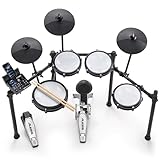
Overview: The Alesis Nitro Max represents a significant step up in the entry-level category, offering an 8-piece configuration with a 10-inch dual-zone mesh snare, three 8-inch toms, and premium cymbals. The module boasts over 440 BFD drum sounds across 32 factory kits, plus Bluetooth connectivity and 90 days of Drumeo lessons, targeting serious beginners and intermediate players.
What Makes It Stand Out: The integration of BFD’s industry-leading drum samples sets this kit apart, delivering multi-velocity layers that sound remarkably authentic. Bluetooth streaming lets you play along with music wirelessly, while the Drumeo partnership provides structured learning from professional drummers. The larger snare pad offers more realistic playing feel than competitors.
Value for Money: At around $500, the Nitro Max punches above its weight class. You’re getting professional-grade sounds, a dual-zone snare, and comprehensive lesson content that typically requires separate subscriptions. While pricier than basic kits, the sound quality and features rival $700+ setups.
Strengths and Weaknesses: Pros include exceptional BFD sound library, 10-inch dual-zone snare, Bluetooth connectivity, robust lesson platform, and USB MIDI for recording. Cons are the still-modest 8-inch tom pads and occasional rack wobble during aggressive playing.
Bottom Line: For dedicated students ready to invest in their craft, the Nitro Max offers the best feature-to-price ratio in its class. The superior sounds and educational resources justify the premium over budget options.
3. Donner DED-200 Electric Drum Sets with Quiet Mesh Drum Pads, 2 Cymbals w/Choke, 31 Kits and 450+ Sounds, Throne, Headphones, Sticks, USB MIDI, Melodics Lessons (5 Pads, 3 Cymbals)

Overview: The Donner DED-200 bridges the gap between beginner and intermediate electronic drums, featuring five mesh pads including an 8-inch dual-zone snare, three toms, and a 6-inch kick drum with three 10-inch cymbals. With 450 sounds, 31 kits, and 50 play-along tracks, it offers substantial creative options for developing drummers seeking more authentic feel.
What Makes It Stand Out: This kit upgrades the DED-80’s formula with larger 8-inch pads that provide better target area and more comfortable playing. The dual-zone snare enables rimshots and cross-sticking techniques, while choke-capable cymbals add expressive possibilities. The double-pedal compatible kick tower is rare at this price point, appealing to metal and progressive players.
Value for Money: Positioned around $400, the DED-200 competes directly with entry-level offerings from major brands while providing more pad real estate and sounds. The inclusion of a sturdy 4-post rack, throne, and headphones makes it a complete package. It’s about $100 more than the DED-80 but offers significant performance improvements.
Strengths and Weaknesses: Pros include larger 8-inch pads, dual-zone snare, choke cymbals, double-pedal kick compatibility, and extensive sound library. Cons involve a less intuitive module interface than Alesis and occasional sensor inconsistencies on edge hits.
Bottom Line: The DED-200 is a smart upgrade for players outgrowing entry-level kits. The enhanced playability and expanded features justify the modest price increase, making it a strong contender in the mid-tier market.
4. AKLOT Acoustic-Style Electric Drum Set: Independent 16’’ Wooden Bass Drum and 12’’ Snare, Triple-Zone Ride Cymbal, Standalone Hi-Hat, Full Mesh Pads, 460 Sounds, USB MIDI, Throne, Sticks (B-CORE543)

Overview: The AKLOT B-CORE543 redefines electronic drum realism with its acoustic-style configuration featuring a 12-inch wooden snare, 16-inch wooden kick drum, and a true two-piece independent hi-hat system. This premium 8-piece kit includes dual-zone toms, a 14-inch triple-zone ride cymbal, and two chokeable crashes, targeting serious drummers who refuse to compromise on feel.
What Makes It Stand Out: The independent hi-hat system with 12-inch top and bottom cymbals delivers unprecedented authenticity, tracking foot splashes and half-open positions with acoustic-like precision. Wooden shells provide 30% faster rebound than standard pads, while the triple-zone ride captures bell, bow, and edge articulations separately. The 6-point tension adjustment lets you fine-tune mesh head response.
Value for Money: At approximately $800, this kit commands a premium but offers features found in $1,200+ systems. The acoustic-style hardware and advanced sound module with 460 studio-sampled voices and deep editing capabilities rival professional setups. For drummers transitioning from acoustic kits, the familiar feel justifies the investment.
Strengths and Weaknesses: Pros include unmatched realistic feel, independent hi-hat system, wooden drum construction, triple-zone ride, extensive sound editing, and studio-grade effects. Cons are the higher price point, larger footprint requiring dedicated space, and steeper learning curve for module navigation.
Bottom Line: The AKLOT is a game-changer for acoustic purists seeking electronic convenience. If authentic feel and expressive control are priorities, this kit delivers pro-level performance that justifies every dollar.
5. AODSK Electric Drum Set for Beginner with 150 Sounds,4 Quiet Drum Pads,2 Pedal,Throne,Sticks,Electronic Drum with Headphone,AED-400

Overview: The AODSK AED-400 is the most accessible entry point into electronic drumming, designed for absolute beginners and younger players. This compact kit includes four 6.5-inch silicone drum pads, three 8-inch cymbals, and a basic module with 150 sounds across 15 kits. The ultra-portable, foldable design makes it ideal for small spaces and spontaneous practice sessions.
What Makes It Stand Out: Unbeatable portability defines this kit—it collapses smaller than any competitor and weighs significantly less. The straightforward setup and simple LED interface remove barriers for first-time users. At its price point, including a throne, headphones, and sticks is impressive, creating a true all-in-one solution for tentative beginners testing their interest in drumming.
Value for Money: Priced under $200, the AED-400 is the most affordable mesh-style electronic drum set available. While sound quality and pad size are limited, it provides the essential experience of drumming with velocity-sensitive pads. It’s perfect for determining if a child will stick with lessons before investing in a more capable instrument.
Strengths and Weaknesses: Pros include extreme portability, lowest price point, complete accessory package, simple operation, and quiet practice capability. Cons feature limited 150-sound library, small 6.5-inch pads, basic silicone heads (not true mesh), and lack of advanced features like dual-zones or choke.
Bottom Line: The AED-400 serves a specific niche: ultra-budget-conscious buyers wanting to explore drumming. It’s a capable starter instrument for young children, but ambitious learners will quickly outgrow its limitations.
6. Alesis Turbo Max Electric Drum Set with Quiet 8" Mesh Pads, Lessons, Bluetooth and Accessories, Foldable

Overview:
The Alesis Turbo Max delivers a complete entry into electronic drumming for beginners. This seven-piece kit arrives ready-to-play with mesh heads that provide authentic rebound while keeping volume apartment-friendly. The foldable rack system makes it ideal for space-conscious musicians who need to pack away their kit after practice sessions.
What Makes It Stand Out:
Bluetooth connectivity sets the Turbo Max apart, allowing wireless streaming of lessons and play-along tracks directly to the module. The comprehensive package includes often-overlooked essentials like a throne, headphones, and sticks—items that typically add $100+ to competitor kits. Its 12 built-in kits cover classic and modern sounds, while the 20 play-along tracks offer immediate engagement for new drummers.
Value for Money:
Priced competitively for the entry-level market, the Turbo Max eliminates hidden costs. Competing kits frequently require separate purchases of thrones and pedals, making this bundle genuinely cost-effective. The mesh heads alone justify the price over rubber-pad alternatives, offering superior feel and quieter operation that prevents neighbor complaints.
Strengths and Weaknesses:
Strengths include the complete accessory package, Bluetooth convenience, quiet mesh pads, and foldable design. Weaknesses are the smaller 8" pads that feel cramped for adult learners, limited 110-sound library compared to mid-range kits, and basic module features lacking advanced editing. The kick pedal tower could be more robust for aggressive playing.
Bottom Line:
Perfect for beginners seeking a hassle-free start, the Turbo Max excels as an all-inclusive, neighbor-friendly package. While serious players will outgrow it, it provides exceptional value for those testing their commitment to drumming.
7. Donner Electric Drum Set, DED-70 Electronic Drum Kit for Beginner with 150 Sounds, 4 Quiet Mesh Pads, 9" Cymbals, USB MIDI, Type-C Charging, 2 Pedal, Throne, Headphones, Sticks, Melodics Lessons

Overview:
Tailored specifically for young learners aged 6-14, the Donner DED-70 offers a scaled-down electronic drumming experience. This seven-piece kit features 6.5" mesh heads and oversized 9" silicone cymbals that deliver better target areas for developing motor skills. The height-adjustable rack grows with your child, making it a long-term investment for parents.
What Makes It Stand Out:
USB-C charging and dual power modes (adapter or power bank) provide unprecedented portability for a drum kit. Young drummers can practice outdoors or in rooms without outlets—a unique feature in this price bracket. The 150 sounds and 15 customizable kits offer more sonic variety than typical starter kits, encouraging musical exploration.
Value for Money:
Positioned as a youth-specific kit, the DED-70 hits a sweet spot between toy and instrument. Parents avoid the frustration of flimsy alternatives while not overspending on professional features children won’t utilize. The included Melodics lessons add educational value that accelerates learning.
Strengths and Weaknesses:
Strengths include kid-friendly sizing, portable power options, silent headphone practice, and educational content. Weaknesses are the small 6.5" pads that quickly limit advancing teens, the requirement for external amplification (no built-in speaker), and a module interface that feels dated. Silicone cymbals, while quiet, lack the realism of mesh.
Bottom Line:
An excellent youth-focused kit that prioritizes accessibility and portability. Ideal for parents seeking a serious but appropriately-sized instrument for children beginning their drumming journey.
8. HAMPBACK MK-0 Electric Drum Set with 7’’ Quiet Mesh Drum Pads, 8’’ Full Rubber Cymbals, 12 Kits and 68 Authentic Sounds, USB MIDI, Throne, Sticks, Headphone, 2 Switch Pedals for Beginners & Kids

Overview:
The HAMPBACK MK-0 positions itself as the budget-conscious entry point for absolute beginners and kids. This seven-piece kit strips away complexity to deliver core drumming functionality with 7" mesh pads and 8" rubber cymbals. The complete package includes all necessities, allowing immediate setup and play without additional purchases.
What Makes It Stand Out:
Power bank compatibility combined with a 2-year warranty distinguishes this kit in the ultra-budget category. Most competitors offer minimal warranties and require wall outlets. The foldable rack collapses to just 24.4×10.6×35.4 inches, sliding easily under beds or into closets—perfect for dorm rooms or small apartments.
Value for Money:
As one of the most affordable mesh-head kits available, the MK-0 removes financial barriers to drumming. While 68 sounds and 12 kits seem limited, they’re sufficient for learning fundamentals. The warranty provides peace of mind that cheaper alternatives lack, representing genuine long-term value.
Strengths and Weaknesses:
Strengths include unbeatable price, warranty protection, extreme portability, and power flexibility. Weaknesses are the basic rubber cymbals (noisier and less realistic than silicone/mesh), limited sound library, and absence of advanced features like Bluetooth or educational apps. Build quality reflects the price point.
Bottom Line:
A no-frills starter kit that accomplishes its mission: affordable, portable, quiet practice. Best for tentative beginners or parents unwilling to invest heavily before confirming interest. Serious learners will need to upgrade quickly.
9. Donner DED-200 MAX Electronic Drum Set with Industry Standard Mesh Heads, 10’’ Snare, 8“ Tom, 10’’ Tom, 12’’ Crash, 450+ Authentic Sounds for Optimal Performance and Feel NEW

Overview:
The DED-200 MAX marks Donner’s step-up offering for serious learners ready to move beyond entry-level limitations. This kit features authentic 2-ply mesh heads on larger 10" shells with genuine metal hoops, bridging the gap between beginner and intermediate instruments. The expanded setup includes a 12" crash and ride, providing professional playing surfaces.
What Makes It Stand Out:
The 450+ sound library and 31 drum kits deliver professional-grade sonic variety rarely found at this price. Dual-zone snare capability and multi-velocity sampling create expressive playability that responds to technique development. The module includes a sequencer, metronome, and recording functions—tools that support structured practice routines.
Value for Money:
Positioned as a mid-tier kit, the DED-200 MAX offers features approaching high-end models for hundreds less. The larger pads alone justify the upgrade cost, preventing the cramped feeling of 8" alternatives. While requiring external amplification, it saves money compared to professional kits with similar specifications.
Strengths and Weaknesses:
Strengths include large mesh heads, extensive sound library, robust rack, and professional module features. Weaknesses are the lack of built-in speakers (requires headphone/amp purchase), no Bluetooth connectivity, and a learning curve for module navigation. The kick tower could be more stable for heavy hitters.
Bottom Line:
An exceptional value for committed students seeking professional feel without premium pricing. Ideal for intermediate players and advancing beginners who’ve outgrown entry-level kits.
10. Alesis Nitro Pro Electric Drum Set with Dual-Zone Quiet Mesh Pads, 500+ Authentic BFD Sounds, Bluetooth, Drumeo, USB MIDI, Double Kick Compatible

Overview:
The Nitro Pro represents Alesis’s professional entry-level offering, delivering eight pieces of performance-ready equipment. Dual-zone 10" mesh snare and 8" toms provide nuanced triggering, while 10" cymbals with choke functionality mimic acoustic response. The robust steel rack supports double-kick setups, accommodating aggressive playing styles.
What Makes It Stand Out:
Integration with BFD Player software unlocks industry-leading drum samples and expansion packs, effectively future-proofing the investment. The 90-day Drumeo membership provides expert instruction from 200+ professional drummers—a educational value exceeding the kit’s cost. Bluetooth connectivity enables wireless play-along without cable clutter.
Value for Money:
Though pricier than entry kits, the Nitro Pro includes $300+ in software and educational content. The 500+ multi-velocity BFD sounds rival professional studios, making this a legitimate recording tool. For aspiring serious drummers, it eliminates the need for an intermediate upgrade.
Strengths and Weaknesses:
Strengths include premium BFD sound library, dual-zone pads, professional rack, educational bonuses, and double-kick compatibility. Weaknesses are the premium price point that may overwhelm beginners, complexity requiring steeper learning curve, and still needing external amplification. Some may find the 8" toms small for professional use.
Bottom Line:
The ultimate launchpad for serious drummers. While overkill for casual curiosity, it delivers professional tools and sounds that grow with you from first lesson to first gig.
Why Electronic Drums Are the Apartment Drummer’s Secret Weapon
Understanding the Noise Complaint Landscape
Before diving into gear, it’s crucial to understand what actually triggers noise complaints. Most apartment lease agreements don’t specify decibel limits—they reference “quiet enjoyment” clauses that are frustratingly subjective. Your downstairs neighbor isn’t just hearing your kick drum; they’re feeling the low-frequency vibrations traveling through floor joists. The couple next door isn’t just bothered by cymbal crashes; they’re annoyed by the repetitive nature of practice routines that cut through walls at specific frequencies. Modern electronic kits address these issues at the source, but only if you know what to look for.
The Decibel Difference: Acoustic vs. Electronic
A standard acoustic snare hit clocks in around 120 decibels—comparable to a thunderclap. Even with mesh heads and low-volume cymbals, an “acoustic-electric” hybrid kit can still produce 70-80 decibels of stick-impact noise. True electronic kits with quality mesh pads reduce stick-on-pad noise to 50-60 decibels, roughly the volume of normal conversation. However, the real magic happens in frequency distribution. Electronic kits produce minimal low-frequency transmission, which is what travels through structures and irritates neighbors three floors down. The 2026 generation of kits takes this further with advanced materials that absorb stick impact energy before it becomes structural vibration.
Key Volume-Related Features to Prioritize in 2026
Mesh Head Technology Advances
The mesh head revolution continues to accelerate, with 2026 models featuring multi-layer woven designs that mimic acoustic drum rebound while dissipating impact energy. Look for dual-ply mesh with variable tension zones—these allow the center of the drum to respond like a tuned acoustic head while the edges absorb excess vibration. The weave density matters more than marketing claims; tighter weaves produce less “pad noise” (the actual sound of your stick hitting the surface) but require more sophisticated trigger sensors underneath to maintain dynamic response. Premium kits now use micro-weave technology that reduces pad noise by up to 40% compared to 2023 models without sacrificing the nuanced ghost notes and buzz rolls that define expressive drumming.
Low-Volume Cymbal Innovations
Cymbal pads have historically been the weak link in electronic kits, with rigid rubber designs that produce a distinctive “thwack” sound. 2026’s breakthrough is the segmented cymbal pad—multiple floating zones connected by flexible bridges that allow the entire pad to move with your stick strike, absorbing energy rather than reflecting it as noise. The edge zones now use softer durometer rubber that compresses more deeply, while the bell areas maintain firm response for accurate articulation. This matters for apartment dwellers because cymbal pad noise is high-frequency, which cuts through walls more effectively than the thud of a kick drum. The new designs reduce this by creating a longer impact duration that spreads the energy across time, lowering the peak noise level.
Kick Drum Pad Design Evolution
Your kick pedal is the primary culprit for downstairs neighbor complaints. Traditional tower-style kick pads transfer pedal mechanism noise and beater impact directly to the floor. The 2026 solution is the suspended pedal board design—essentially a floating platform that decouples the pedal mechanics from the floor. The beater strikes a pad mounted on an isolated frame, while your foot works a separate pedal mechanism connected by a flexible linkage. This design eliminates the “clack” of the pedal cam and the direct transmission of impact energy. For even better results, look for kits with vertical kick towers that position the beater strike at a 45-degree angle, further reducing floor-coupled vibration.
Frame and Stand Vibration Dampening
A wobbly rack system doesn’t just feel bad—it creates micro-impacts as tubes shift and clamps loosen, generating high-frequency noise that travels through the floor. Modern frames use compression-fit joints with internal dampening sleeves made from viscoelastic polymers. These materials convert mechanical vibration into negligible heat energy. The rack feet deserve equal attention; 2026 premium frames feature adjustable isolation feet with layered rubber and cork composites that provide stability while blocking vibration transmission. Some designs even incorporate small air bladders that act as pneumatic isolators, similar to the technology used in precision laboratory equipment.
Beyond the Kit: Holistic Apartment Volume Management
The Role of Drum Thrones in Noise Transmission
Your drum throne is a direct mechanical link between your body weight and the floor, making it a surprising source of noise. Every time you shift weight or play aggressively, you’re creating low-frequency vibrations through the throne base. 2026’s thrones for apartment drummers feature isolation bases with multiple layers of dampening material and a floating seat design. The post connects to the base through a rubber isolation bushing, and some models include a pneumatic cylinder that absorbs vertical movement. For maximum isolation, place your throne on a dedicated isolation platform rather than directly on the floor—this single change can reduce structural noise transmission by 15-20%.
Isolation Platforms: Your Downstairs Neighbors Will Thank You
An isolation platform is arguably the most impactful accessory for apartment drummers. These aren’t just rubber mats—they’re engineered systems using mass-loaded vinyl, closed-cell foam, and sometimes pneumatic isolation. The principle is simple: create a mechanical break between your kit and the building structure. The most effective designs use a “floating floor” concept with a top layer of MDF or bamboo, a middle layer of dense acoustic foam, and a base layer of textured rubber for grip. For 2026, look for modular platforms that can be expanded as your kit grows, and pay attention to weight ratings—a platform that compresses under your kit’s weight loses its isolation effectiveness.
Room Acoustics and Sound Treatment
Electronic drums produce two sound sources: the sound in your headphones (which only you hear) and the mechanical noise from pad strikes (which your neighbors hear). Treating your room addresses the latter. Focus on corners and the wall behind your kit, where sound reflects and amplifies. Broadband bass traps in corners absorb low-frequency energy that would otherwise excite wall resonances. Behind the kit, acoustic panels with high Noise Reduction Coefficient (NRC) ratings dampen the mid-to-high frequencies of stick impact. Don’t overlook the ceiling—a cloud panel mounted above your kit prevents sound from bouncing up and traveling through the floor of the unit above. In 2026, we’re seeing more renters using removable acoustic wallpaper that uses micro-perforations to absorb sound without damaging walls.
Strategic Practice Scheduling
Technology can only solve part of the problem—human factors matter just as much. Most apartment buildings have predictable quiet hours, but the real trick is understanding your building’s rhythm. Are your neighbors early risers who are asleep by 9 PM? Shift your practice to morning hours. Do you live above a commercial space that closes at 6 PM? Evening sessions become your sweet spot. Use a simple decibel meter app to map your apartment’s ambient noise throughout the day—practice when background noise is naturally higher (HVAC cycling, traffic, other residents’ activity). Some drummers in 2026 are using smart home integration to automatically adjust practice schedules based on neighbor occupancy patterns detected through shared Wi-Fi signals (with permission, of course).
Module Features That Matter for Quiet Practice
Advanced Headphone Amplification
The sound module’s headphone amp quality directly impacts your practice experience and, surprisingly, your volume control. Weak amps force you to crank volume to hear details, which can lead to playing harder to “feel” the performance. 2026 modules feature high-current, low-impedance amplifiers with dedicated drum-optimized EQ curves that present a full, balanced sound at lower volumes. Look for modules with separate ambience and master volume controls—this lets you keep the kit’s natural room sound while reducing overall level. Some advanced units now include “apartment mode” DSP that compresses the dynamic range in your headphones, making quiet ghost notes audible without requiring you to smash the pads to hear your accents.
Direct Recording and Silent Practice Modes
The ultimate apartment-friendly feature is the ability to practice without acoustic monitoring at all. Modern modules offer direct USB audio streaming to your computer or mobile device, allowing you to monitor through software with studio-quality effects and processing. This eliminates the module’s own headphone amp from the chain and gives you access to sophisticated volume limiting. Silent practice modes take this further by disabling the module’s internal sound engine entirely, reducing power consumption and eliminating any potential electronic noise. For late-night sessions, some 2026 modules include “whisper mode” that triggers only on intentional strokes, ignoring accidental pad brushes that can create unwanted noise.
Sound Editing for Reduced Frequency Clutter
The frequency content of your drum sounds affects how “loud” they feel, even at low volumes. Harsh high frequencies in cymbals or muddy low end in kicks can make practice sessions more fatiguing and may cause you to play louder to compensate. 2026 modules include sophisticated transient designers and frequency-specific compression that let you sculpt sounds for low-volume clarity. The key is reducing frequency masking—when multiple drums occupy the same frequency band, you turn them up to distinguish them. Advanced modules now offer “apartment EQ presets” that automatically notch out problematic frequencies and enhance the midrange presence where human hearing is most sensitive, allowing you to practice at lower levels without losing definition.
Physical Space Considerations
Compact Footprint Designs for 2026
Urban apartments rarely offer dedicated music rooms, forcing drummers to share living spaces with their kits. 2026’s compact designs use vertical integration, stacking toms above the snare and positioning cymbal pads on articulated arms that fold flat against the rack when not in use. The most innovative designs feature retractable components—the hi-hat stand telescopes into the rack, and the snare pad can swing away to create a desk surface. Look for kits where the module mounts on an adjustable arm rather than the rack itself, allowing you to position it for practice, then tuck it away for storage. These designs typically reduce the footprint from 6’x4’ to 4’x3’ when in use, and down to 2’x2’ for storage.
Foldable and Portable Configurations
The rise of “gigging apartment drummers”—musicians who need to transport their kit regularly—has driven innovation in quick-release mechanisms. 2026 racks use cam-lock clamps that require no tools and can be collapsed in under two minutes. Pad mounts feature ball-and-socket joints with memory locks that remember your positioning, so setup is repeatable. The breakthrough is integrated cable management with quick-disconnect couplers—no more tracing cables through tubes. For maximum portability, some kits now use a unified base plate where all pads connect via magnetic docking stations, allowing you to break down the entire kit by simply lifting components off the base.
Cable Management for Tight Spaces
In a cramped apartment, cables aren’t just ugly—they’re tripping hazards that can knock over pads and create sudden noise events. Modern kits address this with internal cable routing through the rack tubes, but the real innovation is in flat, ribbon-style cables for inter-pad connections. These lay flush against floors and can be run under area rugs without creating bumps. Some 2026 kits use magnetic cable management channels that snap to the rack legs, keeping everything tidy. For the truly space-constrained, wireless pad technology (though still requiring power cables) eliminates trigger cables entirely, using low-latency digital transmission that rivals wired connections.
Connectivity and Integration
Bluetooth and Wireless Advances
Bluetooth MIDI and audio have finally reached professional latency levels in 2026, with aptX Adaptive and LE Audio protocols bringing wireless delay below 20ms—imperceptible to most drummers. This matters for apartment setups because it eliminates cable runs across doorways and allows you to position your sound source (phone, tablet, computer) away from the kit, reducing clutter. More importantly, wireless connectivity lets you use smartphone apps as real-time volume monitors, with visual feedback showing your kit’s noise output in decibels. Some apps even integrate with building management systems in smart apartments, automatically pausing your practice if noise levels breach community guidelines.
App Integration for Volume Monitoring
Third-party apps have become essential tools for the apartment drummer. Modern apps use your phone’s microphone to analyze the acoustic signature of your pad strikes, distinguishing between your playing and ambient noise. They provide real-time feedback on which pads are producing the most mechanical noise and suggest adjustments to technique or kit setup. Advanced apps correlate your playing data with noise complaints (if any) to identify problematic patterns—perhaps your Tuesday evening sessions hit just as your downstairs neighbor puts their baby to bed. The most sophisticated apps in 2026 use machine learning to predict complaint likelihood based on your playing style, time of day, and building acoustic profile.
MIDI and DAW Integration for Silent Recording
For drummers who practice mainly to produce music, 2026 kits offer seamless DAW integration that makes the module’s own sounds optional. With class-compliant USB MIDI and audio interfaces built in, you can trigger virtual instruments directly, monitoring through your DAW with custom drum mixes that are optimized for low-volume headphone listening. This approach eliminates pad noise from your monitoring entirely, as you’re hearing only the triggered samples. The latest advancement is “MIDI direct monitoring” that bypasses the module entirely, reducing latency to near-zero and allowing you to use noise-cancelling headphones with external processing for the quietest possible practice environment.
Durability and Build Quality
Longevity of Mesh Heads in High-Use Scenarios
Mesh heads wear differently in apartments because drummers tend to practice more frequently but for shorter sessions. This creates a different wear pattern than gigging drummers who play intensely but intermittently. 2026 mesh heads use reinforced weave patterns at the strike zone, with graduated tension that prevents the “dead spot” development common in older designs. The key durability metric is thread count per inch—higher counts resist stretching but require more sensitive triggers. For apartment use, look for heads rated for 500,000+ strikes, and pay attention to replaceability. Some kits now use standard-sized mesh heads that can be replaced individually without buying manufacturer-specific parts, a huge cost saving for high-volume practicers.
Frame Stability and Noise
A rack that flexes during play creates two problems: inconsistent trigger response and mechanical noise from joints shifting. 2026 premium frames use ovalized tubing rather than round, which resists twisting forces better and allows for lighter weight without sacrificing rigidity. The clamp designs have evolved to use dual-point contact with internal nylon bushings that eliminate metal-on-metal contact. This matters for apartments because micro-movements in the rack create high-frequency noise that travels efficiently through structures. Test rack stability by gripping the snare pad and gently shaking—any wobble will be amplified during intense playing. The best racks feel like a single welded piece despite being modular.
Budget Considerations
Entry-Level vs. Premium Quiet Features
The price-performance curve for quiet electronic drums is steep in the entry-level range, then plateaus in the premium tier. Sub-$800 kits in 2026 offer basic mesh heads and rubber cymbals that are still dramatically quieter than acoustic drums, but they lack sophisticated isolation features. The $1,200-$1,800 range introduces proper cymbal pad designs, better rack isolation, and modules with advanced headphone amps. Above $2,000, you’re paying for diminishing returns: slightly better mesh, incremental improvements in trigger sensitivity, and premium build materials. For apartment use, the sweet spot is often the upper-midrange, where you get 90% of the volume reduction for 50% of the flagship price. The key is identifying which features directly impact noise versus those that enhance playability marginally.
Cost-Per-Decibel-Reduced Analysis
Calculate value by estimating noise reduction per dollar spent. A basic mesh kit might reduce acoustic drum noise by 25 dB for $700 ($28/dB). Adding an isolation platform might gain another 8 dB reduction for $200 ($25/dB). Upgrading to premium cymbal pads might yield 5 dB more for $400 ($80/dB). This analysis reveals that accessories often provide better noise reduction ROI than kit upgrades. For maximum apartment harmony on a budget, allocate 30% of your spending to the kit itself, 40% to isolation (platform, throne, room treatment), and 30% to monitoring (quality headphones, module features). This approach often outperforms buying a flagship kit and using it on a bare floor.
The Social Aspect of Apartment Drumming
Communicating with Neighbors
The best technology fails without social intelligence. Before your first practice session, introduce yourself to adjacent neighbors and explain your electronic kit setup. Offer a demonstration—let them hear what it sounds like in their unit while you play in yours. Many noise complaints stem from anxiety about potential noise rather than actual disturbance. Provide your phone number and establish a “text first” policy for concerns. Some apartment drummers in 2026 create shared calendar invites showing their practice schedule, giving neighbors predictability. The goal is transforming yourself from “that drummer” to “the considerate neighbor who drums.”
Building Goodwill Through Technology
Use your kit’s features to generate goodwill. Record a short video of your practice setup, highlighting the isolation measures you’ve taken. Share it in your building’s social media group or email thread. Offer to play at building events (using a small PA at reasonable volume) to demonstrate your musicianship and responsibility. Some drummers have even negotiated “drum credits” with landlords—extra soundproofing upgrades in exchange for periodic performances in common areas. In 2026’s connected apartment communities, being transparent about your practice technology can turn a potential conflict into a relationship-building opportunity.
Maintenance for Optimal Quiet Performance
Head Tension and Its Impact on Noise
Loose mesh heads create a flappy, low-frequency “thump” that travels through floors more effectively than a tight, high-frequency “tap.” Conversely, over-tensioned heads produce excessive pad noise and strain trigger sensors. The 2026 standard is a tension range of 3-5 mm of deflection when pressing the center with moderate finger pressure. Use a tension meter app that analyzes the head’s resonant frequency—aim for 80-120 Hz for snare and toms, 60-80 Hz for kick. Check tension monthly, as apartment temperature fluctuations affect mesh elasticity more than acoustic heads. A head that’s perfect in winter may need loosening in summer when indoor humidity drops.
Regular Lubrication of Moving Parts
Hi-hat stands and kick pedals generate surprising noise from dry bearings and linkages. A single drop of synthetic lubricant on each pivot point every three months can reduce mechanical noise by 3-4 dB. Use dry PTFE-based lubricants rather than oil—they don’t attract dust, which creates abrasive noise over time. In 2026, some manufacturers use self-lubricating composite bearings that require no maintenance, but most affordable kits still need attention. Listen carefully while operating each pedal slowly; any scraping or clicking indicates a lubrication need. This maintenance is invisible to your playing but dramatically reduces the high-frequency noise that penetrates walls.
Future-Proofing Your 2026 Purchase
Firmware Updates and Feature Expansion
The drum module is essentially a computer, and its capabilities will evolve. 2026’s best modules guarantee firmware support for at least five years, with regular updates that add features like improved trigger algorithms, new “quiet” play modes, and better app integration. Check the manufacturer’s track record—companies that support older modules with updates are more likely to continue. Some modules now include expandable DSP chips that can be upgraded via firmware to handle more complex processing. This matters because noise-reduction algorithms are improving rapidly; a module that’s quiet today might become even quieter with a software update that optimizes trigger sensitivity curves to reduce false triggers and accidental noise.
Modular Upgrade Paths
Your apartment situation may change—perhaps you move to a ground-floor unit or a building with better soundproofing. Your kit should adapt. Look for systems with modular pad connections that allow you to add or upgrade components without replacing the entire brain. The 2026 standard is universal trigger compatibility—any pad should work with any module via standard TRS cables, though advanced features like positional sensing require proprietary protocols. Consider whether the rack system can expand from a 4-piece to a 7-piece configuration without looking like a Frankenstein setup. The most future-proof kits use a “brain upgrade” model where you can swap in a more advanced module while keeping your pads and rack, protecting your investment as technology evolves.
Frequently Asked Questions
1. Will an electronic drum set really be quiet enough for my apartment, or will I still get complaints?
High-quality electronic kits with mesh heads produce 50-60 decibels of pad strike noise, comparable to normal conversation. However, the kick drum pedal and hi-hat stand can still transmit vibration through floors. With proper isolation (platform, rug, and possibly a floating throne), most apartment drummers practice without issues. The key is combining a good kit with thoughtful setup and open communication with neighbors.
2. What’s the biggest noise culprit in electronic drums that most people overlook?
The drum throne transmits more noise than most realize. Every shift of your weight and hard kick hit travels directly through the throne post into the floor. Upgrading to an isolation throne or placing your existing throne on a mini isolation platform often yields more noise reduction than upgrading from entry-level to premium pads.
3. How much should I budget for a truly apartment-friendly electronic drum setup?
Plan for $1,500-$2,500 total: $800-$1,500 for a mid-range kit with mesh heads and decent cymbals, $200-$400 for a quality isolation platform, and $100-$200 for acoustic treatment panels. This provides 90% of the noise reduction possible, with diminishing returns beyond this price point.
4. Do I need to soundproof my entire room, or will an isolation platform be enough?
For most apartments, a 4’x6’ isolation platform under your kit, a few acoustic panels behind the drums, and a rug covering hard floors will suffice. Full room treatment is overkill unless you’re recording or your building has exceptionally poor construction. Focus on the immediate area around your kit where mechanical noise originates.
5. Can I practice at night with electronic drums without disturbing anyone?
Yes, with caveats. Use headphones, engage any “night mode” features on your module that reduce pad sensitivity to accidental touches, and consider removing the beater from your kick pedal for truly silent footwork practice. Avoid practicing past 10 PM in most buildings, even with electronic kits, as the repetitive nature of drumming can still disturb light sleepers.
6. How do I know if my playing is too loud for my building?
Use a decibel meter app placed in your neighbor’s unit (with permission) while you play. Alternatively, have a friend listen in adjacent hallways and units during a practice session. Many apartment drummers establish a “test day” where they play at various intensities while neighbors text if anything becomes bothersome, setting clear boundaries.
7. Are there specific drumming techniques that reduce noise on electronic kits?
Yes. Use more wrist and less arm motion—this reduces pad impact force while maintaining speed. Practice “burying the beater” in the kick pad rather than letting it rebound fully. For cymbals, strike at 45-degree angles rather than flat-on, which reduces impact noise. Many 2026 modules include practice modes that reward quieter playing with dynamic visual feedback.
8. What maintenance is required to keep my kit operating quietly?
Check mesh head tension monthly, lubricate pedal and hi-hat linkages quarterly, and inspect rack clamps for tightness every six months. Loose components create rattles and micro-impacts that generate surprising noise. Clean mesh heads with a damp cloth to prevent dust buildup, which can affect trigger response and cause you to play harder.
9. Will my electronic kit become obsolete as noise-reduction technology improves?
Most noise reduction comes from physical components (mesh heads, isolation) that won’t become obsolete. However, module features do evolve. Choose a kit with a module that receives regular firmware updates and uses standard trigger connections. This allows you to upgrade the brain later while keeping your pads and rack, which are the primary noise-control elements.
10. How do I handle neighbors who complain even though I’m using an electronic kit?
First, invite them to hear the kit from their unit while you play in yours—often the reality is less disturbing than their imagination. Offer to adjust your schedule, provide your phone number for direct communication, and demonstrate your isolation measures. If complaints persist, consider mediation through your landlord. Document your setup and any steps you’ve taken to reduce noise; this demonstrates good faith if disputes escalate.
See Also
- How to Solve Volume Complaints with 10 Low-Volume Electronic Drum Sets in 2026
- 10 Electronic Drum Sets That Solve Apartment Noise Complaints in 2026
- Stop Noise Complaints: 10 Quiet Electronic Drum Sets for Neighbors in 2026
- Stop Noise Complaints: 10 Best Low-Volume Acoustic Drum Sets for Home Use
- How to Stop Volume Complaints with the 10 Best Low-Volume Drum Sets in 2026