Table of Contents
Living in an apartment doesn’t mean you need to sacrifice your passion for drumming. As we move into 2026, electronic drum technology has evolved to offer studio-quality sounds, acoustic-like feel, and most importantly—neighbor-friendly volume levels that won’t get you evicted. Whether you’re a seasoned acoustic drummer making the switch or a complete beginner looking for your first kit, understanding what makes an electronic drum set truly apartment-ready is crucial.
The modern electronic drum landscape is filled with options that blur the line between digital convenience and acoustic authenticity. But not all kits are created equal when it comes to quiet practice, space efficiency, and the nuanced features that matter most in confined living spaces. This comprehensive guide breaks down everything you need to know to make an informed decision—without the marketing hype or brand-specific bias.
Top 10 Electronic Drum Sets
Detailed Product Reviews
1. Donner DED-80 Electronic Drum Set with 4 Quiet Mesh Pads, 180+ Sounds, 2 Pedals, Throne, Headphones, Sticks, and Melodics Lessons

Overview: The Donner DED-80 is an entry-level electronic drum kit designed for beginners and apartment dwellers. It features four 6-inch dual-layer mesh pads and three 10-inch cymbals, delivering a quiet practice experience. The kit includes all essentials: drum module, throne, headphones, sticks, and cables, making it a complete out-of-the-box solution for aspiring drummers.
What Makes It Stand Out: This kit excels in educational value, offering built-in drum coaching, 30 accompaniment tracks, and Melodics lessons integration. The double-layered mesh heads provide realistic rebound superior to rubber pads. Its compact, foldable design (42.5" x 18.1" x 39.4") fits small spaces perfectly, while USB MIDI connectivity enables DAW integration for music production.
Value for Money: Priced for beginners, the DED-80 delivers exceptional value by including every accessory needed to start playing immediately. Comparable kits often require separate purchases of throne or headphones. While 180 sounds and 15 kits are modest, they’re sufficient for learning. The mesh heads alone justify the price over cheaper rubber pad alternatives.
Strengths and Weaknesses:
- Strengths: Ultra-quiet mesh pads ideal for apartments; comprehensive educational features; complete accessory package; foldable, space-saving design; USB MIDI for recording.
- Weaknesses: 6-inch pads feel small for advanced techniques; requires external amplifier for room-filling sound; limited sound library compared to mid-tier kits; basic module functionality.
Bottom Line: The DED-80 is an outstanding starter kit that prioritizes quiet practice and learning tools. Perfect for beginners in small spaces, it offers genuine mesh head feel and educational support that rubber pad kits can’t match. While seasoned players will outgrow it quickly, it’s an unbeatable value for learning fundamentals without disturbing neighbors.
2. Alesis Nitro Max Kit Electric Drum Set with Quiet Mesh Pads, 10" Dual-Zone Snare, Bluetooth, 440+ Authentic Sounds, Drumeo, USB MIDI, Kick Pedal
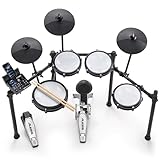
Overview: The Alesis Nitro Max represents a significant step-up in the entry-to-mid-range category, featuring an 8-piece configuration with a 10-inch dual-zone mesh snare and 8-inch mesh toms. Powered by BFD sound technology, it delivers 440+ studio-quality sounds and 32 ready-to-play kits. Bluetooth connectivity and a 90-day Drumeo subscription make it a modern learning powerhouse.
What Makes It Stand Out: The 10-inch dual-zone snare offers rimshots and realistic response unmatched in this price tier. Bluetooth audio streaming allows playing along with tracks wirelessly, while the BFD engine provides multi-velocity samples for authentic acoustic feel. The foldable rack maintains stability, and USB MIDI ensures seamless DAW integration for recording projects.
Value for Money: Positioned as a mid-range kit, the Nitro Max justifies its premium over budget options through professional BFD sounds and a larger snare. The included Drumeo subscription ($30 value) and Bluetooth capability add significant value. While more expensive than basic kits, the sound quality and playability rival kits costing twice as much.
Strengths and Weaknesses:
- Strengths: Large 10" dual-zone snare; exceptional BFD sound library; Bluetooth connectivity; robust foldable rack; Drumeo lessons included; realistic cymbal choke function.
- Weaknesses: 8" toms still feel small for advanced players; hi-hat pedal lacks realism of premium kits; module screen is basic; occasional trigger crosstalk.
Bottom Line: The Nitro Max bridges the gap between beginner and serious practice kits brilliantly. Its large snare and BFD sounds provide authentic feel that accelerates skill development. Ideal for committed students ready to invest in long-term growth, it offers professional features without the pro-level price tag. The Bluetooth and Drumeo access make practice engaging and effective.
3. Donner DED-200 Electric Drum Sets with Quiet Mesh Drum Pads, 2 Cymbals w/Choke, 31 Kits and 450+ Sounds, Throne, Headphones, Sticks, USB MIDI, Melodics Lessons (5 Pads, 3 Cymbals)

Overview: The Donner DED-200 elevates the brand’s offerings with a more expansive 8-piece configuration featuring five mesh pads and three cymbals. It includes an 8-inch dual-zone snare, three 8-inch toms, and a 6-inch kick drum compatible with double pedals. With 450 sounds, 31 kits, and 50 play-along songs, it targets serious beginners ready for a fuller playing experience.
What Makes It Stand Out: The dual-zone snare and double-pedal ready kick drum provide advanced playability rare at this price point. The kit includes choke-capable cymbals for realistic expression, while the module offers a sequencer, metronome, and recording function. Its sturdy 4-post aluminum rack delivers improved stability over entry-level models, and smartphone compatibility enhances practice sessions.
Value for Money: The DED-200 strikes an impressive balance between the DED-80 and premium kits, offering nearly double the sounds and a more complete setup for a modest price increase. The inclusion of a dual-zone snare and double-pedal compatibility future-proofs the investment. While cymbal sizes remain modest, the overall package presents strong value for progressing drummers.
Strengths and Weaknesses:
- Strengths: Dual-zone snare enhances expression; double-pedal compatibility; 450+ extensive sound library; stable 4-post rack; recording and sequencer functions; choke-capable cymbals.
- Weaknesses: 8-inch pads still compact; cymbal quality lags behind Alesis; module interface feels dated; assembly instructions could be clearer.
Bottom Line: The DED-200 is Donner’s answer to drummers outgrowing entry-level kits. It adds crucial professional features like dual-zone snare and double-pedal support without a massive price jump. Perfect for dedicated students progressing beyond basics, it offers room to grow while maintaining the brand’s value proposition. The expanded setup provides a more authentic drumming experience.
4. AKLOT Acoustic-Style Electric Drum Set: Independent 16’’ Wooden Bass Drum and 12’’ Snare, Triple-Zone Ride Cymbal, Standalone Hi-Hat, Full Mesh Pads, 460 Sounds, USB MIDI, Throne, Sticks (B-CORE543)

Overview: The AKLOT B-CORE543 blurs the line between electronic and acoustic drums with its revolutionary acoustic-style design. Featuring a 12-inch wooden snare, 16-inch wooden kick drum, and a true two-piece independent hi-hat system, this premium kit delivers unparalleled realism. Triple-zone ride cymbal and dual-zone toms provide expressive depth, while 460 studio-sampled sounds offer professional-grade sonic flexibility.
What Makes It Stand Out: The independent hi-hat system with 12-inch top and bottom cymbals tracks foot splashes and half-open positions with acoustic precision. The triple-ply mesh heads with 6-point tension adjustment on the snare allow customized rebound. A 14-inch triple-zone ride captures bell, bow, and edge articulations, while studio-grade effects including reverb and EQ enable deep sound customization.
Value for Money: As a premium offering, the AKLOT commands a higher price but justifies it through authentic acoustic feel that competitors lack. The wooden shells and advanced cymbal zones rival kits costing significantly more. For serious drummers needing realistic response for practice or recording, the investment pays dividends in playability and reduced acoustic noise. It’s a professional tool, not a toy.
Strengths and Weaknesses:
- Strengths: Authentic acoustic-style wooden drums; independent hi-hat system; triple-zone ride cymbal; tension-adjustable mesh heads; studio-quality sound editing; realistic kick drum response.
- Weaknesses: Premium price point; large footprint requires dedicated space; complex setup; overkill for casual beginners; heavier than foldable kits.
Bottom Line: The AKLOT B-CORE543 sets a new standard for acoustic realism in electronic drums. It’s an investment for serious drummers, session musicians, and acoustic players needing quiet practice. The independent hi-hat and wooden shells provide feedback that accelerates technique transfer to acoustic kits. While beginners should look elsewhere, dedicated drummers will find this kit indispensable for silent, authentic practice.
5. AODSK Electric Drum Set for Beginner with 150 Sounds,4 Quiet Drum Pads,2 Pedal,Throne,Sticks,Electronic Drum with Headphone,AED-400

Overview: The AODSK AED-400 positions itself as the most accessible entry point into electronic drumming, targeting absolute beginners and gift-givers. This 7-piece kit features four 6.5-inch silicone drum pads and three 8-inch cymbals, delivering 150 sounds across 15 kits. Its ultra-compact, lightweight design prioritizes portability and simplicity over advanced features, making it ideal for young learners or casual practice.
What Makes It Stand Out: Remarkable affordability defines the AED-400, offering a complete drumming package at a fraction of competitor prices. The foldable metal frame sets up in minutes and stores virtually anywhere. AUX input and USB MIDI provide basic connectivity for playing along with music or triggering virtual instruments. The LED display keeps operation simple for non-technical users, while included headphones enable immediate silent practice.
Value for Money: This kit redefines budget drumming, providing functional electronic drums for the price of a few lessons. While sound quality and pad response can’t match mesh-head kits, it delivers playable drums for beginners to explore rhythm fundamentals. The inclusion of throne, sticks, and headphones eliminates hidden costs. It’s disposable pricing that lets users test drumming interest before investing seriously.
Strengths and Weaknesses:
- Strengths: Extremely affordable; ultra-portable and lightweight; simple setup; complete beginner package; silent practice capability; USB MIDI for basic recording.
- Weaknesses: Silicone pads lack realistic rebound; limited 150-sound library; small 6.5" pads restrict technique; basic module features; cymbals are single-zone only; durability concerns.
Bottom Line: The AED-400 serves one purpose brilliantly: ultra-affordable drum introduction. Perfect for young children, tentative beginners, or as a gift, it removes financial barriers to trying drums. However, serious learners will quickly outgrow its limitations. Purchase this if you’re unsure about drumming commitment, but upgrade to mesh-head kits like the Donner DED-80 if dedication grows. It’s a starter toy, not a long-term instrument.
6. Alesis Turbo Max Electric Drum Set with Quiet 8" Mesh Pads, Lessons, Bluetooth and Accessories, Foldable

Overview: The Alesis Turbo Max is a thoughtfully designed entry-level electronic drum kit built specifically for beginners in shared living spaces. This 7-piece configuration combines four 8" mesh drumheads with three 8" cymbals, delivering a responsive playing experience that maintains neighbor-friendly volume levels. The package arrives complete with a full-height adjustable rack, throne, headphones, sticks, and the feature-rich Turbo Max Drum Module.
What Makes It Stand Out: Bluetooth connectivity sets this kit apart, allowing wireless streaming of lessons and play-along tracks directly to the module. The foldable, space-saving design transforms it from performance setup to storage-ready in minutes—ideal for apartments or bedrooms. The full-size kick and hi-hat pedals provide authentic feel while minimizing floor noise transmission. With 12 custom drum kits, 110 individual sounds, and 20 built-in practice tracks, it offers substantial learning resources without overwhelming newcomers.
Value for Money: Priced competitively for the beginner market, the Turbo Max delivers exceptional value by including every essential accessory. Comparable kits often require separate purchases of thrones or headphones, making this an all-in-one investment. The mesh heads alone justify the cost over budget rubber-pad alternatives, offering superior durability and realistic rebound that accelerates skill development.
Strengths and Weaknesses:
- Strengths: Ultra-quiet mesh heads; Integrated Bluetooth streaming; Truly foldable/portable design; Complete accessory package; Beginner-friendly module interface
- Weaknesses: 8" pads feel small for advanced techniques; Limited sound library compared to mid-tier kits; Basic cymbal choke functionality; No USB MIDI for DAW integration
Bottom Line: The Turbo Max is an ideal launchpad for aspiring drummers prioritizing quiet practice and space efficiency. Its comprehensive package and Bluetooth convenience make it a top choice for beginners in apartments or family homes.
7. Donner Electric Drum Set, DED-70 Electronic Drum Kit for Beginner with 150 Sounds, 4 Quiet Mesh Pads, 9" Cymbals, USB MIDI, Type-C Charging, 2 Pedal, Throne, Headphones, Sticks, Melodics Lessons

Overview: Donner’s DED-70 targets young beginners with a scaled-down 7-piece kit featuring four 6.5" dual-layer mesh heads and oversized 9" silicone cymbals. Designed for ages 6-14, this kit emphasizes portability and modern connectivity with USB MIDI and Type-C charging. The package includes Melodics lessons integration, making it an educational tool as much as an instrument.
What Makes It Stand Out: The dual-power capability—supporting both AC adapter and portable power banks—offers unprecedented practice flexibility for outdoor sessions or travel. Its 9" cymbals provide larger strike zones than typical entry-level kits, reducing missed hits for developing players. The collapsible frame folds to just 24.4" x 10.6" x 35.4", sliding easily under beds or into closets.
Value for Money: This kit punches above its weight class with 150 sounds, 15 customizable kits, and Melodics lesson compatibility at a budget-friendly price point. While requiring a separate amplifier for room-filling sound, the included headphones deliver excellent value for silent practice. The metal rack construction exceeds expectations for this tier, ensuring stability during enthusiastic play.
Strengths and Weaknesses:
- Strengths: Power bank compatibility enables mobile practice; Generous 9" cymbal size; USB MIDI for digital recording; Sturdy metal rack; Melodics lessons included
- Weaknesses: 6.5" pads are quite small for older players; Requires external amplifier for speaker output; Limited to 10 demo songs; No Bluetooth connectivity
Bottom Line: Perfect for young learners and families needing maximum portability, the DED-70 excels as a travel-friendly practice kit. Its power versatility and educational integration make it a smart choice for dedicated beginners.
8. HAMPBACK MK-0 Electric Drum Set with 7’’ Quiet Mesh Drum Pads, 8’’ Full Rubber Cymbals, 12 Kits and 68 Authentic Sounds, USB MIDI, Throne, Sticks, Headphone, 2 Switch Pedals for Beginners & Kids

Overview: The HAMPBACK MK-0 positions itself as the budget-conscious entry point into electronic drumming, offering a no-frills 7-piece kit with four 7" mesh pads and three 8" rubber cymbals. Aimed squarely at absolute beginners and kids, it prioritizes affordability and basic functionality over advanced features while still delivering essential accessories including a throne, headphones, and sticks.
What Makes It Stand Out: The standout feature is power bank compatibility, allowing cordless operation anywhere—rare at this price point. The 2-year warranty provides peace of mind that competitors typically reserve for premium tiers. Its compact rack folds remarkably small for storage under beds or against walls, while remaining light enough for weekend outdoor sessions with friends.
Value for Money: This is among the most affordable mesh-head kits available, making it accessible for uncertain beginners testing their interest. While the 68-sound library is modest, it covers essential acoustic and electronic drum voices. The inclusion of a throne and headphones eliminates hidden costs, though the rubber cymbals represent a noticeable compromise versus silicone or dual-zone alternatives.
Strengths and Weaknesses:
- Strengths: Extremely budget-friendly; Power bank operation; 2-year warranty; Highly portable foldable design; Complete starter package
- Weaknesses: Rubber cymbals lack realistic feel; Only 68 sounds limits creativity; Basic switch pedals feel less responsive; No built-in lessons or Bluetooth; Smaller 7" pads
Bottom Line: The MK-0 serves as a low-risk introduction to drumming for kids or casual learners. Its warranty and portability add value, but serious students will quickly outgrow its limited sound set and basic cymbals.
9. Donner DED-200 MAX Electronic Drum Set with Industry Standard Mesh Heads, 10’’ Snare, 8“ Tom, 10’’ Tom, 12’’ Crash, 450+ Authentic Sounds for Optimal Performance and Feel NEW

Overview: The DED-200 MAX represents Donner’s mid-tier offering for advancing drummers ready to move beyond beginner limitations. This kit features significantly upgraded hardware including a 10" dual-zone snare, 10" and 8" toms, and expansive 12" crash and ride cymbals. With over 450 sounds and 31 drum kits, it bridges the gap between practice kit and performance instrument.
What Makes It Stand Out: The larger playing surfaces provide authentic acoustic drum feel and proper stick placement for developing technique. Professional features like a built-in sequencer, metronome, and recording function transform it into a serious practice tool. The module’s faithful real drum sampling delivers dynamic, multi-layered sounds that respond naturally to velocity changes, while smartphone compatibility enables seamless play-along practice.
Value for Money: While nearly double the cost of entry-level kits, the MAX justifies its premium with pro-grade pad sizes and a massive sound library. The 12" cymbals alone represent a significant upgrade, offering proper choke zones and bell triggers. For drummers progressing beyond basics, this investment eliminates the need for an intermediate upgrade, saving money long-term.
Strengths and Weaknesses:
- Strengths: Large 10"-12" pads enable proper technique; 450+ high-quality sounds; Recording and sequencing capabilities; Genuine drum sampling; Robust steel rack
- Weaknesses: No built-in speakers requires separate amp/headphones; Steeper learning curve for module features; Heavier and less portable; No Bluetooth connectivity
Bottom Line: The DED-200 MAX is an excellent choice for serious students and intermediate players seeking authentic feel and professional sounds. Its larger pads and extensive features support genuine skill development.
10. Alesis Nitro Pro Electric Drum Set with Dual-Zone Quiet Mesh Pads, 500+ Authentic BFD Sounds, Bluetooth, Drumeo, USB MIDI, Double Kick Compatible

Overview: The Nitro Pro catapults Alesis into the professional e-drum market with an 8-piece powerhouse featuring dual-zone mesh pads throughout and industry-leading BFD sound engine integration. This kit supports double kick pedals and offers 500+ multi-velocity samples, positioning it as a legitimate acoustic drum replacement for recording and performance. The solid PRO steel rack provides rock-solid stability for aggressive playing.
What Makes It Stand Out: BFD Player software unlocks a vast expansion library and DAW recording capabilities, while built-in Bluetooth and 90-day Drumeo membership provide world-class lesson content. The PRO 10" deep mesh snare and dual-zone 8" toms deliver nuanced rim shots and positional sensing that budget kits simply cannot match. Cymbals feature proper choke functionality and bell triggers, completing the professional experience.
Value for Money: Though priced at the premium end of the mid-tier market, the Nitro Pro delivers legitimate professional features. The BFD sound library alone rivals software costing hundreds separately, while Drumeo access adds substantial educational value. Double-kick compatibility and dual-zone pads ensure this kit won’t limit technical growth, making it a long-term investment.
Strengths and Weaknesses:
- Strengths: Professional BFD sound engine; Dual-zone pads throughout; Double kick pedal ready; Drumeo lessons included; Robust steel construction; Bluetooth connectivity
- Weaknesses: Premium price exceeds beginner budgets; Complex module may overwhelm newcomers; Requires significant space; Heavier than foldable alternatives
Bottom Line: For dedicated drummers seeking professional-grade response and sounds without acoustic volume, the Nitro Pro is a compelling choice. Its feature set supports advanced technique and serious music production.
Why Electronic Drums Are Essential for Apartment Living
The fundamental challenge of drumming in an apartment isn’t just about volume—it’s about vibration transmission and frequency penetration. Acoustic drums produce sound waves that travel through walls, floors, and ceilings with alarming efficiency, particularly the low-frequency energy from kick drums and floor toms. Electronic drums eliminate this problem at the source by converting stick impact into electrical signals.
Beyond noise control, space optimization becomes paramount. Most apartments offer limited square footage, and a full acoustic kit demands roughly 6-8 square feet plus clearance for your arms and sticks. Electronic kits in 2026 are designed with vertical architecture in mind, stacking components upward rather than outward. This design philosophy means you can often tuck a five-piece kit into a 4x4 foot corner, leaving valuable floor space for the rest of your life.
Understanding Noise Levels: Decibels and Your Neighbors
Structure-Borne vs. Airborne Sound
The stick hitting a mesh head produces roughly 60-70 decibels—comparable to normal conversation. However, the real culprit in apartment complaints is structure-borne vibration traveling through the floor. When you stomp a kick pedal or hi-hat control, that mechanical energy transfers directly into the building’s framework. Modern electronic kits address this through floating riser designs and isolation materials, but understanding this distinction helps you focus your soundproofing efforts where they matter most.
The Real-World Noise Floor
Your electronic kit’s module might output pristine audio, but the physical act of drumming still creates noise. The thud of sticks on pads, the click of pedals, and the rattle of hardware contribute to your overall acoustic footprint. In 2026, manufacturers have refined pad construction to minimize these incidental sounds, using multi-layer mesh and rubber compounds that absorb impact energy rather than reflecting it. Look for kits advertising “low-noise chassis” or “impact-dampening frames”—these aren’t just marketing terms but engineered solutions to a real physics problem.
Mesh vs. Rubber Pads: The Silent Revolution
The Mesh Head Advantage
Mesh drum heads represent the gold standard for quiet practice, and 2026’s triple-layer woven designs offer unprecedented stick response. Unlike early single-layer mesh that felt like bouncing on a trampoline, modern implementations use graduated tension zones that mimic acoustic head rebound. The key specification to examine is “tension adjustability”—quality pads allow you to fine-tune head tightness with a drum key, letting you match your preferred acoustic setup’s feel.
Rubber Pad Realities
Rubber pads, particularly for cymbals and auxiliary percussion, remain relevant for their durability and compactness. However, not all rubber is created equal. Harder durometer rubber (measured in Shore hardness) transfers more vibration to the stand and floor—exactly what you want to avoid. Premium kits now use dual-density rubber with a softer striking surface bonded to a firmer base, isolating impact noise while maintaining playing stability. For hi-hats and ride cymbals, this technology is non-negotiable for apartment use.
Module Features That Matter for Quiet Practice
Headphone Amplification Quality
The headphone output on your drum module is your primary listening interface, and its quality directly impacts your practice experience. In 2026, look for modules advertising “high-current headphone amps” with impedance ratings below 32 ohms. This ensures clean, dynamic sound even with consumer-grade headphones. Some advanced modules now include separate volume controls for click tracks and backing music, letting you balance mix elements without touching your phone or DAW.
Volume Curves and Dynamic Range
A crucial but overlooked specification is the module’s volume curve—how it translates your playing dynamics to output level. Cheap modules compress your playing into a narrow volume window, making soft ghost notes inaudible and hard accents harsh. Premium modules offer adjustable volume curves that preserve your full dynamic range while keeping overall levels neighbor-friendly. This feature, often labeled “dynamic response” or “velocity curve editing,” is essential for developing proper technique in an apartment setting.
Size and Footprint Considerations for Small Spaces
Vertical vs. Horizontal Design Philosophy
The most apartment-friendly kits in 2026 embrace verticality. Look for rack systems that position toms above the snare rather than spreading them horizontally. Some innovative designs use curved, upward-sweeping rack tubes that position cymbals at ergonomic heights while keeping the base footprint minimal. Measure your available space’s height as carefully as its floor area—a kit that fits perfectly in a 4-foot square might require 7 feet of vertical clearance when you raise cymbal arms.
Collapsible and Storage-Friendly Designs
If your apartment requires you to pack away your kit between sessions, prioritize kits with tool-less breakdown. Quick-release clamps and folding rack systems let you collapse a five-piece setup in under five minutes. Pay attention to cable management—integrated cable channels within rack tubes prevent tangling and speed up both setup and teardown. Some 2026 models even feature detachable module mounts that let you store the brain separately, reducing theft risk in shared living situations.
Budget Tiers: What to Expect at Every Price Point
Entry-Level Considerations ($300-$700)
Budget-conscious apartment drummers should expect single-layer mesh snare pads and rubber toms at this tier. While this compromises feel, the noise levels remain acceptable. The key compromise is module features—you’ll get basic sounds but limited editing. However, many 2026 entry kits now include Bluetooth connectivity, a feature previously reserved for mid-range models. The critical spec to verify is pad size: avoid kits with pads smaller than 8 inches for snare and toms, as this hampers proper technique development.
Mid-Range Sweet Spot ($800-$1,500)
This is where apartment-friendly features become standard. Expect dual-layer mesh across all drums, larger cymbal pads (12-13 inch rides), and modules with extensive sound editing. You’ll find advanced practice tools like tempo training, play-along tracks, and recording capabilities. Hardware quality jumps significantly—sturdier racks and better pedal designs reduce mechanical noise. For most apartment drummers, this tier offers the best long-term value.
Professional Apartment Solutions ($1,600+)
Premium kits justify their cost through superior noise isolation, expandable architecture, and module processing power. You’ll encounter features like positional sensing on snare pads (detecting where you strike the head), triple-zone cymbals, and modules with hundreds of editable sounds. The hardware is often convertible between acoustic and electronic setups, using standard mounts that accept acoustic shells if you later move to a house. For serious drummers committed to years of apartment living, this investment preserves technique and sanity.
The Importance of Quality Hardware and Stands
Rack System Stability vs. Vibration Transfer
The paradox of apartment drum hardware: heavier stands provide stability but transmit more vibration. Modern rack systems solve this with isolated mounting points. Look for rubber-grommeted clamps that decouple pads from metal tubes. Some premium racks use composite materials in key joints—carbon fiber reinforced polymer reduces weight while maintaining rigidity and dampening vibration better than pure aluminum.
Pedal Mechanics and Floor Impact
Your kick pedal and hi-hat stand are primary vibration sources. Chain-drive pedals generally transmit more vibration than direct-drive or belt-drive designs. In 2026, many electronic-specific pedals use counterweighted beater shafts that reduce impact force without sacrificing response. For hi-hats, consider stands with adjustable tension springs—a looser setting reduces floor impact while maintaining proper cymbal feel. Always place pedals on isolation platforms; even a simple 1-inch dense foam mat cuts floor transmission by 40-60%.
Connectivity Options for Modern Musicians
Bluetooth MIDI and Audio Streaming
Wireless connectivity has become standard in 2026, but implementation quality varies. Look for kits advertising “low-latency Bluetooth 5.3” or higher—older versions introduce 30-50ms delay, which is maddening when playing along with tracks. The best modules allow simultaneous Bluetooth audio input (for backing tracks) and MIDI output (for recording), letting you practice and produce without cables snaking across your apartment floor.
USB Audio Interface Integration
Modern drum modules function as class-compliant USB audio interfaces, streaming multi-channel audio directly to your computer. This means each drum can record to a separate track in your DAW. For apartment producers, this eliminates the need for a separate audio interface, saving precious desk space. Verify the module supports “stereo USB audio” and “MIDI over USB”—some budget options only transmit a stereo mix, limiting your mixing flexibility later.
Expandability: Planning for Future Growth
Pad Input Limitations
Every module has a finite number of trigger inputs, but the advertised “expandable to 12 pads” can be misleading. Check if expansion requires sacrificing existing pads or if there are truly additional inputs. Some 2026 modules use “splitter cables” to double up on inputs, but this often merges two pads into one stereo input, limiting them to single-zone operation. For apartment kits where you might want to add a percussion pad or second crash later, prioritize modules with dedicated auxiliary inputs.
Cymbal Zone Configurations
A “three-zone” ride cymbal (bell, bow, edge) adds realism but consumes multiple inputs. Understanding your module’s input architecture prevents disappointment. Premium modules allow you to assign zones to any input, while budget units hardwire them. If you plan to expand, ensure your module’s input count reflects your long-term vision, not just the kit’s initial configuration.
Sound Libraries and Tone Quality
Sample Depth and Layering
The difference between a realistic snare drum and a cardboard sample often comes down to velocity layers—how many different recordings exist for varying strike intensities. In 2026, quality kits offer 100+ velocity layers for core drums. This isn’t just about quantity; it’s about seamless transitions. Cheap kits might have 20 layers but abrupt volume jumps between them. Listen for “round-robin” sampling, where repeated hits at the same velocity trigger slightly different samples, preventing the machine-gun effect.
User Sample Import and Customization
The ability to load your own samples transforms your module from a sound library into a creative tool. Look for kits supporting lossless formats like WAV at 24-bit/48kHz resolution. Some advanced modules allow you to blend imported samples with internal sounds, creating hybrid kits. For apartment drummers recording demos, this means you can load studio-recorded drum samples and play them through your kit, maintaining sonic consistency between practice and final tracks.
Playability: How Kit Design Affects Technique
Pad Size and Spacing Authenticity
Developing bad habits is the silent danger of apartment drum practice. Pads smaller than 8 inches force you to adjust your stroke precision unnaturally. Premium kits use 10-12 inch snare and tom pads, allowing proper rim-shot technique and accurate stick placement. The rack’s geometry matters too—pads positioned too close together create cramped ergonomics. Measure the span between your snare and first tom; it should mirror acoustic spacing (roughly 18-24 inches) to maintain muscle memory.
Hi-Hat Realism and Pedal Feel
The hi-hat is where most electronic kits reveal their limitations. Basic setups use a simple pedal that only controls open/closed states. Advanced systems employ continuous controllers that detect partial pedal positions, enabling nuanced chick sounds and splash effects. For apartment practice, the pedal mechanism must be silent—avoid designs with loud springs or metal-on-metal contact. The best 2026 implementations use magnetic sensors and felt dampening, producing no mechanical noise while delivering acoustic-like response.
Recording and Practice Tools Built Into Modern Modules
Onboard Recording and Playback
Every 2026 module records your playing, but the implementation details separate useful tools from gimmicks. Look for “non-destructive recording” that saves performances as MIDI data rather than audio files. This lets you edit timing, change sounds, and adjust mix levels after recording. Some modules offer “auto-accompaniment” that analyzes your playing tempo and adjusts backing tracks in real-time—perfect for practicing grooves without a metronome’s rigid click.
Practice Coaching and Skill Building
Artificial intelligence has infiltrated drum modules, offering real-time feedback on timing accuracy and dynamics. These systems compare your playing to internal patterns, highlighting rushed fills or inconsistent ghost notes. For apartment drummers without a teacher, this provides objective feedback. However, verify the coaching features work with headphones—some systems require speaker playback to function, defeating the purpose of quiet practice.
Durability and Build Quality for Daily Use
Pad Longevity and Maintenance
Mesh heads wear out, even on electronic drums. Quality pads feature replaceable heads that you can swap with a drum key in minutes. Check if the manufacturer sells replacement heads individually or only as complete pad assemblies. The difference can mean $15 vs. $150 when your snare head finally breaks down. Pad rims take abuse too—look for reinforced metal hoops rather than plastic, which can crack from rim shots over time.
Cable Management and Connection Integrity
In apartment setups where kits are assembled and disassembled frequently, cable durability becomes critical. Modules with locking connectors (threaded or bayonet-style) prevent accidental disconnections. Some 2026 kits use color-coded cables and labeled inputs, making reassembly foolproof. Inspect the cable gauge—thicker cables with molded strain reliefs last longer than thin, generic wires. For permanent setups, consider kits with cable channels in the rack tubes, protecting wires from foot traffic and vacuum cleaners.
Second-Hand Market vs. New: Making the Smart Choice
Depreciation and Technology Obsolescence
Electronic drums depreciate faster than acoustics, but the rate slows significantly after the first two years. A 2024 flagship kit at 40% off retail might offer better value than a new 2026 budget model. However, technology moves fast—modules from before 2022 likely lack modern connectivity and sound quality. The sweet spot is kits 2-3 years old that originally retailed in the mid-range tier. These have modern features but have absorbed most of their depreciation.
Inspection Checklist for Used Kits
When buying used, test every trigger input, not just the pads. Worn trigger cones beneath mesh heads cause hot spots and double-triggering. Bring headphones and test at low volumes—many defects only appear in subtle ghost note ranges. Check the module’s firmware version; if it’s not updatable, you might miss bug fixes and feature additions. For apartment use specifically, inspect pedal mechanisms for wear that could increase noise. A squeaky kick pedal is a deal-breaker in close quarters.
Setting Up Your Apartment Drum Sanctuary
Vibration Isolation Strategies
Beyond the kit itself, your setup determines neighbor relations. Professional isolation platforms use dense foam topped with MDF board, creating a floating floor that absorbs impact. For budget solutions, interlocking foam gym tiles with a plywood sheet work surprisingly well. Position your kit away from shared walls when possible—a corner opposite your neighbor’s bedroom puts two walls and an air gap between your kick drum and their sleep.
Room Acoustic Treatment for Monitoring
While electronic drums don’t blast sound into the room, your monitoring environment affects practice quality. Hard apartment walls create harsh reflections that make headphone mixes sound boxy. Simple acoustic panels behind your kit—especially at ear height—clean up what you hear, letting you use lower headphone volumes. This protects your hearing and prevents sound leakage from open-back headphones, a common complaint in thin-walled apartments.
Frequently Asked Questions
How much quieter are electronic drums compared to acoustic drums in an apartment setting?
Electronic drums produce roughly 60-70 decibels of mechanical noise from stick impact, while acoustic drums easily exceed 100-120 decibels. More importantly, electronic drums eliminate low-frequency vibration that travels through floors, reducing structure-borne noise by approximately 90%. With proper isolation pads, your downstairs neighbors might hear faint tapping comparable to typing on a mechanical keyboard.
Can I really practice at midnight without bothering anyone?
Yes, with qualifications. The mechanical noise from pads and pedals still transmits some vibration, but it’s negligible compared to acoustic drums. Use a 1-2 inch isolation platform, avoid heel-down kick technique (which pounds the floor), and consider rubber-tipped drumsticks for ultra-quiet sessions. Always test with a roommate or neighbor during reasonable hours first to establish trust.
Do I need special headphones for electronic drum practice?
While any headphones work, closed-back over-ear models are essential for apartment use. They prevent sound leakage and block pad noise, letting you hear the module clearly at lower volumes. Look for headphones with 20-25 ohm impedance for compatibility with drum modules. Gaming headsets often work well, but avoid models with exaggerated bass that masks your playing dynamics.
Will practicing on electronic drums hurt my acoustic technique?
Only if you choose the wrong kit. Pads smaller than 8 inches or with unrealistic rebound can develop bad habits. Invest in kits with full-size pads and adjustable mesh tension. Practice acoustic-specific techniques like rim shots and cross-sticking regularly. Many professional drummers maintain both electronic and acoustic setups, switching between them seamlessly after brief adjustment periods.
How long do mesh heads last with daily apartment practice?
With moderate daily use (1-2 hours), quality mesh heads last 3-5 years. Heavy hitters playing metal might need replacements every 18-24 months. The good news: replacement heads cost $15-30 each and install with a drum key. Inspect heads quarterly for fraying or sagging. Tighten them periodically—loose heads wear faster and feel mushy.
Can I use electronic drums for recording professional tracks?
Absolutely. Modern modules output multi-channel audio via USB, letting you record each drum to separate tracks. The sample quality rivals studio libraries, and the performance capture is perfectly clean. Many producers prefer recording MIDI from electronic kits, then triggering premium sample libraries. This hybrid approach gives you authentic performance feel with ultimate sonic flexibility.
What’s the minimum space needed for a five-piece electronic kit?
You can fit a comfortable five-piece setup in a 4x5 foot area (20 square feet). Collapse the footprint to 3x4 feet (12 square feet) by positioning toms vertically and using compact cymbal arms. Measure your wingspan plus stick length to ensure you won’t hit walls. Remember to account for your drum throne’s movement area—add 2 feet behind the kit for comfortable positioning.
Are rubber cymbal pads too loud for apartments?
Modern dual-density rubber cymbals are surprisingly quiet, producing only slightly more noise than mesh drums. The key is the mounting system—avoid hard-mounted cymbals that transfer vibration to the rack. Look for “isolated cymbal mounts” with rubber washers or suspension designs. For ultimate quiet, consider pure mesh cymbals, though their feel differs significantly from traditional cymbal response.
How do I explain electronic drums to skeptical landlords?
Offer a demonstration. Set up the kit during a walkthrough and let them hear the minimal noise from outside the apartment. Provide specifications showing decibel levels. Offer to add extra isolation padding and establish quiet hours. Many landlords who initially balk at “drums” become supportive once they realize electronic kits are quieter than vacuum cleaners. Written assurance of your soundproofing measures often satisfies lease concerns.
Should I buy an extended warranty for an apartment-use kit?
Yes, especially if you’re buying new. Apartment setups involve frequent assembly/disassembly if you need to store the kit, increasing wear on clamps and cables. Most manufacturer warranties cover 1-2 years; extended warranties push coverage to 3-5 years. Given that a single module replacement can cost $500+, the $75-100 warranty investment makes financial sense. Just read the fine print—some exclude “commercial use,” which could be interpreted as heavy daily practice.
See Also
- 10 Game-Changing Electronic Drum Sets for Apartment Practice in 2026
- Entry-Level Electronic Drum Sets Under $700: How to Pick the Quietest Kit for Apartment Practice
- 10 Electronic Drum Sets With Bluetooth for Silent Practice in 2026
- 10 Expert-Recommended Electronic Drum Sets for Late-Night Practice in 2026
- 10 Electronic Drum Sets with Bluetooth for Silent Practice in 2026