Table of Contents
The modern living room has evolved from a simple gathering space into a multi-functional sanctuary where aesthetics meet technology, and in 2026, nothing embodies this fusion quite like a digital console piano. These sophisticated instruments have transcended their role as mere musical devices to become statement furniture pieces that anchor your space while delivering concert-hall performance at whisper-quiet volumes. Whether you’re a seasoned pianist seeking authentic touch without acoustic compromises or a design-conscious homeowner looking to add both visual elegance and interactive entertainment, today’s digital console pianos offer unprecedented flexibility.
As we navigate the increasingly nuanced landscape of home digital pianos, understanding what separates a true living room centerpiece from a glorified keyboard has never been more critical. The technology has matured dramatically, with artificial intelligence-enhanced sound modeling, hyper-realistic graded hammer actions, and cabinetry that rivals fine furniture. This comprehensive guide will walk you through every consideration—from the invisible engineering inside the chassis to the visible grain of the wood finish—ensuring your investment harmonizes perfectly with both your musical ambitions and your interior design vision.
Top 10 Console Pianos
Detailed Product Reviews
1. Yamaha YDP184 Console Digital Piano with Weighted 88-Key Graded Hammer 3 Action, CFX Concert Grand Piano Sound, Includes Bench (Dark Rosewood)
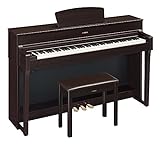
Overview: The Yamaha YDP184 represents the pinnacle of the Arius line, delivering a premium console digital piano experience. This instrument combines Yamaha’s flagship CFX concert grand piano sampling with their acclaimed Graded Hammer 3 action, creating an authentic acoustic piano feel. The dark rosewood cabinet adds elegant furniture appeal to any living space.
What Makes It Stand Out: The full Virtual Resonance Modeling (VRM) technology sets this apart, meticulously recreating the complex string vibrations and resonance of a concert grand. The full dot LCD display provides intuitive navigation through features, a significant upgrade over entry-level models. Synthetic ivory key tops absorb moisture and prevent slipping during extended practice sessions, while the included padded bench completes the professional package.
Value for Money: Positioned in the upper-mid range, the YDP184 justifies its price through superior sound engineering and build quality. It costs significantly less than an acoustic upright while delivering 90% of the experience. Compared to stage pianos, it offers better speakers and furniture-grade cabinetry, making it ideal for dedicated home use.
Strengths and Weaknesses:
- Strengths: Exceptional CFX grand piano sound; realistic GH3 weighted action; comprehensive VRM technology; elegant cabinet design; complete bundle with bench; 128-note polyphony suffices for most repertoire.
- Weaknesses: Premium pricing may deter beginners; heavier and less portable than slab pianos; limited voice selection compared to workstations; 128 polyphony can be limiting for complex layered pieces.
Bottom Line: The YDP184 is an outstanding choice for serious students and discerning pianists seeking authentic acoustic performance in a beautiful console package.
2. Yamaha YDP165 Console Digital Piano with Weighted 88-Key Graded Hammer 3 Action, CFX Concert Grand Piano Sound, Includes Bench (Black)

Overview: The Yamaha YDP165 strikes an impressive balance between affordability and authentic piano performance. This mid-tier console digital piano delivers the core Yamaha experience—CFX concert grand sampling and GH3 weighted action—without the premium price tag of higher-end Arius models, making it accessible to advancing students.
What Makes It Stand Out: The GH3 keyboard with synthetic ivory key tops provides the same tactile authenticity as pricier models, absorbing finger moisture for secure playing. VRM Lite technology enhances realism by simulating string resonance, while the three traditional pedals offer genuine sustain, sostenuto, and soft functionality. The tone escapement construction ensures rich, powerful sound projection from its compact cabinet.
Value for Money: This model occupies the sweet spot for value-conscious buyers. It delivers essential Yamaha quality at roughly 70% of the YDP184’s price, sacrificing only the LCD display and full VRM. For intermediate players, the differences are negligible, making it a smarter purchase than entry-level slabs that lack proper cabinetry and pedals.
Strengths and Weaknesses:
- Strengths: Authentic GH3 action; convincing CFX piano sound; three functional pedals; solid furniture cabinet; includes bench; VRM Lite adds realism.
- Weaknesses: No display screen complicates navigation; 128 polyphony limits advanced layering; fewer features than flagship models; black finish shows dust readily.
Bottom Line: The YDP165 offers exceptional Yamaha authenticity for intermediate pianists, delivering professional fundamentals without unnecessary frills.
3. Casio Privia PX-870 – 88-Key Weighted Console Digital Piano | Tri-Sensor II Scaled Hammer Action Keys| Elegant Design | Powerful 40W 4-Speaker Sound, Concert Play, USB-MIDI

Overview: The Casio Privia PX-870 challenges Yamaha’s dominance with a feature-packed console piano at a competitive price. This instrument leverages Casio’s AiR sound engine and Tri-Sensor II hammer action to deliver impressive authenticity, while its powerful 40W four-speaker system fills rooms with immersive sound that belies its moderate cost.
What Makes It Stand Out: The four-speaker Sound Projection system creates a truly immersive experience, outperforming most competitors in this price bracket. Tri-Sensor II technology captures nuanced dynamics with exceptional speed. The learning suite is comprehensive: Duet Mode for instruction, dual headphone jacks, 60 built-in songs, and Concert Play with orchestral backing tracks. USB-MIDI connectivity ensures seamless integration with educational apps.
Value for Money: The PX-870 significantly undercuts Yamaha equivalents while offering superior speaker power and more learning features. You’re getting premium console piano experience—simulated ebony/ivory textures, advanced resonance modeling, and powerful amplification—at a price point that competes with entry-level consoles from other brands.
Strengths and Weaknesses:
- Strengths: Powerful 40W four-speaker system; realistic Tri-Sensor II action; excellent learning features; USB-MIDI connectivity; elegant design; strong dynamic control.
- Weaknesses: Brand perception lags behind Yamaha for purists; action may feel slightly lighter than Yamaha GH3; limited polyphony specification not stated; key-off simulation can be overly sensitive.
Bottom Line: An exceptional value proposition for students and home musicians seeking powerful sound and modern features without the premium brand tax.
4. Casio Privia PX-770 – 88-Key Weighted Console Digital Piano | Tri-Sensor II Scaled Hammer Action Keys | AiR Sound Source, 19 Tones, Concert Play, 16W Stereo Speakers, USB-MIDI | Elegant White Cabinet

Overview: The Casio Privia PX-770 delivers essential digital piano functionality in an attractive, space-saving design. This entry-level console piano provides the foundation of Casio’s Privia experience—the AiR sound engine and Tri-Sensor II action—wrapped in a sleek white cabinet that complements modern interiors while maintaining a modest footprint.
What Makes It Stand Out: The slim profile with sliding key cover makes it ideal for apartments and smaller spaces where traditional consoles feel imposing. Despite its compact size, it retains core learning features: Duet Mode for lessons, dual headphone jacks, 60 built-in songs, and Concert Play orchestral tracks. The USB-MIDI port connects effortlessly to computers and mobile devices without driver installation.
Value for Money: As one of the most affordable console pianos available, the PX-770 makes genuine weighted-key practice accessible to absolute beginners. It sacrifices speaker power and some tonal sophistication for price, but retains the essential action and sound quality needed for proper technique development. It’s significantly cheaper than the PX-870 while sharing the same fundamental keyboard technology.
Strengths and Weaknesses:
- Strengths: Extremely affordable; compact, stylish white cabinet; authentic Tri-Sensor II action; good learning features; USB-MIDI connectivity; easy setup.
- Weaknesses: Underpowered 16W speakers lack depth; limited tonal variety; white finish requires more maintenance; no line-out jacks for external amplification; less dynamic range than premium models.
Bottom Line: A perfect starter piano for beginners and space-conscious buyers, offering genuine weighted keys and essential features at an unbeatable price point.
5. Casio CELVIANO AP-S200 Console Digital Piano, with 88 Weighted Keys, 19 Tones, 40W Speaker System, Bluetooth Audio/MIDI, USB, White Finish (AP-S200WE)

Overview: The Casio Celviano AP-S200 modernizes the console piano with contemporary connectivity and minimalist aesthetics. This slim instrument combines traditional weighted keys with Bluetooth audio/MIDI and illuminated touch controls, targeting style-conscious buyers who want acoustic piano feel without sacrificing modern digital conveniences in a pristine white finish.
What Makes It Stand Out: The integrated Bluetooth adapter enables wireless streaming and MIDI control—features rarely found in console pianos at this price. Illuminated touch sensors that disappear during play create a clean, uncluttered appearance. The 40W speaker system delivers robust sound from an incredibly slim cabinet, while the soft-close sliding key cover adds a premium furniture touch.
Value for Money: Priced between the Privia PX-770 and PX-870, the AP-S200 charges a premium for its modern features and design. You’re paying for Bluetooth convenience and contemporary styling rather than incremental sound improvements. For tech-savvy users, the wireless connectivity justifies the cost; traditionalists may prefer investing in better action or sound technology.
Strengths and Weaknesses:
- Strengths: Built-in Bluetooth audio/MIDI; elegant slim white design; powerful 40W speakers; illuminated controls; soft-close key cover; modern aesthetic.
- Weaknesses: “Smart Scaled Hammer Action” is less proven than Tri-Sensor; fewer tones than competitors; premium price for features over fundamentals; white finish shows wear; limited legacy connectivity options.
Bottom Line: Ideal for modern homes where aesthetics and wireless connectivity matter as much as piano performance, though purists may prefer traditional alternatives.
6. Casio Celviano AP-750 – 88-Key Digital Console Piano | Smart Hybrid Hammer Action Keyboard CELVIANO Edition | 39 Built In Tones | Black

Overview: The Casio Celviano AP-750 represents the pinnacle of Casio’s digital piano engineering, delivering a premium grand-piano experience in an elegant console cabinet. This flagship model targets serious pianists seeking acoustic authenticity without maintenance headaches.
What Makes It Stand Out: The AP-750’s 8-speaker Grandphonic system creates immersive, room-filling sound that rivals competitors costing thousands more. The Smart Hybrid Hammer Action keys, crafted from spruce and resin with internal counterweights, replicate genuine grand piano touch with whisper-quiet operation. Casio’s AiR Grand Sound Engine captures damper, string, and lid resonance with remarkable precision, while vanishing touch controls maintain aesthetic elegance when not in use.
Value for Money: Priced in the premium tier, the AP-750 competes directly with Yamaha CLP and Kawai CN series. It offers superior speaker configuration and advanced resonance modeling at a more accessible price point. For dedicated students and professionals, this investment eliminates tuning costs while delivering concert-hall performance.
Strengths and Weaknesses: Strengths include exceptional key action authenticity, powerful 40W 8-speaker immersion, elegant minimalist design, and comprehensive 39-tone library. Bluetooth connectivity integrates seamlessly with the Casio Music Space app. Weaknesses involve substantial weight (difficult to move), premium pricing that may exceed casual player budgets, and a steep learning curve for navigating advanced features.
Bottom Line: The AP-750 is ideal for serious pianists demanding acoustic realism in a digital package. Its superior sound system and authentic touch justify the investment for advancing students and performance-focused musicians.
7. Casio Celviano AP-550 – 88-Key Digital Console Piano | Smart Hybrid Hammer Action Keyboard CELVIANO Edition | Dual Concert Grand Piano Tones | 40W 4-Speaker System | Rosewood

Overview: The Casio Celviano AP-550 strikes an impressive balance between premium features and practical value. This mid-high tier digital console piano delivers authentic grand piano touch and tone in a refined package suitable for dedicated students and serious hobbyists.
What Makes It Stand Out: Dual concert grand piano tones, meticulously recorded with dozens of microphones, provide rich tonal variety. The illuminated touch sensors offer intuitive control while maintaining a clean, traditional aesthetic when faded. The Instant Replayer function and 60-song library, accessible via the Casio Music Space app, create an excellent learning environment. Bluetooth Audio & MIDI connectivity comes standard.
Value for Money: Positioned below the flagship AP-750, the AP-550 offers nearly identical key action and sound engine quality at a more approachable price. While it features four speakers instead of eight, the 40W system still delivers impressive room-filling sound. It outperforms entry-level digitals while costing significantly less than high-end alternatives.
Strengths and Weaknesses: Strengths include authentic Smart Hybrid Hammer Action keys, dual grand piano tones, elegant rosewood finish, comprehensive connectivity, and robust educational features. The soft-close key cover adds luxury. Weaknesses include fewer built-in tones than the AP-750, less immersive speaker configuration, and no visual information display.
Bottom Line: The AP-550 excels for advancing pianists wanting premium touch and tone without flagship cost. Its combination of authentic feel, rich sound, and educational tools makes it a smart long-term investment.
8. Casio Celviano AP-S200 – 88-Key Digital Console Piano | Smart Scaled Hammer Action Keyboard | 19 Built In Tones | Grey Beige

Overview: The Casio Celviano AP-S200 brings authentic piano performance to space-conscious homes and budget-minded beginners. This entry-level console piano delivers core features in an ultra-slim cabinet without sacrificing essential playability.
What Makes It Stand Out: The AP-S200’s space-saving design fits beautifully in apartments or small rooms where traditional digitals overwhelm. Despite its compact form, it includes fully weighted Smart Scaled Hammer Action keys with textured ebony-and-ivory surfaces. The 40-watt sound system delivers surprising clarity, and the included WU-BT10 Bluetooth adapter enables wireless app control and audio streaming.
Value for Money: This model significantly undercuts mid-tier digitals while providing genuine weighted keys and respectable sound. For beginners, it eliminates the cost of acoustic piano maintenance and tuning. The four finish options, including the sophisticated Grey Beige, offer aesthetic flexibility uncommon at this price point.
Strengths and Weaknesses: Strengths include compact footprint, affordable pricing, authentic key weighting, Bluetooth connectivity, and elegant design. The soft-close sliding key cover adds premium feel. Weaknesses involve scaled hammer action (less refined than hybrid models), limited 19-tone selection, and simpler resonance modeling. The speaker system, while adequate, lacks the immersive depth of higher-end models.
Bottom Line: The AP-S200 is perfect for beginning students or casual players prioritizing space and budget. It provides essential weighted-key experience and Bluetooth convenience, making it an excellent starter instrument that won’t require immediate upgrading.
9. Casio Celviano AP-S450 – 88-Key Digital Console Piano | Smart Hybrid Hammer Action Keyboard CELVIANO Edition | 26 Built In Tones | Black

Overview: The Casio Celviano AP-S450 bridges the gap between compact design and premium performance. This slim console piano packs hybrid hammer action and advanced features into a space-saving form factor ideal for modern homes.
What Makes It Stand Out: The AP-S450 uniquely offers Smart Hybrid Hammer Action keys—complete with spruce-and-resin construction—in a slender cabinet typically reserved for scaled-action models. The Visual Information Bar provides real-time feedback on dynamics, metronome beats, and Bluetooth audio levels, enhancing practice efficiency. Four-speaker Surround and Hall Simulation effects create impressive spatial depth.
Value for Money: Priced between the entry-level AP-S200 and flagship AP-750, the AP-S450 delivers premium key action in a compact frame. It costs less than full-console hybrids while sacrificing only speaker count and cabinet bulk. Intermediate players gain authentic touch without dedicating an entire room to their instrument.
Strengths and Weaknesses: Strengths include true hybrid hammer action, slim profile, illuminated touch controls, Visual Information Bar, and robust 40W speaker system. Bluetooth MIDI and audio streaming integrate seamlessly. Weaknesses include fewer tones than premium models, less powerful resonance modeling, and premium pricing relative to the AP-S200. The compact speakers can’t match the AP-750’s immersive Grandphonic system.
Bottom Line: The AP-S450 suits intermediate pianists wanting authentic key feel in a modern, compact instrument. It successfully merges premium action with space-conscious design, making it ideal for serious students in smaller living spaces.
10. KY-HUAEN Upright Piano Cover, Heavy Duty Piano Cover For Fit an Acoustic Upright/Console Piano, 420D Dustproof Waterproof Piano Protective Cover , Block Sunlight, Moisture, Dust

Overview: The KY-HUAEN Heavy Duty Piano Cover provides essential protection for acoustic upright and console pianos. This practical accessory safeguards your valuable instrument from environmental damage, dust, and accidental impacts.
What Makes It Stand Out: Constructed from robust 420D Oxford fabric with a silver-coated interior, this cover blocks UV rays, moisture, and heat while remaining easy to clean. The thoughtful zipper design allows quick access without full removal, perfect for daily players. A drawstring bottom ensures a secure, custom fit for most upright pianos up to 60.2 x 13.7 x 43.3 inches.
Value for Money: Priced affordably, this cover costs a fraction of professional piano cleaning or repair services. It prevents costly damage from sunlight fading, humidity warping, and dust accumulation in sensitive action mechanisms. The included storage bag adds convenience for seasonal use.
Strengths and Weaknesses: Strengths include durable waterproof material, universal sizing, zipper access panel, adjustable drawstring, and compact storage. The 420D fabric withstands regular use and cleans easily. Weaknesses involve generic fit that may not suit all upright dimensions perfectly, limited aesthetic appeal compared to custom covers, and no padding for impact protection. Grand piano owners must seek alternative solutions.
Bottom Line: This cover is a must-have for acoustic piano owners wanting affordable, effective protection. It delivers essential defense against environmental threats, extending your instrument’s lifespan and preserving its tonal quality with minimal investment.
Why Choose a Digital Console Piano for Your Living Room?
Digital console pianos represent the sweet spot between the imposing presence of an acoustic grand and the sterile functionality of portable keyboards. Unlike their slab counterparts, console models are designed as permanent fixtures with integrated stands, premium pedal systems, and cabinetry that complements residential architecture. For living rooms specifically, they solve the acoustic piano’s biggest drawbacks: weight, maintenance, and volume control. You can practice at midnight through headphones without sacrificing the tactile authenticity of weighted keys, while during dinner parties, the instrument serves as an elegant conversation piece that doesn’t dominate the entire sonic landscape.
The 2026 market has refined this concept further, with manufacturers recognizing that living room instruments must satisfy both the primary player’s technical demands and the household’s design sensibilities. Modern consoles feature slimmed-down profiles for urban apartments while expanding sound projection for open-concept homes. They’ve become smarter too, integrating with home automation systems and offering companion apps that transform your tablet into a sheet music library, recording studio, or even a remote control for the piano’s functions.
Understanding Digital Console Piano Technology in 2026
The Evolution of Piano Sampling Techniques
Gone are the days when digital pianos simply triggered pre-recorded notes. Contemporary sampling in 2026 employs multi-dimensional velocity layering, capturing not just volume changes but subtle variations in timbre, string resonance, and damper noise across 127 or more velocity levels. Premium instruments now feature “note-off” sampling that reproduces the delicate sound of a key releasing, while sympathetic resonance modeling creates the complex harmonic interplay between strings that defines a acoustic piano’s richness. When evaluating instruments, listen for how sustained chords interact—do they bloom and breathe, or sound static and disconnected?
Physical Modeling Meets AI: The New Frontier
The most significant breakthrough in 2026 is the integration of AI-enhanced physical modeling with traditional sampling. Rather than relying solely on gigabytes of recorded audio, these hybrid engines use real-time calculations to simulate the physical behavior of piano components—hammers, strings, soundboard, even the cabinet itself. AI algorithms analyze your playing style and subtly adjust parameters like hammer strike position or string decay to create a responsive, living instrument. This technology shines in living room settings where you might play everything from delicate Bach inventions to thunderous Rachmaninoff, requiring a dynamic range that static samples struggle to deliver.
Key Features That Define Premium Digital Console Pianos
Keyboard Action: Graded Hammers and Escapement
The action mechanism is where digital pianos win or lose the authenticity battle. In 2026, premium console models feature triple-sensor key detection that captures key movement with microscopic precision, eliminating the “lost note” problem during rapid repetitions. The grading—heavier in the bass, lighter in the treble—should mirror an acoustic piano’s string thickness and hammer weight distribution. Look for “escapement” or “let-off” simulation, that subtle notch felt when pressing keys slowly that mimics the hammer disengaging from the jack. For living room use, consider noise levels too; some actions produce audible mechanical clicking that can disturb quiet households.
Sound Engine Depth: Polyphony and Beyond
While 256-note polyphony was once the gold standard, 2026’s premium engines offer effectively unlimited polyphony through intelligent note-stealing algorithms that prioritize musically important notes. More crucial now is the “active voices” count—how many simultaneous processes like resonance, reverb, and layering can occur without compromising performance. For complex pedaling and layering sounds, ensure the engine supports at least 200 voices of processing power. This prevents the “note dropout” that plagued earlier models when sustaining chords while playing melodic lines.
Speaker Systems: Configuration and Power
Living room acoustics vary dramatically, and your piano’s speaker system must adapt. Premium consoles now feature multi-amplifier designs with dedicated drivers for low, mid, and high frequencies, plus upward-firing speakers that bounce sound off the ceiling to simulate a grand piano’s soundboard projection. Power ratings can be misleading; 100 watts through efficient speakers often outperforms 200 watts through mediocre ones. Pay attention to speaker placement—side-firing woofers need clearance from walls, while front-ported designs offer more placement flexibility. Some 2026 models include room calibration microphones that automatically adjust EQ based on your specific space.
Living Room Aesthetics: Finding Your Perfect Match
Traditional vs. Contemporary Cabinetry
Console pianos in 2026 span design philosophies from ornate period pieces with turned legs and music desks to minimalist slabs that wouldn’t look out of place in a Scandinavian design catalog. Traditional cabinets often use solid woods like oak or walnut with hand-rubbed finishes, commanding $2,000+ premiums but delivering heirloom quality. Contemporary designs favor engineered woods with premium veneers, offering sleeker profiles and often better stability in climate-controlled homes. Consider your existing furniture: a traditional cabinet can anchor a room with classic sofas and wood tables, while modern designs complement glass, steel, and open spaces.
Finish Options That Complement Modern Décor
Beyond basic black, 2026 consoles offer finishes ranging from high-gloss white and charcoal to exotic wood grains like koa and zebrawood. Some manufacturers provide customizable panels you can swap as your décor evolves—imagine changing from rosewood to piano white without buying a new instrument. Matte finishes have gained popularity for their fingerprint resistance and subdued elegance, while “invisible” designs with mirrored or acrylic elements literally reflect your room, making the piano appear to vanish into the space. For high-traffic living rooms, consider scratch-resistant coatings and UV protection to prevent fading near windows.
Space Considerations: Size Matters
Measuring Your Living Room for Proper Fit
A common mistake is focusing solely on the piano’s footprint without accounting for bench space, player clearance, and audience seating. Measure not just the width and depth of the unit, but add 24 inches for bench movement and 36 inches minimum in front for comfortable playing. Consider doorways and staircases during delivery—many consoles ship in two pieces (keyboard and stand) but some premium models are integrated and require professional movers. For apartments, check weight limits; while digital pianos are lighter than acoustics, a fully assembled console can still exceed 200 pounds, concentrating significant load on small floor areas.
Placement Strategies for Optimal Acoustics
Corner placement might save space but creates booming bass and uneven sound distribution. Ideally, position the piano along a solid wall, at least 6 inches away to allow sound to breathe. Avoid direct sunlight that can damage finishes and cause temperature fluctuations affecting electronic stability. For open floor plans, consider the instrument’s visual sightlines from kitchen, dining, and seating areas—it should invite interaction without becoming an obstruction. In smaller living rooms, models with front-facing speakers and slim profiles prevent the piano from sonically and visually dominating the space.
Connectivity: The Modern Living Room Hub
Bluetooth MIDI and Audio Streaming
2026’s digital pianos have matured beyond flaky Bluetooth connections. Look for Bluetooth 5.3 or higher with dual-mode capability—simultaneous MIDI data for apps and audio streaming for playback. This lets you stream backing tracks through the piano’s speakers while playing along, or use wireless headphones for late-night practice. Latency has been reduced to imperceptible levels (under 3ms) in premium models. For living room integration, ensure the piano can remember multiple devices and automatically reconnect to your family’s phones and tablets without manual re-pairing each time.
Smart Home Integration Possibilities
The newest consoles function as smart home devices, compatible with Alexa, Google Home, and Apple HomeKit. Imagine saying “Alexa, start my piano lesson” and having the instrument power on, set volume to 50%, and launch your learning app. Some models include occupancy sensors that wake the piano when you approach and enter eco-mode when the room is empty. Integration with smart lighting can create performance atmospheres—dimming lights and closing smart blinds when you press the power button. For families, parental controls through smart home apps can limit volume levels or playing times.
Sound Quality Benchmarks for Home Use
Headphone Technology: Spatial Audio and Privacy
When living room peace is paramount, headphone quality becomes critical. 2026’s premium pianos offer binaural sampling—microphones placed inside a pianist’s ears during recording—to create three-dimensional sound through headphones. Spatial audio processing simulates the experience of playing a 9-foot grand in a concert hall, with sound seeming to emanate from the instrument’s position in the room rather than from inside your head. Look for dedicated headphone amplifiers with adjustable impedance matching to drive everything from basic earbuds to audiophile-grade planar magnetics.
Layering and Splitting Capabilities
Living room pianos often serve multiple musical roles—from serious practice to casual entertainment. Advanced layering lets you combine piano with strings, pads, or synths with independent volume and EQ controls per layer. Splitting the keyboard between bass and piano for jazz combos should offer adjustable split points and volume balancing. The 2026 standard includes “dynamic split” where the split point moves based on your playing range, preventing awkward hand crossings. For family use, ensure these functions are accessible without menu diving—dedicated buttons or touchscreen interfaces make spontaneous creativity more likely.
The Pedal Experience: Half-Pedaling and Beyond
A digital piano’s pedals must replicate the nuanced control acoustic pianists rely on. Half-pedaling—the ability to partially engage the damper for subtle resonance control—is now standard, but implementation quality varies dramatically. Premium consoles offer continuous pedal sensors (not just on/off switches) that detect 127 positions of depression. The soft pedal should genuinely soften timbre, not just reduce volume, and the sostenuto pedal must capture only notes held at the moment of engagement. For living rooms with children, consider models with lockable pedal functions to prevent toddler-induced chaos during dinner parties.
Educational Features for Multi-Generational Households
The modern living room piano often serves as a family learning hub. Look for built-in lesson libraries with light-up keys that guide beginners through songs, and dual headphone jacks that let teacher and student practice silently together. Some 2026 models include overhead camera mounts that integrate with video lesson platforms, projecting sheet music onto the music desk while capturing hand position for remote instruction. Bluetooth page-turner pedals allow hands-free navigation through digital scores. For adults returning to piano, “play-along” features with adjustable tempo and isolated hand practice modes accelerate progress without the frustration of traditional methods.
Maintenance and Longevity in Home Environments
Climate Control and Humidity Considerations
While immune to the tuning instability that plagues acoustic pianos, digital consoles still suffer in extreme conditions. Electronics prefer stable environments between 65-75°F with 40-50% humidity. Rapid temperature swings can cause condensation inside the chassis, leading to component failure. For living rooms with large windows, position pianos away from direct sun and consider UV-filtering window film. In dry climates, a small room humidifier prevents static buildup that can affect key sensors. Unlike acoustics, digital pianos generate heat—ensure ventilation slots remain unobstructed and dust them quarterly with compressed air.
Budget Considerations: Investment vs. Value
Understanding Price Tiers and What They Deliver
Digital console pianos in 2026 cluster in three distinct tiers. Entry-level models ($1,500-$3,000) offer weighted actions and basic sampling but compromise on speaker quality and cabinet materials—suitable for beginners or purely decorative use. Mid-range instruments ($3,000-$6,000) deliver authentic actions, hybrid sound engines, and furniture-grade cabinetry that satisfies most serious pianists and design-conscious buyers. Premium models ($6,000-$12,000+) provide cutting-edge technology, exotic finishes, and features like motorized key covers, integrated recording studios, and concierge-level support. For living rooms where the piano serves as both musical instrument and focal furniture piece, the mid-range often delivers the best long-term value, balancing performance with aesthetics that won’t feel outdated.
Warranty and Support: What to Expect in 2026
Premium digital pianos now come with warranties reflecting their dual nature as electronics and furniture. Look for at least 5-year coverage on electronics and a lifetime warranty on the cabinet against manufacturing defects. Some manufacturers offer “living room guarantees” covering in-home service and accidental damage—crucial when the instrument shares space with active families and pets. Extended warranties should include annual calibration services, as key actions can drift over time. Before purchasing, investigate the manufacturer’s service network; a beautiful piano becomes a burden if the nearest authorized technician is 200 miles away. Online support via video calls for troubleshooting has become standard for premium brands.
Environmental and Sustainability Factors
Eco-conscious buyers in 2026 have meaningful choices. Some manufacturers now use FSC-certified woods, recycled aluminum for frames, and bio-based plastics for keytops. Energy efficiency varies dramatically—premium models with smart power management consume under 20 watts during play and under 2 watts in standby, while older designs might draw 60+ watts continuously. Look for Energy Star certification and modular designs where individual components (speakers, control boards) can be replaced rather than trashing the entire unit. Battery backup systems, once rare, now protect your settings and allow graceful shutdown during power outages, preventing data corruption.
Making Your Final Decision: A Step-by-Step Approach
Begin by photographing your living room from multiple angles, noting existing wood tones, fabric colors, and lighting conditions. Bring these photos to showrooms, as viewing pianos in isolation rarely reveals how they’ll integrate into your space. Create a checklist of must-have features versus nice-to-haves, prioritizing based on your primary use case—formal practice, family entertainment, or decorative presence. Schedule in-home trials with dealers willing to place instruments on approval; a 30-minute showroom test cannot reveal how a piano’s sound fills your specific room at 7 PM on a Tuesday. Finally, involve your household in the decision—after all, this instrument will share their living space, and their comfort with its appearance, volume, and functionality is essential for long-term satisfaction.
Frequently Asked Questions
How much space should I realistically allocate for a digital console piano in an average living room?
Plan for the piano’s footprint plus an additional 3-4 feet of clearance in front for comfortable playing and bench movement. Most consoles range from 52-58 inches wide and 18-24 inches deep, requiring roughly 6-7 square feet of dedicated floor space. In compact apartments, consider models with slim profiles under 20 inches deep and fold-down music desks that reduce visual bulk when not in use.
What’s the real difference between a digital console piano and a portable digital piano with a separate stand?
Beyond aesthetics, console pianos integrate premium pedal systems, superior speaker configurations, and furniture-grade cabinetry that affects both sound projection and room resonance. The key actions in consoles are often more sophisticated, with longer key sticks for better leverage and triple-sensor detection. Most importantly, consoles are designed for permanent installation with proper cable management, ventilation, and stability that portable setups lack.
Will a digital console piano hold its value if I decide to upgrade in a few years?
Digital pianos depreciate faster than acoustic instruments due to technological obsolescence, but premium consoles retain value better than entry-level models. Expect 40-60% resale value after 3-5 years for mid-to-high-end instruments from established brands. Models with timeless cabinetry and upgradeable firmware/software hold value longest. Keep original packaging and documentation to maximize resale potential.
Can I really practice with headphones without sacrificing the authentic piano experience?
Modern spatial audio headphone technology has closed this gap significantly. Binaural sampling and head-related transfer function (HRTF) processing create a convincing illusion of playing an acoustic instrument in a real space. The key is using the piano’s dedicated headphone amplifier and high-quality over-ear headphones. In-ear buds won’t deliver the same spatial realism, and smartphone headphones lack the impedance matching for optimal dynamics.
How often will I need to upgrade my digital console piano to stay current with technology?
Unlike smartphones, premium digital pianos have matured to the point where 7-10 year upgrade cycles are realistic. The core technology—keyboard action and basic sound engine—remains relevant for decades. Firmware updates now deliver new features and sounds, while modular designs allow upgrading components like wireless modules. Upgrade when your playing level exceeds the action’s capabilities or when new must-have features emerge, not just because a new model released.
Are digital console pianos suitable for complete beginners, or should I start with something simpler?
Console pianos are actually ideal for beginners because their authentic actions develop proper technique from day one. Features like light-up keys, built-in metronomes, and app integration provide structured learning that portable keyboards lack. The psychological commitment of a beautiful console also encourages practice. However, ensure the model you choose has an “easy play” mode that reduces dynamic sensitivity initially, preventing frustration for small fingers.
What’s the typical lifespan of a digital console piano with daily home use?
With proper care, 15-20 years is realistic for the electronics, while the cabinet can last indefinitely. Key actions may require regulation after 5-7 years of heavy use—felt compression and sensor calibration drift over time. Speaker foam surrounds can deteriorate in 10-15 years. Premium brands design for serviceability, with replacement parts available for at least a decade after discontinuation. Climate-controlled environments significantly extend lifespan.
Do I need professional installation, or can I set up a digital console piano myself?
Most consoles ship in two pieces (keyboard and stand) requiring 30-60 minutes of assembly with basic tools. However, professional installation ($150-$300) includes proper calibration, audio testing in your space, and debris removal. For premium models over $5,000 or installations involving tight staircases, professional delivery is worthwhile. Some dealers include setup in the purchase price—always ask. DIY installation won’t void warranties, but improper assembly can damage connectors.
How do I clean and maintain the cabinet finish without damaging it?
Treat the finish like fine furniture. Use microfiber cloths slightly dampened with water for dusting; avoid spray polishes containing silicone, which create buildup. For high-gloss finishes, a 50/50 mix of distilled water and isopropyl alcohol removes fingerprints without streaking. Matte finishes require special care—abrasive cloths create permanent shine spots. Always test cleaning products on an inconspicuous area first, and never place drinks, plants, or hot objects directly on the piano surface.
Can I connect my digital console piano to my existing home theater or sound system?
Absolutely, and this is increasingly common in 2026. Most premium models offer line-level outputs (1/4" or XLR) that connect to AV receivers or powered speakers. Some include digital optical or coaxial outputs for direct connection to home theater processors. Be aware of latency—your piano’s internal speakers will be slightly ahead of external systems, creating an echo effect. Use the piano’s audio delay compensation feature (usually in settings) to synchronize outputs. For the cleanest setup, run a single cable to your AV system and use the piano as both instrument and input source.
See Also
- We Tested 50 Digital Console Pianos—Here Are the 10 Best for Living Rooms in 2026
- The 10 Most Stylish Digital Console Pianos for Modern Living Rooms in 2026
- 10 Premium Digital Console Pianos for Living Room Décor (Worth the Splurge) in 2026
- 10 Space-Saving Digital Console Pianos for Narrow Music Rooms in 2026
- The 10 Ultimate Best Digital Grand Pianos for Luxury Living Rooms in 2026