Table of Contents
So you’ve finally got your hands on your first electric guitar, or maybe you’re ready to upgrade from that dusty hand-me-down amp that’s been buzzing since the ’90s. Either way, you’re staring down one of the most crucial decisions in your musical journey: finding the right amplifier that won’t torch your wallet. With a budget of $300, you’re actually sitting in a sweet spot—modern manufacturing has made it possible to snag a genuine tone machine without selling a kidney.
The world of budget combo amplifiers has exploded with options, and while that means more choices, it also means more potential pitfalls. This guide will walk you through everything you need to know before clicking “add to cart,” from deciphering wattage myths to understanding why that 8-inch speaker might be your new best friend (or worst enemy). Let’s cut through the marketing noise and focus on what actually matters when you’re just starting out.
Top 10 Combo Guitar Amplifiers
Detailed Product Reviews
1. Fender Mustang LT25 Guitar Amp, 25-Watt Combo Amp, with 2-Year Warranty, 30 Preset Effects with USB Audio Interface for Recording

Overview: The Fender Mustang LT25 is a 25-watt solid-state combo amplifier designed specifically for beginners seeking versatility without complexity. Featuring an 8-inch Fender special design speaker and compact dimensions of 12.75" x 14.5" x 8.25", this amp delivers authentic Fender tone in a bedroom-friendly package. The 1.8-inch color display simplifies navigation through its extensive feature set.
What Makes It Stand Out: This amp’s greatest asset is its 30 preloaded presets covering everything from pristine cleans to high-gain distortion, making it a self-contained tone laboratory for new players. The integrated USB audio interface transforms the LT25 into a recording solution, allowing direct connection to computers for home recording sessions without needing additional equipment.
Value for Money: Priced in the entry-level range, the LT25 punches above its weight by combining amplification, multi-effects processing, and recording interface in one unit. Competing products often require separate pedals or interfaces to achieve similar functionality. The included 2-year Fender warranty adds significant peace of mind, representing genuine long-term value.
Strengths and Weaknesses: Strengths include authentic Fender voicing, versatile preset library, user-friendly interface, USB connectivity, and robust warranty coverage. Weaknesses are the 8-inch speaker’s limited low-frequency response and 25 watts proving insufficient for live performances beyond small coffee shops.
Bottom Line: Ideal for beginners and bedroom producers, the Mustang LT25 offers remarkable versatility and recording capabilities. While it won’t replace a stage rig, it’s an exceptional practice and learning tool that grows with your skills.
2. Fender Frontman 20G Guitar Amp, 20 Watts, with 2-Year Warranty 6 Inch Fender Special Design Speaker, 10x16x16 inches

Overview: The Fender Frontman 20G strips away digital complexity to deliver pure, straightforward amplification for players who value simplicity. This 20-watt combo with a 6-inch speaker measures 10" x 16" x 16", making it a compact practice companion. Its dual-channel design offers clean and overdriven tones without menu diving or preset scrolling.
What Makes It Stand Out: In an era of feature-laden modeling amps, the Frontman 20G’s intuitive knob-per-function layout stands out as refreshingly direct. The separate Clean and Drive channels with independent volume controls provide immediate tonal gratification. The inclusion of both auxiliary input and headphone jack enables silent practice alongside backing tracks.
Value for Money: As one of the most affordable amps bearing the Fender name, the 20G delivers core functionality at a budget price point. You’re paying for proven analog circuitry rather than digital processing power. The 2-year warranty ensures this investment lasts through the crucial first years of learning, making it smarter than many no-name alternatives.
Strengths and Weaknesses: Strengths include dead-simple operation, reliable Fender build quality, effective EQ section, and essential practice features. The 6-inch speaker naturally limits bass response and overall volume, while the lack of built-in effects requires external pedals for sonic experimentation.
Bottom Line: Perfect for absolute beginners or purists wanting a no-fuss practice amp. The Frontman 20G trades bells and whistles for reliability and ease of use, serving as an honest introduction to electric guitar amplification.
3. Fender Hot Rod Deluxe 30th Anniversary 40-Watt 1x12-Inch Guitar Combo Amplifier, Black Western Vinyl
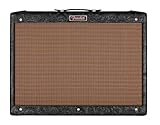
Overview: The Hot Rod Deluxe 30th Anniversary edition represents four decades of Fender’s flagship tube amplifier evolution. This 40-watt all-tube combo, powered by 2x6L6 power tubes and 3x12AX7 preamp tubes, delivers the genuine harmonic richness and dynamic response that digital amps emulate but rarely duplicate. The special black western tooled vinyl covering makes this a collectible piece.
What Makes It Stand Out: The modified preamp circuitry provides enhanced clarity and definition even at high gain settings, solving the muddiness found in earlier versions. The Celestion 12" G12M-65 Creamback speaker offers vintage British character that complements the American tube architecture beautifully. The improved spring reverb delivers studio-quality ambience without the splashiness of lesser circuits.
Value for Money: While commanding a premium price, this amp delivers professional-grade tone suitable for serious gigging musicians. Comparable boutique tube amps cost significantly more. The 30th Anniversary aesthetic upgrades and circuit improvements add collector value, making this a long-term investment rather than a disposable purchase.
Strengths and Weaknesses: Strengths include authentic tube tone, robust 40-watt output, premium Celestion speaker, improved reverb, and stunning anniversary cosmetics. Weaknesses include substantial weight, volume levels unsuitable for home practice, and premium pricing that exceeds beginner budgets.
Bottom Line: A definitive choice for gigging guitarists seeking that elusive tube magic. The Hot Rod Deluxe 30th Anniversary combines Fender’s legacy with modern refinements, justifying its price for serious tone chasers.
4. Flatsons FBA-10 Guitar Amp, 10W Mini Electric Guitar Amplifier with Clean/Drive Channel, 6H Working, USB-C Rechargeable, 3.5mm Headphone/AUX Jack, Wireless Portable Amp for Indoor Practice, Traveling

Overview: The Flatsons FBA-10 redefines portable guitar amplification with its battery-powered, wireless-enabled design. This 10-watt mini amp delivers up to 6 hours of playtime via USB-C charging, measuring just 152x75x99mm and weighing 580g. The full analog signal path promises natural tone despite its diminutive size, targeting mobile musicians and apartment dwellers who need silent practice solutions.
What Makes It Stand Out: Bluetooth 5.3 connectivity allows wireless audio streaming for jamming along with tracks, a rare feature in mini amps. The handcrafted two-tone woven grille provides distinctive vintage aesthetics while supposedly improving sound transmission. The combination of rechargeable power and wireless audio creates unprecedented practice flexibility for modern guitarists.
Value for Money: Positioned as a specialty portable solution, it competes with entry-level practice amps while adding battery power and Bluetooth—features typically found in higher-priced models. For travelers and silent practitioners, the convenience factor justifies any premium over basic desktop amps that require wall power.
Strengths and Weaknesses: Strengths include true portability, rechargeable battery, Bluetooth connectivity, headphone output, and charming design. The 10-watt output limits it to personal practice, while the Flatsons brand lacks Fender’s proven track record. Analog claims in a mini format may overstate actual tonal quality.
Bottom Line: An excellent travel companion for guitarists prioritizing portability over power. The FBA-10 excels as a silent practice solution, though tone purists should temper expectations for a palm-sized amplifier.
5. CXLWZ Electric Guitar Amp 20 Watt Amplifier Portable Amp with Headphone Input Gain Powe Including Professional Noise Reduction Cable (Black)

Overview: The CXLWZ 20-watt amplifier positions itself as a budget-conscious portable solution for practice and small performances. Weighing just 6.2 pounds with a convenient carrying handle, this black combo amp includes a professional noise reduction cable—an unusual accessory at this price point. The straightforward control layout features gain, bass, treble, and volume knobs alongside auxiliary and headphone inputs.
What Makes It Stand Out: The included 6.35mm noise-canceling shielded cable adds immediate value, typically a separate purchase. The amp’s rubber-padded edges and protective corners suggest durability considerations rarely seen in ultra-budget models. Its lightweight design combined with 20 watts of power creates a practical balance for mobile musicians.
Value for Money: Among the most affordable 20-watt amps available, CXLWZ competes directly with generic brands while offering slightly better build quality and that included cable. For beginners unwilling to invest in premium brands, it provides essential functionality at minimal cost, though long-term reliability remains unproven.
Strengths and Weaknesses: Strengths include low price, portability, simple controls, included accessories, and basic practice features. The unknown brand reputation, potentially inferior speaker quality, and lack of effects limit its appeal. Build quality may not match Fender standards despite protective features.
Bottom Line: A functional entry-level amp for absolute beginners on tight budgets. The CXLWZ delivers the basics adequately but represents a compromise between cost and quality. Consider this a temporary solution rather than a long-term investment.
6. BOSS Katana-50 Gen 3 Guitar Amplifier | Compact 50-Watt Combo Amp | Custom 12-Inch Speaker | Evolved Tube Logic Sound | 12 Amp Characters | Onboard BOSS Effects | Advanced Connectivity & More

Overview: The BOSS Katana-50 Gen 3 represents the latest evolution in BOSS’s acclaimed amplifier series, delivering 50 watts of stage-ready power through a custom 12-inch speaker. This third-generation model enhances the Tube Logic platform with improved sound, feel, and response that rivals genuine tube amplifiers while offering modern digital flexibility.
What Makes It Stand Out: The newly developed “Pushed” amp character joins five other characters, each with selectable variations for 12 distinct voices. Five independent effects sections—Booster, Mod, FX, Delay, and Reverb—provide professional-grade processing without external pedals. Advanced connectivity includes USB for direct recording and deep editing via BOSS Tone Studio.
Value for Money: Priced competitively against digital modeling amps and entry-level tube combos, the Katana-50 Gen 3 offers exceptional versatility. You’re getting a multi-effects processor, amp modeler, and gig-worthy amplifier in one package, saving hundreds compared to separate components while delivering tube-like response.
Strengths and Weaknesses: Pros include remarkable tonal flexibility, stage-appropriate volume, robust build quality, and studio-ready effects. The amp’s direct recording capabilities and seamless computer integration are significant advantages. Cons include complexity for beginners, substantial weight for transport, and potential overkill for bedroom-only players. Purists may still prefer genuine tubes.
Bottom Line: Ideal for gigging musicians seeking tube-like response with modern convenience. The Katana-50 Gen 3 delivers professional tones and effects that make it a worthwhile investment for serious players who need versatility and reliability.
7. Orange Amps 20 Watt Crush 20 RT (Black) Bundle with FPA-CTS10 TS Guitar Cable (10-Feet) (2 Items)

Overview: Orange’s Crush 20RT bundle delivers 20 watts of all-analog British tone through a custom 8-inch Voice of the World speaker, paired with a quality 10-foot instrument cable. This compact combo preserves Orange’s signature sound while adding modern practice features for home and studio use.
What Makes It Stand Out: The all-analog signal path maintains the lively feel and responsiveness Orange is famous for. The CabSim headphone output emulates a mic’d 4x12 cabinet for silent practice or direct recording. An integrated chromatic tuner and digital spring reverb add practical functionality without compromising the pure analog core tone that players expect.
Value for Money: Orange commands a brand premium, but this bundle offsets cost by including a necessary accessory. Compared to digital practice amps, the analog circuitry offers superior touch sensitivity. It’s fairly priced for the Orange pedigree, though wattage per dollar isn’t class-leading compared to some competitors.
Strengths and Weaknesses: Pros include authentic Orange tone, robust analog design, convenient tuner, versatile CabSim output, and quality reverb. The 8-inch speaker delivers surprising punch but limits low-end depth. Cons include insufficient power for gigs without PA support, no effects loop, and single-channel design requiring guitar volume manipulation for clean-to-dirty transitions.
Bottom Line: Perfect for bedroom practice and small jam sessions. The Crush 20RT offers genuine Orange character and analog feel that digital competitors can’t match, making it ideal for tone purists seeking quality on a budget.
8. Fender Frontman 10G Guitar Amp, 10 Watts, with 2-Year Warranty, 6 Inch Fender Special Design Speaker, 5.75Dx10.25Wx11H Inches

Overview: The Fender Frontman 10G is a straightforward 10-watt practice amplifier built for beginners and casual players. Featuring a 6-inch Fender Special Design speaker and simple controls, it delivers essential Fender cleans and overdriven tones in a compact, bedroom-friendly package that prioritizes reliability over features.
What Makes It Stand Out: Fender’s two-year warranty demonstrates uncommon confidence in build quality at this price point. The closed-back design enhances bass response beyond typical mini amps, while the intuitive control set—gain, overdrive switch, volume, treble, and bass—keeps operation simple for novices learning their first tones.
Value for Money: Among the most affordable amplifiers from a major brand, it provides reliable Fender tone and solid construction where competitors cut corners. While lacking effects and advanced features, it focuses resources on core amplification and durability, with the warranty adding significant long-term value.
Strengths and Weaknesses: Pros include rock-solid reliability, recognizable Fender voicing, compact footprint, and excellent warranty coverage. The closed-back design yields fuller tone. Cons are the limited 6-inch speaker’s constrained frequency range, lack of effects, no headphone output, and minimal clean headroom. It’s unsuitable for performances.
Bottom Line: An ideal first amplifier for new guitarists. The Frontman 10G trades features for reliability and brand pedigree, making it a smart choice for beginners who want a trustworthy practice companion without unnecessary complexity or expense.
9. LEKATO Mini Electric Guitar Amp 5W, Portable Guitar Amp Bluetooth with Built-in 4 Effects, Clean Distortion Overdrive Reverb, Rechargeable Small Amplifier for Practice, Black (JA-05G)

Overview: The LEKATO JA-05G is an ultra-portable 5-watt amplifier designed for guitarists on the move. This rechargeable mini amp features Bluetooth connectivity and four built-in effects, creating a self-contained practice solution that fits in a backpack and hangs directly from your guitar.
What Makes It Stand Out: The direct plug-in design with a 6.35mm connector eliminates cable clutter entirely. Six hours of battery life enable outdoor playing, while Bluetooth audio lets you jam along with backing tracks wirelessly. Four essential effects—clean, distortion, overdrive, and reverb—cover core practice tones without pedals.
Value for Money: Extremely affordable, this mini amp costs less than a single effects pedal. For travelers, apartment dwellers, or late-night practice, it delivers unmatched features at this price point. It’s not competing with serious amplifiers but rather replacing headphone practice with actual amplifier feel.
Strengths and Weaknesses: Pros include unbeatable portability, wireless Bluetooth streaming, rechargeable battery, direct plug convenience, and surprising effect variety. The 5-watt output suffices for personal practice. Cons involve limited volume, thin tone from the small speaker, questionable long-term durability, and potential Bluetooth latency. Sound quality can’t match full-size amps.
Bottom Line: A niche product that excels at its intended purpose. Perfect for travelers and silent practice, the LEKATO mini amp is a fun, functional gadget rather than a primary amplifier—ideal as a secondary practice tool for guitarists who need portability above all else.
10. Fender Frontman 10G Guitar Combo Amplifier - Black Bundle with Cable and Austin Bazaar Exclusive 12-Pack Picks

Overview: This Fender Frontman 10G bundle packages the classic 10-watt practice amplifier with essential accessories—a quality instrument cable and a 12-pack of picks. It delivers the same reliable Fender tone as the standalone model while providing everything a beginner needs to start playing immediately without additional purchases.
What Makes It Stand Out: Austin Bazaar’s bundle eliminates the hassle of purchasing accessories separately. The included picks and cable represent genuine added value, while the amp maintains Fender’s straightforward design with clean and overdrive channels, closed-back cabinet for enhanced bass, and intuitive controls that new players can master quickly.
Value for Money: The bundle offers measurable savings compared to buying components individually. For first-time buyers, this convenience factor is significant. The Frontman 10G already represents solid entry-level value; adding accessories makes it an even smarter purchase for those starting from scratch with no existing gear.
Strengths and Weaknesses: Pros include complete out-of-box readiness, Fender reliability, compact size, and the same two-year warranty as the standalone unit. The closed-back design improves low-end response. Cons mirror the standard model: limited 6-inch speaker, no built-in effects, minimal headroom, and no auxiliary input. It’s strictly a practice tool, not a performance amp.
Bottom Line: The perfect starter package for absolute beginners. This bundle removes all purchasing friction, delivering a dependable practice amplifier plus necessary accessories at a price that’s hard to beat. An excellent gift option for new guitarists.
What Exactly Is a Combo Amplifier?
A combo amplifier is the Swiss Army knife of the guitar world—it’s a self-contained unit where the amplifier circuitry and speaker are housed in the same cabinet. Unlike stack systems that separate the amp head from the speaker cabinet, combos offer plug-and-play simplicity that beginners absolutely need. No complicated impedance matching, no extra cables to forget, no herniated discs from lugging two separate pieces of gear up a flight of stairs.
For under $300, you’re looking at compact combos that typically range from 5 to 50 watts, with speaker sizes between 6.5 and 12 inches. These aren’t compromise devices—they’re purpose-built tools designed for bedroom practice, jam sessions, and even small gigs. The integration of amp and speaker means manufacturers can voice the entire system as one cohesive unit, often resulting in better tone at lower price points than comparable separate components.
Why Budget Amps Are Perfect for Beginners
The dirty secret of the guitar industry? Expensive gear won’t make you play better. A $300 combo amp offers something far more valuable than boutique capacitors or hand-wired circuits: freedom to experiment without financial anxiety. When you’re learning, you need an amp that encourages twisting knobs, exploring tones, and yes, even making terrible noises as you discover your voice.
Budget amplifiers strip away the intimidation factor. They’re designed with modern features like headphone outputs for silent practice, auxiliary inputs for jamming along with tracks, and simplified control layouts that don’t require an electrical engineering degree to understand. Many include built-in effects, letting you explore reverb, delay, and overdrive without dropping another $200 on pedals. This all-in-one approach means you can spend more time playing and less time GASing (Gear Acquisition Syndrome) over equipment you don’t yet need.
Understanding Amplifier Types: Solid-State vs. Tube vs. Modeling
The Solid-State Workhorse
Solid-state amplifiers use transistor circuits to amplify your guitar signal, and they’ve come a long way since the harsh, brittle tones of decades past. Modern solid-state designs deliver crystal-clear cleans, surprisingly organic overdrive, and bulletproof reliability. For beginners, the key advantage is consistency—they sound the same every time you flip the switch, require virtually no maintenance, and weigh significantly less than their tube counterparts. Under $300, you’ll find some genuinely impressive solid-state combos that could easily serve as your only amp for years.
The Tube Amp Dream (and Reality Check)
Here’s where we need to have an honest conversation. True tube amplifiers under $300 are either vintage finds requiring TLC or newer models that cut serious corners. While tubes offer that magical, responsive breakup and harmonic complexity, they also demand maintenance—tube replacement every 1-2 years, careful handling, and warm-up time. For a beginner, that $250 tube amp might seem like a steal until you’re dropping $80 on a new set of power tubes six months in. If you’re dead-set on tubes, consider stretching your budget or looking at hybrid options, but don’t sacrifice reliability for mojo you might not even appreciate yet.
The Digital Modeling Revolution
Modeling amplifiers are the ultimate cheat code for beginners. Using digital signal processing (DSP), these amps emulate the circuits of classic tube amps, cabinets, and effects with startling accuracy. A $200 modeling amp might give you 20+ amp models spanning vintage Fender cleans to modern Mesa high-gain. This isn’t just convenience—it’s an education. You can instantly A/B compare how a Vox AC30-style circuit responds versus a Marshall Plexi, training your ear to recognize tonal characteristics. The downside? Some models sound slightly “digital” at extreme settings, but for practice and learning, the versatility is unbeatable.
Wattage: How Much Power Do You Really Need?
Wattage is the most misunderstood spec in amplifier shopping. More watts don’t automatically mean better tone—they mean more clean headroom before distortion and more volume. For beginners, the key is matching wattage to your actual use case, not hypothetical future stadium gigs.
Bedroom Practice (5-20 Watts)
If you’re primarily practicing at home, a 5-20 watt amp is your sweet spot. These amps reach their sweet spot at conversational volumes, letting you push them into natural overdrive without receiving eviction notices. Many modern low-wattage amps include power scaling, letting you drop from 20 watts to 5 watts or even 1 watt for late-night practice. Don’t dismiss tiny 5-watt amps—they’re tone machines that reward you with cranked-amp satisfaction at apartment-friendly levels.
Jamming With Friends (20-40 Watts)
Planning to jam with a drummer? You’ll need enough clean headroom to cut through acoustic drums without turning your tone to mush. A 20-40 watt solid-state or modeling amp will hang with a moderate drummer, especially if you mic it through a PA. Tube amps are naturally louder per watt, so a 15-watt tube combo could work, but remember our budget reality check. For most beginners, a 30-watt solid-state amp offers the perfect balance of volume, tone, and portability.
Small Gigs (40+ Watts)
While a $300 budget can land you a 50-watt combo, ask yourself if you’re actually gigging or just planning to “maybe gig someday.” That extra wattage often means a larger, heavier amp with features you won’t use for months or years. If you do need gigging power, focus on amps with direct outputs for PA systems—your 20-watt amp with a good DI can easily handle a coffee shop gig when run through the house system.
Speaker Size and Its Impact on Your Sound
Speaker size shapes your tone as much as the amp circuit itself. Budget combos typically offer three main options, each with distinct personalities.
8-inch speakers, found in ultra-compact practice amps, deliver tight, focused tones with surprising clarity. They lack the low-end thump of larger speakers, but for bedroom practice, that can be a feature rather than a bug—less bass means fewer noise complaints. These little speakers also emphasize midrange, helping you hear your playing articulation clearly, which is crucial for development.
10-inch speakers strike perhaps the best balance for beginners. They provide enough low-end to sound “full” without getting flabby, maintain clarity when overdriven, and keep the amp’s overall weight manageable. Many classic practice amps use 10-inch speakers because they respond well to both clean and dirty tones.
12-inch speakers are the industry standard for a reason—they move serious air, produce rich, complex overtones, and handle high volumes without breaking up unnaturally. In the sub-$300 range, a 12-inch speaker often indicates a manufacturer prioritized tone over portability. These amps will be heavier and larger, but that speaker can make a basic amp sound surprisingly professional.
Essential Features Every Beginner Should Look For
Clean and Overdrive Channels
At minimum, your amp should offer both clean and overdrive channels. The clean channel is your sonic blank canvas—essential for learning dynamics, practicing chords, and using external pedals. The overdrive channel introduces natural amp distortion, teaching you how gain structures affect your playing feel. Look for amps with footswitch capability, even if you don’t buy the footswitch immediately. This future-proofs your rig for when you start performing.
EQ Controls
A three-band EQ (bass, middle, treble) is non-negotiable. While some budget amps offer simple “tone” knobs, these are training wheels you don’t need. Learning to shape your tone with discrete EQ controls is fundamental to developing your ear. The midrange control is particularly crucial—it’s where your guitar lives in a mix, and understanding how to dial it in separates bedroom players from stage-ready musicians.
Headphone Jacks for Silent Practice
This feature alone can justify a purchase. A proper headphone output with cabinet simulation lets you practice at 2 AM without sacrificing tone. More importantly, it lets you hear your playing with studio-like clarity, revealing sloppy technique that gets masked by room acoustics. Make sure the headphone jack is a standard 1/4-inch output—some ultra-cheap amps use 3.5mm jacks that feel flimsy and limit your headphone options.
Auxiliary Inputs
An aux input for backing tracks is like having a band in your bedroom. This 1/8-inch or 1/4-inch jack lets you plug in your phone or music player, running practice tracks through the amp’s speaker while you play along. It’s the difference between mechanical scale practice and musical development. Some amps even blend the aux signal with your guitar, letting you control the balance.
Built-in Effects: Convenience vs. Quality
Built-in effects are the ultimate double-edged sword. On one hand, a $250 amp with reverb, delay, and modulation effects saves you hundreds in pedals. On the other, cheap digital effects can sound sterile and uninspiring. The key is prioritizing quality over quantity.
Reverb is the most essential built-in effect. A good spring or hall reverb adds dimension to your tone and makes practicing more enjoyable. Delay is next on the list—it teaches you timing and adds professional sheen to your sound. Modulation effects (chorus, phaser, flanger) are nice-to-haves but rarely sound great in budget amps.
Be wary of amps boasting “50 effects!” Most will be variations on a theme you’ll never use. Instead, look for amps with 3-5 high-quality, adjustable effects. The ability to tweak parameters (like delay time or reverb decay) is far more valuable than a long list of presets. And remember: you can always add pedals later, but you can’t fix a bad core amp tone with effects.
Connectivity Options for Modern Players
Your amp isn’t just a speaker—it’s your interface to the wider world of music creation. Modern budget amps should include USB connectivity for direct recording into your computer. This bypasses the need for microphones and audio interfaces, letting you capture your playing with studio-quality amp simulations. Look for amps that function as class-compliant USB devices, meaning no driver headaches.
Bluetooth connectivity is increasingly common, letting you stream backing tracks wirelessly. While convenient, don’t let Bluetooth be a dealbreaker—a simple aux cable is more reliable and introduces zero latency. Some amps also include line outputs for direct connection to PA systems or recording consoles. This feature essentially gives you two amps in one: a practice combo and a direct recording solution.
Consider amps with effects loops if you plan to use external pedals seriously. An effects loop lets you place modulation and time-based effects after the preamp distortion, resulting in cleaner, more professional tones. While not essential for absolute beginners, it’s a feature you’ll appreciate within your first year of playing.
Portability and Size Considerations
That 50-watt, 12-inch combo might sound glorious, but if it’s collecting dust because you dread moving it, it’s worthless. Portability directly correlates with practice frequency. A 15-pound amp you can grab with one hand will get played ten times more than a 40-pound beast that requires a hand truck.
Consider your living situation. Apartment dwellers should prioritize smaller combos that fit in a closet. If you’re a student lugging gear between home and dorm, a compact 10-inch combo with a sturdy handle is worth its weight in gold. Many modern budget amps include clever design features like built-in cable storage, recessed handles, and even battery power options for true portability.
The “bedroom amp” category (typically under 20 watts with 8-10 inch speakers) has matured dramatically. These aren’t toys—they’re serious practice tools that happen to be small. Don’t let size snobbery convince you that bigger is always better. Your back and your neighbors will thank you.
Build Quality and Durability on a Budget
Cheap doesn’t have to mean flimsy. While you’re not getting birch plywood cabinets and metal chassis at this price point, you can still find amps built to survive real use. The cabinet material matters less than the construction—look for glued and screwed joints rather than stapled particle board. Press the cabinet sides; they should feel solid, not hollow.
The control knobs should turn smoothly without wobbling, indicating quality potentiometers. Input jacks should feel tight when you plug in your cable—loose jacks are the first failure point in budget electronics. Flip the amp over and examine the corners; plastic corner protectors suggest the manufacturer expects it to get bumped around.
Weight is actually a good indicator of build quality here. A surprisingly light 12-inch combo probably uses a cheap particle board cabinet and a lightweight speaker magnet. That 10-pound 8-inch practice amp? It might be built like a tank. Trust your hands as much as your ears when evaluating construction.
Brand Reputation and Community Support
In the sub-$300 market, brand reputation matters more than in any other price bracket. Established brands have decades of manufacturing experience, meaning they’ve already made (and learned from) the mistakes that plague no-name imports. They also offer better customer support, firmware updates for modeling amps, and robust online communities.
A strong user community is an underrated asset. When you can’t figure out why your amp is humming or how to dial in a decent metal tone, a thriving forum or Facebook group can be more valuable than the manual. Look for brands with active social media presence and responsive customer service—send them a question before you buy and see how quickly they respond.
That said, don’t dismiss newer brands entirely. Some boutique-style companies are disrupting the budget market with innovative designs. Read reviews from multiple sources, paying attention to long-term reliability reports rather than initial impressions. An amp that sounds amazing for a week but dies after three months is no bargain.
The Importance of Trying Before Buying
Specs and reviews can’t tell you how an amp feels under your fingers. That “perfect” amp on paper might sound harsh with your specific guitar’s pickups, while a “mediocre” amp could come alive with your playing style. If possible, visit a guitar store with your own guitar and spend at least 30 minutes with each candidate.
Play at different volumes. An amp that sounds great cranked might be fizzy and uninspiring at bedroom levels, where you’ll spend 90% of your time. Test every feature: does the footswitch lag? Do the effects pop when engaged? Is the headphone output noisy? Bring a backing track on your phone to test the aux input quality.
If in-store testing isn’t possible, buy from retailers with generous return policies. A 30-day return window essentially gives you a free trial. Use this time to push the amp hard—play it daily, test every feature, and don’t be afraid to return it if something feels off. Your first amp should inspire you to play more, not frustrate you into silence.
Common Beginner Mistakes to Avoid
Mistake #1: Buying Too Much Amp
It’s tempting to think, “I’ll grow into it,” but a 100-watt amp doesn’t make you gig-ready—it makes you unpopular with housemates. Buy for your current situation, not a hypothetical future. You can always sell and upgrade when you actually need more power.
Mistake #2: Ignoring the Weight
That 45-pound amp seems manageable until you’re carrying it up three flights of stairs to your practice space every week. Check the actual weight specs, not just the “portable” marketing copy. Anything over 25 pounds should have casters or be something you can keep semi-permanently in one location.
Mistake #3: Overvaluing Wattage
A 50-watt amp isn’t “better” than a 20-watt amp—it’s just louder. Focus on tone and features first. Many professional players use 15-watt amps for recording and small gigs because they hit their sweet spot at usable volumes.
Mistake #4: Dismissing Modeling Technology
“Digital” isn’t a dirty word. Modern modeling amps offer tones that would cost thousands to replicate with individual pedals and tube amps. Don’t let vintage purism rob you of a versatile learning tool. Your ears (and wallet) will thank you.
Getting the Most Out of Your Budget Amp
Your new amp is a tool, and like any tool, its performance depends on how you use it. Start by learning the interaction between your guitar’s volume knob and the amp’s gain stage. Rolling back your guitar volume on an overdriven amp cleans up your tone dramatically—it’s like having two channels at your fingertips.
Experiment with speaker placement. Putting your amp on a chair or amp stand rather than the floor projects sound better and reduces bass buildup. Angling it toward your ears (rather than your knees) reveals nuances in your playing that get lost in room reflections.
Use the EQ controls actively. Spend a practice session focusing only on the midrange knob, learning how it affects your tone in a mix. Then do the same with bass and treble. This ear training is more valuable than any effect or feature. Record yourself with your phone and listen back—what sounds good in the room might be too boomy or harsh when recorded.
Future-Proofing Your Purchase
Think beyond your first six months of playing. Does the amp have an extension speaker output? This lets you add a larger cabinet later for gigs. Is the firmware updatable? For modeling amps, this means new amp models and effects down the line. Can you turn off the cabinet simulation on the line out? This matters when you start recording seriously.
Consider the pedal ecosystem. While built-in effects are great, you’ll eventually want to explore pedals. An amp with a good effects loop and clean pedal platform will serve you for years. Test the amp’s clean channel with an overdrive pedal if possible—even a cheap Tube Screamer clone will reveal whether the amp takes pedals well.
The ultimate future-proofing is resale value. Established brands hold their value better. Buying a used name-brand amp often means you can sell it for nearly what you paid, effectively making it a free rental while you learn what you really want.
Where to Shop for the Best Deals
Guitar Center and Sweetwater offer price matching and excellent return policies, making them safe bets for online purchases. Sweetwater’s customer service includes post-purchase tech support, which is invaluable for beginners. Guitar Center’s used section can be a goldmine—floor models and returned amps often sell for 20-30% off with full warranty.
Don’t overlook Reverb.com for used gear. Many sellers are music stores liquidating inventory, offering near-new amps with return policies. The key is filtering for “mint” or “excellent” condition and buying from sellers with 100+ positive reviews. You can often score a $400 amp for under $300.
Local music stores deserve your business when possible. They might not match online prices, but the ability to test multiple amps side-by-side and build a relationship for future repairs is worth the slight premium. Plus, many will throw in free cables or setup services.
Making Your Final Decision
After researching specs, reading reviews, and hopefully testing candidates, trust your gut. The “best” amp is the one that makes you want to play more. If an amp checks every technical box but feels uninspiring, keep looking. If a simpler amp makes you smile when you hit a chord, that’s your winner.
Set a firm budget but allow a 10% flexibility for the right amp. That $280 amp might be perfect, but the $320 model with USB recording could save you $100 on an interface later. Consider the total cost of ownership: will you need to buy pedals to get the tones you want? Does it come with a footswitch, or is that a separate $40 purchase?
Finally, remember that your first amp is a learning tool, not a lifetime commitment. It should serve you for 2-3 years while you develop your playing and tonal preferences. By then, you’ll know exactly what you need in your forever amp. The goal isn’t perfection—it’s progress.
Frequently Asked Questions
Can I really gig with an amp that costs less than $300?
Absolutely, but with caveats. A 30-40 watt solid-state or modeling amp with a line output can handle small venues when mic’d or run direct to the PA. Focus on amps with good direct outputs and reliable clean tones. For coffee shops, small bars, and rehearsal spaces, a budget combo is entirely gig-worthy. Just don’t expect to fill a 500-seat venue unmic’d.
What’s the real difference between a “practice amp” and a “real amp”?
Marketing jargon mostly. Historically, practice amps were low-quality toys, but modern budget combos are genuine musical instruments. The distinction now is more about features: practice amps prioritize headphone outputs, small size, and lower wattage. A “real amp” might have more headroom and better projection. In the sub-$300 range, you’ll find plenty of amps that blur this line entirely.
Do I need an effects loop as a beginner?
Not immediately, but it’s a feature you’ll want within a year. An effects loop lets you place delay and modulation effects after the preamp distortion, which sounds more professional than running everything into the front. If you’re choosing between two similar amps and one has an effects loop, that’s the better long-term investment. That said, many classic recordings were made without effects loops, so don’t consider it a dealbreaker.
How reliable are cheap amplifiers? Will it break in six months?
Modern budget amps from reputable brands are remarkably reliable. Solid-state and modeling amps have no tubes to wear out and fewer moving parts than vintage gear. The key is buying from established manufacturers with good warranties. Most offer at least a one-year warranty, and some extend to three or five years. Read user reviews focusing on long-term reliability, not just first impressions. Avoid no-name Amazon brands with suspiciously low prices.
Should I prioritize a 1x12 or 2x12 speaker configuration?
At this budget, stick with 1x12. A cheap 2x12 combo usually means two cheap speakers instead of one decent one, resulting in muddier tone and unnecessary weight. A quality 1x12 with a good speaker will sound better and be more practical. The only exception is if you find a used 2x12 from a premium brand at a steep discount, but that’s rare under $300.
Can I record directly from these amps into my computer?
Many modern budget amps include USB audio interfaces that make direct recording simple. For amps without USB, you can use the headphone/line out into a separate audio interface. The quality varies—modeling amps with USB generally sound better direct than solid-state amps using their headphone out. If recording is a priority, prioritize amps with USB and positive reviews of their direct tone.
How long will a budget amp last before I need to upgrade?
A good budget amp should serve you for 2-5 years, depending on your progress. If you’re practicing daily and gigging occasionally, you might outgrow it in 2-3 years as your ear develops. If you’re a casual player, it could be your only amp for a decade. The key is buying an amp that grows with you—one that takes pedals well, has useful connectivity, and doesn’t limit your exploration.
Is buying used a better way to get more amp for my money?
Often, yes. A used $400 amp selling for $250 will typically outperform a new $250 amp. The trick is buying smart: stick to reputable brands, inspect for damage, and test thoroughly. Avoid amps with scratchy pots, loose jacks, or obvious modifications. Buying used from Guitar Center or Sweetwater gives you return protection, while Reverb offers buyer protection. Skip Craigslist unless you know how to test amps properly.
What’s more important: spending money on a better amp or a better guitar?
For beginners, a decent guitar and decent amp trump an amazing guitar through a terrible amp. A good amp makes a cheap guitar sound acceptable, but a bad amp makes any guitar sound lifeless. Split your budget evenly—if you have $600 total, spend $300 on each. An amp that inspires you to play is more valuable than a fancy guitar that sounds bad through a poor amplifier.
Can I upgrade or modify my budget amp later to make it sound better?
Some upgrades are worthwhile, others aren’t. Swapping the speaker can dramatically improve tone—many budget combos come with mediocre speakers, and a $50-100 speaker upgrade can give you 90% of a premium amp’s sound. Tubes aren’t an option on solid-state amps. Firmware updates can add features to modeling amps. However, don’t buy an amp planning to “fix” it with mods. Buy the best complete package you can afford.
See Also
- 10 Best Combo Guitar Amplifiers Under $500 for Beginners
- How to Choose the 10 Best Combo Guitar Amplifiers for Open-Mic Nights in 2026
- 10 Budget Tube Guitar Amplifiers That Rival Boutique Tone Under $800
- 10 Best 1x12 Combo Guitar Amplifiers for Club Gigs in 2026
- 10 Best Combo Guitar Amplifiers for Bedroom Practice in 2026