Table of Contents
There’s something magical about the shimmering, chorus-like wash of a properly tuned 12-string guitar cutting through a live mix. That wall of sound can transform an ordinary chord progression into a sonic landscape, but anyone who’s toured with a 12-string knows the dark side: mysterious tuning drift mid-song, unexpected string failures during quiet passages, and that heart-stopping moment when your B-string decides to snap right before your big solo. The difference between a transcendent live performance and a technical nightmare often boils down to one overlooked detail—your choice of strings.
As we look toward 2026’s touring season, the string market continues evolving with new materials, manufacturing processes, and reliability features designed specifically for the demands of modern stage work. Whether you’re an acoustic troubadour playing 200 dates a year or an electric player adding octave sparkle to your band’s sound, understanding what makes a 12-string set truly roadworthy isn’t just helpful—it’s essential for your sanity and your reputation. Let’s dive deep into the factors that separate dependable strings from the ones that’ll leave you fumbling for your tuner between every song.
Top 10 12-String Guitar Strings
Detailed Product Reviews
1. D’Addario Acoustic Guitar Strings, Phosphor Bronze, EJ38, Light Gauge 10-47, 12-String Set, Pack of 1

Overview: The D’Addario EJ38 represents the gold standard for 12-string acoustic guitarists seeking a light, playable gauge. This 10-47 set features phosphor bronze wrap wire over a high-carbon steel core, delivering the quintessential D’Addario tone that has defined countless recordings. Precision wound in New York, these strings offer a perfect entry point for players transitioning to 12-string instruments or those preferring lighter tension.
What Makes It Stand Out: As the pioneers of phosphor bronze strings in the 1970s, D’Addario brings unmatched expertise to this set. The corrosion-resistant construction ensures extended playability, while the hexagonal core provides superior tuning stability. The recyclable VCI bag includes a Players Circle code, rewarding loyal customers—a unique touch competitors rarely match. This set achieves a rare balance between vintage warmth and modern consistency.
Value for Money: Priced in the mid-range for premium strings, the EJ38 offers exceptional value. USA manufacturing quality control means fewer defective sets than budget alternatives. While slightly more expensive than generic brands, the tone consistency and longevity justify the investment. Players save money long-term through reduced replacement frequency and reliable performance gig after gig.
Strengths and Weaknesses: Strengths include warm, balanced tone suitable for all genres, excellent intonation, and break-in speed. The light gauge reduces finger fatigue on 12-string necks. Weaknesses involve faster oxidation than coated strings, and some players may desire more high-end sparkle for cutting through dense mixes.
Bottom Line: The EJ38 is an ideal choice for discerning 12-string players wanting authentic phosphor bronze tone without excessive tension. It excels in folk, rock, and singer-songwriter contexts where warmth and clarity coexist.
2. Ernie Ball Earthwood 12-String Light Phosphor Bronze Acoustic Guitar Strings, 9-46 Gauge (P02153)

Overview: Ernie Ball’s Earthwood P02153 set brings their legendary string-making expertise to 12-string acoustics with an ultra-light 9-46 phosphor bronze configuration. Designed for maximum playability, these strings reduce the notoriously high tension of 12-string guitars, making them ideal for extended playing sessions and players with lighter touch preferences. The California-made strings promise the warm, rich tone signature to the Earthwood series.
What Makes It Stand Out: The exceptionally light gauge—particularly the 9-gauge high E pairs—sets this apart from competitors, offering unprecedented ease of fretting and bending. Ernie Ball’s Element Shield Packaging actively extends string life by creating a protective environment that maintains factory freshness. The hex-shaped high-carbon steel core ensures robust tuning stability despite the lighter gauges, while the phosphor bronze winding delivers that coveted Earthwood warmth.
Value for Money: Positioned competitively within the premium string market, these offer excellent value for players prioritizing comfort. The extended freshness from Element Shield packaging means less waste from pre-corroded strings. While not the cheapest option, the playability benefits and quality materials justify the price, especially for those finding standard 12-string gauges physically demanding.
Strengths and Weaknesses: Strengths include superior playability, reduced finger strain, bright projection, and excellent out-of-the-box freshness. The lighter tension can improve action on older guitars. Weaknesses involve potentially less volume and fullness compared to medium gauges, and faster breakage risk for aggressive strummers. The tone may lack the depth some genres require.
Bottom Line: Perfect for beginners, fingerstyle players, or those with hand strength concerns. These strings make 12-string guitars more accessible without sacrificing tonal quality, though heavy strummers may prefer thicker gauges.
3. Ernie Ball Earthwood 12-String Medium 80/20 Bronze Acoustic Guitar Strings, 11-52 Gauge (P02012)
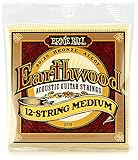
Overview: The Ernie Ball P02012 set delivers medium-gauge 80/20 bronze power to 12-string acoustics, offering a robust 11-52 tension for players seeking maximum projection and fullness. These strings feature the classic 80/20 copper-zinc alloy wrapped around a high-carbon steel core, producing the bright, articulate tone that defined American folk and bluegrass. Made in California, they represent Ernie Ball’s commitment to premium materials and craftsmanship.
What Makes It Stand Out: The medium gauge provides exceptional dynamic range and volume, perfect for unplugged performances where projection matters. Unlike phosphor bronze, the 80/20 alloy delivers a distinctly bright, crisp character with enhanced treble response that cuts through ensemble playing. The Element Shield Packaging ensures these strings arrive factory-fresh, while the precise winding tolerances maintain consistent intonation across all twelve strings—a critical factor for tuning stability.
Value for Money: These strings command a fair premium price but deliver proportional performance benefits. The medium gauge’s increased metal mass translates to longer playable life before tone degradation. For performers needing maximum acoustic presence without amplification, the investment pays dividends in projection. Compared to coated alternatives, they offer superior initial brightness at a lower cost point.
Strengths and Weaknesses: Strengths include outstanding volume and projection, bright articulate tone ideal for lead playing, and enhanced durability from thicker gauges. The packaging preserves freshness exceptionally well. Weaknesses involve significantly higher tension requiring stronger hands and well-set-up guitars. The bright tone can sound harsh on some instruments, and they may lose brilliance faster than phosphor bronze alternatives.
Bottom Line: Ideal for aggressive strummers, flatpickers, and performers needing maximum acoustic power. These strings excel in bluegrass and country contexts but require a quality guitar and player stamina to maximize their potential.
4. Elixir Strings, Acoustic Guitar Strings, 80/20 Bronze with NANOWEB Technology, Longest-Lasting Bright and Focused Tone For Life with Comfortable Feel, 12 String Set, Light 10-47

Overview: Elixir’s 12-string light set revolutionizes string longevity through proprietary NANOWEB coating technology, delivering the brightest-lasting tone in the industry. These 10-47 gauge strings combine traditional 80/20 bronze wrap wire with an ultra-thin polymer coating that protects against corrosion, sweat, and humidity. Manufactured in the USA, they target players frustrated by frequent string changes and tone degradation, promising consistent performance for months rather than weeks.
What Makes It Stand Out: The NANOWEB coating is the definitive feature, creating an impermeable barrier that preserves that fresh-string sparkle far longer than uncoated competitors. Unlike thicker polyweb coatings, NANOWEB maintains a natural, smooth feel while providing comprehensive protection to the entire string surface. This technology specifically addresses the Achilles’ heel of 12-string guitars—the rapid oxidation of multiple unplayed strings. The coating also reduces finger squeak, making these ideal for recording applications.
Value for Money: While priced 50-100% higher than standard strings, the extended lifespan makes them economically superior for regular players. A single set can outlast 3-4 uncoated sets, translating to lower annual string costs. For working musicians, the reliability and reduced stage-time string changes offer invaluable peace of mind. The premium is justified if you value consistency over initial cost.
Strengths and Weaknesses: Strengths include unparalleled tone longevity, excellent corrosion resistance, reduced finger noise, and stable intonation over time. The light gauge maintains playability. Weaknesses involve a slightly different feel that purists may reject, and the coating can dull initial brightness compared to fresh uncoated strings. The environmental impact of polymer coating may concern eco-conscious players.
Bottom Line: The ultimate choice for gigging musicians, recording artists, and players in humid climates. If you prioritize longevity and consistent tone over traditional feel, these strings deliver unmatched performance and long-term value.
5. D’Addario Set Acoustic Guitar 80/20 Lite 12Str (EJ36)

Overview: D’Addario’s EJ36 set revives the historic 80/20 bronze formula pioneered in the 1930s, offering 12-string players a light 10-47 gauge with bold, bright character. These strings feature the same precision winding and high-carbon steel core as D’Addario’s phosphor bronze offerings, but with the classic copper-zinc alloy that delivers a more pronounced treble response. Made in New York to exacting specifications, they appeal to traditionalists and modern players seeking articulation.
What Makes It Stand Out: The heritage connection to John D’Angelico provides authentic vintage credibility unmatched by competitors. The 80/20 alloy produces a distinctively crisp, projecting tone that excels in strummed rhythms and single-note lines requiring definition. Like other D’Addario strings, they include Players Circle points and use recyclable VCI packaging. The precision manufacturing ensures each of the twelve strings maintains consistent tension relationships, crucial for 12-string tuning stability.
Value for Money: Positioned identically to the EJ38 phosphor bronze set, these offer excellent value for players wanting classic bronze tone. USA construction quality means reliable performance with minimal defects. While they may require more frequent changes than coated strings, the lower initial cost balances this. For players who prefer the 80/20 sound, there’s no better value in this price tier.
Strengths and Weaknesses: Strengths include brilliant, articulate tone with exceptional projection, fast break-in period, and consistent quality. The light gauge facilitates playability. Weaknesses involve faster tarnishing than phosphor bronze, a potentially harsh top-end on bright guitars, and less midrange warmth for fingerstyle. They demand more frequent cleaning to maintain tone.
Bottom Line: Perfect for strummers, bluegrass players, and those seeking vintage-inspired clarity. Choose these for rhythmic drive and articulation, but consider phosphor bronze if warmth and longevity are priorities. A classic formula executed with modern precision.
6. Ernie Ball 12-String Slinky Nickel Wound Electric Guitar Strings, 8-40 Gauge (P02230)

Overview: Ernie Ball’s P02230 delivers their iconic Slinky feel to the 12-string electric realm. These nickel-plated steel strings wrap around hex-shaped steel cores, producing bright, articulate tones perfect for jangly electric 12-string chime. The ultra-light 8-40 gauge reduces finger fatigue while maintaining enough tension for proper intonation.
What Makes It Stand Out: The signature Slinky feel translates beautifully to 12-string applications, offering exceptional bendability and comfort. Ernie Ball’s Element Shield Packaging genuinely preserves freshness, preventing corrosion before installation—a real advantage over conventional packaging. The California manufacturing ensures quality control, while the specific 8-40 gauge caters to players preferring lighter tension without sacrificing tone.
Value for Money: Priced competitively with other premium uncoated strings, these offer excellent value through consistency and longevity. While coated strings last longer, the Slinky’s quality materials and manufacturing mean fewer premature breakages. For players who prefer changing strings regularly for optimal tone, these represent a smart mid-range investment.
Strengths and Weaknesses: Pros: Signature Slinky playability; bright, balanced tone; excellent packaging; reliable intonation; made in USA. Cons: 8-40 gauge may feel too light for rhythm players; uncoated steel requires more frequent changes than coated alternatives; nickel tone lacks the warmth of pure nickel.
Bottom Line: Ideal for lead players and those with lighter touch seeking that classic Slinky responsiveness on their 12-string electric. The packaging and consistency justify the price, though heavy strummers might prefer heavier gauges.
7. D’Addario Electric Guitar Strings, XL Nickel, EXL150, Regular Light 10-46, 12-String Set, Pack of 1

Overview: D’Addario’s EXL150 represents their flagship XL Nickel formula adapted for 12-string electrics. The regular light 10-46 gauge strikes a versatile balance, delivering the bright, articulate tone that made XLs best-sellers. Built around the proprietary Hex-Core, these promise consistent performance across all twelve strings.
What Makes It Stand Out: The Hex-Core technology ensures superior intonation stability and tension consistency—critical for temperamental 12-string tuning. D’Addario’s Players Circle rewards program adds tangible value, turning purchases into future discounts. The recyclable VCI bag, while simpler than Ernie Ball’s Element Shield, still offers decent protection. New York manufacturing maintains strict quality standards.
Value for Money: These sit at a competitive price point, often slightly below premium competitors. The reward program effectively reduces long-term costs for frequent buyers. While lacking advanced packaging, the reliable durability means you’re not paying for premature replacements—excellent value for working musicians.
Strengths and Weaknesses: Pros: Consistent Hex-Core performance; bright, versatile tone; reward points system; reliable intonation; made in USA. Cons: Uncoated wire means shorter lifespan than coated rivals; packaging less advanced than some competitors; 10-46 may feel stiff for some players.
Bottom Line: A no-nonsense, reliable choice for gigging musicians who value consistency and appreciate the loyalty program. Perfect for players who don’t mind changing strings regularly to maintain fresh tone and want to earn rewards on essential purchases.
8. Ernie Ball Earthwood 12-String Custom Light Phosphor Bronze Acoustic Guitar Strings, 10-48 Gauge (P02152)

Overview: Ernie Ball’s Earthwood P02152 brings phosphor bronze warmth to 12-string acoustics with a custom light 10-48 gauge. These strings deliver the rich, full-bodied tone acoustic players crave, with balanced lows, mids, and highs. The hex-core construction ensures stability across the doubled courses.
What Makes It Stand Out: The custom light gauge specifically addresses 12-string playability, reducing the notorious finger fatigue associated with acoustic doubles. Phosphor bronze formulation provides that quintessential warm, articulate acoustic voice that improves with age. Ernie Ball’s precision manufacturing guarantees dependable performance for both studio and stage.
Value for Money: Positioned in the mid-range, these offer professional-grade quality without premium pricing. While uncoated, the high-quality materials resist corrosion better than budget alternatives. For players who prefer the natural evolution of phosphor bronze tone, these represent excellent value over frequently replacing cheaper sets.
Strengths and Weaknesses: Pros: Rich, balanced acoustic tone; comfortable custom light gauge; quality materials; stable intonation; suitable for all skill levels. Cons: Uncoated strings require more frequent changes; phosphor bronze loses brightness faster than 80/20 bronze; not ideal for players wanting maximum longevity.
Bottom Line: Perfect for acoustic 12-string players seeking traditional phosphor bronze warmth with enhanced playability. The custom light gauge makes extended playing sessions comfortable, though frequent performers should stock up for regular changes to maintain optimal tone.
9. Elixir Strings, Acoustic Guitar Strings, Phosphor Bronze with NANOWEB Technology, Longest-Lasting Rich and Full Tone For Life with Comfortable Feel, 12 String Set, 12-String Light 10-47

Overview: Elixir’s NANOWEB-coated phosphor bronze strings promise the longest-lasting tone in the acoustic 12-string market. The 10-47 light gauge combined with proprietary coating technology aims to deliver consistent, rich tone while combating corrosion from sweat and humidity—enemies of traditional uncoated strings.
What Makes It Stand Out: The NANOWEB coating genuinely extends string life three to five times longer than uncoated alternatives, maintaining that fresh tone for months. The coating protects the entire string, not just the wound portions. Elixir’s rigorous testing ensures stable performance in extreme conditions, making these ideal for touring musicians.
Value for Money: While priced at a premium, the extended lifespan means fewer string changes and more consistent performance. For gigging musicians, this translates to saved time and money. The initial investment pays for itself by reducing replacement frequency and maintaining tonal consistency between changes.
Strengths and Weaknesses: Pros: Exceptional longevity; consistent tone; sweat and corrosion resistance; smooth comfortable feel; made in USA. Cons: Premium price point; coated feel isn’t for traditionalists; slightly attenuated high-frequency sparkle compared to uncoated strings.
Bottom Line: The ultimate choice for players prioritizing convenience and longevity over absolute tonal purity. If you hate changing strings or perform regularly in varying climates, these justify every penny. Traditionalists may prefer the raw, unfiltered tone of uncoated strings.
10. Ernie Ball 12-String Light Nickel Wound Electric Guitar Strings, 9-46 Gauge (P02233)

Overview: Ernie Ball’s P02233 offers a light 9-46 gauge nickel-wound set for 12-string electrics, featuring a wound G string for added versatility. These deliver balanced electric tone with the company’s renowned consistency and quality control, packaged in their protective Element Shield system.
What Makes It Stand Out: The wound G string provides a unique tonal option for 12-string players, offering more sustain and warmth on the third course compared to plain G strings. The ultra-light 9-46 gauge makes bending and vibrato remarkably easy across all twelve strings. Element Shield Packaging keeps strings factory-fresh until installation.
Value for Money: Competitively priced within Ernie Ball’s electric range, these offer excellent value for players wanting the wound G option without custom-ordering. The quality materials and packaging ensure you’re not wasting money on corroded strings. For experimental players, the unique gauge configuration justifies the price.
Strengths and Weaknesses: Pros: Wound G adds tonal versatility; extremely playable light gauge; excellent packaging; balanced nickel tone; made in USA. Cons: Wound G may not suit all playing styles; light gauge reduces overall volume and sustain; not ideal for heavy strummers.
Bottom Line: Best suited for lead players and experimentalists seeking maximum flexibility and easy playability. The wound G is a love-it-or-hate-it feature, but for those who appreciate its sustain characteristics, these strings are irreplaceable. Consider your playing style before committing.
Understanding 12-String Guitar Dynamics for Live Performance
The Double-Course Challenge
A 12-string isn’t just a 6-string with extra strings—it’s a fundamentally different instrument that subjects your strings to unique physical stresses. Each of the four lower courses pairs a standard pitch string with an octave companion, while the top two courses are unison pairs. This configuration means you’re dealing with nearly double the overall string tension, creating a complex interplay of forces that can wreak havoc on tuning stability. During a live show, when you’re attacking strings with aggressive strumming patterns and your guitar is feeding back through monitors, these forces multiply. The octave strings, typically thinner and under higher tension per unit of mass, are particularly prone to stretching unevenly, causing that characteristic “chorus effect” to drift into atonal chaos.
Tuning Stability Under Stage Lights
Live performance environments are torture chambers for guitar strings. The heat from stage lights can cause metal expansion, while the rapid temperature changes as you move from a cold van to a hot stage create microscopic shifts in string structure. For 12-strings, this problem is magnified twelvefold. The tuning stability you need isn’t just about staying in pitch—it’s about maintaining the precise interval relationship between each pair of strings. When your octave G string drifts 5 cents sharp while its standard-pitch partner stays stable, the entire character of your instrument changes. Look for sets engineered with tension-balanced pairs and materials that resist thermal expansion, particularly in the plain steel treble strings where most tuning drift originates.
Core Materials: What Your Strings Are Made Of
Phosphor Bronze vs. 80/20 Bronze
For acoustic 12-string players, the choice between phosphor bronze and 80/20 bronze wrap wire shapes your fundamental tone and long-term reliability. Phosphor bronze offers a warmer, more complex midrange that sits beautifully in a live mix without competing with vocals, but its higher copper content makes it slightly more susceptible to corrosion from sweat and humidity. The 80/20 alloy (80% copper, 20% zinc) delivers that signature bright, jangly chime that defined the folk-rock era, with a tighter low end that cuts through dense band arrangements. However, its brighter tone comes at the cost of faster oxidation, meaning more frequent changes on tour. For stage reliability, consider how your guitar’s pickup system interacts with these materials—under-saddle pickups sometimes favor the more magnetic properties of bronze alloys with higher zinc content.
Nickel and Steel Alloys for Electric 12-Strings
Electric 12-string players face a different set of material considerations. Pure nickel wrap wires produce a smooth, vintage-inspired warmth that works beautifully for clean arpeggiated parts, but they lack the output and high-end articulation needed for overdriven tones. Nickel-plated steel offers a compelling middle ground, providing the magnetic responsiveness your pickups crave while maintaining enough harmonic content for the octave strings to sing rather than buzz. For maximum stage reliability, some touring techs swear by stainless steel wrap wires on the lower courses—while slightly stiffer feeling, they resist fret wear and maintain their brightness through weeks of heavy playing, reducing the frequency of those dreaded mid-tour string changes.
Synthetic Core Innovations
The past few years have seen experimental sets featuring synthetic core materials for the octave strings, designed to reduce breakage and improve tuning stability. These aren’t your typical classical guitar nylon cores—they’re high-tech polymers that mimic the density of steel while offering superior elasticity. For live work, the real advantage lies in their resistance to temperature fluctuations and their ability to maintain consistent tension across the entire course. The downside? They require a specific setup and can feel unfamiliar under your fingers, potentially affecting your playing dynamics during an energetic performance. If you’re considering this route, budget time for a full setup and several rehearsals to adapt your technique.
Gauge Selection: Balancing Tone and Playability
Light vs. Medium vs. Heavy: The Trade-offs
String gauge on a 12-string is a high-stakes game of compromise. Light gauge sets (typically .010–.047) make those barre chords manageable during a two-hour set, but they sacrifice low-end authority and are more prone to breakage, especially on the octave strings. Medium gauges (.012–.054) deliver the full, piano-like resonance that 12-strings are famous for, but they’ll test your hand endurance and may require a truss rod adjustment to handle the increased tension. Heavy gauges are rarely practical for live work—they’re tone monsters but finger killers, and the extreme tension can actually cause tuning instability as the guitar’s top struggles to resonate freely. Most seasoned touring players settle on a custom-light or light-medium hybrid, often mixing gauges from different sets to achieve the perfect balance of playability and durability.
Custom Hybrid Gauges for Stage Work
Here’s where the pros separate themselves from the amateurs. Many reliable 12-string sets for touring aren’t off-the-shelf products but carefully curated combinations. A common approach is using slightly heavier gauges on the standard-pitch strings while keeping the octave strings at conventional light gauges. This balances the overall tension across each course, reducing the tendency for the thinner octave string to get lost in the mix or snap under aggressive playing. Another trick is substituting a slightly heavier octave G string (.018 instead of .017) since this is historically the most breakage-prone string on a 12-string. When evaluating any set, consider whether the manufacturer offers individual strings or if you’ll need to purchase multiple sets to create your custom configuration.
Coating Technologies: Protection vs. Pure Tone
Polymer Coatings and Their Lifespan
Coated strings promise extended life—a tempting proposition when you’re changing twelve strings at a time. Modern polymer coatings have evolved far beyond the early versions that deadened tone and flaked off after a week. Today’s nano-thin treatments can extend string life by 3-5x while preserving most of the natural string character. For live reliability, the real benefit isn’t just longevity; it’s consistency. A coated set maintains its tonal properties through weeks of gigs, meaning your soundcheck tone matches your week-three tone. The trade-off is a subtle high-frequency roll-off and a slightly slicker feel that some players describe as “plasticky.” If your stage tone relies on pristine, glassy highs, you might prefer the uncoated route and accept more frequent changes.
Uncoated Strings: The Traditionalist’s Choice
There’s no substitute for the raw, vibrant response of a fresh set of uncoated strings. They respond to your pick attack with immediate harmonic complexity and breathe with the instrument in a way that coated strings can’t quite replicate. For live work, the key to reliability lies in your maintenance routine rather than the string construction. Players who swear by uncoated strings develop ritualistic cleaning habits—wiping down after every set, using fingerboard oils that don’t contaminate the windings, and sometimes even applying a light string lubricant before soundcheck. The sonic payoff is real, but so is the risk: an uncoated set might only last 3-5 shows before losing its sparkle, and that degradation happens gradually enough that you might not notice until you listen back to a board recording.
Winding Types: Roundwound, Flatwound, and Beyond
Roundwound: The Standard Bearer
Roundwound strings dominate the 12-string market for good reason—they deliver the bright, articulate tone that makes those octave courses shimmer. The round wire construction creates more surface area and micro-crevices where dirt, sweat, and dead skin accumulate, which can be problematic on tour. However, modern manufacturing has improved the consistency of roundwound strings, with tighter tolerances that reduce the “dead string” syndrome that plagued older sets. For stage reliability, pay attention to the winding tension and how tightly the wrap wire is secured at the ball end—loose windings are a primary culprit in premature string failure.
Flatwound and Halfwound for Specific Tones
While uncommon on acoustic 12-strings, flatwound and halfwound strings have found a niche among electric 12-string players seeking to reduce finger noise and tame harsh highs. The smooth surface eliminates the squeak that can plague amplified 12-strings, especially when switching chords quickly. The downside is a darker tone that can cause the octave strings to lose definition in a dense mix. Some innovative players use a hybrid approach: flatwounds on the lower courses for smooth bass response, and roundwounds on the upper octave strings for articulation. This requires careful balancing of output levels but can solve persistent on-stage feedback issues.
Ball End Design: A Critical Reliability Factor
Reinforced Ball Ends for High-Tension Instruments
The ball end is where the majority of 12-string failures occur, yet it’s the most overlooked component. Standard ball ends can pull loose under the extreme tension of a 12-string, especially if your guitar has a steep break angle over the bridge. Look for sets featuring reinforced or “treated” ball ends where the wrap wire is locked in place with additional twists or a small amount of solder. Some manufacturers use brass or bronze ball ends instead of steel, which can improve tonal transfer but may be slightly less durable. The telltale sign of a quality ball end is a smooth, consistent shape with no sharp edges that could catch on bridge pins or saddle slots. When restringing, always inspect the ball end seating—an improperly seated string is a ticking time bomb.
Intonation Considerations for 12-String Setup
The Compensated Saddle Factor
No string set, no matter how perfectly manufactured, can overcome poor intonation. 12-strings are notoriously difficult to intonate because each course contains two strings that need to converge at the same pitch point. The octave strings, being thinner, require slightly different saddle compensation than their standard-pitch partners. Many modern acoustic 12-strings come with compensated saddles, but these are typically designed for standard gauge sets. If you’re experimenting with custom gauges or hybrid sets, you may need a custom saddle. For electric 12-strings, ensure your bridge has individual saddle adjustment for each string—some budget models share saddles between courses, which is a recipe for tuning chaos. A well-intonated 12-string stays in tune better because the strings aren’t fighting each other across the fretboard.
Breaking In Period: What to Expect
Pre-Stretching Techniques
Fresh strings are tuning nightmares, and on a 12-string, that nightmare is doubled. The breaking-in period isn’t just about the strings themselves—it’s about the entire system settling. Professional touring techs have developed aggressive pre-stretching routines that go beyond a simple tug. The most reliable method involves installing the strings, tuning to pitch, then systematically pulling each string away from the fretboard at the 12th fret with firm, consistent pressure. After stretching, retune and repeat the process three to four times. Some players use a capo during this process, stretching above and below it to ensure even tension distribution. For maximum reliability, install new strings at least 24 hours before the gig, play them hard for an hour, then let them settle overnight. This process stabilizes the windings around the tuning posts and ball ends, dramatically reducing on-stage drift.
Climate and Environmental Resilience
Humidity and Temperature Swings
Touring musicians subject their instruments to environmental whiplash—air-conditioned venues to summer festivals, dry winter vans to humid coastal clubs. These changes affect 12-strings more dramatically than 6-strings because the paired courses can expand and contract at different rates. Strings with higher carbon content in the steel core tend to be more dimensionally stable, resisting the elongation that causes tuning drift. Some players in extreme climates swear by slightly de-tuning their 12-strings during travel (down a half-step) to reduce tension stress, then retuning at the venue after the guitar has acclimated for 30-45 minutes. The string packaging matters too—sealed, corrosion-resistant packaging preserves freshness better than simple paper envelopes, which is crucial when you’re buying sets months in advance for a tour.
The Rigors of Live Performance: Specific Challenges
Feedback Management with 12-Strings
That beautiful, resonant 12-string body is a feedback magnet on stage. Your string choice directly impacts how prone your instrument is to runaway resonance. Heavier gauge sets, while harder to play, can actually reduce feedback because they drive the top less aggressively, creating a more controlled resonance. The tension balance between courses also matters—if one string in a pair is significantly looser than its partner, it can create sympathetic vibrations that feed back at specific frequencies. Some players experiment with slightly dampening the octave strings with a light touch of foam under the strings behind the saddle, though this requires careful placement to avoid affecting tone. Your string choice should complement your guitar’s pickup system—piezo systems often pair better with coated strings that reduce harsh overtones, while magnetic pickups need the full metallic content of uncoated strings for optimal output.
Signal Clarity Through Your Signal Chain
A 12-string generates a complex harmonic signature that can overwhelm pickups and preamps. Strings with too much high-frequency content can create a brittle, harsh tone that forces you to roll off treble, losing the very definition that makes a 12-string special. Conversely, strings that are too warm can cause the octave courses to disappear in the mix. The key is finding strings that produce balanced harmonics—where the fundamental and octave partials have equal voice. This often means choosing strings with consistent winding tension and core-to-wrap ratios. For electric players, this balance is critical when using overdrive or modulation effects, which can exaggerate frequency imbalances and create a muddy, indistinct sound that no amount of EQ can fix.
Changing Strings: Efficiency for the Gigging Musician
The 12-String String Change Workflow
When you’re changing strings in a cramped backstage area with 30 minutes to showtime, efficiency is survival. Develop a systematic approach: remove and replace one course at a time to maintain neck tension, use a string winder with a built-in cutter, and pre-sort your strings in the order you’ll install them. Some touring players use color-coded stickers on the string packs to identify octave versus standard strings at a glance. The most reliable method is to start with the lowest course and work upward, tuning each pair to pitch before moving to the next. This maintains consistent tension on the bridge and prevents the saddle from shifting. Always bring twice as many high octave strings as you need—they’re your weakest link, and running out mid-tour is a rookie mistake.
Tone Preservation Throughout a Tour
Wiping Down and Cleaning Protocols
Your strings begin dying the moment you install them, but your cleaning routine determines how quickly. The most reliable protocol involves wiping down strings with a clean, dry microfiber cloth after every set, followed by a quick pass with a string cleaner/lubricant before the next show. Avoid products that leave a residue—silicone-based cleaners can deaden tone over time and contaminate your fretboard. Some players use a light application of isopropyl alcohol on a cloth to cut through grime, but this must be done sparingly as it can dry out the windings. The real secret weapon? Wash your hands before playing. It sounds simple, but oil and sweat are string killers, and clean hands can extend string life by 30-40% on a long tour.
Budget vs. Premium: The Real Cost Analysis
When to Splurge and When to Save
The math of 12-string ownership is brutal: you’re buying twice as many strings, so price differences compound quickly. A premium set might cost three times as much as a budget option, but if it lasts four times longer and fails less frequently, the economics favor the expensive choice. However, the real cost isn’t just the strings—it’s the labor of changing them, the risk of failure during a paid performance, and the tonal consistency that keeps your sound professional. Budget sets have their place: they’re excellent for rehearsals, songwriting sessions, and as emergency backups. But for mission-critical performances where your reputation is on the line, the reliability of premium construction—better ball ends, more consistent winding tension, and superior materials—often justifies the expense. Calculate your cost-per-gig, factoring in change time and failure risk, rather than just sticker price.
Troubleshooting Common On-Stage Failures
Dealing with Breakage Mid-Set
Despite your best precautions, strings break. On a 12-string, a broken octave string might not stop the show, but it fundamentally alters your instrument’s voice. The pros always have a backup guitar ready, but when that’s not possible, know which strings you can afford to lose. A broken high E octave string is often manageable; a broken low E standard-pitch string is a show-stopper. Carry pre-cut replacement strings in your pocket for the most vulnerable courses (G and D octaves are the usual suspects). The fastest mid-set change technique involves removing the broken string, threading the new one through the bridge, making a sharp bend at the ball end to hold it temporarily, then wrapping the other end around the tuning post and tuning by ear. It’s not perfect, but it’ll get you through the last two songs.
Frequently Asked Questions
How often should I change strings on my 12-string when touring?
For active gigging musicians playing 4-5 shows per week, change acoustic strings every 7-10 days and electric strings every 10-14 days. If using coated strings, you can extend this to 3 weeks for acoustics and a full month for electrics. The key indicator isn’t calendar time but tonal consistency—when your octave strings start sounding dull compared to the standard strings, it’s time.
What’s the best gauge for someone transitioning from 6-string to 12-string?
Start with a custom light set (.010–.047) to build hand strength and adapt to the doubled courses. After a month, evaluate: if you’re comfortable and crave more low-end, move to light-medium (.011–.052). Most players find light gauges provide the best balance of playability and tone for live work, especially when using a capo frequently.
Do coated strings really sound that different on a 12-string?
The tonal difference is more noticeable on 12-strings than 6-strings because the coating affects the high-frequency content that gives octave strings their shimmer. Modern nano-coatings have minimized this, but discerning ears can still hear a slight high-end roll-off. The trade-off is worth it for most touring players—what you lose in absolute brightness you gain in consistent tone night after night.
Why do my octave strings always break first?
Octave strings are thinner, under higher tension per unit diameter, and often sit in the shadow of their thicker partners, making them more susceptible to uneven picking attack. They also vibrate in a narrower plane, concentrating stress at the bridge and nut. Using a slightly heavier gauge on problem octave strings and ensuring smooth saddle slots can dramatically reduce breakage.
Should I use a string lubricant on my 12-string?
Yes, but sparingly. A light application at the nut and bridge saddles reduces binding that causes tuning instability, especially on the octave strings. Avoid lubricating the full string length—it deadens tone and attracts grime. Graphite from a pencil works in a pinch, but dedicated nut lubricants last longer and don’t stain.
How do I keep my 12-string in tune during long sets?
Tune in the exact environment where you’ll perform, allow 15 minutes of acclimation time after bringing the guitar on stage, and use quality locking tuners if possible. Stretch strings thoroughly during installation, and consider slightly heavier gauge octave strings to match tension. Always tune up to pitch, never down, and check tuning after the first song when everything has settled under stage heat.
Are there specific strings for acoustic-electric 12-strings?
While most acoustic strings work fine with pickup systems, those with piezo undersaddle pickups benefit from strings with consistent core density and minimal coating variation. Magnetic soundhole pickups require nickel or steel content in the wrap wire—pure bronze strings won’t produce sufficient output. Some manufacturers now offer “acoustic-electric” specific sets optimized for both tone and output balance.
What’s the ideal humidity range for storing 12-string strings?
Store unused strings in their original packaging at 40-50% relative humidity. Extreme dryness can cause the paper envelopes to become abrasive and micro-scratch the windings, while high humidity accelerates corrosion before installation. Never store strings in your guitar case long-term—the humidity swings and potential for chemical contamination from case materials can pre-age them.
Can I mix brands or types in a custom 12-string set?
Absolutely, and many professionals do. The key is matching tension and core materials across each course. Don’t mix phosphor bronze with 80/20 bronze on the same course—the different densities cause tuning drift. Keep octave strings and their standard partners from the same product line, but feel free to use different brands for different courses if you prefer their characteristics.
Why does my 12-string sound muddy through the PA?
Muddiness usually stems from frequency overlap between courses, often exacerbated by strings that are too warm or have uneven output. Try a lighter gauge on the lower courses to reduce bass buildup, or switch to 80/20 bronze for more articulation. Check your pickup height—octave strings often need slightly different pole piece adjustment. Finally, consider using a high-pass filter around 80Hz to clean up low-end rumble without losing the guitar’s body.
See Also
- The 10 Most Revolutionary 12-String Sets for Rich Harmonies in 2026
- 10 Must-Have 12-String Sets for Jangly Pop Tones in 2026
- 10 Budget Baritone Guitar String Sets Under $15 for Drop-A Riffing
- 10 Nickel-Iron 12-String Sets for Balanced Jangle Across the Board
- 10 Coated 12-String Sets That Stay Bright After 100 Hours of Strumming