Table of Contents
The moment a teenager expresses interest in learning guitar, a clock starts ticking—not just on their musical journey, but on finding an instrument that won’t sabotage their enthusiasm before it even begins. In 2026, the beginner acoustic guitar market is more crowded than ever, with manufacturers flooding the sub-$300 zone with instruments that range from genuine gems to little more than decorated firewood. For teens specifically, the stakes are uniquely high: the wrong body size can cause physical discomfort, poor playability can make learning feel impossible, and a tone that falls flat can kill inspiration faster than a broken string at a campfire sing-along.
This guide cuts through the marketing noise and influencer hype to focus on what actually matters when selecting a beginner acoustic guitar for a teenager on a realistic budget. We’re not here to spoon-feed you a list of models—that comes later. Instead, we’re equipping you with the knowledge to make a smart, informed decision that respects both your wallet and your teen’s potential. Whether you’re a parent navigating this purchase or a young musician spending your own hard-earned cash, understanding these fundamentals will ensure your first guitar becomes a trusted companion, not a regretful dust collector.
Top 10 Beginner Acoustic Guitars
Detailed Product Reviews
1. Ashthorpe 38-inch Beginner Acoustic Guitar Package (Black), Basic Starter Kit w/Gig Bag, Strings, Strap, Tuner, Pitch Pipe, Picks

Overview: The Ashthorpe 38-inch Beginner Acoustic Guitar Package delivers a complete starter solution for teens and students entering the guitar world. This right-handed acoustic comes with everything needed to begin playing immediately, including a gig bag, tuner, strap, picks, and even a pitch pipe. The laminated basswood construction provides a durable foundation with a high-gloss finish that looks more expensive than its price suggests.
What Makes It Stand Out: Unlike many starter kits that skimp on accessories, this bundle includes a pitch pipe alongside a digital tuner, giving beginners two tuning options. The 18-fret neck with steel strings offers authentic acoustic guitar feel, while the 38-inch size hits the sweet spot for younger players—not too large to handle, yet big enough to produce respectable volume and tone. The laminated basswood body delivers consistent sound whether you’re strumming chords or picking melodies.
Value for Money: This package eliminates the need for separate purchases, saving beginners significant money and confusion. While the laminated construction won’t satisfy purists, it’s expected at this price point and actually benefits new players by providing a stable, low-maintenance instrument. Comparable to buying a no-name guitar and accessories separately, but with the convenience of a curated bundle.
Strengths and Weaknesses: Pros include the comprehensive accessory package, decent laminated construction, appropriate size for teens, and included pitch pipe. Cons involve steel strings that can be tough on uncalloused fingers, laminated wood limiting tonal complexity, and potential quality control inconsistencies common in budget guitars.
Bottom Line: An excellent choice for committed beginners, particularly teenagers, who want a complete, ready-to-play package without breaking the bank. The steel strings prepare students for standard acoustic guitars they’ll encounter as they progress.
2. Ashthorpe 30-inch Beginner Acoustic Guitar Package (Blue), Basic Starter Kit w/Gig Bag, Strings, Strap, Tuner, Picks

Overview: The Ashthorpe 30-inch Beginner Acoustic Guitar Package scales down the learning curve for younger children and players with smaller hands. This compact right-handed acoustic maintains the same core features as its larger sibling—laminated basswood construction, steel strings, and 18 frets—but in a highly manageable 30-inch body that’s lightweight and portable.
What Makes It Stand Out: The diminutive size is this guitar’s defining feature, making it one of the most comfortable options for elementary-aged children. Despite the smaller dimensions, it still includes a full accessory bundle with digital tuner, strap, picks, and spare strings. The high-gloss finish and laminated basswood construction ensure durability against the inevitable bumps of youth ownership.
Value for Money: The 30-inch format offers similar pricing to larger beginner guitars while providing superior portability and comfort for small players. Parents save money by avoiding the “trial and error” of finding an appropriately sized instrument. However, the smaller body naturally produces less volume and tonal depth, which is a fair trade-off for playability in this age group.
Strengths and Weaknesses: Pros include excellent size for young beginners, lightweight portability, complete accessory package, and durable construction. Cons feature reduced acoustic projection due to the smaller body, steel strings that remain difficult for soft fingers, and a shorter scale that may require adjustment when transitioning to full-size guitars.
Bottom Line: Ideal for children under 10 or as a travel guitar, but serious students will outgrow it quickly. Choose this for comfort and immediate playability, not long-term musical development.
3. Best Choice Products 38in Beginner All Wood Acoustic Guitar Starter Kit w/Gig Bag, 6 Picks, Nylon Strings, Strap w/Pick Holder - Matte Black

Overview: Best Choice Products’ 38-inch Acoustic Guitar Starter Kit distinguishes itself with nylon strings and a modern matte black finish, appealing to beginners prioritizing finger comfort and contemporary aesthetics. This all-inclusive package eliminates guesswork with a gig bag, strap with pick holder, extra nylon strings, six picks, capo, and cleaning cloth—everything needed for immediate practice sessions.
What Makes It Stand Out: The nylon strings are gentler on uncalloused fingers, a significant advantage for absolute beginners who might quit due to pain. The standout feature is four months of free Fret Zealot lessons through their app, providing structured learning that most competitors lack. The upgraded fretboard-string proximity reduces finger fatigue, while the matte finish resists fingerprints and scratches better than glossy alternatives.
Value for Money: The included lesson subscription adds substantial value, potentially saving $60+ compared to private lessons or other paid apps. Nylon strings also mean fewer broken strings and lower replacement costs. While the wood quality isn’t specified beyond “all wood,” the accessory bundle and educational content justify the price for newcomers.
Strengths and Weaknesses: Pros include finger-friendly nylon strings, free lessons, capo inclusion, matte finish durability, and pick-holder strap. Cons involve nylon strings sounding different from standard steel acoustics (potentially requiring relearning), unspecified wood grades, and reliance on a digital app that may not suit all learning styles.
Bottom Line: Perfect for absolute beginners worried about finger pain or those wanting guided digital instruction. The nylon strings trade some traditional acoustic brightness for playability and comfort.
4. Joymusic 38 inch blueburst beginner acoustic guitar kit,bundle with a strap with picks holder,digital tuner, set strings, capo,cleaning cloth,6 picks,gig bag.(JG-38C,BLS)
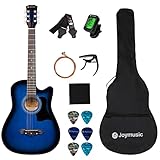
Overview: The Joymusic 38-inch Blueburst Beginner Acoustic Guitar Kit offers an eye-catching aesthetic combined with a comprehensive accessory package at a highly competitive price point. This steel-string folk guitar balances portability with full-size playability, making it suitable for beginners and traveling musicians alike. The package includes a strap with pick holder, digital tuner, spare strings, capo, cleaning cloth, six picks, and a gig bag.
What Makes It Stand Out: The striking blueburst finish gives this guitar a premium appearance uncommon in budget instruments, potentially inspiring practice through visual appeal. The full accessory suite matches or exceeds competitors, particularly the pick holder integrated into the strap—a small but practical detail. The 38-inch size offers comfortable handling while retaining adequate acoustic projection for practice and small performances.
Value for Money: Positioned as “highly cost-effective,” this kit delivers exceptional bang for the buck. The inclusion of a capo and cleaning cloth alongside standard accessories adds value. While brand recognition lags behind Fender or Yamaha, the comprehensive package and attractive finish make it a strong contender for budget-conscious buyers testing their interest in guitar.
Strengths and Weaknesses: Pros include the attractive blueburst finish, comprehensive accessory bundle, comfortable 38-inch size, steel-string authenticity, and excellent affordability. Cons involve unknown brand reputation potentially indicating inconsistent quality control, likely laminated construction limiting tonal depth, and minimal instructional support compared to lesson-included competitors.
Bottom Line: An excellent budget option for beginners drawn to its visual appeal or those wanting maximum accessories for minimal investment. Ideal for testing commitment before upgrading.
5. Fender Dreadnought Acoustic Guitar - Natural Bundle with Gig Bag, Tuner, Strings, Picks, and Austin Bazaar Instructional DVD

Overview: The Fender Dreadnought Acoustic Guitar Bundle brings legendary brand credibility to the beginner market, offering a full-size instrument with features typically found on more expensive models. This natural-finish dreadnought features an all-laminate lindenwood top with mahogany back and sides, scalloped “X”-bracing for enhanced resonance, and a slim mahogany neck with dark-stained maple fingerboard for comfortable playability.
What Makes It Stand Out: The Fender name alone commands respect and ensures better resale value than no-name competitors. The dreadnought body shape delivers superior volume and full-bodied tone compared to smaller 38-inch guitars. Scalloped “X”-bracing—a premium feature—enhances projection and tonal complexity uncommon in budget instruments. The slim neck profile specifically accommodates learning hands, reducing strain during chord transitions.
Value for Money: While pricier than other kits, the Fender badge, superior construction, and full-size dreadnought body justify the premium. The included Austin Bazaar instructional DVD provides structured learning, and the overall build quality means this guitar can serve players well beyond the beginner stage, eliminating the need for an immediate upgrade.
Strengths and Weaknesses: Pros include reputable Fender brand, superior dreadnought sound projection, quality scalloped bracing, comfortable slim neck, and better long-term value. Cons involve full-size body potentially overwhelming younger players, all-laminate construction still limiting ultimate tonal potential, and higher initial investment.
Bottom Line: The best investment for serious beginners wanting a guitar that grows with their skills. Choose Fender for brand reliability, superior sound, and an instrument that remains playable for years.
6. Moukey 41" Acoustic Guitar for Beginners Adult Teen Full Size Guitarra Acustica with Chord Poster, Gig Bag, Tuner,Steel Strings, Capo, Strap - Black

Overview:
The Moukey 41" Acoustic Guitar delivers a comprehensive starter package for absolute beginners. This all-in-one bundle includes the guitar, padded gig bag, tuner, capo, strap, strings, picks, and a helpful chord poster. Featuring a cutaway dreadnought body design, the instrument promises easier access to upper frets while maintaining a full, vibrant tone suitable for various musical styles.
What Makes It Stand Out:
The included chord poster is a standout feature, displaying commonly used chords for rapid visual learning. The cutaway design at this price point is unusual and beneficial for learning solos and higher-position chords. Precise position marks at seven different frets provide excellent visual guidance for finger placement, accelerating the learning curve significantly.
Value for Money:
This package offers exceptional convenience for under $100, eliminating the need to purchase accessories separately. While the basswood body and Okoume neck won’t match premium tonewoods, the 1:14 enclosed copper tuning machines and bone nut deliver surprising tuning stability for the price point, rivaling kits costing significantly more.
Strengths and Weaknesses:
Pros include the complete accessory bundle, cutaway design, visual learning aids, and reliable tuning machines. Cons feature the less resonant basswood construction, basic accessory quality, and lack of brand recognition for resale value. The laminate construction prioritizes durability over tonal complexity.
Bottom Line:
Perfect for testing musical interest without major investment. If the player progresses beyond six months, plan to upgrade. For absolute beginners seeking maximum accessories at minimum cost, this is a compelling choice.
7. Fender California Debut Redondo Series Acoustic Guitar Pack, Beginner Guitar, 2-Year Warranty, Includes Gig Bag, Stand, and More, Natural

Overview:
The Fender California Debut Redondo Series Acoustic Guitar Pack represents the legendary manufacturer’s entry into the beginner market. This comprehensive bundle includes not just the guitar, gig bag, strap, picks, tuner, and extra strings, but also a guitar stand and a complimentary Fender Play subscription with thousands of instructional videos.
What Makes It Stand Out:
Fender’s 75-year legacy of craftsmanship lends credibility and resale value rarely found in beginner instruments. The iconic 6-in-line headstock design provides authentic Fender aesthetics. Most significantly, the included Fender Play subscription offers structured, professional lessons at no additional cost—a game-changer for self-taught beginners.
Value for Money:
Priced higher than generic brands, you’re paying for the Fender name, quality control, and educational content. The all-laminate construction keeps costs reasonable while ensuring durability. When factoring in the stand and Fender Play subscription, the premium becomes justified for serious learners.
Strengths and Weaknesses:
Strengths include trusted brand heritage, quality laminate construction, comfortable C-shaped neck, walnut fingerboard, sealed-gear tuners, and exceptional educational resources. Weaknesses involve the premium price point, laminate-only construction limiting tonal depth, and potentially more features than casual beginners require.
Bottom Line:
Ideal for committed beginners who value brand reputation and structured learning. The Fender Play subscription alone makes this worthwhile for disciplined students. If you’re serious about developing proper technique from day one, this pack justifies its premium.
8. Donner Acoustic Guitar for Beginner Adult Full Size Dreadnought Acustica Guitarra Bundle Kit with Free Online Lesson Bag Strap Tuner Capo Pickguard Pick, Right Hand 41 Inch Sunburst, DAG-1S/DAD-160S

Overview:
The Donner DAG-1S/DAD-160S acoustic guitar bundle delivers professional-grade tonewoods at an accessible price point. This 41-inch dreadnought features a solid spruce top with mahogany back and sides, X-bracing, and includes a comprehensive accessory kit: gig bag, strap, tuner, capo, pickguard, extra strings, picks, cleaning cloth, and Allen wrench.
What Makes It Stand Out:
The spruce top and mahogany body combination produces a rich, warm, and balanced tone with excellent resonance. The X-bracing pattern enhances structural integrity while optimizing sound projection. Phosphor bronze strings with high-carbon steel hex core provide superior tonal clarity and longevity compared to standard beginner strings.
Value for Money:
This package rivals $300+ instruments in tonal quality while remaining firmly in the beginner price range. The inclusion of professional-grade tonewoods, brass frets with comprehensive position markers, and high-quality hardware makes this arguably the best sonic value in the entry-level market.
Strengths and Weaknesses:
Pros include exceptional tonewood selection, X-bracing, phosphor bronze strings, complete accessory kit, and excellent tuning stability. Cons feature Donner’s lesser brand recognition, potentially affecting resale value, and the sunburst spray paint finish which may not appeal to traditionalists. The full-size dreadnought may prove large for smaller players.
Bottom Line:
For tone-conscious beginners prioritizing sound quality over brand prestige, this is the clear winner. The wood selection alone makes this a keeper even as skills advance. Choose this if you’re serious about developing good tonal ear training from the start.
9. Donner Acoustic Guitar for Beginner Adult Full Size Cutaway Acustica Guitarra Bundle Kit with Free Online Lesson Bag Strap Tuner Capo Pickguard String Pick, Right Hand 41”Sunburst, DAG-1CS/DAD-160CS

Overview:
The Donner DAG-1CS/DAD-160CS offers the same exceptional value as its dreadnought sibling but adds a cutaway design for enhanced playability. This 41-inch acoustic features identical specifications: spruce top, mahogany back and sides, X-bracing, and the same comprehensive accessory bundle including gig bag, strap, tuner, capo, pickguard, strings, picks, cloth, and Allen wrench.
What Makes It Stand Out:
The Venetian cutaway provides effortless access to frets 14 and beyond, making this ideal for learning lead guitar, fingerstyle, and higher-position chords. The cutaway design sacrifices minimal body volume while significantly expanding the instrument’s versatility, essentially future-proofing your purchase.
Value for Money:
Maintaining the same aggressive pricing as the standard dreadnought, the cutaway version adds premium features without premium cost. You’re getting identical tonewood quality, hardware, and accessories with enhanced upper fret access at no additional expense, representing outstanding engineering value.
Strengths and Weaknesses:
Strengths mirror the dreadnought version: superior tonewoods, X-bracing, phosphor bronze strings, complete kit, and now cutaway versatility. Weaknesses include the same brand recognition limitations, the slightly reduced air volume affecting ultimate bass response, and the cutaway’s aesthetic not appealing to traditionalists. The cutaway may also encourage technique beyond beginner level.
Bottom Line:
Choose this over the standard dreadnought if you anticipate learning solos, fingerpicking, or desire upper fret access. For identical pricing, the cutaway adds significant long-term value. This is the smarter investment for ambitious beginners planning rapid progression.
10. Fender California Debut Redondo Series Acoustic Guitar, Beginner Guitar, 2-Year Warranty, Natural

Overview:
The Fender California Debut Redondo Series Acoustic Guitar offers the core Fender experience without the accessory bundle. This right-handed beginner instrument features the iconic 6-in-line headstock, dreadnought body shape, and all-laminate construction designed for durability and consistent performance across various environments.
What Makes It Stand Out:
The Fender Play subscription remains included, providing thousands of instructional videos and structured lessons—exceptional value for a standalone instrument. The legendary Fender quality control ensures consistent setup and playability, while the lightweight laminate construction makes this ideal for younger players or those concerned about instrument weight. The C-shaped neck profile and walnut fingerboard deliver genuine Fender feel.
Value for Money:
As a standalone guitar, this targets buyers who already own accessories or prefer to select their own. The price reflects Fender’s brand premium but becomes reasonable when including the Fender Play subscription. For those seeking a foundation instrument from a trusted name without redundant accessories, this offers focused value.
Strengths and Weaknesses:
Pros include Fender brand prestige, quality construction, comfortable neck profile, sealed-gear tuners, included educational content, and excellent resale potential. Cons involve the premium price for laminate construction, lack of included accessories requiring additional investment, and potentially paying for brand name over sonic superiority.
Bottom Line:
Perfect if you already own a gig bag, tuner, and strap. The Fender Play subscription provides ongoing educational value that justifies the cost. For brand-conscious buyers wanting a recognizable name on the headstock without the full pack’s price, this strikes an intelligent balance.
Why the Right Starter Guitar Matters for Teen Players
The Psychological Impact of a Good First Instrument
A teenager’s first guitar is more than wood and strings—it’s a statement of identity, a tool of self-expression, and often their first serious personal investment. When an instrument feels good in their hands and rewards their early efforts with pleasant sounds, it creates a powerful positive feedback loop. Conversely, a guitar that fights them at every turn—strings too high, neck too wide, body too bulky—can make them feel like they’re the problem, not the tool. In those formative weeks, when calluses are forming and chord shapes feel like geometry puzzles, the instrument’s playability can be the difference between a lifelong passion and a brief hobby that “just wasn’t for me.”
Physical Comfort and Long-Term Progress
Teens are still growing, and their physical proportions can vary wildly. A 13-year-old with smaller hands needs a different neck profile than a 17-year-old with near-adult hands. The guitar’s body size affects how they sit with it, how their strumming arm reaches over the top, and even their posture during practice sessions. An uncomfortable guitar leads to compensating techniques that become bad habits—hunching over, twisting the wrist unnaturally, or developing a weak strumming approach. These physical mismatches don’t just slow progress; they can lead to actual discomfort or strain that makes practicing feel like a chore rather than a joy.
Decoding the $300 Budget: What’s Realistic in 2026
Inflation’s Impact on Beginner Instruments
The sub-$300 acoustic guitar market has shifted significantly over the past few years. What $250 bought you in 2020 might now cost $320, forcing manufacturers to make subtle compromises to hit price points. In 2026, the “under $300” category is still the sweet spot for legitimate beginner instruments, but you need to understand where corners are being cut. Most guitars in this range will feature laminate back and sides, a laminated or pressure-tested solid top, and generic hardware. The key is identifying which compromises are purely cosmetic versus those that genuinely affect playability and durability.
What “Under $300” Actually Gets You
At this price point, you’re not buying heirloom quality, but you absolutely can purchase a gig-worthy instrument that will serve a teen well through their first several years of playing. Expect a factory setup that’s “good enough” but not great, decent tuning stability, and a tone that’s balanced if not exceptional. The magic happens when manufacturers prioritize the right things: a comfortable neck, properly seated frets, and a top that resonates despite being laminate. Your $300 should buy reliability and playability first, with tone being a welcome bonus. Anything that promises solid wood everything and premium features at this price is likely cutting invisible corners on construction quality.
Body Styles Demystified: Dreadnought, Concert, and Beyond
Dreadnoughts: The Classic Choice
The dreadnought is the most recognizable acoustic shape, and for good reason—it delivers powerful volume and a full low end that makes chords sound rich and complete. For teens, however, the sheer size can be intimidating. A standard dreadnought’s wide lower bout can feel like straddling a boat for smaller players, making it harder to maintain proper posture. That said, for taller teens or those with broader shoulders, a dreadnought offers that iconic acoustic presence and can be incredibly inspiring. The key is ensuring they can comfortably reach their arm over the body without elevating their shoulder.
Concert and Grand Concert: Comfort for Smaller Frames
Concert (or “O” size) and Grand Concert (“OO”) bodies are the unsung heroes for teenage beginners. These shapes shrink the overall dimensions while maintaining a surprisingly full voice. The waist is more pinched, making the guitar easier to hold close, and the reduced depth means less reaching for the strumming arm. Tonally, they tend to emphasize midrange clarity over booming bass, which actually helps beginners hear their chord changes more distinctly. For most teens under 5'6", a concert-size guitar will feel like it was made for them, and the comfort trade-off often results in longer, more productive practice sessions.
Parlor and Travel Guitars: Trendy but Practical?
Parlor guitars have enjoyed a renaissance, and their compact size makes them incredibly appealing to teens who want something that looks cool and travels easily. While modern parlors are far better than their historical counterparts, their small bodies can sound boxy or lack projection, which might disappoint a teen expecting a big, strummy sound. Travel guitars take this to the extreme, often with shortened scales that can feel toy-like. These are best reserved for teens who specifically prioritize portability or have very small frames—otherwise, the sonic compromise might dampen their enthusiasm when they realize their guitar doesn’t fill a room the way their favorite artist’s does.
Tonewood Basics for Budget-Conscious Buyers
Laminate vs. Solid Wood: The Cold Hard Truth
Let’s be blunt: under $300, you’re almost certainly getting a laminate back and sides, and possibly a laminate top. This isn’t the tragedy some purists make it out to be. Laminate wood is essentially multiple thin layers of wood pressed together, making it more resistant to temperature and humidity changes—a huge plus for teens who might leave their guitar in a hot car or a cold bedroom. The downside is reduced resonance and complexity of tone. However, a well-built guitar with a laminate top can still sound musical, while a poorly built solid-top guitar will sound dead. Focus on how the guitar sounds when you play it, not on the spec sheet’s promises.
Common Wood Pairings and Their Sonic Personalities
Even in budget instruments, wood choice matters. Spruce tops (whether solid or laminate) are common because they offer bright, articulate highs and good projection—ideal for strumming and fingerpicking alike. Cedar tops, less common but occasionally found, provide a warmer, more immediate response that fingerstyle players love. For backs and sides, mahogany laminate delivers focused mids and a punchy character, while rosewood (or rosewood-like alternatives) offers more complex overtones and a scooped midrange. For teens, a spruce top with mahogany back and sides is the safest bet: it’s versatile, records well, and cuts through a mix if they start playing with friends.
Neck Specifications That Make or Break Playability
Scale Length and Teen Hand Size
Scale length—the distance between the nut and saddle—directly affects string tension and fret spacing. A standard 25.5" scale (common on dreadnoughts) can feel stretchy for teens with smaller hands, making barre chords and wide stretches challenging. A shorter 24.75" or 24" scale reduces tension and brings frets closer together, making the guitar feel more approachable. However, shorter scales can feel a bit slinkier and less taut, which some players find less precise. For most teen beginners, a scale length around 24.75" to 25" hits the sweet spot of comfortable reach without feeling too loose.
Nut Width and String Spacing
The nut width determines how much space exists between strings at the headstock. A standard 1 11/16" (43mm) nut is common on steel-string acoustics and works well for most teens. Wider nuts (1 3/4" or 44mm) give more room for fingerstyle but can make chord transitions harder for small fingers. Narrower nuts (1 5/8" or 41mm) feel cramped for many players but can help beginners form clean chords. The key is matching nut width to playing style: if your teen wants to strum pop songs, go standard. If they’re into intricate fingerpicking, that extra millimeter might matter more than you think.
Neck Profile Shapes Explained
Neck profile—the shape of the back of the neck—comes in descriptors like C, V, and U shapes. For teens, a slim C-shaped profile is almost universally the best choice. It fills the hand comfortably without forcing the thumb into awkward positions. Chunky V or U profiles, while beloved by some experienced players, can cause fatigue and make proper thumb placement behind the neck feel unnatural. When testing guitars, have your teen make a simple G chord and notice if their palm feels relaxed or if they’re straining to wrap their hand around the neck. Comfort here is non-negotiable.
The Critical Importance of Action and Setup
What is Action?
Action refers to the height of the strings above the fretboard. Too high, and pressing strings feels like a workout; too low, and you get buzzing frets and choked notes. For beginners, moderately low action is crucial—it reduces the finger strength needed to form chords, which means less pain and faster progress. However, “low” doesn’t mean “as low as possible.” There needs to be enough clearance for the strings to vibrate freely without buzzing against frets. A good setup balances these competing needs based on the guitar’s individual characteristics and the player’s style.
Why Factory Setups Often Fail Beginners
Most sub-$300 guitars ship with a generic factory setup designed to survive shipping and avoid returns from buzzing complaints. This usually means action that’s too high for comfortable learning. The strings might be heavy gauge, the nut slots might be too shallow, and the truss rod might be adjusted for a neck that’s been sitting in a warehouse for months. This is why budgeting an extra $50-$75 for a professional setup is arguably more important than which specific guitar you choose. A mediocre guitar with a great setup will always outperform a “better” guitar that’s unplayable out of the box.
To Plug In or Not? Acoustic-Electric Considerations
When Electronics Make Sense for Teens
An acoustic-electric guitar includes a built-in pickup and preamp system, allowing you to plug into an amplifier or PA system. For teens, this feature is a double-edged sword. On one hand, it opens doors to playing at school events, youth groups, or eventually gigging. On the other, it adds cost that could otherwise go toward better wood or construction quality. If your teen dreams of performing, an acoustic-electric makes sense. If they’re primarily practicing in their bedroom, it’s an unnecessary expense that might tempt them to crank up distortion instead of developing their acoustic tone.
The Trade-Offs of Budget Pickup Systems
The pickup systems found in sub-$300 acoustic-electrics are functional but basic. They’ll amplify the guitar, but rarely capture its true acoustic character. Many use under-saddle piezo pickups that can sound quacky or harsh without sophisticated preamps—which these guitars don’t have. The controls are often mounted on the side of the guitar, which requires cutting into the wood and can slightly affect acoustic tone. If you opt for electronics, prioritize systems with at least a built-in tuner (a huge convenience for beginners) and simple EQ controls. Treat the electronics as a bonus feature, not the main event.
Must-Have Features for First-Time Players
Built-in Tuners and Accessibility
A built-in tuner is arguably the most valuable feature for a beginner. Teens are more likely to practice consistently when they can quickly tune up without fumbling with a separate clip-on tuner or phone app. The visual feedback helps train their ear, and the convenience means they’re less likely to play out of tune (which sounds terrible and kills motivation). Many acoustic-electric guitars include tuners in their preamp systems, but some acoustic-only models now feature soundhole-mounted tuners. This single feature can dramatically improve the daily practice experience.
Cutaways: Form vs. Function
A cutaway body shape removes part of the upper bout, allowing easier access to higher frets. While this looks modern and cool—appealing to teens—it’s not essential for learning open chords and basic songs. The cutaway does reduce internal air volume slightly, which can marginally affect tone and volume, though most beginners won’t notice. If your teen is drawn to lead guitar or wants to explore solos up the neck, a cutaway is practical. If they’re focusing on strumming and singing, it’s purely aesthetic. Let their musical interests guide this choice.
Smart Compromises: Where to Save and Where to Spend
Cosmetic vs. Functional Features
When every dollar counts, prioritize function over flash. A guitar with a simple matte finish and plain dot inlays but a comfortable neck and stable tuning is infinitely better than one with flashy abalone inlays, a glossy sunburst top, and a neck that feels like a baseball bat. Binding (the decorative trim around the body) looks nice but does nothing for playability. A rosette with intricate designs is purely visual. Instead, focus your budget on the neck carve, fretwork quality, and the integrity of the construction. These invisible factors determine whether the guitar helps or hinders learning.
Hardware Hierarchy on a Budget
Not all hardware is created equal. Tuners are critical—loose, imprecise tuners will have your teen constantly retuning, which is maddening. Look for sealed die-cast tuners, which are common even on budget guitars and offer decent stability. The nut and saddle material matters too; plastic is standard and functional, but Tusq or similar synthetic materials can improve tone and sustain slightly. Bridge pins are largely cosmetic at this level. As for the bridge itself, ensure it’s cleanly glued with no gaps—poor bridge installation is a red flag for overall build quality issues.
The 2026 Shopping Landscape: Retailers and Marketplaces
Brick-and-Mortar vs. Online in the Modern Era
In 2026, the debate between buying in-store versus online has evolved. Physical guitar stores offer the irreplaceable benefit of hands-on testing and often include a basic setup with purchase. However, online marketplaces now provide extensive video demos, generous return policies, and competitive pricing that local shops struggle to match. For teens, the tactile experience of trying guitars is invaluable. A store visit becomes a learning experience, helping them understand what feels right. If buying online, prioritize retailers with 45-day return windows and free return shipping, effectively giving you an in-home trial period.
Spotting Genuine Deals vs. Marketing Hype
The guitar industry loves a “limited edition” or “signature model” tag, even on budget instruments. In 2026, watch for marketing language that overpromises. “Solid wood top” might mean a thin veneer over laminate. “Professional-grade electronics” is meaningless without brand names. Real deals often come in the form of last year’s models being cleared out or bundle packages that include a case and accessories at a discount. Compare the guitar’s list price across multiple retailers; if one site shows a huge “sale” from an inflated original price, you’re not actually saving money.
The Pre-Owned Path: Finding Gems in the Used Market
Red Flags for Second-Hand Guitars
Buying used can stretch your budget dramatically, but teens and parents need to know what to avoid. First, check the neck relief by sighting down the fretboard—it should have a slight forward bow, not be dead straight or back-bowed. Test every fret for buzzing or dead notes. Inspect the bridge for lifting or separation from the top, a common failure point. Look inside the soundhole for loose braces or glue drips. Ask about the guitar’s history: has it been kept in a climate-controlled environment? Any cracks, even repaired ones, are dealbreakers for a beginner’s only instrument.
Best Platforms for Teen Budgets
In 2026, local marketplace apps remain the best value, allowing you to inspect the guitar in person before buying. Reverb.com has become the go-to for shipped used gear, with buyer protection and a vast selection. Guitar Center’s used inventory online offers the safety of a return policy but often at higher prices. For teens, Facebook Marketplace or local music school bulletin boards can yield incredible deals from families whose kids gave up playing. Always meet in a safe public place and bring someone who can play a few chords to test the instrument.
Beyond the Guitar: The True Cost of Starting Out
Non-Negotiable Accessories
The guitar itself is just the beginning. A gig bag or hard case is essential for protection—budget $40-$60 for a padded gig bag that will survive school bus trips. A clip-on tuner (if the guitar lacks a built-in one) runs about $15. Picks are cheap but essential; buy variety packs so your teen can discover their preference. A basic strap ($20) makes playing standing up possible. Most importantly, budget for a setup. These accessories can add $100-$150 to your total cost, so plan accordingly rather than being surprised later.
The Setup Budget
Professional setup costs have crept up to $75-$100 in many markets, but this is the best money you’ll spend. A good tech will adjust the truss rod, file the nut slots, set the action, and intonate the guitar. Some stores offer a “beginner setup package” that includes a lesson on basic maintenance. For teens, this is invaluable—it teaches them that instruments require care and gives them a baseline for how their guitar should feel. Skipping the setup to save money is like buying a car and never changing the oil; it’ll work for a while, but you’re shortening its lifespan and making the experience worse.
The In-Store Test Drive: A Teen’s Action Plan
What to Play When You Don’t Know How
Walking into a guitar store as a complete beginner is intimidating. The secret? You don’t need to shred to test a guitar. Start by gently strumming all open strings—does it ring out clearly? Press each string at the 3rd fret and strum; listen for buzzing. Form a simple G chord (or have a staff member show you) and notice how much pressure your fingers need. Slide your hand up and down the neck; does it feel smooth or sticky? The goal isn’t to sound good, it’s to feel comfortable. A good salesperson will respect a teen who’s honest about being a beginner and wants to focus on comfort over flash.
Involving Staff Without Getting Sold
Music store staff can be incredible resources or pushy salespeople. The trick is asking the right questions: “Which guitars in this price range have the lowest action?” or “What’s the return policy if the setup isn’t right?” rather than “What’s the best guitar?” A teen who shows genuine curiosity about playability rather than brand names will earn respect. Don’t be swayed by upsells to more expensive models; instead, ask what specific setup services are included with purchase. If a staff member dismisses your budget or pushes you toward a brand without explaining why, thank them and find another employee or store.
Avoiding the Biggest Pitfalls in Budget Guitar Buying
Brand Snobbery and Its Traps
In the age of social media, teens can become fixated on what their favorite YouTuber plays. The reality is that most iconic guitarists started on cheap, no-name instruments. While established brands offer consistency, many smaller brands now produce exceptional budget guitars. Don’t dismiss a guitar because you’ve never heard of the brand; judge it on its feel and sound. Conversely, don’t assume a famous logo guarantees quality at this price point—some big brands rest on their laurels and charge a premium for the headstock shape alone. The guitar is a tool, not a fashion statement.
The “Good Deal” That Isn’t
A $200 guitar marked down from $500 sounds tempting, but that original price might be fictional. Research the guitar’s typical street price across multiple retailers. Be wary of “starter packs” that bundle a guitar with a tiny amp and flimsy accessories—the guitar itself is often a lower-tier model than what you could buy separately. Online marketplaces sometimes list “mint condition” guitars that are actually B-stock with hidden defects. If a deal seems too good to be true, inspect the guitar for finish flaws, fret sprout, or structural issues. A genuine good deal is a fairly priced guitar that’s been properly set up, not a flashy discount on a dud.
First Steps After Purchase: Setting Up for Success
The Professional Setup Difference
Even if you bought a guitar that feels decent, a professional setup transforms it into a precision learning tool. A tech will address issues invisible to the untrained eye: uneven frets that cause buzzing, a nut that’s choking strings, or a bridge saddle that’s killing sustain. For teens, this process is educational—many techs will explain what they’re doing and why. The difference between a factory setup and a pro setup is the difference between a bike with rusty chains and one that’s been tuned for a championship race. It’s the single most impactful upgrade you can make.
Establishing a Practice Routine
With the perfect guitar in hand, the real work begins. For teens, consistency beats duration. Fifteen minutes daily is more effective than two hours on Saturday. Create a dedicated practice space that’s inviting and distraction-free. Use a metronome app to develop timing from day one. Most importantly, learn one song all the way through rather than collecting fragments of ten songs. This completion creates confidence. Encourage them to record themselves on their phone regularly—not to critique harshly, but to hear their progress over weeks and months. The best guitar in the world is just decoration without the commitment to play it.
Frequently Asked Questions
1. Can a $300 acoustic guitar really last through my teen’s first few years of learning?
Absolutely. While these guitars aren’t built for stadium tours, modern manufacturing has made even budget instruments remarkably durable. With proper care, humidification, and an initial professional setup, a $300 guitar can easily serve a teen for 3-5 years, taking them from beginner to intermediate player. The key is maintenance and avoiding environmental extremes.
2. Is it better to buy a slightly cheaper guitar and upgrade parts later?
Generally, no. Upgrading hardware on a budget guitar rarely yields the improvement you’d expect. The cost of new tuners, a bone saddle, and professional installation can approach half the guitar’s value. It’s more cost-effective to buy the best-playing guitar in your budget initially. Upgrades make sense later when a player has developed preferences, not as a fix for a poorly made instrument.
3. How do I know if my teen’s hands are too small for a standard guitar?
Have them sit with the guitar and form a simple first-position G chord. If their wrist is severely bent and their fingers can’t comfortably reach the notes, the neck might be too wide or the body too deep. A good rule of thumb: if they can wrap their hand around the neck with their thumb behind without strain, the size is workable. If not, consider a 3/4-size or short-scale model.
4. Are acoustic-electric guitars heavier or harder to play than acoustic-only models?
The weight difference is minimal—usually just a few ounces for the electronics. The preamp system is typically mounted in the side, which doesn’t affect balance significantly. Playability is identical; the electronics don’t change string tension or neck shape. The real consideration is whether the extra cost is worth a feature they might not use for years.
5. What’s the biggest mistake parents make when buying a first guitar?
Buying based on appearance or brand recognition rather than playability. That sunburst finish or famous headstock might win initial excitement, but if the guitar is hard to play, that excitement fades fast. Parents should prioritize instruments that feel easy and comfortable, even if they look plain. A guitar that gets played always beats a pretty one that gathers dust.
6. Should I avoid laminate guitars completely?
Not at all. While solid wood offers better tone, laminate construction provides durability that’s ideal for beginners. Teens are more likely to subject their guitar to temperature swings, bumps, and humidity changes. Laminate withstands this abuse better. Focus on finding a well-built laminate guitar rather than chasing a poorly made solid-top instrument at the same price.
7. How often will a beginner guitar need to be set up?
After the initial setup, a guitar should be checked annually or with seasonal changes if you live in a climate with dramatic humidity shifts. As teens improve, they might want the action lowered further. If the guitar starts buzzing or becomes harder to play, it’s time for a check-up. Think of it like a car’s oil change—preventative maintenance that keeps everything running smoothly.
8. Is it worth buying a guitar online if we can’t test it first?
Yes, if you choose retailers with generous return policies. Many online stores now offer 45-day trials with free return shipping. Read reviews focusing on setup quality out of the box. Some online sellers even include a basic setup before shipping. The key is having a local tech ready to do a proper setup if needed, and being willing to return a guitar that has defects or just doesn’t feel right.
9. What accessories are absolutely necessary on day one?
At minimum: a gig bag for protection, a tuner (clip-on if the guitar lacks a built-in one), a few picks of different thicknesses, and a strap. A capo is highly useful but can wait a few weeks. A stand is practical to encourage spontaneous practice. Prioritize protection and tuning stability before buying fancy straps or decorative picks.
10. My teen wants to learn electric guitar. Should we still start with acoustic?
This depends on their musical interests. If they love acoustic singer-songwriters, start acoustic. If they’re obsessed with rock and metal, forcing acoustic first can kill motivation. However, starting acoustic builds finger strength and teaches clean chord formation without effects hiding mistakes. Many teachers recommend 6-12 months on acoustic before switching. The compromise? Consider an acoustic-electric they can eventually amplify, bridging both worlds.
See Also
- 10 Essential Acoustic Guitars for Beach Bonfire Sessions in 2026
- 10 Essential Acoustic Guitars for Campfire Sing-Alongs This Year
- We Tested 50 Beginner Acoustic Guitars—Here Are the 10 Easiest to Play
- 10 Essential Beginner Acoustic Guitar Packs Under $300 in 2026
- 10 Essential Acoustic Guitars for Taylor Swift-Style Songwriting in 2026