Table of Contents
The landscape of beginner keyboards has fundamentally transformed by 2026, shattering the old compromise between affordability and authentic sound quality. Where aspiring musicians once had to settle for thin, tinny tones and limited expression, today’s sub-$300 instruments pack sophisticated sound engines that would have cost four figures just a decade ago. Whether you’re a parent nurturing a child’s musical curiosity, a bedroom producer taking your first steps, or an adult finally pursuing that piano dream, the market now offers genuine sonic depth without demanding a major financial commitment.
But here’s the challenge: with manufacturers racing to pack more features into budget-friendly packages, it’s become increasingly difficult to distinguish between meaningful innovations and marketing fluff. That “128-note polyphony” spec might look impressive on paper, but what does it actually mean for your playing experience? How do you evaluate key action through an online storefront? And which modern connectivity features will you actually use versus those that’ll gather digital dust? This comprehensive guide cuts through the noise, focusing on the audio architecture and practical features that truly matter when your budget is capped but your sonic standards aren’t.
Top 10 Beginner Keyboards Under 300
Detailed Product Reviews
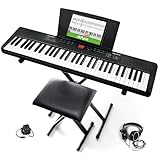
1. Alesis Melody 61 MK4 Keyboard Piano for Beginners with 61 Keys, Speakers, Stand, Bench, Headphones, Tablet/Sheet Music Stand, 300 Sounds and Music Lessons
Overview:
The Alesis Melody 61 MK4 delivers a comprehensive starter package that eliminates guesswork for new pianists. This 61-key keyboard includes an adjustable stand, padded bench, headphones, and sheet music holder—everything needed for immediate practice sessions. Weighing just 6.6 pounds, it balances portability with functionality, running on either the included power adapter or six AA batteries for on-the-go playing.
What Makes It Stand Out:
The massive 300-sound library and 300 accompaniment rhythms dwarf most competitors in this price bracket. The ability to layer two sounds simultaneously and add sustain/vibrato effects provides creative depth rarely seen at this level. The inclusion of 30 demo songs and auto-chord functions accelerates learning, while the built-in metronome and recording mode enable structured practice.
Value for Money:
At this price point, purchasing these accessories separately would cost significantly more. The bundle represents genuine savings, though the basic key action and speaker quality reflect the budget tier. Comparable beginner packages from Yamaha or Casio typically start 30-40% higher with similar features.
Strengths and Weaknesses:
Strengths include the all-inclusive bundle, extensive sound library, battery power option, and educational features. Weaknesses involve non-weighted keys that don’t replicate acoustic piano feel, modest speaker output, and plastic construction that feels utilitarian rather than premium.
Bottom Line:
Perfect for absolute beginners seeking a turnkey solution. If you’re testing commitment or buying for a child, this package removes barriers to entry while providing room to grow.
2. 61 Key Keyboard Piano, Portable Electronic Keyboard Piano for Beginners with Speakers, Microphone, Sheet Music Stand, Digital Music Keyboard for Beginners

Overview:
This generic 61-key keyboard positions itself as an affordable entry point for casual musicians. The instrument offers 100 sounds, 100 rhythms, and 10 demo songs—substantially fewer than premium alternatives but sufficient for basic skill development. The included wired microphone enables singing along, while the LCD screen provides visual feedback for settings adjustments.
What Makes It Stand Out:
The microphone integration stands out at this price point, encouraging performance confidence in young players. The “Record” function captures practice sessions for progress tracking, and the headphone jack allows silent practice. The keyboard runs on either batteries or a DC adapter, though the latter isn’t included—a notable omission.
Value for Money:
This represents bare-bones affordability. While significantly cheaper than name-brand alternatives, the trade-offs include limited polyphony, basic sound quality, and no included stand or bench. You’re getting functional keys and basic features, but serious learners will outgrow it quickly. The value proposition depends entirely on your budget constraints and realistic expectations.
Strengths and Weaknesses:
Strengths include the included microphone, lightweight portability, and simple interface suitable for young children. Weaknesses encompass the unknown brand reliability, limited sound library, absence of educational content, and lack of essential accessories requiring additional purchases.
Bottom Line:
Suitable for toddlers or as a disposable introduction to music. For anyone serious about learning, invest slightly more in an established brand with proven durability and educational support.
3. Alesis Melody 32 - Electric Keyboard Digital Piano with 32 Keys, Speakers, 300 Sounds, 300 Rhythms, 40 Songs, USB-MIDI Connectivity and Piano Lessons

Overview:
The Alesis Melody 32 redefines portability for beginner keyboards. With just 32 mini keys, this compact instrument targets young children and traveling musicians who prioritize size over range. Despite its diminutive form factor, it packs 300 voices, 300 rhythms, and 40 demo songs—matching its larger siblings in sonic variety. USB powering eliminates the need for bulky adapters, while battery operation provides true wireless freedom for park performances.
What Makes It Stand Out:
The USB-MIDI connectivity transforms this from a simple practice keyboard into a versatile controller for music production software. The inclusion of premium lesson subscriptions—one month of Melodics and three months of Skoove—adds tremendous educational value exceeding the hardware cost. The headphone output mutes speakers for quiet practice, making it apartment-friendly.
Value for Money:
As a secondary instrument or child’s first keyboard, the value is exceptional. However, the 32-key limitation becomes restrictive within months of learning. While cheaper than 61-key alternatives, you’ll need to upgrade sooner. Consider it a specialized tool rather than a long-term primary instrument.
Strengths and Weaknesses:
Strengths include extreme portability, USB-MIDI functionality, generous lesson subscriptions, and impressive sound library for its size. Weaknesses involve mini keys that hinder proper technique development, limited two-octave range, and tiny built-in speakers lacking bass response.
Bottom Line:
Ideal for ages 3-7 or as a portable MIDI controller for producers. For serious piano study, the limited range makes it a supplementary tool at best.
4. 61 keys piano keyboard, Electronic Digital Piano with Built-In Speaker Microphone, Portable Keyboard Gift Teaching for Beginners, electric piano for kids, Birthday Gift for Children

Overview:
This brightly colored 61-key keyboard targets the youngest musicians with safety-focused design and simple operation. Constructed from ABS plastic with rounded edges, it prioritizes child safety over premium feel. The feature set includes 100 tones, 100 rhythms, 10 demo songs, and a detachable microphone—basic functionality for exploratory play rather than structured learning.
What Makes It Stand Out:
The kid-centric design philosophy shines through curved surfaces and lightweight construction that survives drops. The “One Key for One Note” teaching mode helps children associate keys with pitches, while eight panel percussion pads add rhythmic exploration. Dual power options—USB cable or batteries—provide flexibility for travel and outdoor use.
Value for Money:
This sits at the lowest price tier, reflecting its toy-like quality. While affordable, the sound synthesis is primitive, with thin, digital tones that don’t inspire serious practice. The absence of weighted keys, limited polyphony, and lack of educational software make it a poor value for actual learning compared to entry-level Casio or Alesis models costing only slightly more.
Strengths and Weaknesses:
Strengths include child-safe materials, included microphone, extreme affordability, and simple interface. Weaknesses encompass poor sound quality, non-responsive keys, absence of lesson content, and build quality that feels disposable rather than durable.
Bottom Line:
Appropriate as a toddler’s noisy toy but inadequate for genuine musical education. Spend an extra $30-50 for a proper beginner keyboard that won’t hinder technique development.
5. Alesis Melody 61 MK4 Keyboard Piano for Beginners with 61 Keys Speakers, Tablet/Sheet Music Stand, 300 Sounds and Music Lessons

Overview:
The streamlined Alesis Melody 61 MK4 variant focuses on core functionality, stripping away the stand, bench, and headphones to reduce cost. You still receive the excellent 61-key keyboard with 300 sounds, 300 rhythms, and 30 demo songs—the same powerful engine as the full bundle. The included sheet music/tablet stand and power adapter cover essential needs while allowing you to source furniture separately based on your preferences.
What Makes It Stand Out:
This configuration offers flexibility for buyers who already own a suitable bench or prefer to upgrade components individually. The identical sound engine and educational features—metronome, record mode, auto-chord accompaniment—remain intact. Battery power capability persists, maintaining portability for performers and students who travel between lessons.
Value for Money:
Cost savings of approximately 25-30% compared to the full bundle make this attractive if you have existing accessories. However, purchasing a comparable stand and bench separately often negates these savings. The value proposition depends entirely on your current equipment situation and whether you need the complete package.
Strengths and Weaknesses:
Strengths include the same robust feature set as the premium bundle, reduced initial investment, and freedom to choose higher-quality accessories. Weaknesses involve hidden costs if buying accessories separately, and the lack of headphones means additional expense for quiet practice.
Bottom Line:
Choose this version only if you already own compatible accessories. For most beginners, the complete bundle remains the smarter initial purchase.
6. KEYIVOX 61-Key Electronic Keyboard Piano for Beginners with 200 Tones & Rhythms, Microphone, Learning Features, and Piano Note Stickers

Overview: The KEYIVOX 61-Key Electronic Keyboard targets beginners with touch-sensitive keys, 200 tones/rhythms, and integrated learning tools. This portable instrument includes a microphone, note stickers, and teaching modes designed to develop proper technique from day one. Power it via AC adapter or batteries for flexible practice anywhere, making it suitable for home or classroom use.
What Makes It Stand Out: Touch-sensitive keys differentiate this model from most budget keyboards, allowing dynamic expression and proper finger technique development. The built-in teaching modes, recording function, and metronome create a structured learning environment, while the included microphone enables singing along with auto-accompaniment for a complete musical experience.
Value for Money: While priced slightly higher than basic non-touch-sensitive models, the dynamic key response justifies the cost for serious beginners. The comprehensive starter kit eliminates additional purchases, though the lack of USB connectivity and lighted keys may disappoint some learners who prefer visual guidance.
Strengths and Weaknesses: Strengths include touch-sensitive keys, robust teaching functions, dual power options, and a complete accessory package. Weaknesses are the absence of lighted keys, no USB/MIDI interface for app integration, and headphones not being included despite a headphone jack being present.
Bottom Line: Ideal for beginners prioritizing proper technique over flashy guides. The touch-sensitive keys provide a more authentic playing experience, making this a solid foundation for advancing to acoustic pianos.
7. 61 keys keyboard piano, Electronic Digital Piano with Built-In Speaker Microphone, Sheet Stand and Power Supply, Portable piano Keyboard Gift Teaching for Beginners

Overview: This 61-key keyboard piano positions itself as an ultra-portable, kid-friendly instrument for beginners. Measuring just 29.5 inches wide, it runs on batteries or adapter and includes a microphone, LCD screen, and basic recording features for interactive play and practice at home or on the go.
What Makes It Stand Out: Its compact footprint and lightweight design make it exceptionally portable for outdoor use or travel. The non-toxic, child-safe construction with smooth edges prioritizes young users’ safety, while the simple interface with LCD display helps beginners navigate its functions without overwhelming complexity.
Value for Money: The contradictory specifications—listing both 16 tones and 100 tones—raise concerns about product clarity. If delivering the higher specs, it offers decent value, but the confusion and basic feature set suggest a budget-tier price point appropriate for young children rather than serious learners seeking long-term growth.
Strengths and Weaknesses: Strengths include extreme portability, dual power options, kid-safe materials, and an included microphone. Weaknesses involve ambiguous product specifications, no lighted keys for guidance, absence of a stand or headphones, and a limited sound library compared to competitors offering 200+ voices.
Bottom Line: Best suited as a toy-like introduction for young children. The confusing specifications and basic features limit its effectiveness for structured learning, but its portability and safety features make it acceptable for casual, supervised play and musical exploration.
8. Sannewstartu 61 Key Electric Piano Keyboard for Beginners with Lighted Keys – Includes Stand, Bench, Headphones, Microphone, Note Stickers & Built-in Speakers – Digital Piano Learning Keyboard

Overview: The Sannewstartu keyboard offers a premium beginner experience with 61 lighted keys, 300 tones/rhythms, and a complete furniture kit. Three smart teaching modes guide finger placement while the double keyboard mode enables duets. The package includes an adjustable stand, padded bench, headphones, and microphone for immediate setup and comfortable practice.
What Makes It Stand Out: Lighted keys with three teaching modes provide visual guidance unmatched by non-illuminated keyboards. The extensive 300-tone library, dual stereo speakers, and performance features like transpose, vibrato, and sustain deliver professional sound quality. Double keyboard functionality transforms it into a teaching tool for instructor-student play or family duets.
Value for Money: This all-inclusive package eliminates separate accessory purchases, offering exceptional value despite a higher price point. The robust feature set rivals keyboards costing significantly more, while the included furniture-grade stand and padded bench provide ergonomic playing comfort that grows with the user.
Strengths and Weaknesses: Strengths include lighted teaching keys, vast sound library, double keyboard mode, comprehensive accessory bundle, and recording capabilities. Weaknesses may include a larger footprint requiring dedicated space and potentially overwhelming younger children with its extensive features.
Bottom Line: The ultimate starter package for committed beginners. The lighted keys accelerate learning while the quality accessories and extensive features ensure this keyboard grows with the player’s skills for years of musical development.
9. 61 Key Piano Keyboard, Electric Keyboard Piano with Light-Up Keys, 255 Tones/Rhythms, Smart Learning System, Headphone, Microphone, Keyboard Stand, Stool, Stickers, Piano Keyboard Set for Beginners

Overview: This 61-key lighted keyboard delivers an interactive learning experience with 255 tones/rhythms and a smart 3-step teaching system. The comprehensive package includes an adjustable stand, stool, headphones, microphone, and stickers. Advanced features like rhythm programming, dual-keyboard play, and four memory settings cater to progressing beginners seeking long-term use.
What Makes It Stand Out: The intelligent learning system with Single Key, Follow, and Ensemble modes tracks progress through four memory banks. Light-up keys provide visual guidance while the split-tone feature allows duets. A next-generation sound chip powers 255 voices through stereo speakers for rich, vibrant audio that inspires practice.
Value for Money: Competing directly with premium lighted-key models, this keyboard matches features while including all essential accessories. The memory settings and advanced programming capabilities offer future-proofing that justifies its mid-to-high range price for serious learners who want guided instruction.
Strengths and Weaknesses: Strengths include interactive lighted keys, sophisticated learning modes, memory settings, split-tone duets, comprehensive kit, and quality audio output. Weaknesses are slightly fewer tones than top competitors and a stand height that may not accommodate taller adult players comfortably.
Bottom Line: An excellent investment for beginners wanting guided instruction with room to grow. The smart learning system and performance features create an engaging, progressive experience that effectively bridges the gap between toy and serious instrument.
10. 61 keys keyboard piano, Electronic Digital Piano with Built-In Speaker Microphone, Portable Keyboard Gift Teaching for Beginners, electric piano for kids

Overview: This ultra-compact 61-key keyboard targets young beginners with its portable 22.8-inch design and kid-safe ABS construction. The instrument features 100 tones/rhythms, 10 demo songs, and basic recording with an included microphone. Power options include a DC 5V adapter or AA batteries for on-the-go musical play anywhere.
What Makes It Stand Out: Remarkable portability defines this model—its lightweight, thin profile fits backpacks for travel. The “charge function” suggests possible internal battery capability, while child-friendly curved edges and non-toxic materials prioritize safety for the youngest musicians exploring their first instrument.
Value for Money: Likely the most affordable option, this keyboard sacrifices features for portability and safety. However, the power adapter is not included, requiring additional purchase. The basic 100-tone library and miniature size limit its longevity as a learning tool for growing students.
Strengths and Weaknesses: Strengths include extreme portability, kid-safe design, simple operation, and dual power flexibility. Weaknesses involve very small key size, no lighted keys, limited sound variety, lack of included adapter, and minimal learning guidance compared to feature-rich competitors.
Bottom Line: Suitable as a travel toy or introductory instrument for very young children. Its tiny footprint and safety features excel for casual play, but serious learners should invest in full-size keys and more robust teaching functions for proper technique development.
The Evolution of Budget Keyboard Technology in 2026
The sub-$300 keyboard category has experienced a quiet revolution, driven by advances in ARM processor technology and the democratization of professional-grade sound libraries. Modern entry-level instruments now leverage the same fundamental sound-shaping principles as their professional counterparts, just with strategic simplifications that preserve the core playing experience.
Why $300 Is the Sweet Spot for Beginners
Three hundred dollars represents more than an arbitrary price ceiling—it’s the inflection point where manufacturers can deliver fully realized sound engines without cutting critical corners. Below this threshold, you’re likely to encounter compromised polyphony, limited dynamic sampling, or unweighted keys that hinder technique development. At the $300 mark, you gain access to multi-layered piano samples, essential connectivity options, and build quality that withstands daily practice while still leaving room for accessories like stands and pedals.
How Modern Sound Engines Have Transformed Budget Instruments
In 2026, even entry-level keyboards utilize streamlined versions of the same synthesis architectures found in stage pianos. The key advancement is “intelligent sample streaming,” where the instrument loads only the velocity layers and articulations you’re actually using, rather than holding everything in limited RAM. This approach delivers the nuanced response of a 2GB piano library using less than 200MB of memory—crucial for keeping costs down while maintaining sonic integrity.
Understanding Sound Quality: What Actually Matters
Sound quality isn’t subjective when you know which technical specifications directly impact your ears. The marketing department might highlight “500 instrument voices,” but seasoned players know that three well-crafted piano tones outperform a thousand mediocre ones every time.
Polyphony: The Hidden Spec That Defines Your Playing Experience
Polyphony—the number of notes that can sound simultaneously—determines whether your sustained chords ring true or mysteriously drop notes. For beginners, 64-note polyphony is the absolute minimum for piano practice, but 128 notes has become the 2026 standard even at budget prices. Here’s why it matters: when you press a key, you’re not triggering just one sample. A damper pedal-down note might consume 4-6 voices due to sympathetic resonance, string modeling, and release samples. That seemingly generous 64-note limit evaporates quickly during pedal-saturated passages.
Sampling vs. Modeling: The 2026 Approach to Authentic Tone
Most budget keyboards still rely on sampling—recording actual instruments at multiple velocities—but the implementation has grown sophisticated. Leading manufacturers now use “hybrid modeling” where the base sample is enhanced with physical modeling for string resonance, key-off noise, and damper behavior. This creates a living, breathing instrument rather than a static recording. When evaluating keyboards, listen for how notes decay naturally and whether repeated strikes of the same key produce subtle variations rather than identical copies.
Speaker Systems: Why Wattage Isn’t Everything
That 20-watt speaker system might look impressive on a spec sheet, but speaker quality trumps raw power every time. In 2026, premium budget keyboards employ ported enclosure designs and DSP-powered equalization to compensate for small driver limitations. The result is surprisingly full low-end from compact speakers. Pay attention to stereo imaging—quality instruments create a wide, immersive soundstage rather than a narrow mono blob. And critically, test the headphone output; a great-sounding headphone amp indicates the manufacturer prioritized audio quality throughout the signal chain.
Key Features That Separate Good from Great
Beyond basic sound generation, certain features dramatically accelerate learning and creative exploration. These are the non-negotiables that transform a keyboard from a temporary toy into a long-term musical companion.
Key Action Types: Finding the Right Feel Without Breaking the Bank
The keys are your physical connection to the instrument, and budget keyboards now offer three distinct action types. Semi-weighted actions use springs and light weights to simulate piano resistance—ideal for beginners transitioning from unweighted controllers. Synth-action keys are lighter and faster, perfect for organ and synth leads but less helpful for building finger strength. The newest category, “progressive hammer-action,” uses graded weighting (heavier in the bass, lighter in the treble) without the full mechanism cost. For piano-focused learners, even a basic progressive action builds proper technique far better than synth-action alternatives.
Connectivity in 2026: USB-C, Bluetooth MIDI, and Beyond
The modern beginner’s setup extends beyond the keyboard itself. USB-C has finally replaced the maze of legacy ports, providing audio and MIDI over a single cable while delivering power—no more wall warts cluttering your desk. Bluetooth MIDI, now with sub-3ms latency thanks to LE Audio protocols, enables wireless connection to tablets running learning apps. Look for 5-pin MIDI DIN ports if you plan to connect hardware synthesizers later, and check whether the USB audio supports multi-channel output for recording dry and processed signals simultaneously.
Built-in Learning Tools: Smart Features That Accelerate Progress
Today’s keyboards function as personal tutors. LED-guided key lighting has evolved beyond simple “follow the lights” gimmicks to show proper fingering and hand position. Integrated metronomes now offer rhythm patterns beyond standard clicks—think drum grooves in various styles to develop timing within musical context. The most valuable feature? Onboard recording and playback that lets you objectively critique your own performances. Some 2026 models even include basic analysis tools that detect uneven timing or velocity, providing actionable feedback without a human teacher present.
The Three Categories of Beginner Keyboards
Understanding which category aligns with your goals prevents costly mismatches. Each approach prioritizes different aspects of sound and functionality.
Digital Pianos: Authentic Acoustic Feel
Digital pianos under $300 prioritize acoustic piano authenticity above all else. They typically feature 88 progressively weighted keys, limited but high-quality voices (usually 5-10 core sounds), and robust built-in speakers optimized for piano tone. The trade-off? Fewer bells and whistles, but what you get is meticulously crafted. These instruments are ideal if your primary goal is learning classical or jazz piano technique with proper dynamics and expression.
Synthesizer-Workstations: Creative Powerhouses
These keyboards sacrifice some piano realism for versatility, packing dozens of synth engines, drum patterns, and sequencing capabilities. The keys are often synth-action, making them less ideal for traditional piano study but perfect for songwriting, beat-making, and sonic experimentation. In 2026, even budget workstations include basic wavetable synthesis and sample import via USB, letting you build custom sounds without computer software. Choose this path if you’re drawn to electronic music production and sound design.
MIDI Controller Bundles: The Computer-Centric Approach
For the tech-savvy beginner, a quality 61-key MIDI controller paired with software instruments offers unparalleled sonic depth. Your $300 budget splits between the hardware (typically $150-200) and a software bundle like Ableton Lite or a subscription to a sound library service. The controller itself produces no sound—you’ll need a computer or tablet—but the software pianos and synths rival $2000 hardware. This route demands more technical setup but rewards you with infinite expandability and professional-grade sounds.
Sound Architecture Deep Dive
Understanding how sounds are created and modified helps you identify instruments that offer genuine depth rather than superficial variety.
Layering and Splitting: Expanding Your Sonic Palette
Layering combines two sounds across the entire keyboard—perhaps piano with strings—while splitting assigns different voices to left and right hands. In 2026, budget keyboards implement these features with independent volume balancing and adjustable split points. The key quality indicator is whether layered sounds maintain full polyphony or if the feature cuts your note capacity in half. Premium implementations use separate DSP paths for each layer, preserving the full 128-note spec even in complex setups.
Effects Processing: Built-in Reverb, Chorus, and Modulation
Effects transform dry samples into living performances. Reverb adds spatial depth, but the type matters—convolution reverb (using actual room impulse responses) sounds natural while algorithmic reverb can feel artificial. Chorus thickens sounds but easily becomes cheesy at high settings. The 2026 standard includes editable effect parameters rather than simple on/off switches. Look for keyboards where reverb decay time and chorus rate can be adjusted, indicating a more sophisticated effects implementation that respects your musical intentions.
Expansion Options: Downloadable Sounds and Firmware Updates
A keyboard that grows with you represents smarter value. Many 2026 models include Wi-Fi connectivity for downloading additional voices and styles directly to the instrument. More importantly, check the manufacturer’s firmware update history—brands that regularly add features post-purchase demonstrate commitment to their budget lineup. Some instruments now support user sample import, letting you replace the factory piano with a custom sample set as your ears become more discerning, effectively future-proofing your investment.
Practical Considerations for Real-World Use
Specifications only tell part of the story. How the keyboard integrates into your daily life determines whether it becomes a cherished tool or a closet-bound regret.
Portability vs. Features: Striking the Right Balance
That 88-key digital piano sounds glorious, but at 40 pounds, will you ever move it from your bedroom? Conversely, a 25-key controller fits in a backpack but limits your playing to one hand at a time. The 2026 sweet spot for beginners is the 61-key semi-weighted instrument—compact enough for apartment living yet spacious enough for two-handed repertoire. If you plan to gig or collaborate, prioritize instruments under 15 pounds with optional battery power, but verify that portability hasn’t compromised speaker size or key stability.
Headphone Outputs: Silent Practice Essentials
Nearly all practice happens through headphones, making the headphone amp quality critical. Test for low noise floor—cheap amps produce hiss that masks subtle dynamics. In 2026, look for 1/4-inch TRS outputs that drive high-impedance studio headphones properly, and check if the volume control offers independent headphone and speaker levels. Some advanced models include binaural piano samples that create a three-dimensional soundstage specifically for headphone listening, transforming private practice into an immersive experience.
Power Options: Batteries, AC Adapters, and Sustainability
Modern keyboards offer surprising power flexibility. Lithium-ion battery packs now provide 8-12 hours of playtime, recharging via USB-C while you play. This matters not just for portability but for sustainability—no more proprietary wall adapters destined for landfills. Check the battery runtime with speakers at moderate volume; some manufacturers quote unrealistic figures based on headphone use only. For home-bound instruments, verify that the AC adapter is included—some budget models ship with USB power only, requiring you to supply your own capable charger.
Common Mistakes Beginners Make
Even with perfect specifications, certain oversights can undermine your musical progress. Learn from the collective experience of thousands who’ve walked this path before you.
Overlooking the Importance of a Sustain Pedal
A keyboard without a proper sustain pedal is like a car without a brake pedal—you can’t play expressively. The included footswitch-style pedal is a cruel joke; it slides across the floor and offers no half-pedaling nuance. Budget $20-30 for a quality piano-style pedal with rubber grip and half-damper support. Test whether the keyboard recognizes continuous pedal data or just on/off messages—this single feature separates instruments serious about piano education from those merely piano-shaped.
Getting Distracted by Flashy Features You’ll Never Use
That 500-song library and 200 rhythm styles look exciting in the store, but how many will you actually use? Manufacturers bulk up spec sheets with quantity to mask quality deficiencies. Focus on the core 5-10 sounds you’ll play daily. Are the pianos expressive? Do the electric pianos sit well in a mix? Is there at least one usable strings patch? A keyboard with 10 exceptional voices beats one with 100 mediocre ones every time. The same applies to features—prioritize responsive key action over gimmicky light shows.
Ignoring Build Quality: The Longevity Factor
Budget doesn’t have to mean flimsy. Inspect key wobble—gently rock each key side to side. Excessive movement indicates cheap keybed construction that’ll develop clicking noises within months. Check the chassis flex; press down firmly on the center of the keyboard. Quality instruments use internal metal bracing even at low prices. The buttons and knobs should feel crisp, not mushy. Remember, this instrument will endure thousands of hours of practice—spending $50 more for robust construction saves money compared to replacing a broken instrument in a year.
Testing and Evaluation Strategies
You can’t trust marketing materials, but you can trust your ears and hands. Develop a systematic approach to evaluating keyboards before committing.
What to Play In-Store (or Trial Online) to Assess Sound
Forget the demo button. Play a simple C major scale with varied dynamics—are soft notes whisper-quiet and firm notes bold without distortion? Test repeated notes for consistency; poor sampling engines produce “machine gun” repetition. Play wide, sustained chords with the damper pedal and listen for note dropout. For synths, hold a low bass note while playing melodies above—does the bass thin out or maintain fullness? Many retailers now offer 30-day home trials; take advantage of this to test in your actual practice environment.
Red Flags in Spec Sheets That Indicate Compromised Audio
Beware “maximum polyphony” figures that include “sounds using stereo samples count as two notes”—that’s marketing math hiding limited capability. “Compatible with” lists that require additional purchases to unlock advertised features are another trap. Watch for hidden asterisks: “USB connectivity*” that only transfers MIDI, not audio. “Built-in speakers*” that are disabled during headphone use. Trust specifications that include measurable data like frequency response ranges and THD (total harmonic distortion) figures—manufacturers confident in their audio quality publish these numbers.
Community Resources: Forums and Demo Videos Worth Your Time
The user community reveals truths manufacturers won’t. Search for “[keyboard model] issues” on Reddit and keyboard forums to uncover common failures. YouTube demos from non-sponsored channels often include unflattering close-mic’d recordings that expose speaker limitations. Pay attention to videos showing firmware update processes—clunky software suggests poor long-term support. Discord servers dedicated to specific brands provide real-time feedback from owners. The 2026 community has also embraced “blind comparison” videos where keyboards are EQ-matched and level-balanced, letting you focus purely on sound character without price bias.
Future-Proofing Your Purchase
A well-chosen beginner keyboard should serve you for 3-5 years, not 3-5 months. Anticipate how your needs will evolve as your skills grow.
Firmware Update Policies: Which Brands Support Long-Term
Investigate the manufacturer’s track record. Visit their support website and check firmware release notes for discontinued models—are they still receiving bug fixes years later? Brands that provide major feature updates (new sounds, improved polyphony) to older models demonstrate engineering integrity. In 2026, some manufacturers have adopted “feature subscriptions” that add capabilities over time, but avoid models that lock core functionality behind paywalls. Open-source firmware communities have emerged for popular budget keyboards, offering unofficial enhancements that extend instrument lifespan.
Compatibility with Emerging Music Software
The DAW landscape evolves rapidly. Ensure your keyboard class-compliant USB MIDI, meaning it works without custom drivers on Windows, macOS, iOS, and Android. Test compatibility with popular free software like GarageBand, Cakewalk, and Waveform Free. For forward-thinking buyers, investigate MPE (MIDI Polyphonic Expression) support—even basic implementation future-proofs the instrument for advanced software synthesis. Some 2026 models include DSP-powered audio interfaces that offload effects processing from your computer, ensuring low-latency performance even on aging laptops.
Resale Value: What Holds Its Worth in the Sub-$300 Market
Should you outgrow your instrument, certain features preserve resale value. 88 weighted keys always command higher used prices than 61-key synth actions. Brands with strong community loyalty (evidenced by active forums and third-party accessories) retain value better. Instruments with ungraded, non-slip black finishes show wear less than glossy surfaces. Original packaging and manuals significantly boost resale appeal. Consider that a $250 keyboard you sell for $150 after two years cost you only $50/year—a bargain compared to renting. Check completed eBay listings to identify which models depreciate least.
Frequently Asked Questions
What makes a keyboard “good for beginners” versus just cheap?
A quality beginner keyboard prioritizes playability and core sound over feature quantity. It should have consistent key response across all registers, a clean headphone output for daily practice, and at least 64-note polyphony to prevent note dropout during learning. The interface must be intuitive enough that you spend time playing, not reading manuals. Most importantly, it should inspire you to return daily—if it sounds and feels good, you’ll practice more.
Can I really get piano-like sound for under $300 in 2026?
Absolutely, but with realistic expectations. Modern sampling technology captures multi-velocity piano recordings that respond dynamically to your touch. However, you’re getting a streamlined version—perhaps 4-5 velocity layers instead of 20, and basic string resonance modeling rather than advanced physical modeling. The sound is authentic enough for learning proper dynamics and expression, though discerning ears will notice limitations in complex pedaling and subtle tonal shifts. For a beginner developing technique, it’s more than sufficient.
How many keys do I actually need as a beginner?
61 keys (5 octaves) covers 90% of beginner piano repertoire and is the practical minimum for two-handed playing. However, if classical piano is your goal, 88 keys prevents frustration when encountering pieces requiring extreme registers. The compromise is 76 keys, offering 6+ octaves in a more compact frame. For synth-focused players, 49 keys can work if you master octave shifting, but you’ll feel constrained quickly. When in doubt, 61 semi-weighted keys offer the best balance of range, size, and cost.
Is it better to buy new or used when budget is tight?
New instruments under $300 include warranties, firmware support, and modern connectivity like USB-C and Bluetooth MIDI. Used keyboards in this price range are often older models lacking these conveniences. However, a used $500 keyboard from 2022 might outperform a new $300 instrument in key action and sound quality. The sweet spot is last year’s mid-range models selling used for $250—just verify the owner transferred any transferable warranty and that firmware updates are still available.
What’s the difference between touch-sensitive and weighted keys?
Touch-sensitive (velocity-sensitive) keys detect how hard you strike them to control volume and timbre, but they have no mechanical weight. Weighted keys add physical mass to simulate an acoustic piano’s hammer mechanism, building finger strength and proper technique. All quality keyboards are touch-sensitive, but weighted action is a premium feature. For piano learners, semi-weighted offers a middle ground—some resistance without the full mechanism cost. Synth players often prefer non-weighted keys for speed and comfort.
Should I prioritize built-in speakers or headphone quality?
Headphone quality is far more important for beginners because 80% of practice happens privately. A superior headphone amp with low noise and proper impedance matching reveals subtle dynamics that built-in speakers mask. While good speakers are nice for casual playing and performances, they’re limited by physics—small drivers can’t reproduce the full piano frequency range accurately. Invest in a quality $50-100 pair of studio headphones; the improvement in your practice experience will dwarf any speaker upgrade.
How important is MIDI connectivity for a beginner?
Essential, even if you don’t plan to use a computer initially. MIDI over USB allows you to record and review your practice sessions, identifying timing issues and progress. It opens the door to interactive learning apps that provide real-time feedback. As your skills grow, MIDI lets you control virtual instruments that far exceed the keyboard’s built-in sounds. In 2026, Bluetooth MIDI has become reliable enough for daily use, eliminating cable clutter. Even basic MIDI implementation future-proofs your instrument for years of musical growth.
Can I learn proper piano technique on a 61-key keyboard?
Yes, for the first 2-3 years of study. Most foundational technique—scales, arpeggios, chord progressions, hand independence—fits comfortably within 61 keys. The limitation appears when exploring advanced repertoire with wide octave leaps or extreme register passages. More critical than key count is key width and spacing; some budget keyboards shrink keys slightly, which builds bad habits. Verify the keys are full-size (approximately 23.5mm wide). When you’re ready for advanced pieces, you’ll know—and you can upgrade with solid technique already established.
What accessories are absolutely necessary beyond the keyboard itself?
A sturdy X-stand ($30-50) that doesn’t wobble during energetic playing, a piano-style sustain pedal ($25-40) with half-pedal capability, and quality headphones ($50-100) are non-negotiable. A padded bench at proper height prevents posture problems—kitchen chairs are too high and promote bad wrist angles. For digital pianos, consider a furniture stand ($80-120) for stability. These accessories cost $150-200 total but transform the playing experience from frustrating to professional. Factor them into your initial budget, not as afterthoughts.
How long will a sub-$300 keyboard last before I need to upgrade?
With proper care, a quality budget keyboard lasts 5-7 years mechanically. The upgrade trigger is usually skill level, not failure. Most beginners outgrow entry-level sound quality within 2-3 years if practicing consistently. However, if you choose an instrument with good key action and MIDI capability, it remains useful as a master controller for software instruments long after you’ve moved to a premium piano. The key is buying something that inspires daily practice; rapid progress will have you shopping for an upgrade sooner, but that’s a success story, not a problem.
See Also
- 10 Affordable Folding Keyboard Stands That Don’t Sacrifice Stability in 2026
- 10 Affordable Beginner Keyboards with Light-Up Chord Guides for Seniors in 2026
- 10 Affordable Workstation Keyboards for Home Studios in 2026
- 10 Beginner Keyboards for Kids That Make Practice Fun in 2026
- 10 Beginner Keyboards for Kids That Light Up Keys for Faster Learning in 2026