Table of Contents
After decades of juggling careers, family responsibilities, and life’s endless to-do lists, retirement finally offers something precious: time. Time to explore the hobbies you’ve always promised yourself you’d pursue. For many, that means picking up the acoustic guitar—that timeless instrument that’s been calling from music store windows and campfire circles for years. The beauty of starting your guitar journey in retirement is that you’re doing it purely for joy. No pressure to become the next folk sensation, no deadlines for mastering barre chords. Just you, six strings, and the satisfaction of finally making music on your own terms.
But walking into a guitar shop in 2026 can feel overwhelming. The market has evolved dramatically, with new manufacturing techniques, sustainable materials, and player-centric designs that didn’t exist when you first considered learning. This guide cuts through the noise, focusing specifically on what retirement-hobby players actually need. We’ll explore the features that matter most for mature hands, aging eyes, and the desire for a low-maintenance, high-reward musical companion. Whether you’re drawn to gentle fingerpicking or spirited sing-alongs, understanding these fundamentals will ensure your first (or upgraded) acoustic guitar becomes a cherished partner in your retirement adventure.
Top 10 Acoustic Guitars For Seniors
Detailed Product Reviews
1. Fender California Debut Redondo Series Acoustic Guitar, Beginner Guitar, 2-Year Warranty, Black

Overview:
The Fender California Debut Redondo Series delivers iconic Fender craftsmanship in a beginner-friendly package. This all-laminate dreadnought acoustic features a comfortable “C”-shape neck with walnut fingerboard, sealed-gear tuners, and a distinctive tilt-back 6-in-line headstock. Finished in sleek satin black with durable body binding, it combines classic Fender aesthetics with modern playability features designed specifically for new players.
What Makes It Stand Out:
Beyond the trusted Fender name, this guitar includes a complimentary subscription to Fender Play and Fender Tune apps, providing structured lessons and precise tuning tools right out of the box. The tilt-back headstock isn’t just cosmetic—it improves string break angle for better sustain and tuning stability. Combined with a two-year warranty that doubles the industry standard, Fender demonstrates confidence in their entry-level offering while giving beginners peace of mind.
Value for Money:
Priced competitively with generic beginner guitars, the California Debut justifies its cost through brand reputation, digital lesson inclusion, and extended warranty protection. While all-laminate construction keeps costs down, the premium Fender hardware and setup quality rival instruments costing significantly more. You’re essentially getting Fender’s quality control and support network at a budget price point.
Strengths and Weaknesses:
- Strengths: Renowned Fender build quality; includes valuable lesson subscription; extended 2-year warranty; stable sealed-gear tuners; comfortable neck profile; distinctive aesthetics
- Weaknesses: All-laminate body lacks tonal complexity of solid wood; dreadnought size may challenge smaller players; limited color options
Bottom Line:
An exceptional choice for beginners prioritizing brand reliability and learning support over premium tonewoods.
2. Best Choice Products 41in Beginner Acoustic Guitar Full Size All Wood Cutaway Guitar Starter Set w/Case, Strap, Capo, Strings, Picks - Dark Brown

Overview:
Best Choice Products delivers a comprehensive acoustic solution with this 41-inch full-size cutaway guitar and extensive accessory bundle. The dreadnought body shape with elegant inlay work produces a warm, balanced tone while the cutaway design provides easy access to higher frets. Constructed from all-wood materials with a rich dark brown finish, this set eliminates the need for additional purchases, including everything from a padded gig bag to maintenance essentials.
What Makes It Stand Out:
The shock-proof rubber-bottomed case with foam padding offers superior protection rarely seen in budget bundles, while front storage compartments keep accessories organized. The included capo, pick guard, cleaning cloth, and spare strings demonstrate thoughtful curation. The cutaway body style allows beginners to explore the entire fretboard from day one, a feature often absent in starter instruments.
Value for Money:
This package represents remarkable convenience value. Purchasing the guitar, case, strap, capo, tuner, and other accessories separately would cost significantly more than this bundle’s price. While the “all-wood” construction uses laminated materials rather than solid wood, the sheer completeness of the kit makes it an economical entry point for absolute beginners who want to start playing immediately without researching compatible accessories.
Strengths and Weaknesses:
- Strengths: Truly all-inclusive package; protective padded case with storage; cutaway for fret access; ready to play out of box; suitable for intermediate progression
- Weaknesses: Unknown brand reliability; laminated construction; quality control inconsistencies; basic hardware components
Bottom Line:
Ideal for beginners seeking maximum convenience and complete equipment in a single purchase without breaking the bank.
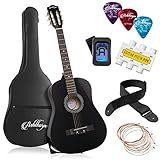
3. Ashthorpe 38-inch Beginner Acoustic Guitar Package (Black), Basic Starter Kit w/Gig Bag, Strings, Strap, Tuner, Pitch Pipe, Picks
Overview:
Ashthorpe’s 38-inch acoustic guitar package targets younger learners and players needing a compact instrument. This right-handed guitar features 18 smooth frets on an easy-to-hold neck, with laminated basswood construction delivering versatile tones across playing styles. The high-gloss black finish adds visual appeal while the lightweight design ensures comfortable extended practice sessions for smaller players.
What Makes It Stand Out:
The 38-inch scale length specifically accommodates students and teens, making it less intimidating than full-size alternatives. The complete starter kit thoughtfully includes both a digital tuner and traditional pitch pipe, offering two tuning methods. At just 3.25 inches deep and weighing considerably less than standard acoustics, this instrument prioritizes playability for developing hands and arms without sacrificing core accessories.
Value for Money:
Positioned as an entry-level bundle, Ashthorpe delivers exceptional affordability without stripping essentials. The laminated basswood construction keeps costs low while providing decent tonal response. While gig bag padding is minimal compared to premium options, the inclusion of a strap, picks, extra strings, and instructional materials eliminates hidden costs. It’s a calculated balance between price, size, and completeness for budget-conscious families.
Strengths and Weaknesses:
- Strengths: Perfectly sized for young beginners; extremely lightweight and portable; complete accessory package; affordable price point; responsive laminated construction
- Weaknesses: Smaller size limits adult use; reduced volume and projection; minimal gig bag protection; laminated woods lack tonal depth
Bottom Line:
Excellent starter instrument for children and petite players prioritizing comfort and affordability.
4. Pyle Steel String Acoustic Guitar Kit, 4/4 Full Size Cutaway All-Wood Guitarra Acustica with Premium Accessory Set and Upgraded Gig Bag, 41" Cherry Burst Glossy

Overview:
Pyle’s 41-inch steel-string acoustic guitar kit presents a full-size cutaway instrument with eye-catching cherry burst finish. Handcrafted with an all-linden wood body and multi-ply inlay, this guitar offers classic styling alongside practical features for beginners. The standard 25.5-inch scale length and 20-fret fingerboard provide authentic acoustic experience while the cutaway body allows access to higher registers.
What Makes It Stand Out:
The vibrant cherry burst glossy finish delivers visual impact uncommon in budget instruments, making it inspiring to pick up. Chrome die-cast machine heads provide reliable tuning stability, while the upgraded gig bag includes thoughtful touches like a detachable shoulder strap. Pyle positions this as a “premium accessory set,” and the inclusion of a capo and cleaning cloth demonstrates attention to beginner needs beyond just the instrument itself.
Value for Money:
This kit offers full-size acoustic experience with stage-ready aesthetics at an entry-level price. The linden wood construction (similar to basswood) provides acceptable tone while keeping costs accessible. While the brand lacks Fender’s pedigree, the complete package and striking finish create strong perceived value. Beginners get a legitimate-looking instrument that doesn’t scream “starter guitar” despite its budget origins.
Strengths and Weaknesses:
- Strengths: Attractive cherry burst finish; full-size cutaway design; chrome die-cast tuners; complete accessory bundle; upgraded gig bag with strap
- Weaknesses: Linden wood is budget material; Pyle brand lacks resale value; quality control hit-or-miss; laminated construction limits tone
Bottom Line:
A visually appealing, full-featured option for beginners wanting a traditional-sized guitar with flair.
5. Fender FA-25N 3/4 Size Nylon String Acoustic Guitar, Beginner Guitar, with 2-Year Warranty, Perfect Beginner Guitar for Kids that is Easy on Fingers, Includes 3 Months of Free Lessons, Natural

Overview:
The Fender FA-25N 3/4 Size Nylon String Guitar brings Fender’s legendary quality to young beginners in a scaled-down, finger-friendly package. Featuring a 3/4-size body that’s easier for small hands to hold, this instrument uses soft nylon strings that are gentle on developing fingers. The natural finish showcases the wood grain while the walnut bridge and open-gear tuners maintain Fender’s attention to detail.
What Makes It Stand Out:
Nylon strings eliminate the finger pain that often discourages new players, while the 3/4 scale length (approximately 23.3 inches) ensures comfortable reach for children. Fender includes three months of free Fender Play lessons, providing structured learning tailored to this specific instrument. The easy-to-play “C” shaped neck profile, inherited from Fender’s electric guitars, makes chord transitions smoother for novices.
Value for Money:
Fender’s 75-year legacy of craftsmanship justifies the slight premium over generic 3/4-size guitars. The included lesson subscription adds immediate educational value, while the two-year warranty protects the investment. Though nylon-string guitars have different tonal character than steel-string acoustics, the playability benefits for young learners outweigh sonic considerations. This is a purposeful tool for nurturing early musical development.
Strengths and Weaknesses:
- Strengths: Fender quality and warranty; nylon strings gentle on fingers; perfect 3/4 size for kids; included lesson subscription; comfortable neck profile
- Weaknesses: Nylon sound differs from standard acoustic; 3/4 size quickly outgrown; less volume than full-size; limited to beginner use
Bottom Line:
The ultimate beginner guitar for children, combining Fender reliability with player-friendly nylon strings.
6. Moukey 41" Acoustic Guitar for Beginners Adult Teen Full Size Guitarra Acustica with Chord Poster, Gig Bag, Tuner,Steel Strings, Capo, Strap - Black

Overview: The Moukey 41" acoustic guitar positions itself as the ultimate turnkey solution for aspiring guitarists. This comprehensive bundle eliminates the guesswork for newcomers by including every essential accessory alongside a full-size dreadnought instrument. Designed specifically for beginners, it combines practical learning tools with a playable instrument at an accessible price point, making it an attractive entry point into the world of acoustic guitar.
What Makes It Stand Out: The included chord poster is a standout feature, offering visual learners immediate reference to essential chords right from day one. The cutaway body design is unusual for budget acoustics, providing easier access to higher frets as skills progress. Precise position marks at multiple frets (3rd, 5th, 7th, 9th, 12th, 15th, and 17th) demonstrate thoughtful consideration for the learning curve. The 1:14 enclosed copper tuning machines are notably robust for this price tier, addressing the common beginner frustration of constant retuning.
Value for Money: This package delivers exceptional value by bundling roughly $100+ worth of accessories with the guitar itself. While the basswood body and laminate construction won’t satisfy purists, the cost savings versus purchasing items separately is undeniable. Competing starter packs often skimp on tuner quality or omit the capo, making Moukey’s completeness impressive for the sub-$150 category.
Strengths and Weaknesses: Strengths include the comprehensive accessory bundle, helpful learning aids, stable tuning machines, and cutaway design. Weaknesses involve the basswood body’s tonal limitations compared to solid wood, potential quality control inconsistencies common with budget brands, and the gig bag’s minimal 3mm padding offering limited protection.
Bottom Line: For absolute beginners seeking a no-fuss, ready-to-play package without significant financial commitment, the Moukey delivers admirable value. It’s an ideal first instrument for testing long-term interest before upgrading to a premium guitar.
7. Fender California Debut Redondo CE Series Acoustic Guitar, Beginner Guitar, 2-Year Warranty, Includes Built-In Tuner, Black

Overview: The Fender California Debut Redondo CE leverages one of music’s most trusted names to create a beginner acoustic that doesn’t compromise on brand integrity. This instrument combines Fender’s 75-year legacy with modern conveniences like onboard electronics and a complimentary lesson subscription. The iconic 6-in-line headstock and dreadnought silhouette deliver authentic Fender aesthetics while maintaining beginner-friendly playability.
What Makes It Stand Out: The inclusion of a Fender Play subscription transforms this from a simple purchase into a complete learning ecosystem. Unlike generic starter guitars, you get structured video lessons from the brand that built the Stratocaster. The built-in tuner is seamlessly integrated, eliminating the need for clip-on devices that beginners often lose. The 2-year warranty demonstrates Fender’s confidence in their laminate construction, offering peace of mind absent from most budget competitors.
Value for Money: Priced in the $200-250 range, you’re paying a premium for the Fender name and lesson subscription. However, when factoring in the $50+ annual value of Fender Play and the warranty protection, the math becomes more favorable. Comparable quality generics cost less but lack the resale value, lesson integration, and brand support that justify the upcharge.
Strengths and Weaknesses: Strengths include legendary brand backing, comprehensive lesson platform, reliable electronics, comfortable C-shaped neck, and strong warranty. Weaknesses involve all-laminate construction that limits tonal richness, a price point 30-40% higher than similar spec no-name guitars, and the Redondo body shape being less traditional than classic dreadnoughts.
Bottom Line: Choose this Fender if you value brand heritage, structured learning, and long-term support over pure acoustic tone. It’s the smart investment for serious beginners committed to progressing beyond basic chords.
8. Best Choice Products 38in Beginner All Wood Acoustic Guitar Starter Kit w/Gig Bag, 6 Picks, Nylon Strings, Strap w/Pick Holder - Matte Black

Overview: Best Choice Products targets the youngest and most budget-conscious beginners with this 38-inch acoustic featuring nylon strings. The reduced scale length and gentler string tension create a more forgiving learning experience for small hands and tender fingertips. As a complete starter kit with four months of digital lessons included, it removes every barrier to entry for under $100.
What Makes It Stand Out: The nylon string configuration is the defining feature, dramatically reducing finger pain that deters many beginners. The closer string-to-fretboard proximity further minimizes finger fatigue, allowing longer practice sessions. At 38 inches, it’s specifically sized for pre-teens and smaller teens, a demographic often overlooked by full-size starter packs. The Fret Zealot lesson partnership provides app-based learning with a highly-rated digital tuner.
Value for Money: This represents one of the best ultra-budget values available. Sub-$80 pricing for a playable instrument plus accessories and lessons is remarkable. While you sacrifice tone and build quality, the nylon strings alone justify the cost for young learners. Parents can test a child’s interest without the $150+ investment typical of steel-string starters.
Strengths and Weaknesses: Strengths include child-friendly size, pain-free nylon strings, included digital lessons, unbeatable price, and reduced finger fatigue design. Weaknesses involve limited projection and tonal quality, 38-inch scale being too small for most adults, nylon strings restricting musical genres, and basic build quality that may not withstand heavy use.
Bottom Line: Ideal for children ages 8-12 or any beginner prioritizing comfort over traditional acoustic tone. It’s a low-risk introduction to guitar that prioritizes playability and affordability above all else.
9. Enya Nova Go Carbon Fiber Travel Acoustic Guitar | 1/2 Size Lightweight Moisture-Proof Guitara | Adult & Beginner Portable Guitar with Gig Bag & Accessories (Black)

Overview: The Enya Nova Go revolutionizes the travel guitar category with aerospace-grade carbon fiber construction, creating an instrument immune to environmental damage. At just 7.35 pounds and half the size of a standard acoustic, it’s engineered for musicians who refuse to compromise sound quality while traveling. This isn’t a toy—it’s a legitimate instrument built for serious players facing humidity, temperature swings, and portability challenges.
What Makes It Stand Out: The carbon fiber monocoque construction eliminates every wooden guitar’s nemesis: warping, cracking, and swelling. This is a true “go anywhere” instrument that sounds identical whether you’re in a desert or rainforest. The patented zero-fret technology ensures consistent action and intonation across the neck, while the ergonomic profile reduces hand fatigue during extended sessions. It’s simultaneously a premium travel solution and a low-maintenance beginner option.
Value for Money: Positioned around $300-350, it’s expensive for a half-size guitar but remarkably affordable for carbon fiber technology. Comparable composite instruments from Rainsong or Journey cost 3-5 times more. For touring musicians or travelers, the durability justifies every penny. Beginners benefit from never needing a setup or humidifier.
Strengths and Weaknesses: Strengths include indestructible construction, consistent sound in any climate, lightweight portability, professional-grade hardware, and zero maintenance. Weaknesses involve the unconventional appearance, debate over carbon fiber’s tonal character versus wood, premium pricing for budget-conscious buyers, and half-size body not suiting all playing styles.
Bottom Line: A game-changer for traveling musicians and beginners in extreme climates. If you need a guitar that survives anything while delivering respectable tone, the Nova Go is unmatched at this price.
10. Mens 70th Birthday Acoustic Guitar Player Vintage Seventies T-Shirt

Overview: This vintage-styled t-shirt celebrates the 70-year-old guitarist with retro graphics and an empowering message. Featuring a classic illustration of a senior musician accompanied by the phrase “Never Underestimate An Old Man Who Still Plays Guitar In His Seventies,” it’s designed as a novelty gift rather than functional gear. The lightweight cotton construction prioritizes comfort for casual wear.
What Makes It Stand Out: The hyper-specific 70th birthday niche makes this a refreshingly personal gift option in a sea of generic musician apparel. Unlike standard guitar t-shirts, it acknowledges the dedication of lifelong players with humor and respect. The vintage seventies aesthetic complements the milestone age, creating a cohesive design that resonates with recipients who came of musical age during that era. Double-needle tailoring ensures durability for years of wear.
Value for Money: Priced appropriately for licensed graphic tees in the $20-25 range, it offers fair value for a specialized gift. The quality cotton and reinforced stitching exceed typical souvenir shirt standards. While you can find cheaper generic guitar shirts, the specific messaging and milestone focus justify the modest premium for gift-givers seeking something memorable.
Strengths and Weaknesses: Strengths include perfect theming for 70th birthdays, quality fabric and construction, universal classic fit, and emotional resonance for senior guitarists. Weaknesses involve extremely limited appeal (only for 70-year-old male guitarists), lack of versatility as everyday wear, no actual musical function, and potential sizing inconsistencies common with online apparel.
Bottom Line: An excellent, heartfelt gift for the 70-year-old guitarist in your life. It’s not equipment, but it’s guaranteed to generate smiles and become a favorite lounge shirt for the seasoned player who has everything.
Why Retirement Is the Perfect Time to Start Playing Guitar
The psychological and physical benefits of learning guitar after 60 are well-documented. Studies from 2025 show that cognitive engagement with music helps maintain neural plasticity, while the fine motor skill development keeps hands nimble. Unlike younger learners who often rush through fundamentals, retirement-hobby players typically practice with intentionality and patience—two ingredients that accelerate real progress. You have the luxury of learning at your own pace, exploring genres that genuinely move you, and building a practice routine that fits your lifestyle, not your boss’s schedule. The guitar becomes more than an instrument; it’s a meditation tool, a social connector, and a creative outlet that adds purposeful structure to your week.
Understanding Your Playing Style and Goals
Before considering body shapes or tonewoods, reflect on what you want to do with your guitar. Your musical intentions should drive every decision, from budget to features. Retirement hobbyists typically fall into several categories, and identifying yours early prevents costly mismatches.
The Fingerstyle Enthusiast
If you’re drawn to the intricate patterns of James Taylor or Tommy Emmanuel, you’ll want a guitar that rewards delicate touch. Fingerstyle players need instruments with excellent note separation and a responsive top that speaks even with light attack. Wider nut widths (1-3/4" to 1-13/16") provide extra space between strings for complex patterns, while shorter scale lengths reduce string tension, making it easier to hold chord shapes for extended periods.
The Strummer and Singer
Planning to lead sing-alongs at community gatherings or family events? You need a guitar that projects bold, clear chords without becoming muddy. Dreadnoughts and larger body styles excel here, offering the volume and low-end thump that supports vocals. Focus on instruments with strong midrange presence that won’t compete with your singing voice but will complement it instead.
The Blues and Folk Traditionalist
Delta blues and folk standards often require alternate tunings and slide playing. These styles benefit from guitars with sturdy construction that can handle varied string tensions and the occasional bottleneck slide on the frets. Look for slightly taller frets and a setup that accommodates both standard and open tunings without constant adjustments.
The Experimental Learner
Maybe you’re not sure yet—you just want to explore. This is perhaps the most common retirement player, and it calls for maximum versatility. A comfortable mid-size body, quality electronics for eventual amplification, and a setup that’s forgiving across multiple genres will serve you best. Think of this as your “Swiss Army knife” acoustic that can grow with you as your tastes evolve.
Acoustic Guitar Body Styles Explained
The guitar’s body shape is the single biggest factor in its sound, comfort, and projection. For retirement players, physical comfort is just as critical as tonal quality—what good is a great-sounding guitar if it’s too bulky to play for more than 15 minutes?
Dreadnought: The Classic Workhorse
The dreadnought remains the most popular acoustic shape for good reason. Its large, square-shouldered design delivers powerful volume and a booming low end that fills rooms. For retirement players with larger frames or those prioritizing strumming, it’s unbeatable. However, the 16" lower bout can be cumbersome for smaller individuals or those with shoulder issues. Modern variants in 2026 include “slope-shouldered” dreadnoughts that contour more comfortably against your body while retaining much of the traditional tone.
Concert and Grand Concert: Comfortable Mid-Size Options
These bodies represent the sweet spot for many retirement players. With a 13-1/2" to 14" lower bout, they sit comfortably in your lap without sliding around, and their reduced depth means less arm strain when reaching over the top. The concert size offers balanced tone with enough projection for intimate settings, while the slightly larger grand concert adds a bit more bass response. Both are exceptionally fingerstyle-friendly.
Auditorium and Grand Auditorium: The Versatile Sweet Spot
Often considered the most versatile shapes, these guitars (particularly the grand auditorium) combine strumming power with fingerstyle clarity. The 15" lower bout and narrower waist create a comfortable playing position while the internal bracing patterns in 2026 models have become incredibly sophisticated, offering near-dreadnought volume with enhanced note definition. For the undecided player, this is often the best single-guitar solution.
Parlor and Travel Guitars: Compact Companions
Don’t dismiss smaller guitars as “beginner” instruments. Modern parlor guitars feature premium tonewoods and construction that deliver surprising volume and complex tones. Their compact 12-fret neck joints and lightweight bodies make them ideal for players with arthritis, back problems, or limited playing space. Many retirement hobbyists keep a parlor guitar in the living room for spontaneous practice sessions and a larger instrument for dedicated playing time.
Tonewoods and Their Impact on Sound
The woods used in your guitar’s construction fundamentally shape its voice. In 2026, sustainable sourcing has become standard, with many manufacturers using responsibly harvested or alternative tonewoods that match traditional species in quality.
Spruce Tops: Clarity and Projection
Sitka spruce remains the gold standard for its stiffness-to-weight ratio, delivering clear, articulate notes with strong projection. For retirement players, this means every note rings true, which is encouraging when you’re still developing technique. Lutz spruce, a hybrid species, offers similar characteristics with slightly more headroom for aggressive strumming. Both age beautifully, meaning your guitar will sound better in five years than it does today.
Cedar and Redwood: Warmth and Responsiveness
These softer top woods produce a warmer, more broken-in sound right from the start. Cedar, in particular, is highly responsive to light fingerpicking, making it ideal for players with less hand strength. The trade-off is slightly less headroom for hard strumming, but for most hobbyists, the immediate gratification of a sweet, complex tone outweighs this consideration.
Mahogany: Midrange Focus and Punch
Whether used for tops, backs, or sides, mahogany emphasizes the midrange frequencies where the human voice lives. This makes it excellent for singer-songwriters, as it creates space for vocals rather than competing with them. All-mahogany guitars have become increasingly popular for retirement players seeking a vintage, bluesy character with minimal maintenance concerns.
Rosewood and Maple: Complexity and Brightness
Indian rosewood backs and sides add harmonic complexity and lush overtones, while maple provides brightness and note separation. Both are premium choices that elevate a guitar’s voice, though they add to the cost. For hobbyists, a rosewood-bodied guitar offers a lifetime of sonic discovery, revealing new nuances as your ear develops.
Neck Profiles and Playability for Aging Hands
The neck is your primary point of contact, and its shape dramatically affects comfort. In 2026, manufacturers have embraced “modified V” and “soft C” profiles that fill the hand without forcing it into unnatural positions. These shapes support the thumb naturally and reduce the grip strength needed to form chords.
Nut width deserves special attention. The standard 1-11/16" width works for most players, but those with larger fingers or arthritic joints often prefer 1-3/4" or even 1-13/16". The extra 1/16" to 1/8" provides surprising relief, preventing accidental string muting and reducing frustration during barre chords.
Scale length—the distance from nut to saddle—affects string tension. Shorter 24.75" scales (common on many concert guitars) require less pressure than the standard 25.5". This small difference can mean the difference between playing for 30 minutes or two hours before fatigue sets in.
The Importance of Setup and Action
A guitar’s “action” (string height above the frets) can make or break your experience. Many new guitars arrive from factories with actions set too high for comfortable playing. Budget for a professional setup, typically $75-$150, where a technician will adjust the truss rod, saddle height, and nut slots for your specific playing style.
For retirement players, a slightly lower action (without buzzing) is preferable. You don’t need to worry about aggressive strumming causing fret buzz, and the reduced finger pressure will extend your practice sessions. Ask specifically for a “low-moderate action setup for fingerstyle and light strumming” when you take your guitar in.
Cutaways and Upper Fret Access: Do You Need Them?
The cutaway design removes part of the guitar’s upper bout, allowing easier access to frets above the 12th. While this seems purely aesthetic, it has practical implications. If you envision playing melodies or soling above the 12th fret, a cutaway is invaluable. However, it does remove a small amount of internal air volume, theoretically reducing bass response slightly.
For most retirement hobbyists focused on chords and basic fingerpicking below the 12th fret, a non-cutaway guitar offers slightly better value and traditional aesthetics. But don’t rule out cutaways entirely—modern bracing designs have minimized the sonic compromise, and the ergonomic benefit for reaching those high notes can be substantial if you develop a taste for melody playing.
Electronics and Amplification: To Plug In or Not?
Built-in pickup systems have become remarkably sophisticated and affordable. Even if you don’t plan to perform, having electronics allows you to practice with headphones through small amps, record directly into apps on your tablet, or play along with backing tracks without overwhelming the room.
Look for systems with undersaddle pickups combined with internal microphones or soundboard transducers. These “blended” systems capture both string clarity and body warmth. Simple onboard tuners are now standard and incredibly convenient for quick tuning checks during practice sessions. For retirement players, the ability to plug in occasionally opens doors to community center jam sessions or family gatherings where you need a bit more volume.
Budget Considerations for Retirement Living
Guitar prices span from $200 to $20,000, but the sweet spot for serious hobbyists lies between $800 and $2,500. In this range, you’ll find all-solid-wood construction, professional setups, and quality hardware that stays in tune. These guitars are investments that will appreciate in tone over decades, not disposable instruments you’ll outgrow.
Consider your total budget: guitar, setup, case, and accessories typically add 20-30% to the base price. Many retirement communities have started “guitar libraries” where residents can borrow instruments—an excellent way to test different styles before committing. Some manufacturers also offer 55+ discount programs, so always ask about age-related promotions.
New vs. Used Guitars in 2026
The used market in 2026 is flooded with quality instruments from players who upgraded during the pandemic guitar boom. A used guitar from a reputable brand, built after 2015, can offer exceptional value. The wood has already opened up, and any manufacturing defects would have surfaced.
However, buying used requires knowledge. Check for fret wear (especially on guitars played by aggressive strummers), ensure the neck is straight, and look for cracks or repairs around the bridge and neck joint. For retirement players without technical expertise, buying new from a dealer with a generous return policy and warranty provides peace of mind. Many shops now offer “certified pre-owned” programs that combine value with professional inspection.
Where to Shop: Online vs. Local Stores
Online retailers offer convenience and selection, with 30-day return policies that effectively let you audition guitars at home. In 2026, most provide detailed photos, sound samples, and even video chats with specialists. This is ideal if you live far from quality shops or have mobility limitations.
That said, nothing replaces sitting with a guitar. Local stores allow you to feel neck profiles, test body comfort, and hear the instrument in person. Many have embraced “retirement player hours” with seating, good lighting, and patient staff. The relationship you build with a local shop pays dividends in free setups, advice, and community connections. Consider a hybrid approach: research online, then visit stores to narrow choices before making a final decision.
Essential Accessories for the New Hobbyist
Your guitar purchase isn’t complete without a few key items. A quality gig bag or hard case protects your investment—hardshell cases are worth the extra weight for home storage. A clip-on tuner is non-negotiable; the Snark-style tuners of 2026 are faster and more accurate than ever.
For comfort, invest in a guitar strap even if you only play sitting down—it provides security and proper positioning. A footstool or guitar support (like the ErgoPlay or Sageworks) elevates the guitar to the correct angle, reducing back and shoulder strain. Finally, a capo and basic string-winder make changing keys and strings effortless tasks rather than frustrating chores.
Maintenance and Care for Longevity
Acoustic guitars are relatively low-maintenance, but a few habits ensure yours lasts decades. Keep it in its case when not in use, maintain 45-55% humidity (especially important in retirement destinations like Arizona or Florida), and wipe down strings after playing to extend their life. In 2026, humidity control packs have become smarter, with color-changing indicators that alert you when they need replacement.
Learn to change strings yourself—it’s a meditative ritual that connects you to your instrument. For retirement players, lighter gauge strings (.011-.052) reduce finger fatigue while still providing full tone. Plan on changing strings every 2-3 months with regular play, or whenever they start to sound dull. Annual professional checkups, like a doctor’s visit for your guitar, catch issues before they become expensive problems.
Building a Practice Routine That Works
The key to progress in retirement is consistency over duration. Fifteen focused minutes daily yields better results than occasional two-hour marathons. Structure your practice: five minutes on technique (chord changes, scales), five on a song you’re learning, and five just playing for pleasure. This prevents burnout and maintains motivation.
Use technology to your advantage. Apps like Yousician and Fender Play have evolved to include “senior mode” with larger fonts, slower tempos, and arthritis-friendly exercise modifications. YouTube remains a treasure trove of free lessons, but be selective—look for channels that teach songs you love, not just generic exercises. Many retirement communities now host weekly guitar circles, providing both accountability and social connection.
Frequently Asked Questions
1. Is it too late to start playing guitar in my 60s or 70s?
Absolutely not. While children may develop muscle memory faster, adult learners bring patience, discipline, and genuine motivation that often lead to more satisfying long-term progress. Many players don’t start until retirement and become proficient within two years. The key is realistic expectations and consistent, enjoyable practice.
2. How much should I realistically spend on my first serious acoustic guitar?
Plan on $800-$1,500 for a quality instrument that will inspire you rather than frustrate you. Below this price point, you’ll encounter laminate woods and poor setups that make playing harder than necessary. Above it, you enter diminishing returns for hobbyist playing. Remember to budget an additional $150-200 for a professional setup and essential accessories.
3. What’s the best body size for someone with arthritis or shoulder problems?
Concert or grand concert sizes (13.5" to 14" lower bout) offer the best compromise of comfort and sound. Their reduced depth and lighter weight minimize strain, while modern bracing ensures they still project well. Parlor guitars are even easier on the body, though they sacrifice some bass response. Try several sizes while seated—your body’s feedback is more important than any recommendation.
4. Do I need electronics if I only plan to play at home?
Not necessarily, but they’re surprisingly useful even for home players. Being able to plug into a small amp with headphones allows practice at any hour without disturbing others. It also future-proofs your guitar if you decide to join a jam session or play at a family event. Most quality guitars now include electronics at minimal added cost.
5. How do I know if a guitar’s neck will be comfortable for my hands?
Visit stores and ask to sit with guitars for at least 10-15 minutes. A neck that feels fine for two minutes can reveal problems over longer playing. Look for “soft C” or “modified V” profiles, and consider nut width carefully—1-3/4" provides extra finger room without feeling overly wide. Your fretting hand should feel supported, not stretched or cramped.
6. What’s the difference between solid wood and laminate, and does it matter?
Solid wood means the top, back, and sides are each made from single pieces of wood. Laminate uses thin layers pressed together. Solid wood vibrates more freely, producing richer, more complex tones that improve with age. For retirement players, a solid top is non-negotiable; solid back and sides are ideal but less critical. The tonal difference is immediately noticeable and worth the investment.
7. How often should I change my guitar strings?
With regular play (30 minutes daily), change strings every 2-3 months or when they sound dull and lifeless. New strings are brighter and more responsive, which makes playing more enjoyable. For retirement players with lighter touch, you might extend this to 4 months, but don’t wait until they break—old strings hurt your tone and can be harder on your fingers.
8. Can I teach myself guitar using online resources, or do I need a teacher?
Both approaches work, and many retirement players thrive with self-directed learning using apps and YouTube. However, even 3-4 lessons with a qualified teacher can correct bad habits early and provide a personalized practice roadmap. Consider hybrid learning: start with a teacher for fundamentals, then use online resources to explore songs you love. Many teachers now offer discounted “senior starter packages.”
9. What’s the best way to store my guitar when I’m not playing?
Keep it in its case, standing upright in a closet or corner, away from direct sunlight, heat vents, and exterior walls. Use a humidifier pack in dry climates. Never leave it on a stand for extended periods—stands are for temporary holding during practice sessions. Proper storage prevents warping, cracking, and other expensive damage that can occur even in climate-controlled homes.
10. Are there any health concerns I should discuss with my doctor before starting?
Mention your plans to your doctor, especially if you have arthritis, carpal tunnel, or back issues. They can recommend hand exercises and ergonomic adjustments. Most concerns are manageable—lighter strings, proper posture, and frequent breaks prevent problems. Guitar playing actually improves hand strength and dexterity when done correctly. The mental health benefits of creative expression often outweigh minor physical adjustments needed.
See Also
- 10 Must-Have Parlor Acoustic Guitars for Fingerstyle Players in 2026
- 10 Acoustic Guitars for Retirement-Hobby Players with Arthritic Hands in 2026
- 10 Must-Have Acoustic Guitars for Songwriters Who Record at Home in 2026
- 10 Must-Have Acoustic Guitars for Open-Tuning Blues in 2026
- 10 Must-Have Travel Acoustic Guitars for Backpacking Musicians in 2026