Table of Contents
The battlefield is familiar to every gigging guitarist: you nudge your volume knob a hair past unity, the bassist cranks their rig to compensate, the drummer starts hitting harder, and suddenly the sound engineer is making throat-slitting gestures from the mixing booth. Welcome to the stage volume war—a sonic arms race where nobody wins and tone always loses. But what if you could achieve that glorious, cranked-tube saturation without triggering the nuclear option? Enter the 1-watt tube amp revolution, a paradigm shift that’s rewriting the rules of live sound for 2026.
These micro-marvels aren’t just practice toys anymore. They’ve evolved into sophisticated tone machines capable of delivering professional-grade saturation at conversation levels, fundamentally solving the stage volume equation. Whether you’re playing intimate clubs or mic’ing through a massive PA, understanding how to leverage these pint-sized powerhouses will transform your relationship with both your tone and your bandmates. Let’s dive deep into the technology, psychology, and practical application of ending volume wars once and for all.
Top 10 1-Watt Tube Amps
Detailed Product Reviews
1. Monoprice 5-Watt, 1x8 Guitar Combo Tube Amplifier with Celestion Speaker - Stage Right Series

Overview: The Monoprice Stage Right 5-watt combo delivers genuine tube tone for budget-conscious players. Featuring an ECC83/12AX7 preamp tube and 6V6GT power section, this no-frills amplifier pairs classic tube circuitry with a Celestion Super 8 GBA-15 speaker. Designed for home practice and recording, it offers two inputs (Low and High) that provide 50% signal attenuation or easier overdrive respectively. With a frequency response of 80Hz-10kHz and impressively low noise floor (-75dB), it produces 0.5% THD at rated power.
What Makes It Stand Out: The Celestion speaker inclusion at this price point is remarkable—most budget amps use generic drivers. The dual-input design offers immediate versatility without complex controls, letting players choose between cleaner tones or earlier breakup. Monoprice’s direct-to-consumer model strips away marketing costs, delivering pure tube circuitry that focuses on fundamental tone rather than flashy features. The 6V6GT power tube provides authentic American-style breakup characteristics.
Value for Money: Priced significantly below competitors like the Fender Champ or Vox AC4, this represents one of the most affordable entry points into true tube amplification. You’re getting name-brand components (Celestion, recognized tube types) that typically command 2-3x the price. For home recordists seeking authentic tube saturation without attenuators, the 5-watt output hits the sweet spot.
Strengths and Weaknesses: Strengths: Unbeatable price-to-performance ratio; genuine Celestion speaker; simple, reliable circuit design; ideal recording volume level; authentic tube breakup characteristics.
Weaknesses: No reverb or effects loop; basic single-tone control; build quality less robust than premium brands; 8-inch speaker limits low-end response; no headphone output for silent practice.
Bottom Line: This is the ideal first tube amp for players wanting authentic tube tone without financial commitment. Perfect for home recording and practice, though gigging musicians will need miking capabilities. The Celestion speaker alone justifies the price.
2. Easy Book On How To Build a Tube Amp 1 Watt To 75 Watt: Easy Book On How To Build a Tube Amp 1 Watt To 75 Watt

Overview: This instructional guide targets DIY enthusiasts wanting to build custom tube amplifiers from scratch. Covering a broad 1-watt to 75-watt power range, the book presumably provides schematics, component selection guidance, and step-by-step assembly instructions for multiple amplifier designs. While specific features aren’t detailed in the listing, such resources typically include circuit theory, safety protocols, and troubleshooting sections for various amp topologies.
What Makes It Stand Out: The extensive wattage range distinguishes it from specialized manuals focusing on single designs. This versatility allows builders to progress from low-power practice amps to gig-worthy heads using one resource. For technically-inclined players, the ability to customize tone stacks, gain structures, and power sections offers unparalleled creative control. The book likely demystifies tube amp construction, potentially saving thousands compared to custom shop builds.
Value for Money: Compared to the cost of boutique amplifiers ($1,500+), a technical manual represents minimal investment. However, value depends entirely on content quality and clarity. Free online resources (forums, schematic repositories) offer similar information, though curated, structured guidance can prevent costly mistakes. The book’s worth is measured in time saved and safety risks mitigated.
Strengths and Weaknesses: Strengths: Comprehensive power range coverage; educational value for understanding tube circuits; potential cost savings versus boutique purchases; empowers customization and repair skills.
Weaknesses: No listed features raise quality concerns; requires significant electronics knowledge; high-voltage safety risks; component costs add up quickly; may contain outdated information; not a physical product for immediate use.
Bottom Line: Only recommended for experienced DIYers with electronics background. Casual players should buy ready-made amps instead. Verify author credentials and reviews before purchasing, as quality varies dramatically in technical publications. The missing feature list is a red flag.
3. Bugera V5 INFINIUM 5-Watt Class-A Tube Amplifier Combo with INFINIUM Tube Life Multiplier, Original Turbosound Speaker, Reverb and Power Attenuator

Overview: The Bugera V5 INFINIUM combines vintage aesthetics with modern tube management technology. This 5-watt, Class-A combo uses an EL84 power tube and 12AX7 preamp to deliver classic British-style breakup, paired with an 8-inch Turbosound speaker. The integrated INFINIUM system automatically monitors and adjusts tube performance, extending lifespan and maintaining tonal consistency. Additional features include built-in reverb and a power attenuator for volume control.
What Makes It Stand Out: The INFINIUM Tube Life Multiplier is Bugera’s proprietary auto-biasing system that actively balances tube operation, potentially doubling tube life while preventing catastrophic failures. This addresses a major pain point of tube ownership. The inclusion of both reverb and attenuator in a sub-$300 package is exceptional—features typically requiring external pedals. The Class-A design provides harmonically-rich distortion at manageable volumes.
Value for Money: Competing amps with similar features (Vox AC4TV, Fender Bassbreaker) cost 30-50% more. The INFINIUM technology alone adds significant long-term value by reducing tube replacement costs ($50-100 annually for frequent players). You’re essentially getting three products: tube amp, attenuator, and reverb unit. The Turbosound speaker, while less prestigious than Celestion, is engineered specifically for this circuit.
Strengths and Weaknesses: Strengths: INFINIUM tube management system; integrated attenuator and reverb; Class-A circuit purity; vintage styling; EL84 British tone character; excellent feature density.
Weaknesses: Bugera’s historical reliability issues; Turbosound speaker lacks Celestion’s pedigree; plastic corners and lighter construction; customer service concerns; may be too feature-rich for purists.
Bottom Line: Ideal for home players wanting maximum features with minimal maintenance. The INFINIUM system mitigates tube anxiety, making this perfect for tube newcomers. However, gigging musicians should research long-term durability reports before committing.
4. Blackstar HT-1R MK III - 1-watt 1x8 inch Guitar Tube Combo Amp w/ 2 Channels, CabRig Speaker Simulation, and Reverb

Overview: Blackstar’s HT-1R MK III represents the modern approach to low-wattage tube amplification. This 1-watt combo features two footswitchable channels, an 8-inch Celestion speaker, and sophisticated digital enhancements. The amp uses a single ECC83 preamp tube to generate genuine tube distortion, while the ISF (Infinite Shape Feature) tone control and 3-band EQ provide extensive tonal flexibility. The CabRig speaker simulation and headphone output enable silent recording and practice.
What Makes It Stand Out: The 2-channel design with independent voice controls is rare in 1-watt amps, offering both clean and overdrive tones at bedroom volumes. CabRig technology provides professional-grade DI tones for home recording, eliminating the need for miking. The 3-band EQ (vs typical single-tone knob) allows precise tonal sculpting. The headphone out with reactive load preserves tube feel during silent practice—a feature missing from many traditional tube amps.
Value for Money: Priced in the mid-tier range, the HT-1R MK III competes with digital modeling amps while offering authentic tube response. The recording-ready features justify the premium over simpler tube combos. For apartment dwellers and home producers, the silent practice capabilities eliminate the need for separate attenuators or load boxes ($100-300 additional cost). The Celestion speaker maintains brand credibility.
Strengths and Weaknesses: Strengths: Versatile 2-channel design; professional CabRig simulation; comprehensive EQ; silent practice functionality; genuine tube tone; Celestion speaker; compact footprint.
Weaknesses: 1-watt limits clean headroom severely; digital features may alienate purists; higher price than basic tube combos; reliability of digital components in tube amp; no effects loop.
Bottom Line: Perfect for modern players prioritizing versatility and silent recording over raw power. The digital integration is seamless and practical, though traditionalists may prefer simpler circuits. Best-in-class for bedroom producers needing authentic tube DI tones.
5. Laney CUB-SUPERTOP All Tube Guitar Head With Boost And Reverb >1W & 15W

Overview: The Laney CUB-SUPERTOP is a British-designed tube head offering switchable power between 15 watts and less than 1 watt. Powered by three 12AX7 preamp tubes and two EL84 output tubes, this amp head provides substantial gain staging flexibility. The 3-band tonestack, onboard boost, and reverb deliver tonal versatility, while the line-out enables direct recording or slaving to larger systems. Requires an external 8-16 ohm speaker cabinet.
What Makes It Stand Out: The dual-power mode is the headline feature—15 watts for rehearsals and small gigs, <1 watt for saturated home practice without attenuators. Three preamp tubes (vs typical one or two) create a complex, high-gain preamp section rivaling larger amps. The British-engineered circuit delivers classic UK breakup characteristics. The line-out with speaker emulation (implied) makes this recording-ready without microphones.
Value for Money: As a head-only unit, total cost requires adding a cabinet, making initial investment higher than combos. However, the flexibility of pairing with different speakers justifies the approach for tone-chasers. Comparable heads (Orange Tiny Terror, Marshall DSL) cost more while offering similar features. The tube complement and power scaling provide boutique-level versatility at mid-range pricing.
Strengths and Weaknesses: Strengths: Switchable power modes; three preamp tubes for gain flexibility; British EL84 tone; line-out for recording; boost and reverb included; quality Laney construction; gig-worthy 15W output.
Weaknesses: Requires separate speaker cabinet; <1W mode still may be loud for apartments; no effects loop; single channel limits versatility; higher total cost than combos.
Bottom Line: Excellent choice for players needing both practice and performance capabilities from one unit. The power scaling is genuinely useful, but home-only players should consider combos. Best matched with a quality 1x12 cabinet to maximize tonal potential.
6. Hughes & Kettner TubeMeister Deluxe 20-20/5/1-Watt Tube Head

Overview: The Hughes & Kettner TubeMeister Deluxe 20 delivers genuine tube tone in a compact, studio-friendly package. This two-channel head offers switchable 20, 5, and 1-watt operation, making it equally capable of bedroom practice, recording sessions, and small gigs. The integrated Red Box DI provides professional cabinet simulation, allowing silent recording or direct PA connection without sacrificing tone.
What Makes It Stand Out: The built-in Red Box AE+ DI is the star feature—studio-grade cabinet emulation that eliminates the need for miking or external load boxes. Combined with the Power Soak and three wattage settings, you can crank the EL84 power tubes into saturation at whisper volumes. The effects loop and channel switching offer genuine flexibility rarely found in low-wattage heads.
Value for Money: Priced competitively against buying a separate attenuator and quality DI box, the TM20 Deluxe bundles essential tools for modern guitarists. Comparable tube heads lack the integrated DI, making this a smart one-stop solution for home studio owners who need professional direct tones without additional $300-400 investments.
Strengths and Weaknesses: Strengths include exceptional DI quality, versatile power scaling, compact size, and robust build. The clean channel offers pleasing headroom, while the lead channel delivers classic British crunch. Weaknesses include a shared EQ section between channels and limited low-end thump compared to larger heads. The 1-watt setting, while useful, can feel slightly compressed.
Bottom Line: Perfect for apartment-dwelling tone hounds and studio musicians needing authentic tube saturation at manageable volumes. The integrated DI makes it a recording workhorse that punches well above its weight class.
7. Hughes & Kettner TubeMeister 40 Deluxe - 40/18/5/1-Watt Tube Head

Overview: Stepping up from its 20-watt sibling, the TubeMeister 40 Deluxe provides additional headroom and flexibility for gigging musicians while retaining the series’ signature features. This two-channel head expands the power options to 40, 18, 5, and 1 watts, accommodating everything from stage volumes to late-night practice. Like the TM20, it includes the acclaimed Red Box DI and effects loop.
What Makes It Stand Out: The 40-watt setting delivers enough clean headroom for live use with a full band, while the 18-watt mode offers a sweet spot between home and stage volumes. The variable power soak maintains the same direct-recording capabilities that define the Deluxe series, making this the most versatile wattage-scaling amp in H&K’s lineup.
Value for Money: The price premium over the TM20 is justified for players who regularly perform live. You’re essentially getting a studio tool and gigging amp in one chassis. Competing 40-watt tube heads with attenuation and DI capabilities often cost significantly more, making this a cost-effective dual-purpose solution.
Strengths and Weaknesses: Strengths include ample clean headroom, flexible wattage stepping, professional DI output, and robust construction. The additional 18-watt mode is more musically useful than expected. Weaknesses include a weight increase over the TM20 and the same shared EQ limitation. At 1-watt, the tone lacks the complexity of higher settings.
Bottom Line: Ideal for musicians splitting time between stage and studio. If you need genuine clean headroom with the same recording convenience as the TM20, the 40 Deluxe is worth the upgrade.
8. Peavey Invective MH 20/5/1-watt Tube Head
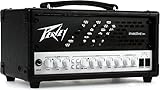
Overview: Designed in collaboration with Periphery’s Misha Mansoor, the Invective MH brings modern high-gain tone to the low-wattage arena. This two-channel mini head features a noise gate, separate EQ sections for clean and lead channels, and cab-simulated output. The 20/5/1-watt attenuator lets you achieve tight, aggressive saturation at any volume level.
What Makes It Stand Out: The integrated noise gate is a game-changer for high-gain players, eliminating the need for external pedals. Separate 2-band EQ on the clean channel and 3-band on the lead channel provide unprecedented tonal control for a lunchbox head. The cab-simulated output delivers DI-ready tones optimized for modern metal production.
Value for Money: Signature-model amps typically command premium prices, but the Invective MH offers Mansoor’s precise tones at a surprisingly accessible price point. Competing high-gain heads require separate noise gates and attenuators, easily adding $200+ to the total cost. This all-in-one approach saves money and pedalboard space.
Strengths and Weaknesses: Strengths include brutally tight low-end, effective noise gate, flexible EQ, and excellent build quality. The clean channel is surprisingly pristine. Weaknesses include a learning curve to dial in the gate properly and a voicing that’s too modern for vintage enthusiasts. The shared gain structure between wattage modes can limit clean headroom at higher settings.
Bottom Line: A must-have for modern metal and prog players seeking tight, articulate gain at bedroom levels. The integrated gate makes it uniquely practical for high-gain applications.
9. Hughes & Kettner GrandMeister Deluxe 40-40/20/5/1-watt Programmable Tube Head

Overview: The GrandMeister Deluxe 40 represents Hughes & Kettner’s flagship programmable tube amplifier, combining four channels, four wattage settings, and a suite of built-in digital effects. This all-in-one solution offers MIDI control, power soak, Red Box DI, and an effects loop in a single chassis. It stores 128 presets, making it a powerful tool for session players and tone collectors.
What Makes It Stand Out: Programmability is the defining feature—every parameter from channel selection to effects settings can be saved and recalled via MIDI. The integrated effects (delay, reverb, modulation) are surprisingly high quality, eliminating the need for a pedalboard in many situations. The 40/20/5/1-watt scaling covers every scenario from arena to apartment.
Value for Money: While priced higher than non-programmable alternatives, the GrandMeister replaces an entire rig: amp, attenuator, DI, and multi-effects unit. Professional musicians will quickly recoup costs through reduced setup time and eliminated gear purchases. It’s a touring musician’s Swiss Army knife.
Strengths and Weaknesses: Strengths include limitless tonal possibilities, studio-grade DI, excellent effects integration, and road-worthy construction. The 4-channel flexibility is unmatched. Weaknesses include a steeper learning curve and menu-diving complexity. Purists may find the digital effects less organic than standalone pedals. The price puts it out of reach for casual players.
Bottom Line: For tech-savvy guitarists needing maximum versatility in a compact package, the GrandMeister is unparalleled. It’s a complete rig solution for professionals.
10. Laney CUB-SUPER12 All Tube Combo With Boost And Reverb >1W & 15W 12 Inch HH Speaker

Overview: The Laney CUB-SUPER12 delivers classic British tube tone in an affordable, user-friendly combo format. This 15-watt all-tube amplifier features a <1-watt mode for bedroom practice, built-in boost and reverb, and a custom-voiced 12-inch HH speaker. Powered by three 12AX7 preamp tubes and two EL84 output tubes, it captures vintage-style dynamics and harmonic richness.
What Makes It Stand Out: The sub-1-watt setting allows genuine power tube saturation at conversation volumes—a rarity in all-tube combos. The integrated boost function provides additional gain staging without pedals, while the digital reverb adds ambience. The HH speaker is specifically voiced for this circuit, delivering authentic British character.
Value for Money: This is among the most affordable all-tube combos with true power scaling. Competing products from boutique brands cost twice as much for similar features. The included boost and reverb eliminate $150+ in pedal costs, making it an exceptional entry point into premium tube tone.
Strengths and Weaknesses: Strengths include authentic EL84 chime, effective low-wattage mode, quality speaker, and straightforward operation. The boost adds satisfying grit. Weaknesses include no effects loop, limited EQ (single tone control), and lack of DI output. The reverb, while decent, isn’t studio-grade. Build quality is adequate but not road-case rugged.
Bottom Line: Perfect for players seeking classic British crunch on a budget. The <1W mode makes it ideal for home use, while 15 watts handles small gigs admirably.
The Anatomy of a Stage Volume War
Why Traditional Amps Fuel the Problem
The classic 50-100 watt tube amp was designed for an era before modern PA systems—when guitar amplifiers were the PA. Those circuits need to be pushed to 70-80% of their maximum output to achieve the harmonic complexity and compression we crave. On a 100-watt Marshall, that means hitting 70-80 watts, which translates to roughly 115-120dB at one meter. That’s not music; it’s a physical assault. The problem compounds when multiple musicians chase each other up the volume ladder, creating a wall of indistinct noise that even the best sound engineer can’t untangle.
The 1-Watt Revolution: A Paradigm Shift
One-watt amps flip this equation entirely. At full throttle, they produce around 90-95dB—loud enough to cut through in a rehearsal but quiet enough to mic effectively without bleeding into every other stage microphone. The real magic lies in their design philosophy: they’re engineered to sound finished at low volumes, not compromised. In 2026, we’re seeing advanced transformer designs, refined power scaling implementation, and preamp voicings that maintain authority and clarity even when whisper-quiet.
Understanding 1-Watt Tube Amp Technology
Power Scaling vs. True Low Wattage
Here’s where many buyers get confused. Power scaling (or attenuation) takes a high-wattage amp and reduces its output after the power section, which can create harshness and “fizz” because you’re essentially choking the power tubes. True 1-watt designs, conversely, operate with power tubes that are designed to saturate at low voltages from the start. The result is a more natural, singing compression without the artifacts. When shopping in 2026, look for units that specify “true low-wattage operation” rather than just “power scaling to 1 watt.”
How Tube Saturation Works at Bedroom Levels
Tube saturation occurs when the signal exceeds the linear operating range of the tube, causing pleasant even-order harmonics and natural compression. In a 1-watt amp, this happens at plate voltages around 150-200V instead of the 400-500V in a 100-watt head. The lower voltage means earlier breakup, but modern circuit design ensures you’re not sacrificing harmonic richness. The key is the relationship between preamp gain staging and power amp distortion—quality 1-watt amps balance these elements so the power tubes contribute musical compression rather than just farting out.
The Role of Transformers in Tone Preservation
Output transformers are the unsung heroes of low-wattage design. In 2026, manufacturers are using premium laminations and optimized winding ratios specifically for micro-power applications. A properly designed output transformer for a 1-watt amp maintains low-end tightness and high-end sparkle that would otherwise disappear at low volumes. Pay attention to transformer size relative to the amp’s power rating—an undersized transformer will sound boxy and choked, while a properly spec’d one delivers surprising depth.
Key Features to Evaluate Before Buying
Wattage Switching and Attenuation Options
Even within the 1-watt category, flexibility is crucial. Many modern units offer half-power or quarter-power modes (0.5W, 0.25W) for even quieter operation. Some include built-in reactive load attenuators that maintain feel while dropping volume further. The sweet spot for most gigging scenarios is an amp that can run at 1 watt for stage feel, then drop to 0.25 watts for silent recording. Avoid amps with stepped attenuators that use cheap resistors—they kill dynamics.
Speaker Compatibility and Impedance Matching
Don’t assume your 4×12 cab is off-limits. Quality 1-watt amps provide multiple impedance outputs (4, 8, 16 ohms) and can drive full-size cabinets effectively. The interaction between a saturated micro-amp and a large cab’s air movement creates a unique tone—tight but spongy, with massive low-end girth. Check the amp’s minimum load requirements; some designs need at least an 8-ohm load to operate safely, while others are more forgiving.
FX Loops and Pedalboard Integration
A serial FX loop is non-negotiable for modern players. It allows you to place time-based effects after the preamp distortion, maintaining clarity and definition. Look for loops with send/return level controls—this lets you match pedal levels optimally. In 2026, we’re seeing more amps with buffered loops that preserve tone over long cable runs, a critical feature when your amp is sitting backstage and you’re controlling it via pedalboard.
Build Quality and Component Selection
Pop the chassis (or look through the vent holes) and examine the components. Premium 1-watt amps use film capacitors in the signal path for transparency, carbon comp resistors for vintage vibe, and robust power supply filtering to minimize noise. The tube socket quality matters more than you’d think—cheap sockets cause microphonics and premature tube failure. Hand-wired eyelet boards offer easier servicing than PCB-mounted pots and jacks.
Tone Profiles: Finding Your Sonic Signature
British vs. American Voicings
British-voiced 1-watt amps typically use EL84 or EL34 power tubes with aggressive midrange emphasis, perfect for cutting through dense mixes. They excel at everything from Beatles chime to Sabbath grind. American-voiced designs lean toward 6V6 or 6L6 tubes (even in micro formats), offering scooped mids, glassy highs, and robust lows—ideal for pristine cleans and bluesy breakup. In 2026, hybrid voicings are emerging that blend both characteristics, but purists should stick to traditional tube complements.
Single-Ended vs. Push-Pull Designs
Single-ended circuits (one power tube) produce asymmetrical clipping—rich in even-order harmonics with a sweet, singing quality. They’re the simplest path to vintage tone but can lack headroom. Push-pull designs (two power tubes working in opposition) deliver more power, tighter bass, and cleaner headroom before breakup, then transition to aggressive odd-order harmonics. For stage use, push-pull often provides better note definition in a full band context, while single-ended shines for recording and solo practice.
The Impact of Preamp Tube Count
Don’t be fooled by preamp tube quantity. A 1-watt amp with three 12AX7s might have one dedicated to the phase inverter and FX loop, leaving only two for actual gain staging. More preamp tubes don’t automatically mean more gain—they mean more flexibility in voicing. Look for amps where you can substitute 12AT7 or 12AY7 tubes in specific positions to tailor gain structure without rebiasing.
Gigging with Micro-Power: Practical Considerations
Mic’ing Techniques for Low-Wattage Amps
Close-mic’ing with a dynamic mic (like the industry-standard SM57) is just the starting point. For 1-watt amps, consider a mid-distance condenser (12-18 inches) to capture more room tone and cab resonance. The lower SPL means you can use sensitive mics without pads. Blend a close dynamic with a distant condenser for huge recorded tones that still fit in a live mix. In 2026, dual-source mic’ing is becoming standard practice for micro-amps.
DI Outputs and Cabinet Simulations
Many modern 1-watt amps include post-power-amp DI outputs with impulse response (IR) loading. This is a game-changer for silent stages—you get the authentic power tube feel in your monitors without stage volume. Evaluate the quality of the onboard IRs; some units include licensed cab models from major manufacturers. Ensure the DI is truly post-power-amp (not just preamp out) to capture the output transformer’s color.
Monitoring Solutions for Silent Stages
When your amp is essentially a recording device, your in-ear monitor mix becomes critical. Work with your sound engineer to create a separate “amp feed” that includes your mic’d amp signal plus a touch of room mic from the drum kit. This prevents the disorienting “amp in another room” feeling. Some 1-watt amps now include dedicated monitor outputs with independent EQ, letting you shape your stage sound without affecting FOH.
The Psychological Shift: Changing Band Dynamics
Communication Strategies for Volume Reduction
Bringing a 1-watt amp to rehearsal requires a conversation, not an ultimatum. Frame it as a tone choice: “I found a way to get my sound without stepping on everyone.” Record a before/after clip on your phone to demonstrate that your tone actually improves when the power section is cooking. Address the drummer’s concerns directly—explain that they’ll hear guitar articulation better, allowing for tighter rhythmic interaction.
Redefining “Loud Enough” in Modern Venues
The reality of 2026 live sound is that most venues over 200 capacity have PA systems that render stage volume obsolete. Your amp’s job is to provide tone and feel, not projection. A 1-watt amp cranked through a 2×12 cab produces enough stage volume for the band to lock in, while the PA handles audience coverage. This separation of concerns—tone vs. volume—leads to better mixes and happier sound engineers.
Budget Planning and Value Proposition
Price-to-Performance Ratios
Entry-level 1-watt tube amps start around $300, but the sweet spot for gigging durability and tone lies in the $600-900 range. Above $1200, you’re paying for hand-wiring, premium transformers, and boutique components. The law of diminishing returns hits hard here—a $800 amp is typically 90% as good as a $1500 unit. Focus on features that matter for your use case rather than chasing prestige brands.
Long-Term Investment vs. Entry-Level Options
Cheap 1-watt amps often cut corners on transformers and tube sockets, leading to higher maintenance costs. A mid-range amp with a solid warranty and readily available schematic is a smarter investment. Consider modularity—some platforms allow you to swap preamp modules or upgrade transformers later. In 2026, we’re seeing more manufacturers offer upgrade paths, making your initial purchase a foundation rather than a dead end.
Frequently Asked Questions
1. Will a 1-watt tube amp really be loud enough to hear myself on stage?
Absolutely. A cranked 1-watt amp through a 1×12 or 2×12 cabinet produces roughly 90-95dB at one meter—comparable to a loud conversation and easily audible over acoustic drums in a rehearsal setting. For live gigs, you’ll mic the amp through the PA for audience coverage, while your stage volume remains at a comfortable monitoring level that lets you hear every nuance of your playing.
2. Can I use my existing pedalboard with a low-wattage amp?
Yes, but with considerations. 1-watt amps have less clean headroom, so boost and overdrive pedals push them into saturation faster. This is often desirable, but you may need to adjust your gain staging. Ensure the amp has an FX loop for time-based effects, and consider using a clean boost in the loop to maintain level parity. Some players find they need fewer pedals when the amp itself is providing the core tone.
3. Do I need a special cabinet for a 1-watt amp?
No—one of the beauties of micro-power is compatibility with any cabinet. Your 4×12 will sound massive with a 1-watt head, though you won’t push the speakers to their full mechanical limits. For optimal results, match the amp’s output impedance to the cabinet. Many players prefer high-efficiency speakers (100dB+ sensitivity) with low-wattage amps to maximize volume and dynamics.
4. How often will I need to replace tubes in a 1-watt amp?
Paradoxically, 1-watt amps can be harder on tubes than high-wattage units because they’re often run at maximum dissipation constantly. Expect to replace power tubes every 1-2 years with regular gigging, while preamp tubes last 3-5 years. The good news? You’re only buying one or two tubes at a time, making maintenance affordable. Keep a spare set in your gig bag.
5. Can I record silently with a 1-watt amp?
Most modern 1-watt amps include either a headphone output with speaker simulation or a post-power-amp DI for silent recording. For the most authentic tone, use the DI into a load box with impulse responses. Some amps have this built-in. The key is ensuring the power tubes are still seeing a proper load, otherwise you’re just getting preamp distortion, not true power amp saturation.
6. Will my bandmates think I’m not serious if I show up with a tiny amp?
Tone speaks louder than size. Record your rehearsals—chances are the mix will be clearer and more defined with lower stage volume. Many professional touring acts now use 1-5 watt amps backstage with isolation cabs. Position it as a professional choice: you’re prioritizing the audience’s experience and the FOH mix over ego. The results will convert the skeptics.
7. What’s the difference between a 1-watt amp and just using an attenuator on my 50-watt head?
Attenuators work by dissipating excess power as heat after the output transformer. This maintains power tube saturation but changes the speaker’s reactive relationship with the amp, often resulting in a “flattened” feel. True 1-watt amps are designed from the ground up for low-power operation, maintaining the critical amp-speaker interaction at appropriate levels. The result is more dynamic, three-dimensional tone.
8. Can I gig a 1-watt amp without a PA system?
For acoustic duos, jazz combos, or very small coffeehouse gigs, a 1-watt amp can suffice unmiked in a quiet room. However, for rock bands with drums or venues over 50 people, you’ll need reinforcement. Think of it this way: even 100-watt stacks are mic’d in arenas. The PA is part of your instrument now—embrace it. The amp provides tone; the PA provides coverage.
9. Are battery-powered 1-watt tube amps viable for gigging?
2026 has seen advances in high-voltage battery technology, but most “battery tube amps” use starved-plate designs that don’t achieve true tube saturation. True high-voltage battery rigs exist but offer limited runtime (2-3 hours) and cost premiums. For most gigging scenarios, AC power remains the reliable choice. Battery power excels for busking and outdoor acoustic gigs where power isn’t available.
10. How do I convince my venue’s sound engineer to embrace micro-amps?
Bring them into the conversation early. Send them specs and a sound clip before the gig. Offer to soundcheck with both your micro-amp and a backup traditional amp to demonstrate the difference. Most engineers will be thrilled—you’re solving their biggest headache. Pro tip: bring a small gift card to the local coffee shop. A happy engineer will make you sound like a million bucks, regardless of amp size.
See Also
- Stop Stage Volume Wars: 10 Best Low-Watt Combo Amps for Club Gigs in 2026
- How to Solve Stage Monitoring: 10 Amps with DI Outs in 2026
- 10 Expert-Recommended Tube Amps for Blues Breakup at Low Volume in 2026
- 10 Best 15-Watt Tube Amps for Cranked Club Volumes in 2026
- 10 Boutique Tube Amps for Collectors Seeking Rare Tones in 2026